
Executive Overview
On November 9, the Metropolitan Opera presented the third performance of its high-profile autumn revival of Giacomo Puccini’s timeless masterpiece, Tosca. As part of a heavily anticipated 25-performance run slated to showcase five different leading sopranos across the season, this particular evening belonged indisputably to Spanish soprano Saioa Hernández. Making her eagerly awaited company debut, Hernández stepped onto the legendary stage with the heavy mantle of international acclaim, having already conquered the world’s major European opera houses. Hailed by the legendary Montserrat Caballé as "the diva of our century," Hernández proved that this monumental praise was entirely merited, delivering a fearless, dramatically multidimensional, and vocally sublime masterclass.
However, the evening also offered a fascinating study in artistic contrasts. While Hernández soared to stratospheric heights, illuminating David McVicar’s grand production with fresh directorial choices and staggering vocal potency, the surrounding elements of the production revealed significant structural and interpretive fractures. Tenor SeokJong Baek delivered an ardent, physically intense Cavaradossi, and baritone Quinn Kelsey offered a vocally magnificent yet physically tentative Scarpia. Meanwhile, in the orchestra pit, conductor Oksana Lyniv polarized critics and audience members alike with a series of sluggish, idiosyncratic tempos and questionable balance choices that frequently tested the patience of the singers and the momentum of Puccini’s score. Ultimately, the night will be remembered as the triumphant New York arrival of a generational soprano who effortlessly carried the evening upon her shoulders.
Detailed Chronology: Act-by-Act Performance Analysis
Act I: The Seeds of Jealousy and Devotion
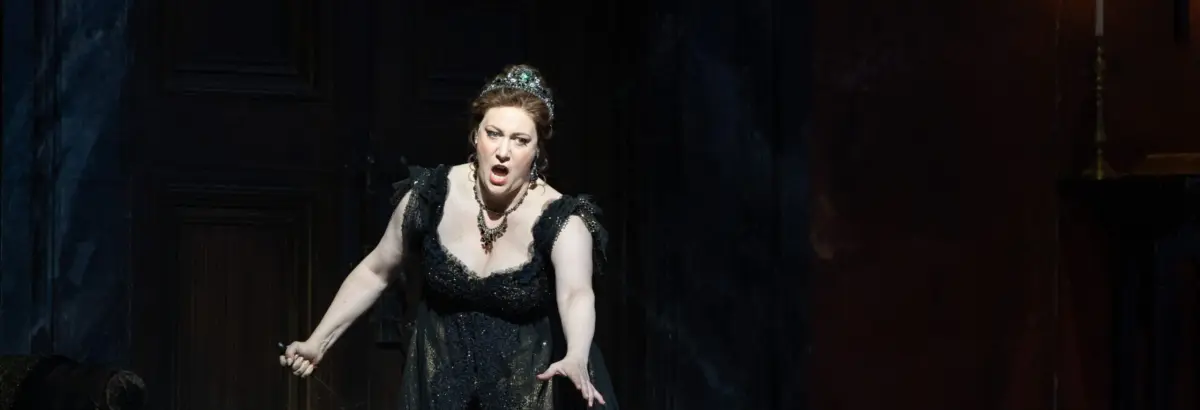
From her very first entrance, Hernández established a Tosca rich in psychological complexity and youthful energy. Her opening exclamation, "Mario, Mario, son qui!" rang through the massive auditorium with a round, plush, and commanding presence, underpinned by a resonant chest voice that immediately established her character’s passionate authority. Rather than playing the titular diva as a one-note caricature of vanity, Hernández portrayed a woman caught in a whirlwind of flirtatious playfulness, deep piety, and consuming jealousy.
As she entered the church and knelt to pray, her physical blocking felt natural and unforced. When kissing Cavaradossi, she intimately shielded their faces with her shawl, injecting the scene with genuine, youthful ardor. Yet, this levity transformed effortlessly into suspicion upon the introduction of the blonde-haired woman in the painting. Hernández accentuated the sharper rhythms of the music to telegraph her simmering jealousy before melting back into a sumptuous, connected legato on "Sì, lo sento… ti tormento," floating ethereal, gorgeous notes into the upper balcony.
SeokJong Baek’s Cavaradossi matched this initial energy with an impeccably sung "Recondita armonia," establishing an ardent tone that captured the archetype of the romantic hero. His smooth legato lines during "Quale occhio al mondo può star di paro" blended seamlessly with Hernández’s vocal architecture.
The entry of Quinn Kelsey’s Scarpia injected a darker, more manipulative undercurrent into the nave. Delivering his opening line, "Un tal baccano in chiesa!" with potent authority, Kelsey leaned into a suave, scheming vocal delivery. His execution of the grand Te Deum featured immaculate legato phrases, even as his vocal coloring underscored a predatory lust for the soprano.
However, conductor Oksana Lyniv’s interpretive choices immediately began to assert themselves here, heavy-handedly burying the choral textures beneath an over-percussive, sluggish orchestral blanket that impeded the natural rise of Puccini’s crescendo.
Act II: The Crucible of Fear and Retribution
The dramatic core of Tosca lies within the claustrophobic confines of Scarpia’s Palazzo Farnese office, and it was here that Hernández truly cemented her status as a dramatic powerhouse. Entering with absolute command, her initial vocal exchanges with Scarpia radiated confidence. But as Kelsey’s baron intensified his psychological and physical probing, Hernández’s persona pivoted masterfully toward stark, visceral desperation.
Her delivery of "Orsù, Tosca, parlate" unfolded as a gradual, masterclass crescendo that culminated in chilling, razor-sharp high Cs, laying bare the full-throttle dramatic weight of her voice. In her lower chest register during "Che v’ho fatto in vita mia?", every syllable resonated with clear, unadulterated distress.
One might have anticipated the soprano to maintain this unrelenting storm of dramatic force, but her interpretation of the iconic aria "Vissi d’arte" took a radically intimate, introspective turn. Eschewing grandstanding, Hernández utilized delicate, floated pianissimos that slowly blossomed as the movement progressed. Her "Nell’ora del dolore" evoked a haunting, ancient lament, while her climactic "perché me ne rimuneri così?" was executed with heartbreaking expression, remaining scrupulously faithful to the dynamic markings without over-inflating the phrase.
Kelsey’s vocal approach in Act II remained a marvel of baritonal richness. His delivery of "Ha più forte sapore" was texturally lush, digging deep into the Italian libretto to emphasize manipulative desire. During the interrogation sequence, his repetitions of "Dov’è Angelotti?" grew organically in dynamic volume, and his roaring command "Aprite le porte che n’oda i lamenti!" genuinely rattled the theater.
Yet, physically, Kelsey’s Scarpia faltered. He appeared strangely hesitant and passive during the violent physical choreography. When tasked with grabbing or pressing himself upon Hernández, his movements lacked total commitment. During the torture sequence, although he loomed over the soprano, his physical timing lagged behind the ferocious tenacity of his stage partner, diluting the character’s terrifying aura.
Amidst this high-stakes dramatic chess match, Lyniv’s pacing proved increasingly problematic. During "Vissi d’arte," the conductor imposed a protracted, self-indulgent tempo that stretched orchestral lines long after Hernández had concluded her vocal phrases, creating an awkward, dislocated breathing space between singer and pit.
The act’s violent climax, however, showcased Hernández’s theatrical ingenuity. Introducing a brilliant piece of stage business to David McVicar’s production, she did not immediately lunge for the knife. Instead, she paused momentarily by a chair, observed Scarpia’s desperate attempt to evade justice, and then struck with the fatal second blow. Her snarl of "Questo è il bacio di Tosca!" was delivered with savage vigor. Immediately following the murder, the fiery diva vanished, replaced once more by a trembling, terrified girl who frantically washed her hands before whispering the final, chilling line of the act: "E avanti a lui tramava tutta Roma."
Act III: Tragedy, Triumphant Vocals, and the Final Leap
The final act opened on the parapets of Castel Sant’Angelo with a brief moment of serene illusion. Hernández entered radiating palpable joy and excitement at the prospect of her impending escape with Cavaradossi, her timbre brightening triumphantly on "… e al cavaliere che l’accompagna." Yet, this optimism fractured instantaneously during "Il tuo sangue o il mio amore," where she plunged into her dark, chest-driven lower register while her face contorted in raw terror as she recounted the trauma of Scarpia’s murder.
As they transitioned into "Senti… l’ora è vicina," Hernández recovered her flirtatious charm, floating immaculate piano lines that blended gorgeously with Baek’s tenor. Baek himself enjoyed notable vocal highlights in this final act, tackling "E lucevan le stelle" with connected, ardent lines. Though lacking a true, whisper-quiet pianissimo, his emotional investment was palpable. During their second duet, Baek scaled back his dynamic output to a tender piano on "O dolci mani mansuete e pure," proving capable of a delicate vocal coloring that paired exquisitely with the soprano.
When the inevitable tragedy struck and Hernández discovered the lifeless body of her lover, her cries of "Mario! Mario! Morto! Morto!" were lacerating in their desperation. Eschewing the conventional, heavily prepared theatrical hesitation seen from past sopranos in McVicar’s staging, Hernández simply ran to the ramparts and hurled herself off the parapet in an unbridled surge of defiance and despair. Her final, ringing curse—"O Scarpia, avanti a Dio!"—echoed through the house as the ultimate statement of an unbowed spirit.
Supporting Context & Production Metrics
| Performance Metric / Production Element | Detail & Assessment |
|---|---|
| Total Planned Performances | 25 performances scheduled for the 2024–25 season. |
| Number of Rotating Divas | 5 distinct sopranos sharing the title role. |
| Production Director | David McVicar (traditional, opulent staging). |
| Conductor | Oksana Lyniv (notable for expanded, sluggish tempi). |
| Key Directorial Innovations | Hernández introduced a mid-table hesitation during Scarpia’s assassination and an unhesitating, impulsive leap from the parapet. |
| Vocal Standout | Saioa Hernández (unanimously praised for dramatic range and fearless vocalism). |
Official Statements and Critical Reception
While the Metropolitan Opera has not issued formal executive press releases concerning individual nightly vocal adjustments, critical consensus among press and seasoned opera-goers has been remarkably uniform regarding Saioa Hernández’s triumphant reception.
Montserrat Caballé’s historic designation of Hernández as "the diva of our century" was frequently invoked in post-performance critiques, validating the Spanish soprano’s meteoric rise across the major capitals of Europe—including La Scala, the Vienna State Opera, and the Royal Opera House—and cementing her status as a legitimate heir to the Italianate dramatic soprano tradition.
Conversely, critical commentary surrounding Oksana Lyniv’s musical direction highlighted a growing tension between traditional Italianate pacing and contemporary modernist podium eccentricities. Reviewers noted that Lyniv’s persistent elongation of melodic phrases drained the score of its essential dramatic propulsion.
By prioritizing granular, often disruptive instrumental voices—such as overly prominent winds and an excessively heavy-handed snare drum during the Shepherd’s song—the musical direction frequently compromised the pristine balance required to let Puccini’s soaring vocal lines breathe naturally.
Future Outlook
As the Metropolitan Opera’s extensive 25-performance run of Tosca continues through the season, the production will inevitably evolve as the remaining four divas rotate through the title role. However, the benchmark set by Saioa Hernández during this revival’s opening sequence will be exceptionally difficult to match.
Her ability to fuse vocal opulence with deeply considered, psychologically acute physical acting has instantly positioned her as an audience favorite in New York. Opera aficionados and critics alike are already voicing high hopes that the Metropolitan Opera administration will move swiftly to secure Hernández for future seasons, ideally starring her in a brand-new, bespoke production tailored specifically to her formidable dramatic and vocal dimensions. Until then, her incendiary portrayal of Puccini’s doomed heroine will remain a defining highlight of the company’s theatrical calendar.