
Executive Overview
In an era defined by hyper-connectivity, immediate digital dissemination, and the relentless stream of smartphone-captured media, the modern concert experience has increasingly become a mediated event. Yet, defying the prevailing tides of the contemporary music industry, indie-folk luminaries Big Thief recently orchestrated a masterclass in mystique.
At Nashville’s historic Ryman Auditorium, the band gathered a select audience for an entirely private, strictly phone-free showcase designed to test the boundaries of fan expectation and artistic vulnerability. Photography and videography were strictly prohibited, creating a transient, ephemeral environment reminiscent of bygone eras of live performance. The focal point of the evening was neither a victory lap for their recent catalog nor a predictable greatest-hits retrospective. Instead, Big Thief used the hallowed stage of the "Mother Church of Country Music" to perform an unreleased, mysterious body of work tentatively titled Horsepower in its entirety.
The event, which immediately sent ripples through the underground music community via leaked setlists and word-of-mouth accounts, signals a bold new chapter for the band. Coming on the heels of their transformative 2025 LP, Double Infinity—their first release as a trio following the departure of longtime bassist Max Oleartchik—Horsepower represents a massive, sprawling artistic statement. Comprising an ambitious 29 tracks, the unreleased record was brought to life on the Ryman stage with the assistance of an expanded ensemble of virtuosic collaborators.
Frontwoman Adrianne Lenker set the tone for the evening with a characteristically uncompromising disclaimer to the crowd: "If you had some hopes of hearing some of the songs you might know, those can also be discarded." What followed was a deeply immersive, chronological subversion of traditional album rollouts. As Big Thief prepares to launch another extensive North American tour behind Double Infinity, the clandestine premiere of Horsepower has left industry analysts, critics, and dedicated fans grappling with a singular question: When, and in what form, will this monumental collection of music finally see the light of day?
Detailed Chronology: Inside the Ryman Auditorium Seance
The Atmospheric Prelude and the Digital Blackout
The atmosphere inside the Ryman Auditorium on the evening of the private showcase was charged with an unusual tension. Attendees were greeted not by the familiar sea of glowing screens that typically characterize modern live music events, but by security personnel enforcing a stringent zero-tolerance policy regarding recording devices. Phones were securely locked away in pouches, forcing the audience into an uncomfortably present state of mind. This deliberate digital blackout was not merely a logistical measure; it was an artistic imperative. By stripping the audience of their digital crutches, Big Thief demanded an undivided, unrecorded form of collective listening.
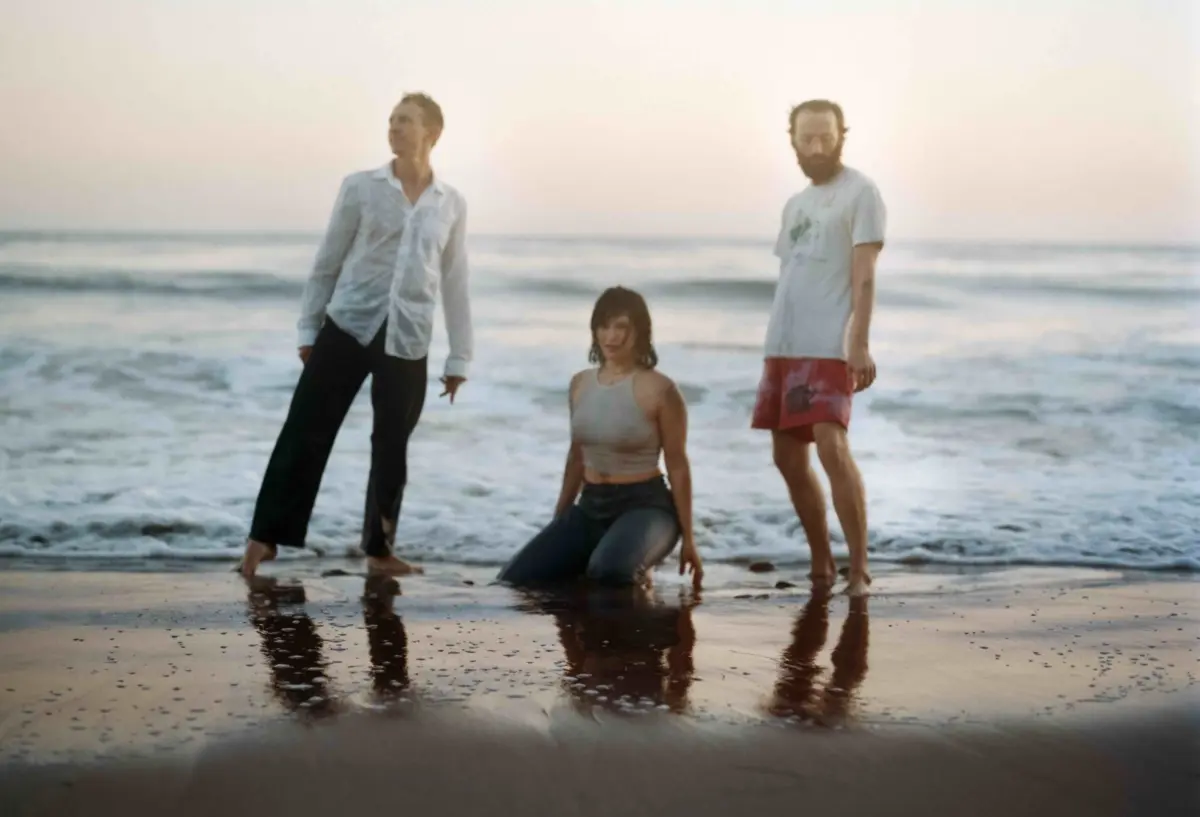
As the house lights dimmed, the sense of anticipation reached a fever pitch. The band members—guitarist and vocalist Adrianne Lenker, guitarist Buck Meek, and drummer James Krivchenia—took the stage alongside an impressive retinue of auxiliary musicians. The stage setup itself hinted at the sonic expansiveness of the material to come, featuring a constellation of acoustic instruments, pedal steel rigs, and traditional string arrangements.
Adrianne Lenker’s Disarming Address
Before a single note was struck, Adrianne Lenker stepped up to the microphone. True to her enigmatic public persona, she offered no conventional pleasantries or promotional stage banter. Instead, she offered a gentle yet firm warning that shattered any lingering expectations of a standard concert experience.
"If you had some hopes of hearing some of the songs you might know, those can also be discarded," Lenker told the hushed crowd.
This manifesto of radical presence instantly recalibrated the room. The audience was being asked to abandon their historical relationship with Big Thief’s catalog—to temporarily forget the fragile intimacy of Masterpiece, the pastoral explorations of U.F.O.F., the raw urgency of Dragon New Warm Mountain I Believe in God, and the streamlined focus of Double Infinity. They were here to bear witness to something entirely unprecedented: a 29-song monolith of unrecorded, unheard music.
The Unfolding of ‘Horsepower’
While a leaked setlist that later circulated on platforms like Setlist.fm has given music archivists a roadmap of the evening, the live execution of Horsepower was an immersive, fluid journey. Eschewing a strict, linear track-by-track sequence of the yet-unreleased album, the band instead curated a dynamic flow that showcased the staggering breadth of the 29 compositions.
The sonic architecture of the performance was heavily enriched by the presence of the wider ensemble that contributed to the record’s studio genesis. Masters of the pedal steel and electric guitar, Russ Pahl and Greg Leisz, wove weeping, atmospheric textures throughout the arrangements, anchoring the songs in a rich, Americana-inflected soil. Simultaneously, a formidable trio of fiddle players—Hannah Read, Richard Bowden, and Zosha Warpeha—infused the performance with haunting, folk-noir dimensions, creating a tapestry of sound that oscillated between stark minimalism and thunderous, full-band crescendos.
Sharp-eared devotees in the audience immediately recognized seeds of material that had slowly trickled into Big Thief’s live rotation over the preceding months. Cuts like "Carry" and "Space and Time"—which were first aired back in May during an intimate, stripped-down field session for Belgium’s Radio 1—finally found their context within the sprawling narrative arc of Horsepower. Hearing these songs live alongside dozens of unfamiliar compositions revealed the meticulous scaffolding of the project, demonstrating a band operating at the absolute peak of their compositional powers.
Supporting Context & Metrics: The Evolution of Big Thief
The Trio Era and the Shadow of Double Infinity
To fully understand the weight of the Horsepower revelation, one must examine the institutional and creative shifts Big Thief has navigated over the last two years. The band’s trajectory was permanently altered prior to the recording of their 2025 critically acclaimed album, Double Infinity. That record marked a monumental milestone in the band’s history: their first release as a three-piece following the amicable departure of founding bassist Max Oleartchik.
The transition from a four-piece powerhouse to a streamlined trio forced a radical internal re-evaluation of Big Thief’s creative chemistry. Rather than attempting to replicate their previous wall-of-sound dynamics, Lenker, Meek, and Krivchenia leaned into a more porous, spacious sonic identity on Double Infinity. They discovered new avenues of interplay, proving that the subtraction of an element could paradoxically open up vast new territories of expression.
Yet, if Double Infinity was an exercise in structural refinement, Horsepower appears to be its stylistic counterweight—an unbridled, maximalist exploration that gathers an ensemble cast to push the boundaries of what a modern folk-rock band can achieve. The juxtaposition of a leaner touring trio on the road with the sprawling, multi-instrumental army summoned for the Horsepower sessions highlights Big Thief’s commitment to duality: they are simultaneously an agile, stripped-down roots band and a grand, orchestral avant-folk collective.
The Anatomy of a 29-Song Masterpiece
In an era where the music industry is increasingly driven by short-attention-span economics—where algorithms favor bite-sized, sub-three-minute singles designed for algorithmic playlisting and viral TikTok moments—the concept of a 29-song album is a defiant act of artistic resistance.
Historically, double albums of this magnitude (The Beatles’ "White Album," Tusk by Fleetwood Mac, or Joanna Newsom’s Have One on Me) are career-defining statements, moments where an artist attempts to capture the totality of their creative universe before moving into a new era. For Big Thief to invest in a 29-song project immediately following a major personnel shift underscores their relentless work ethic and prolific output. Lenker, widely regarded as one of the preeminent songwriters of her generation, has long maintained a symbiotic relationship with the creative muse, frequently writing dozens of songs between official album cycles.
The involvement of pedal steel legends Russ Pahl and Greg Leisz, alongside the virtuosic fiddle work of Read, Bowden, and Warpeha, suggests that Horsepower is not merely a collection of bedroom acoustic demos scaled up, but a deeply collaborative, texturally rich studio achievement. These players are not casual session musicians; they are master craftsmen of traditional and experimental American roots music, hinting that Horsepower may dive deeper into country, folk, and ambient textures than anything the band has released prior.
Official Statements and Industry Repercussions
The Silence from the Label and Management
As news of the Ryman Auditorium performance leaked through underground forums and dedicated fan communities, industry watchers immediately turned their attention to 4AD, Big Thief’s long-standing label home, for official confirmation. Thus far, the response has been deafening silence.
No official press release has been issued, no teaser trailers have been dropped on social media, and no release date has been attached to the title Horsepower. This deliberate withholding of information is indicative of a broader strategy employed by top-tier legacy and indie acts who recognize that in an oversaturated market, mystery is a powerful marketing tool. By allowing the event to exist solely as a rumor-mill legend among those fortunate enough to be in the room, Big Thief has cultivated an aura of exclusivity and artistic purity that money simply cannot buy.
The Live Circuit and the Road Ahead
While the existence of Horsepower hangs in a tantalizing limbo, the band’s immediate professional obligations remain firmly rooted in the promotion of Double Infinity. Next month, Big Thief is scheduled to embark on an extensive North American tour, bringing the lean, focused energy of their trio configuration to stages across the continent.
Concert promoters and ticketing agencies report unprecedented demand for the upcoming run, no doubt supercharged by the murmurs emanating from Nashville. Fans attending the upcoming dates are naturally left wondering whether any of the 29 tracks from Horsepower will make their way into the standard live setlists, or if the Ryman showcase will remain a singular, isolated ritual. Given Big Thief’s penchant for unpredictability—where setlists are frequently rewritten minutes before showtime and unreleased songs are routinely test-driven—attendees of the upcoming tour would be wise to expect the unexpected.
Future Outlook: What Lies Ahead for Big Thief?
Speculation on the Release Strategy for Horsepower
The million-dollar question facing the independent music landscape is simple: When will Horsepower be released, and how will it be delivered to the public?
Given the sheer scale of a 29-song record, a traditional, linear rollout featuring multiple pre-release singles, radio promos, and multi-month marketing campaigns seems almost antithetical to the spirit of the Ryman debut. Instead, industry analysts are speculating on alternative release strategies. Could Horsepower drop as a surprise double-album, echoing the stealth-drop methodologies pioneered by artists like Radiohead or Beyoncé? Or will it be parceled out over a series of EPs or companion volumes that allow listeners to digest the massive tracklist in manageable chapters?
Furthermore, the logistical reality of touring with an expanded ensemble—bringing Pahl, Leisz, Read, Bowden, and Warpeha out on the road—presents both financial and operational hurdles for a touring band. If Horsepower is fundamentally a collaborative, ensemble-driven record, Big Thief may be planning a specialized, highly selective tour run dedicated entirely to the new material, distinct from their standard power-trio touring setup.
The Legacy of a Generational Band
Ultimately, the clandestine premiere of Horsepower at the Ryman Auditorium reaffirms Big Thief’s status as one of the most vital, fearless, and uncompromising musical entities of the 21st century. At a time when commercial pressures frequently force artists into predictable creative cycles, Adrianne Lenker, Buck Meek, and James Krivchenia continue to shatter the mold, prioritizing creative urgency, communal collaboration, and genuine artistic risk above all else.
Whether Horsepower materializes in the coming months as a sweeping physical double-LP package or remains an elusive myth whispered about by passionate fans in online forums, the Nashville seance has already achieved its primary purpose. It reminded us that music, at its core, is a sacred, ephemeral exchange between human beings—an experience to be felt in the marrow of one’s bones, unmediated by screens, untouched by algorithms, and preserved forever in the amber of memory.