
Executive Overview
London’s West End and broader theatrical district are preparing for one of the most ambitious, star-studded, and creatively diverse seasons in recent memory. Spanning intimate fringe houses, major subsidized venues, and sprawling commercial stages, the upcoming calendar of productions reflects an industry brimming with renewed confidence and artistic daring. From high-profile revivals of twentieth-century masterworks to radical new musicals, world premieres, and genre-defying adaptations, the capital’s stages are set to host a remarkable array of international talent, visionary directors, and celebrated actors.
The diversity of the upcoming slate highlights a deliberate pivot toward bold programming. Producers are increasingly willing to take risks on non-traditional stagings, immersive venues, and intellectually demanding material. Whether exploring the fractured high-society drama of Truman Capote’s mid-century New York, the gritty reality of 1990s East London, or the soaring, cinematic scores of reimagined historical epics, London’s theatrical ecosystem continues to function as a global crucible for dramatic innovation.
This comprehensive preview outlines the major productions scheduled to open across the city, organized chronologically by their opening dates. It serves as an authoritative guide for theatregoers, critics, and industry professionals navigating a season rich with anticipation.
Detailed Chronology of Upcoming London Productions
1. Golden Boy
- The Premise: Joe Bonaparte is a gifted young violinist with extraordinary talent and a secure future in music, until a chance at fame and fortune lures him into the brutal world of professional boxing. Pressured by a ruthless manager, tempted by a forbidden love, and bound by the expectations of his Italian-American family, Joe stands at a perilous crossroads. He is a young man torn between the seductive promise of the American Dream and the quiet honor of a decent life, forced to confront the ultimate cost of ambition.
- Thematic Resonance: An exploration of assimilation, capitalistic exploitation, and the psychological weight of expectation within immigrant communities.
2. Thelma & Louise
- The Premise: On a sudden whim, Louise invites her best friend Thelma for a spontaneous weekend getaway. However, an ill-fated encounter with a stranger at a roadside bar transforms their lives forever, forging a lifelong bond into something dangerous, fierce, and unbreakable. Propelled by a soaring, contemporary musical score, the two women set out on a high-stakes, last-chance adventure across a landscape where every systemic card is stacked against them.
- Thematic Resonance: Female liberation, radical solidarity, and the subversion of patriarchal narratives under existential threat.
3. The Last Ship
- The Premise: Inspired by musician Sting’s childhood in Wallsend, United Kingdom, and drawing deeply on his own artistic roots, The Last Ship tells the piercing, emotional story of a close-knit community facing the sudden closure and disappearance of their local shipyard—the literal and figurative heart of their existence. In a world where past traditions and uncertain futures collide, the production echoes timeless themes of industrial loss, fierce working-class pride, and human connectedness.
- Thematic Resonance: Deindustrialization, community resilience, and the preservation of heritage against the relentless march of economic modernization.
4. Tru
- The Premise: Set in Truman Capote’s luxurious New York apartment in December 1975, the play unfolds in the immediate aftermath of the publication of an excerpt from his scandalous, tell-all novel Answered Prayers. Having thoroughly alienated his wealthy high-society confidantes, Capote is depicted in isolation. He reflects candidly on his meteoric literary career, the heavy fallout from his betrayal of elite confidences, and his ongoing battles with profound loneliness, substance addiction, and complex personal relationships.
- Thematic Resonance: The price of artistic observation, the fragility of fame, and the self-destructive impulses of the literary elite.
5. The Standard of Living
- The Premise: As husband to the celebrated ballerina Lydia Lopokova, lover to Duncan Grant, and trusted friend to Virginia Woolf, the economist John Maynard Keynes moves effortlessly between the corridors of political power in Whitehall and the intoxicating, bohemian freedom of a radical circle of artists and intellectuals. Yet, as global markets crash, historic financial systems crumble, and Great Britain teeters precariously on the edge of chaos, Keynes is consumed by a singular, urgent question: What constitutes a truly good life?
- Thematic Resonance: The intersection of macroeconomic volatility, avant-garde lifestyle choices, and the ethical responsibilities of intellectual elites.
6. Who’s Afraid of Virginia Woolf?
- The Premise: In the small hours of the morning on a sleepy American college campus, Martha—much to the visible displeasure of her husband, George—has invited a newly arrived professor, Nick, and his naive wife, Honey, back to their home for late-night drinks. As the liquor flows and dawn slowly approaches, the younger couple is inexorably drawn into George and Martha’s psychological battleground, culminating in an evening of devastating truth-telling.
- Thematic Resonance: Marital disillusionment, academic status anxiety, and the destructive power of illusion versus brutal reality.
7. Hay Fever
- The Premise: Having recently retired from a glittering stage career, actress Judith Bliss already misses the intoxicating rush of applause. While idling away her days at an eccentric country home, she finds her family—her hermetic novelist husband, David, and their failure-to-launch adult children, Sorel and Simon—far too self-involved to provide a proper audience. In response, Judith invites a young fan for the weekend. Unbeknownst to her, however, every member of the Bliss household has independently invited their own weekend guest. Completely unsuited to hospitality and constitutionally allergic to compromise, the household rapidly erupts into chaos.
- Thematic Resonance: The theatricality of domestic life, bourgeois narcissism, and the anarchic nature of artistic ego.
8. Affluenza
- The Premise: When a wealthy teenager’s reckless, alcohol-fueled joyride ends in devastating tragedy, his high-profile legal defense pivots on a staggering premise: Is it genuinely possible for an individual to be so sheltered by immense wealth that they are utterly incapable of distinguishing right from wrong? Inspired by shocking real-world legal proceedings, this gripping drama interrogates the insidious ripple effects of power, privilege, and judicial inequality.
- Thematic Resonance: Class impunity, systemic injustice, and the moral vacuum created by generational wealth.
9. Into the Woods
- The Premise: We all know how fairy tales traditionally begin. But what happens after the happily-ever-after? Into the Woods follows a baker and his wife attempting to lift a witch’s curse, a boy and his beloved cow, a girl in a red cloak, a maiden with impossibly long hair, and a cinder-covered servant as they journey deep into the dark, ambiguous woods to secure their deepest wishes.
- Thematic Resonance: The consequences of desire, the complexities of parenthood, and the moral gray areas that exist beyond traditional storytelling tropes.
10. Rent
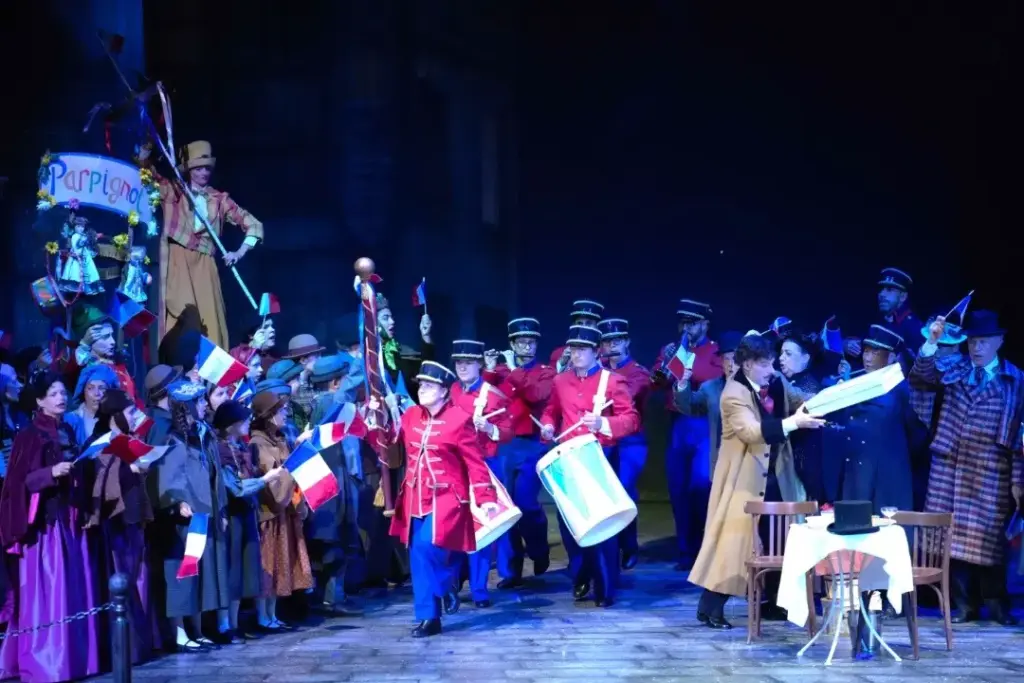
- The Premise: Set against the backdrop of New York City’s vibrant, bohemian East Village during the height of the HIV/AIDS crisis, Rent follows a tight-knit circle of young artists, musicians, and activists striving to navigate love, artistic ambition, and daily survival. Freely inspired by Puccini’s opera La Bohème, this iconic rock musical captures the joy, existential uncertainty, and fierce resilience of a generation determined to live life on their own terms.
- Thematic Resonance: Community in the face of public health crises, the commercialization of art, and the urgency of living in the present.
11. The Cherry Orchard
- The Premise: When the aristocratic Lyubov Ranevskaya returns to her ancestral Russian estate after years of self-imposed exile abroad, she discovers that her family home and beloved cherry orchard are facing imminent foreclosure and auction to pay off mounting debts. As old family loyalties fracture and new, pragmatic capitalist ambitions rise to prominence, a protected world of feudal privilege begins its collapse.
- Thematic Resonance: Social transition, the obsolescence of the landed gentry, and the painful necessity of confronting a changing economic reality.
12. Ilford Boy
- The Premise: Mixed-race teenager Ted Martin is growing up in 1990s East London within a domestic environment defined by cheerful chaos, domestic friction, and fierce, unvarnished love. The arrival of Patrick disrupts Ted’s routine, introducing him to an entirely new aesthetic, a sharp sense of humor, and a shared passion for show tunes. Suddenly, an alternative path in life opens up—one populated by art, creative possibility, and people who recognize his authentic identity.
- Thematic Resonance: Adolescent identity formation, multicultural urban life in 1990s Britain, and finding community through artistic expression.
13. Martin Guerre
- The Premise: Alain Boublil and Claude-Michel Schönberg’s Olivier Award-winning musical returns in a radically reimagined production designed for an immersive "In-the-Round" staging. Based on the extraordinary true sixteenth-century French legal case of identity theft, forbidden passion, and village deception, this fresh version incorporates newly penned music, contemporary lyrics, and folk-inflected orchestrations.
- Thematic Resonance: Identity fluidity, communal gullibility, and the consuming nature of illicit romance within agrarian societies.
14. The Pianist
- The Premise: Based on Wladyslaw Szpilman’s harrowing autobiographical memoir, The Pianist charts one man’s extraordinary survival from the vibrant cultural life of pre-war Warsaw through the catastrophic destruction of the ghetto. Throughout unimaginable horrors, Szpilman is sustained, protected, and ultimately lifted by his art, memory, and an unbreakable human will to endure. This world stage premiere features dialogue drawn directly from Szpilman’s words alongside his own compositions.
- Thematic Resonance: The redemptive power of art under totalitarian terror, historical memory, and individual endurance.
15. The Sea
- The Premise: Set in 1907 during the peak of the Edwardian era, a violent coastal tempest shakes a small East Anglian seaside village to its foundations. Amidst the chaos of the storm and local panic, public attention remains obsessively fixed on the theatrical ambitions of the village’s self-appointed "First Lady," Mrs. Rafi, who is relentlessly drilling her reluctant female charges for an upcoming amateur staging of Orpheus and Eurydice.
- Thematic Resonance: Edwardian social rigidity, provincial absurdity, and humanity’s trivial distractions in the face of natural forces.
16. The Lives of Others
- The Premise: The year is 1984 in the heart of authoritarian East Germany. A prominent playwright and his actor partner are placed under intensive, covert state surveillance. From a makeshift listening post in the attic directly above their apartment, a meticulous Stasi officer monitors their every move for evidence of political subversion. However, as the officer immerses himself in the intimate details of their artistic lives, he undergoes a profound moral awakening, demonstrating that to observe a life is to risk altering one’s own.
- Thematic Resonance: Surveillance capitalism and totalitarianism, moral complicity, and the humanizing effect of culture upon institutional machinery.
17. Dirty Dancing
- The Premise: The global stage phenomenon returns to London in a custom-built, 620-seat temporary venue engineered specifically to maximize intimacy. Every seat in the auditorium places audience members within nine rows of the stage, offering an uncompromised view of the action. The production transports viewers directly back to the sweltering summer of 1963 at Kellerman’s Mountain House resort, where Frances "Baby" Houseman encounters charismatic resident dance instructor Johnny Castle.
- Thematic Resonance: Class crossing, sexual awakening, and the socio-political upheaval of early-1960s America expressed through movement.
18. Hamlet Hail to the Thief
- The Premise: Elsinore has a newly crowned ruler, and the political atmosphere is charged with tension. This radical adaptation centers squarely on Hamlet and Ophelia as they awaken to the systemic lies, institutional corruption, and warmongering infecting their militarized state. During the dark hours when restless ghosts whisper dangerous truths, the production utilizes an aggressive, driving musical score to mirror the erratic pulses of a populace on the brink of revolution.
- Thematic Resonance: State corruption, generational rebellion, and the psychological corrosion of political power.
Supporting Context & Metrics
The upcoming theatrical lineup reflects several key structural shifts within the British performing arts economy:
- Venue Diversification: Producers are increasingly looking beyond traditional proscenium arch theatres. The integration of purpose-built temporary structures—such as the 620-seat intimate venue housing Dirty Dancing—demonstrates a growing commercial appetite for site-specific audience proximity.
- Intellectual Property Evolution: While well-known cinematic properties (The Pianist, The Lives of Others, Thelma & Louise) continue to serve as reliable box-office anchors, they are being paired with high-art literary adaptations (The Standard of Living, Tru) and experimental music-theatre crossovers (Hamlet Hail tothe Thief).
- Star Power and Ensemble Balance: The season features a calculated blend of Hollywood and television luminaries making high-profile West End debuts alongside classically trained stage veterans, ensuring robust advance ticket sales across both subsidized institutions and commercial houses.
Official Statements and Industry Perspective
Speaking on the curation of the upcoming season, leading West End producers and artistic directors have emphasized a collective commitment to risk-taking and audience engagement.
"Theatre in London has always thrived when it mirrors the complex anxieties and vibrant energies of the society around it," noted a spokesperson for the Society of London Theatre. "This season does not shy away from difficult historical truths, systemic critique, or structural innovation. By bringing together world-class musicians, visionary directors, and stellar acting talent, our stages are reaffirming London’s position as the theatrical capital of the world."
Industry analysts point out that the financial models supporting these productions rely heavily on diversified staging approaches, ranging from large-scale immersive environments to tightly focused chamber pieces. This strategic diversification ensures that both large commercial operators and subsidized regional transfer houses can weather ongoing economic pressures while delivering uncompromising artistic value.
Future Outlook
As rehearsals commence and technical setups begin across the West End and South Bank, anticipation for the upcoming season reaches fever pitch. The sheer breadth of programming—encompassing everything from the intimate psychological chamber drama of Tru to the stadium-scale sonic ambition of Hamlet Hail to the Thief—signals a vibrant, forward-looking theatrical community.
For theatre lovers, critics, and cultural historians alike, the coming months promise an extraordinary collision of classic texts, contemporary urgency, and groundbreaking performance art. London’s stages are ready; the curtain is poised to rise on a defining chapter in modern theatre.