
Executive Overview
As the winter holidays approach, musicians, educators, and piano enthusiasts continually search for repertoire that bridges the gap between accessible sight-reading and deeply expressive performance. Enter renowned composer, educator, and pianist Ben Dunnett, LRSM, founder of the Music Theory Academy. With over two decades of experience in music education, Dunnett has crafted a sophisticated, beautifully nuanced piano arrangement of the traditional English Christmas carol, “The Holly and the Ivy.”
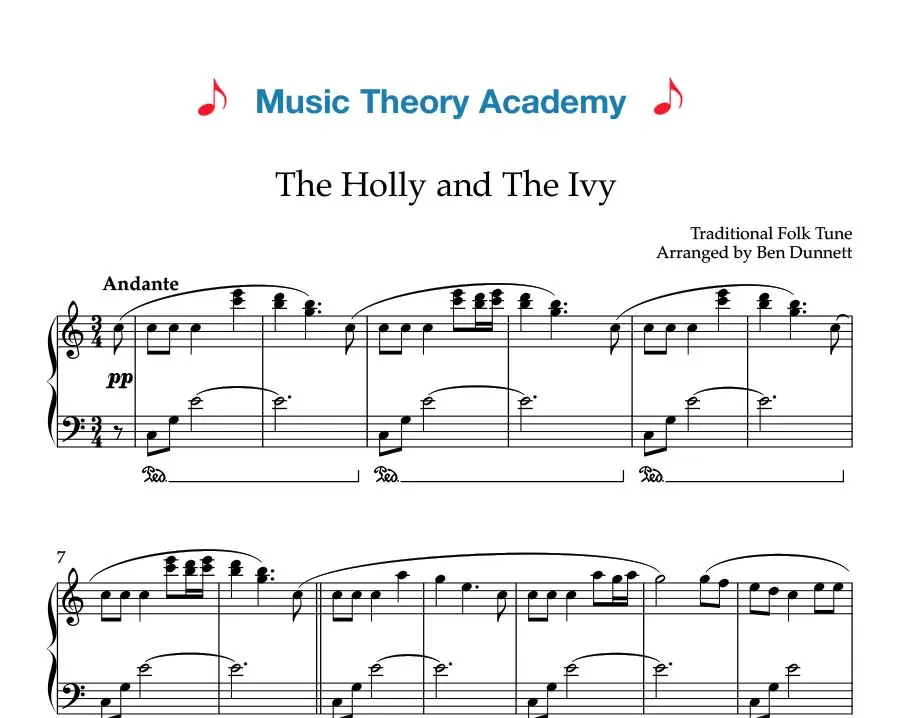
This comprehensive review and pedagogical guide examines Dunnett’s arrangement, analyzing its harmonic framework, technical demands, and historical backdrop. Written in the accessible key of C major, the piece deceptively conceals several technical hurdles that test intermediate pianists. These include expressive sustain pedal management, complex rhythmic interplay in the right hand during the middle section, and the art of balancing sustained thematic elements with active accompaniment figures.
For educators looking to enrich their seasonal studio curriculum, self-taught pianists aiming to expand their holiday repertoire, or music theorists examining contemporary arrangements of folk-carols, Dunnett’s work provides a compelling case study. This article offers a deep dive into the performance mechanics of the score, a chronological exploration of the carol’s enduring cultural history, structural metrics of the arrangement, official instructional insights from the author, and a look at the future of digital sheet music distribution in music pedagogy.
Detailed Chronology: From Ancient Folk Roots to Modern Digital Arrangement
To fully appreciate Ben Dunnett’s contemporary piano arrangement, it is essential to trace the historical evolution of "The Holly and the Ivy" across the centuries. The trajectory of this beloved piece mirrors the blending of ancient pagan winter solstice traditions with Christian liturgical heritage.
Pre-Christian Roots and the Symbolism of Winter Flora
Long before the widespread celebration of Christmas, ancient Celtic and Germanic tribes revered evergreen plants. In the dead of winter, when deciduous trees stood bare and lifeless, hollies and ivies remained vibrant and green. This resilience symbolized eternal life, fertility, and the endurance of nature against the dark, harsh winter months. Holly, with its striking red berries and prickly leaves, and ivy, with its clinging vines, were brought indoors to ward off evil spirits and welcome the impending return of the sun.
The Christianization of the Carol
As Christianity spread throughout Western Europe during the Middle Ages, the Church often reinterpreted existing pagan symbols to help convert local populations. The holly and the ivy were gradually adapted to represent Christian theology:
- The Holly: Symbolized the crown of thorns worn by Jesus during the crucifixion. The white blossoms represented the purity of the Virgin Mary, the red berries symbolized the drops of blood shed for humanity, and the bitter bark reflected the suffering endured for salvation.
- The Ivy: Traditionally linked to human dependence on divine support—much like the ivy clings to trees for survival.
Collection and Publication in the 19th Century
While the lyrics and melodies of "The Holly and the Ivy" circulated orally for generations across rural England, the specific version known today was first documented in the early 20th century. Folklorist Cecil Sharp recorded the traditional tune from a singer named Mrs. Clayton in Turkdean, Gloucestershire, and published it in his seminal 1911 work, English Folk Carols. The distinctive, modal melody—characterized by its soaring phrases and uplifting refrains—quickly captured the public imagination, securing its place in choral and instrumental holiday traditions.
The Contemporary Era: Ben Dunnett’s 2022 Pedagogical Release
Fast forward to November 2022, when Ben Dunnett released his contemporary piano arrangement via the Music Theory Academy. Recognizing a gap in the market for holiday music that is approachable yet musically stimulating for intermediate players, Dunnett combined traditional folk charm with modern pianistic textures. By publishing the sheet music alongside a high-definition video walkthrough and downloadable PDF scores, Dunnett embraced a modern digital pedagogy model designed for learners worldwide.
Supporting Context and Structural Metrics
Analyzing Dunnett’s arrangement requires a breakdown of its physical score, harmonic architecture, and technical parameters. Below is a detailed look at the structural metrics of the composition.
Sheet Music Layout and Accessibility
The arrangement spans a comprehensive four-page PDF document, available through the Music Theory Academy. The layout is clean, uncluttered, and optimized for both digital tablet reading and traditional paper printing.
- Total Pages: 4 pages
- Primary Key Signature: C major (no sharps or flats), making it instantly accessible for pianists who may be intimidated by complex accidental-heavy key signatures.
- Meter and Tempo: Set in a flowing, lyrical time signature that supports the natural narrative rhythm of the traditional text.
- Accompaniment Style: Homophonic texture featuring a stable left-hand foundation supporting expressive right-hand melodies and harmonic counterpoint.
Technical Breakdown and Performance Challenges
While the choice of C major lowers the initial barrier to entry, Dunnett’s arrangement introduces several intermediate-to-advanced technical challenges that elevate the piece artistically:

- Sustain Pedal Mastery:
Achieving a rich, resonant texture without muddying the harmonic transitions requires precise footwork. Pianists must master half-pedaling and clear changes on chord shifts, particularly during passages where the left hand leaps or the right hand introduces sustained octave intervals. - The Middle Section Polyphonic Interplay:
The core technical hurdle of the piece occurs in the middle section, where the right hand must simultaneously execute long octave notes while navigating alternating quavers (eighth notes). This requires a high degree of finger independence, hand relaxation, and lateral wrist mobility. The pianist must ensure the melodic octaves sing out prominently above the rhythmic pulse of the accompanying quavers without sounding percussive or forced. - Dynamic Sculpting and Phrasing:
Because the carol has deep vocal roots, instrumentalists are encouraged to "sing" through their instrument. Balancing the voicing between the soprano melody lines and the inner alto/tenor harmonies is crucial to capturing the reverent, cathedral-like atmosphere of the original choral tradition.
Official Statements and Pedagogical Insights
To understand the artistic intent behind the arrangement, we examine the professional background and guiding philosophies of the author, Ben Dunnett, LRSM.
About the Author: Ben Dunnett, LRSM
Ben Dunnett is an established music teacher, examiner, composer, and pianist boasting over two decades of frontline experience in music education. As the founder of the Music Theory Academy, Dunnett has dedicated his career to making rigorous music theory and piano performance accessible, engaging, and structurally sound for students of all ages and abilities. Holding the prestigious Licentiate of the Royal Schools of Music (LRSM) diploma, his work emphasizes a holistic approach to musicianship—combining technical precision with historical context and listening comprehension.
Instructional Philosophy: Listening Before Reading
In his introductory notes for "The Holly and the Ivy," Dunnett emphasizes a fundamental pedagogical tenet: listening precedes learning. He strongly advises students and teachers to study his performance video while simultaneously following along with the four-page sheet music before attempting to play a single note.
"It is certainly worth listening to the arrangement on the video link above whilst following the sheet music to get a sense of how the sections fit together," Dunnett notes.
This approach encourages learners to internalize the overarching form, phrasing, and dynamic contour of the piece rather than getting bogged down prematurely in mechanical finger drills. By developing an auditory roadmap first, the student approaches the physical instrument with a clear musical goal in mind.
Future Outlook: The Evolution of Holiday Piano Pedagogy
As music education continues to embrace digital transformation, the release and reception of arrangements like Ben Dunnett’s "The Holly and the Ivy" point toward several exciting trends in the future of instrumental pedagogy.
The Rise of Blended Media Learning
The modern student expects more than just a static PDF on a printed page. The integration of high-definition YouTube video performances directly alongside downloadable sheet music represents the gold standard of contemporary music education. Future releases will likely see even deeper multimedia integration, including interactive digital scores, MIDI playback files, and virtual masterclasses that allow students to study phrasing and pedaling in real-time.
Preserving Folk Heritage Through Contemporary Composition
As globalization homogenizes popular culture, traditional folk carols face the risk of fading from public consciousness. Composers who revisit historical melodies and reframe them for modern instruments play a vital role in cultural preservation. By translating a centuries-old English carol into a contemporary piano solo, Dunnett ensures that the rich harmonic and narrative traditions of the past remain vibrant, relevant, and engaging for twenty-first-century pianists.
Accessibility Meets Artistic Depth
The trend in modern piano arranging favors repertoire that offers high artistic return on technical investment. Pianists—particularly adult amateurs and busy students—seek pieces that sound lush, professional, and emotionally resonant without requiring years of conservatory-level virtuosity. Dunnett’s arrangement of "The Holly and the Ivy" is a prime example of this philosophy: by anchoring the piece in C major while introducing sophisticated voicing and pedal techniques, it provides a rewarding challenge that builds confidence and technical competence.
Conclusion
Ben Dunnett’s arrangement of "The Holly and the Ivy" is far more than a simple holiday tune; it is a masterclass in tasteful arranging, blending historical reverence with modern pedagogical insight. Whether you are an intermediate pianist looking to add a touch of seasonal elegance to your repertoire, a piano teacher seeking engaging performance material for your studio, or a music lover tracing the evolution of festive folk traditions, this composition offers rich rewards.
By combining careful listening with disciplined practice—particularly in mastering pedal control and the right-hand octave-quaver independence of the middle section—players can bring this timeless Christmas carol vividly to life. Visit the Music Theory Academy to watch the performance video, study the four-page score, and download the sheet music to begin your journey into the heart of this beautiful holiday tradition.