
What does a city sound like? When we interrogate the auditory identity of a metropolis—whether it’s the brass-punctuated swagger of New Orleans, the gritty boom-bap of New York, or the rain-slicked grime of London—we are rarely pointing to a single genre. Instead, we are describing a feeling, a collective psychic architecture, and a moodboard of drum loops, architectural textures, and socio-political histories.
In the case of Berlin, the sonic DNA is uniquely distinct, yet stubbornly slippery. It is a city defined by retrofuturism, paranoia, monochromatic shadows, industrial surveillance, and the relentless, hypnotic thrum of the motorik beat—that revolutionary 4/4 rhythm pioneered by Jaki Liebezeit of Can and Klaus Dinger of Neu!. It is the sound of drum machines that crackle and stutter as if perpetually on the verge of structural collapse, of whispered, half-spoken vocals, of collage-like self-sampling, and of stark, electronic minimalism.
German experimentalism has long colonized the British and American sonic consciousness. From Stereolab’s appropriation of Neu!’s single-chord vamps to The Postal Service adopting a direct lineage from Morr Music’s avant-pop roster, the modern indie and post-punk landscape is steeped in Germanic machinery. Icons from David Bowie and Lou Reed to Stephen Malkmus and Bob Mould crossed oceans to drink from this well.
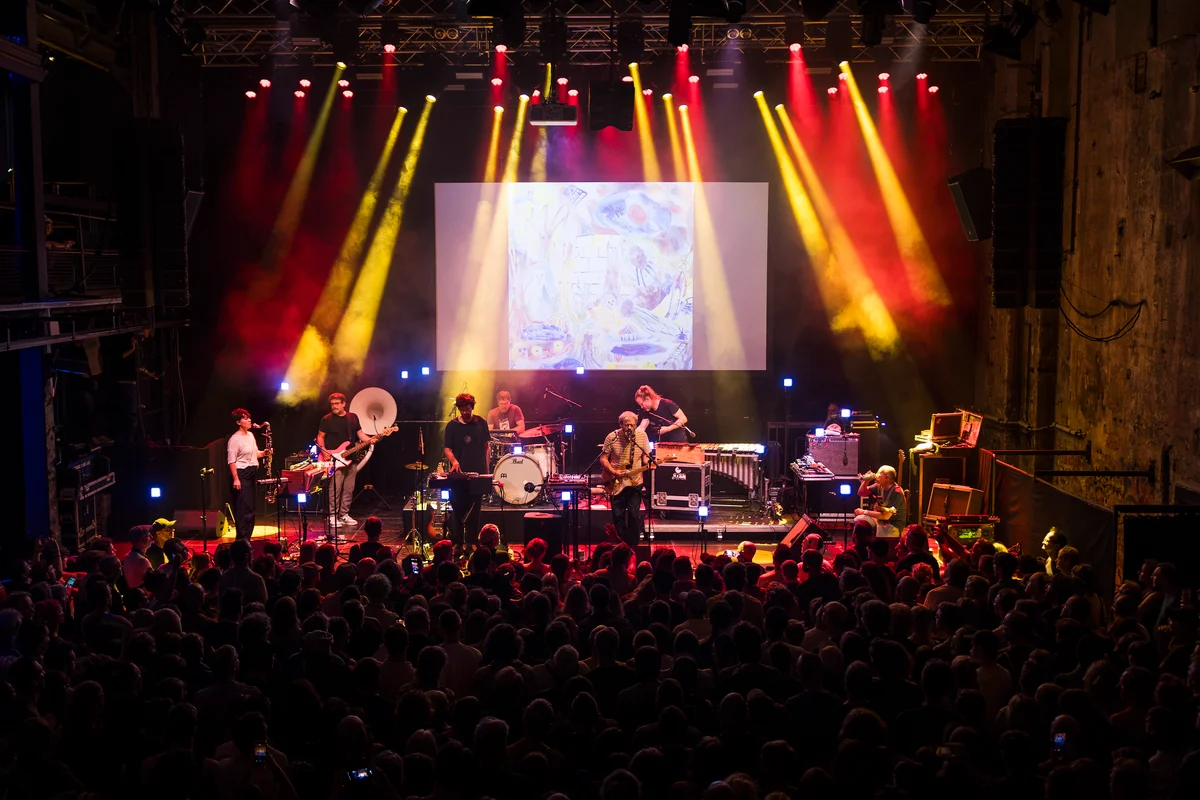
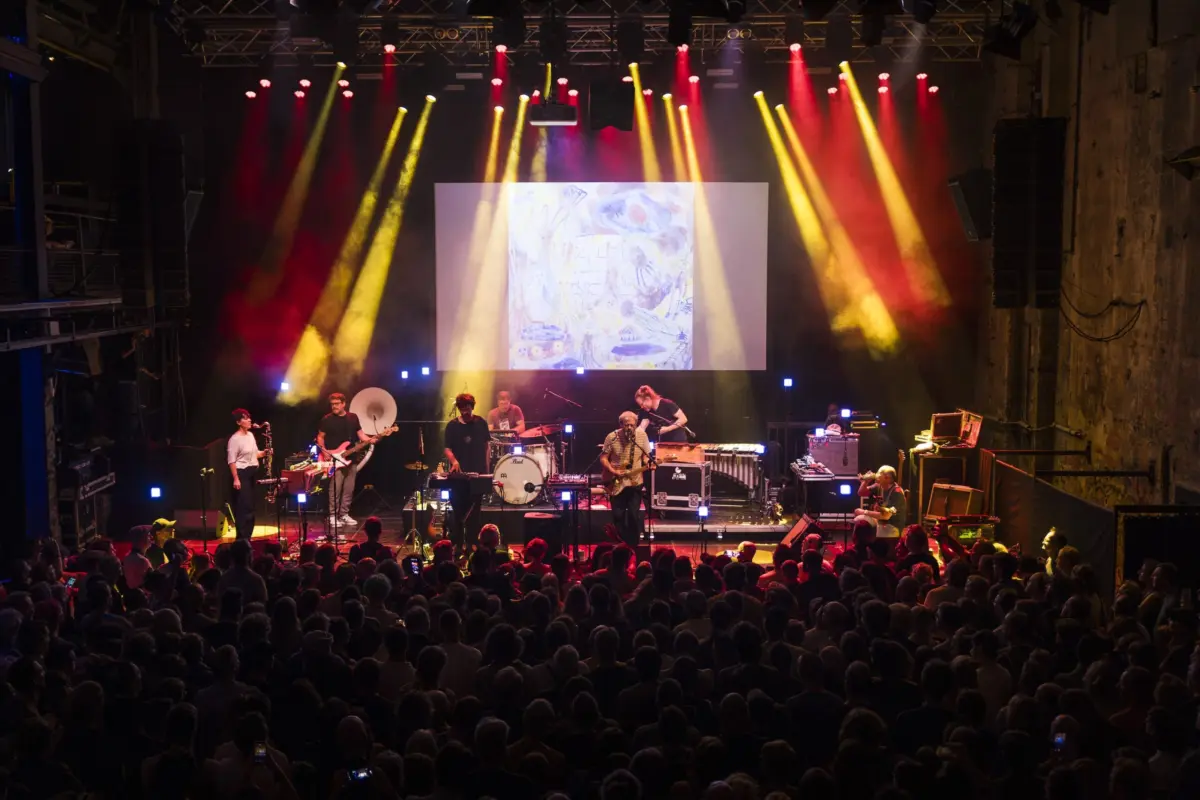
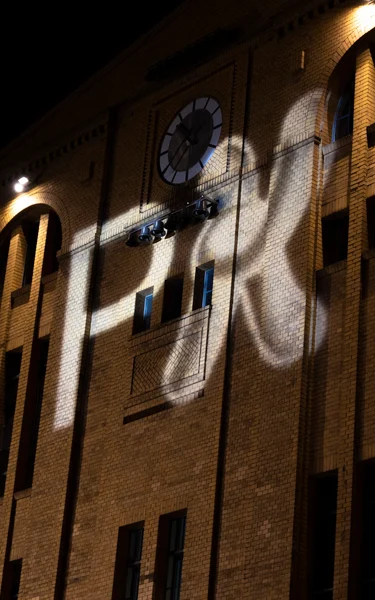
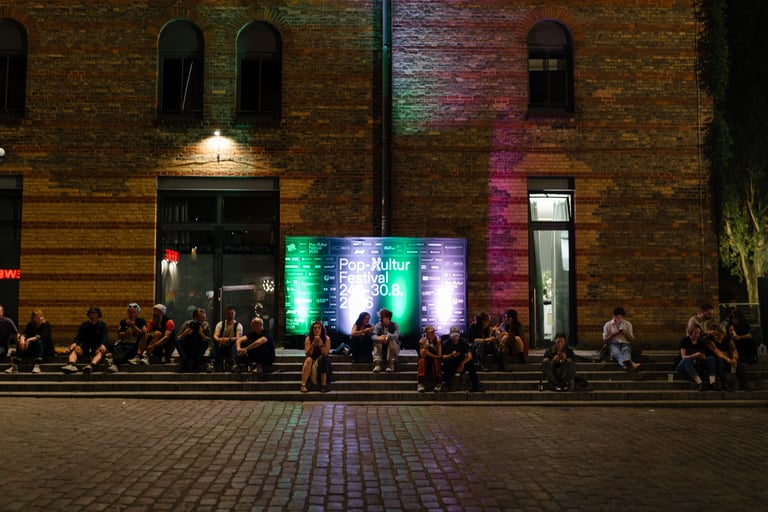
Yet, for all its global export value, this sonic ecosystem finds its most vital, living reflection at home in the German capital. Each August, the Pop-Kultur festival takes over the sprawling, historic confines of the Kulturbrauerei in Prenzlauer Berg, serving not as a nationalistic celebration, but as a forensic audit of where contemporary alternative music stands. Eschewing traditional festival hierarchies—offering no monolith headliners, no monolithic "main" stages, and equitable set times for all—Pop-Kultur maps out the bleeding edge of the underground. This year’s edition proved that while gentrification threatens the physical soil of Berlin’s counterculture, the subterranean machinery remains violently, beautifully alive.
Detailed Chronology & On-the-Ground Dispatch
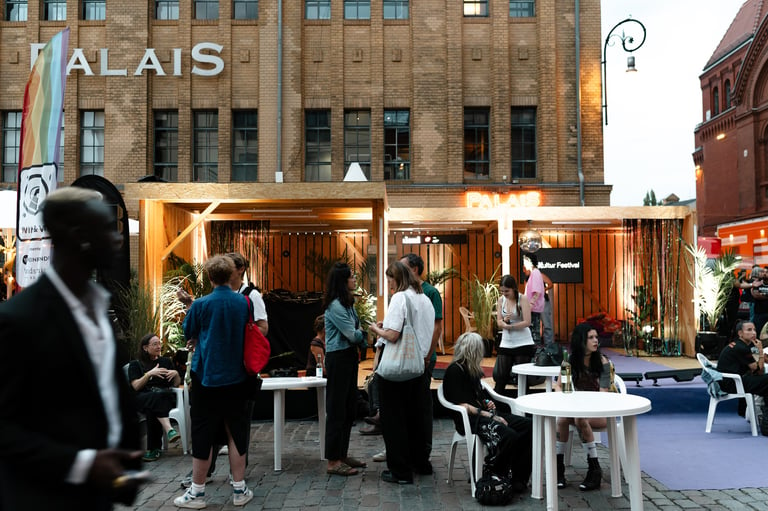
The festival grounds at the Kulturbrauerei—a sprawling 19th-century brewery complex transformed into a cultural hub—act as a physical manifestation of Berlin’s transformation. Once the largest lager brewery in the world, its cobbled courtyards and red-brick industrial halls now house art schools, cinemas, clubs, and performance spaces. During Pop-Kultur, these spaces become portals into the myriad micro-genres bubbling beneath the surface of European alternative music.
Day One: Industrial Echoes and Neo-Krauty Punks
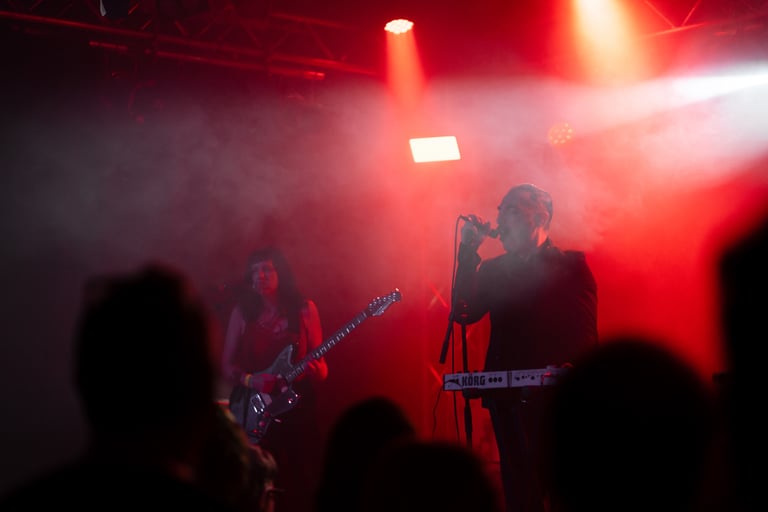
The festival opens not with a whisper, but with the calculated, gothic onslaught of Elektrokohle. Hailing nominally from Berlin, the trio’s members actually span Sardinia, Sicily, and the city’s outer fringes—a demographic reality that vocalist/synth player "Mr Cigarette Butt" notes is typical: "I don’t think I know any band where all the members are actually from Berlin."
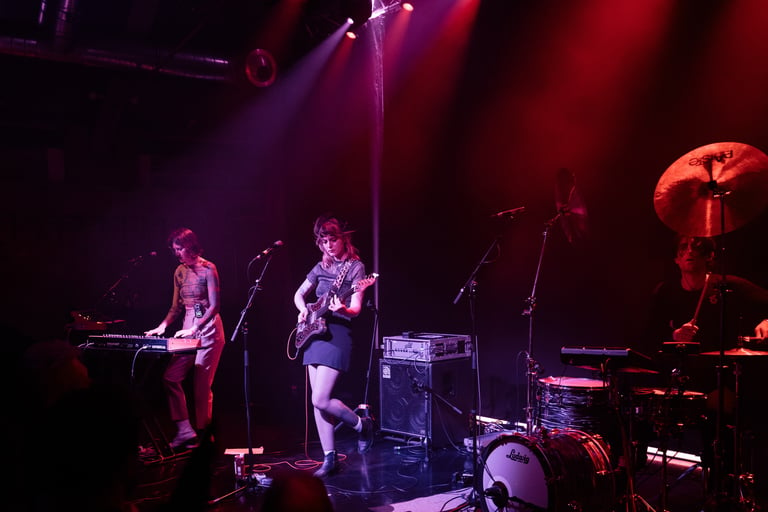
Formed during the pandemic lockdown restrictions as a necessity-driven duo with Mona Manie, the group plays what they term "cold punk"—barbed-wire guitar lines tangled in synth cobwebs, driven by malfunctioning drum machines and chanted cultish vocals delivered in four languages. Bassist Fab, who produced their exceptional debut album Kalt Wie Du Bist, highlights the ethos of the festival: "The good thing about this festival in general is that it’s pop culture, which means everything. There’s a lot of different music genres and it’s very inclusive."
Out in the courtyard, performance art bleeds directly into the physical architecture. Turkey-born non-binary artist Göksu Kunak stages a performance on a pop-up basketball court, reading a spoken-word piece over creeping theta-wave drones. Kunak draws a razor-sharp parallel between the physical disciplines of ballet and basketball—both systems of institutional control that demand extreme bodily sacrifice and pain purely for public entertainment.
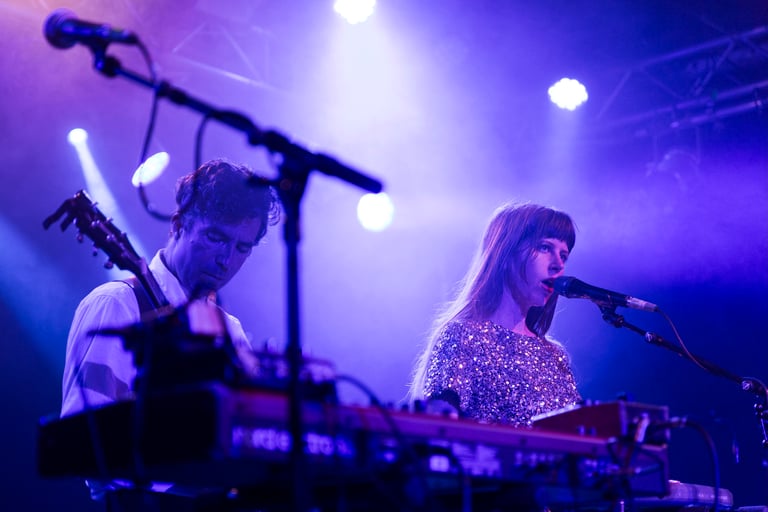
As evening falls, the historic Frannz Club—once a youth club under the German Democratic Republic (GDR)—fills to capacity for Lael Neale. Armed with an Omnichord, a fascinating hybrid of children’s toy and archaic chapel organ, Neale weaves brittle, tape-hiss-drenched pop that feels instantly nostalgic yet alien. Tracks like "I Am The River" pulse with an urgent drum machine loop, while guitarist Guy Blakeslee coaxes Velvet Underground-esque shimmers from an inverted guitar. Yet it is the stripped-back, unaccompanied performance of "Blue Vein"—just Neale’s angelic, soaring vocal floating over pristine chord progressions—that commands absolute silence from the room.
Day Two: Punk Anarchy and Swedish Cyclones
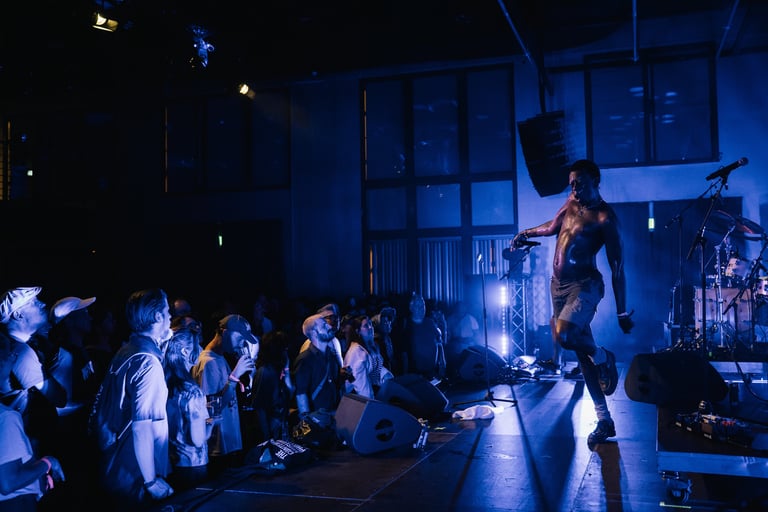
The energy shifts dramatically with Boko Yout from Stockholm. Frontman Paul Adamah treats the stage as a mere launching pad, spending half his set dangling from industrial staircases or diving into the mosh pit to bark instructions like a hardcore punk conductor. Dressed in matching, mismatched Scout uniforms, the trio delivers a frantic, loud-quiet dynamic that echoes a collision between The Dismemberment Plan and Blur.
Back at the smaller platforms, local queercore stalwarts Deutsche Laichen deliver a set that is thrillingly, dangerously ramshackle. Singing primarily in German, their instruments clatter and shed parts like a speeding car barreling down an autobahn. It is unpolished, confrontational, and utterly vital.
Vienna’s Beaks, helmed by Anna Francesca, ground the evening in a more nocturnal, paranoid register. Their music captures the quintessential skinny-jeans-and-shades cool of late-night city navigation. Francesca’s murmuring delivery tackles universal anxieties—dreams, intimacy, urban alienation—with a lethargic, mesmerizing gravity that deserves an international following on par with modern post-punk darlings like Geese.
Day Three: Veterans, Sorrow, and Closing Hymns
The final day belongs to those who have lived through the city’s radical transformations. Chris Imler, a true 40-year veteran of Berlin’s weirdo-underground, commands the stage at Frannz Club like Mark E Smith cross-pollinated with John Zorn’s record collection. Pogoing relentlessly at the front of the stage, Imler pummels trigger pads and cymbals between warping live trumpet loops.
On the gloomier side of the spectrum, Balm offers a devastatingly slowcore counterweight. Built around the filigree baritone guitar lines, waterlogged organs, and the sorrowful vocals of Lina Boehnke, their music feels custom-built for an exhausting, rain-swept trek home from a late shift. On "no worries," Boehnke repeats the refrain, "It doesn’t matter how much money I make," turning economic fatalism into a melancholic mantra for a city that is increasingly pricing out its creators.
The festival reaches its emotional crescendo with The Notwist. Anchored by the legendary Markus Acher, the group delivers an end-of-night masterclass in shimmering, melancholic indie-pop. Their sound bridges structural complexity and emotional directness, sitting comfortably alongside luminaries like Wilco and Yo La Tengo.
Supporting Context & Metrics: The Gentrification Battlefield
To understand the urgency of festivals like Pop-Kultur, one must look closely at the soil from which they grow. The festival takes place in Prenzlauer Berg, the undisputed poster child for Berlin gentrification.
Historical Evolution of Prenzlauer Berg
- Pre-WWII & Soviet Era: Largely spared from Allied bombing raids, the district became a haven for East Berlin counterculture, dissident liberal Christians, bohemian artists, and the LGBTQ+ community. It served as a vital intellectual incubation zone that eventually helped fracture the Berlin Wall.
- The 1990s Squat Wave: Following reunification, vast swathes of 19th-century housing stock in East Berlin were abandoned. A massive squat culture emerged, transforming derelict shells into autonomous art zones.
- The Modern Corporate Siege: Today, remnants of this era are vanishingly rare. Spaces like K77—a legendary squat-turned-housing-project on Kastanienallee recognized by the local government for its cultural contributions—house roughly 30 artists. However, these sanctuaries are heavily outnumbered by luxury condominiums, organic sourdough bakeries, and high-end boutiques.
| District Metric / Feature | Historical Context (1990s) | Contemporary Reality (2025) |
|---|---|---|
| Primary Real Estate Use | Abandoned squats, collective housing, artist communes | Luxury apartments, commercial cafes, corporate offices |
| Cultural Incubators | Autonomous, unregulated DIY spaces | Institutionalized cultural complexes (e.g., Kulturbrauerei) |
| Cost of Living / Studio Space | Negligible / Free occupation | Rapidly escalating commercial rents, systemic precarity |
Official Statements & Artist Perspectives
The tension between commercial pressures and creative output was a recurring theme in conversations with festival participants:
-
Mr Cigarette Butt (Elektrokohle) on Berlin’s Global Influence:
"We live in Berlin so we don’t realise that a lot of people are taking a lot from Berlin. I’ve met bands from America and they say the same—inspired not only by Berlin, but Kraftwerk to D.A.F. or Neu! or modern German bands."
-
Fab (Bassist, Elektrokohle) on Festival Inclusivity:
"The good thing about this festival in general is that it’s pop culture, which means everything. There’s a lot of different music genres and it’s very inclusive. There’s everything for everyone."
-
Mr Cigarette Butt on Local Soundscapes:
"I think about New York bands—it can be hip hop, can be punk, can be folk—there is something special in the sound of New York bands. And it’s the same in Berlin."
Future Outlook: Protecting the Subterranean Engine
Pop-Kultur does not pretend to be a radical political insurrection; it does not take up the mantle of a renegade leader attempting to overthrow the music industry. Instead, its mission is far more valuable: it acts as an exhaustive, highly curated mirror reflecting the current state of European underground music. If an external observer required a masterclass in modern sonic subcultures, sociopolitical performance art, and avant-pop trends, Pop-Kultur remains the definitive pedagogical institution.
However, the existential threat facing this ecosystem remains clear. Mega-festivals and curated municipal showcases cannot survive without the grassroots legwork performed in dingy, unglamorous DIY venues, underground squats, and fringe rehearsal spaces across cities like Berlin, London, Vienna, and Stockholm.
As gentrification continues to sanitize urban centers, prioritizing profit margins over creative expression, the foundational layer of the pyramid is being steadily eroded. Ensuring the survival of the sound of Germany—indeterminable, slippery, and motorik-driven as it may be—requires aggressive municipal protection of independent spaces. Without the dark, damp, chaotic rooms where bands like Balm, Deutsche Laichen, and Elektrokohle forge their sound in the dark, there will eventually be no pop culture left to celebrate at all.