
By Francisco Salazar
Published in partnership with OperaWire
Executive Overview
On September 14, 2026, the historic Teatro Petruzzelli in Bari, Italy, will become the epicenter of an extraordinary international cultural exchange. The prestigious southern Italian opera house is set to host the Italian premiere of Bona Sforza, a two-act contemporary opera by the celebrated Polish composer Zygmunt Krauze.
This landmark production is a rare and momentous event on the global classical music calendar. The inclusion of a contemporary Polish opera into the permanent programming and mainstage repertoire of a major Italian opera house bridges centuries of shared Mediterranean and Central European history. Bona Sforza dives deep into the complex, fascinating life of Bona Sforza d’Aragona—a 16th-century Italian noblewoman who ascended to become the Queen of Poland and Grand Duchess of Lithuania. Her legacy remains a powerful symbol of political acumen, cultural patronage, and trans-European diplomacy.
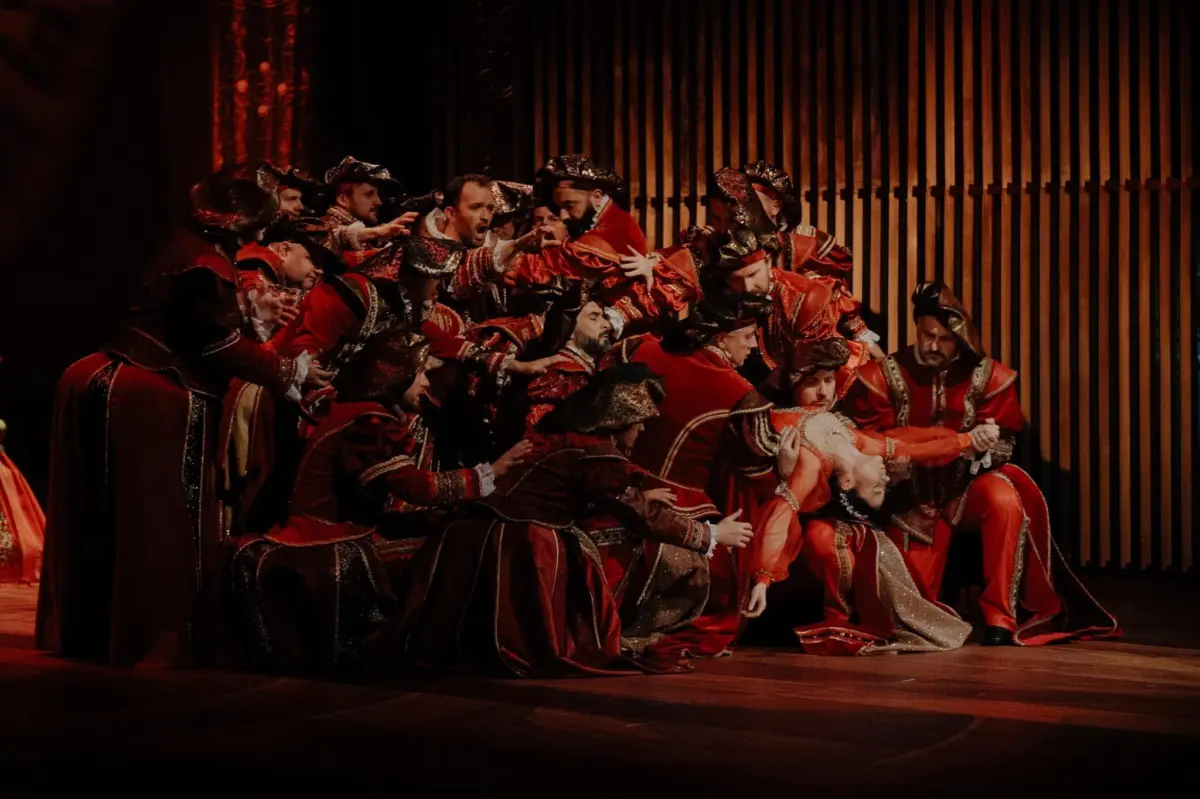
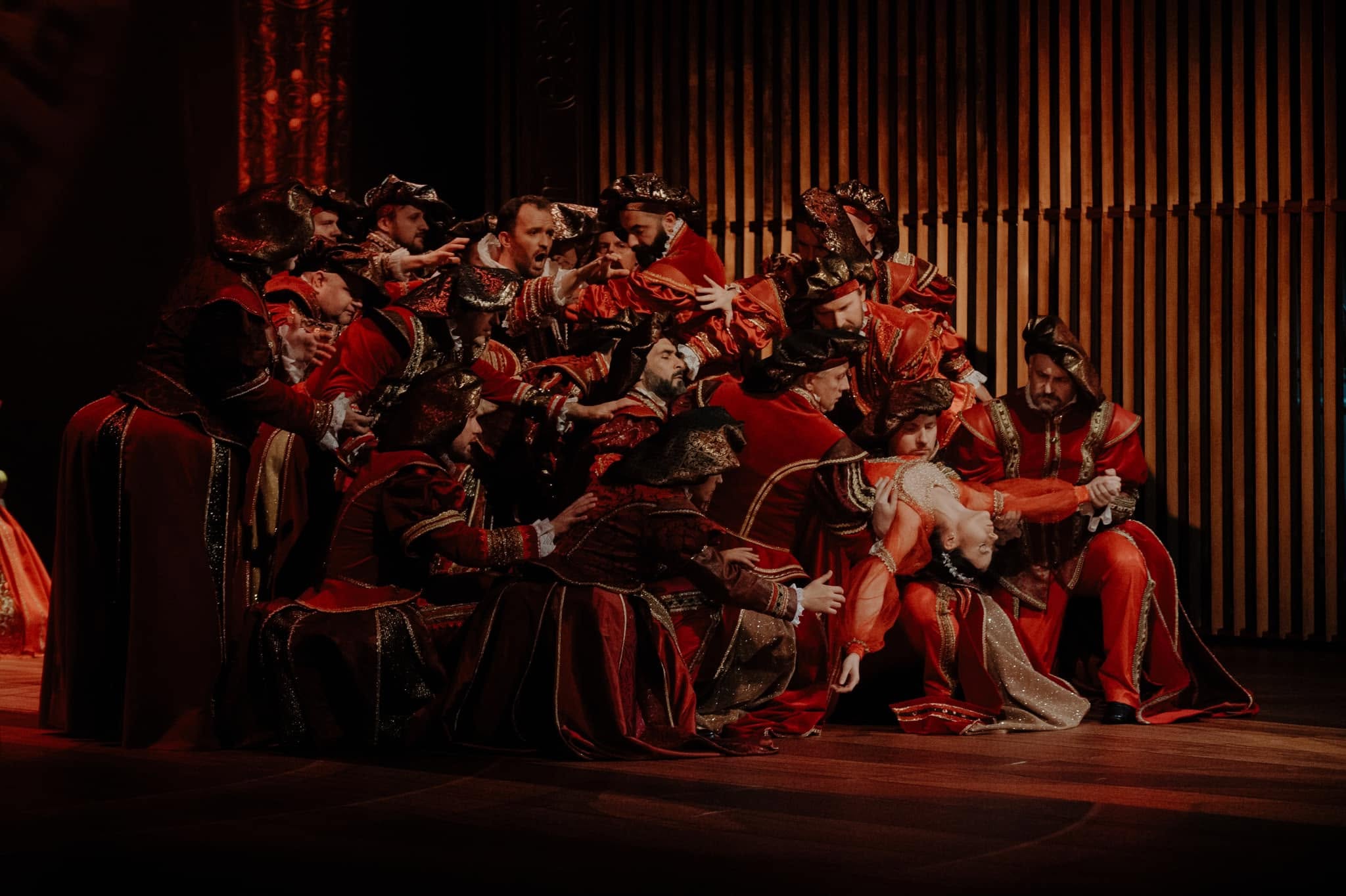
Bringing this visionary work to life is an elite, internationally acclaimed creative team. The production will be directed by the visionary Polish stage director Michał Znaniecki, known for his striking spatial designs and deeply psychological character explorations. The musical reins will be held by distinguished conductor Piotr Sułkowski, who will lead an international cast featuring luminaries and rising stars of the operatic stage, including Anna Maria Chiuri, Valeria Sepe, Nikoletta Hertsak, Rory Musgrave, Deniz Leone, Lorrie Garcia, Saverio Pugliese, Davide Giangregorio, Eleonora Filipponi, and Nicolò Balducci.
Running for four exclusive performances through September 20, 2026, the production of Bona Sforza at Teatro Petruzzelli represents a masterclass in modern operatic curation, proving that contemporary lyric theater can successfully engage with deep historical narratives while maintaining artistic innovation.
Detailed Chronology: From 16th-Century Courts to the Modern Stage
To fully appreciate the weight of Zygmunt Krauze’s Bona Sforza, one must trace both the historical trajectory of its protagonist and the methodical development of the opera itself.
The Historical Muse: Bona Sforza d’Aragona (1494–1557)
Born in Milan into the powerful Sforza dynasty, Bona Sforza was conditioned from youth to navigate the cutthroat political arenas of Renaissance Europe. In 1518, she married King Sigismund I the Old of Poland, stepping onto a geopolitical stage far removed from her native Italy.
Far from acting as a passive royal consort, Queen Bona immediately immersed herself in the political, economic, and cultural life of the Polish-Lithuanian Commonwealth. She instituted sweeping agrarian reforms (known as the Włóczna pomiar), increased the royal treasury, fortified towns, and fiercely defended state sovereignty against the encroaching Habsburg dynasty. Culturally, she is credited with introducing Italian culinary traditions—most notably bringing vegetables, roots, and sophisticated cooking methods to the Polish court—as well as championing Renaissance architecture and humanistic education.
Her life was defined by triumphs, political intrigue, and personal tragedies, including bitter struggles with the Polish nobility and her eventual, involuntary exile back to Bari, where she died under suspicious circumstances (poisoned by her trusted secretary, Gian Lorenzo Pappacoda, in a plot orchestrated by the Habsburgs to avoid repaying massive royal loans).
Genesis of the Opera and Artistic Vision
Zygmunt Krauze, one of Poland’s most influential contemporary composers and a pioneer of the "Musical Constructivism" movement, recognized the cinematic and dramatic potential of Bona’s life. Known for his spatial approach to composition and his ability to juxtapose avant-garde sonic textures with lyrical accessibility, Krauze crafted Bona Sforza to reflect the duality of its subject: the rigid, formal grandeur of Renaissance courts versus the turbulent, emotional interiority of a woman operating in a man’s world.
The opera unfolds across two acts, structured not merely as a linear historical biography, but as an impressionistic psychological portrait. Krauze’s score treats the orchestra as a living, breathing landscape, utilizing minimalist pulses, rich choral textures, and striking brass fanfares to evoke the pomp of Kraków and the sun-drenched memory of Bari.
The 2026 Italian Premiere Timeline
- Pre-Production & Casting (2024–2025): Director Michał Znaniecki and conductor Piotr Sułkowski finalize the conceptual framework, marrying minimalist set designs with Renaissance-inspired costume elements to bridge the centuries.
- Rehearsal Phase (August–September 2026): The international cast assembles in Bari for intensive staging and musical rehearsals inside the storied walls of Teatro Petruzzelli.
- Opening Night (September 14, 2026): The official Italian premiere opens the autumn slate of Teatro Petruzzelli’s cultural calendar, drawing international critics, diplomats, and musicologists.
- Run Conclusion (September 20, 2026): The four-performance run concludes, cementing the production’s legacy as a milestone in contemporary opera production.
Supporting Context & Metrics: The International Significance
The staging of Bona Sforza at Teatro Petruzzelli is much more than a standard house premiere; it is a statistical and cultural anomaly in an industry heavily reliant on 19th-century standard-repertoire staples.
Contemporary Opera in Mainstream Italian Houses
According to recent cultural economic analyses by European musicology institutes, fewer than 5% of all productions mounted by major Italian opera houses (Fondazioni Lirico-Sinfoniche) feature contemporary operas written by non-Italian composers. Italian opera houses have historically leaned inward, prioritizing Verdi, Puccini, Rossini, and verismo masters.
When international contemporary works are imported, they typically find homes in specialized festivals (such as Venice Biennale or the Ravenna Festival) rather than securing a multi-night run within a mainstage subscription season. Teatro Petruzzelli’s decision to commit four full performances to Krauze’s work signals a progressive shift toward a truly pan-European operatic identity.
Artistic Forces and Biographical Highlights
The success of this monumental undertaking rests on the shoulders of its creative and performing forces:
- Zygmunt Krauze (Composer): Born in Warsaw in 1938, Krauze studied piano under Maria Wiłkomirska and composition under Kazimierz Sikorski, later studying with Nadia Boulanger in Paris and working alongside avant-garde icons like John Cage. His oeuvre spans orchestral works, chamber music, installations, and operas including Balthazar, Yvonne, Princess of Burgundia, and The Star.
- Michał Znaniecki (Director): Renowned across Europe and South America, Znaniecki has directed over 200 opera productions in major houses from La Scala in Milan to the Teatro Colón in Buenos Aires. His signature style combines visceral theatricality with deep socio-political commentary.
- Piotr Sułkowski (Conductor): A leading figure in Polish symphonic and operatic conducting, Sułkowski is celebrated for his precise control over complex contemporary scores and his ability to draw lush, transparent textures from the pit.
- The Vocal Ensemble: The cast features heavyweights like mezzo-soprano Anna Maria Chiuri (a fixture at the Vienna State Opera, Teatro alla Scala, and Arena di Verona) and soprano Valeria Sepe (acclaimed for her dramatic intensity in verismo and contemporary repertoire alike), supported by a robust ensemble of international talent.
Official Statements and Artistic Perspectives
While formal press conferences are slated to coincide with the opening weeks of the rehearsal period, statements released by Teatro Petruzzelli’s artistic administration and creative leaders illuminate the ethos driving the project.
"Bringing Bona Sforza to Bari is not merely an artistic choice; it is an act of historical restitution," noted a representative from Teatro Petruzzelli’s programming committee. "Bona Sforza left her beloved Puglia to shape the destiny of Northern Europe, and through Krauze’s magnificent score, her spirit returns home. This production proves that our theater remains a living, breathing laboratory for the future of opera, rather than a museum of the past."
Director Michał Znaniecki has frequently emphasized the modern relevance of historical queens who wielded absolute authority in a patriarchal world:
"Bona was a visionary. She understood land reform, international trade, and political propaganda centuries before modern nation-states adopted them. Our staging does not romanticize her; instead, it looks at the immense personal cost of holding power. Krauze’s music provides the psychological map for her isolation, her triumphs, and her tragic end."
Composer Zygmunt Krauze, reflecting on the transnational identity of his work, has often expressed profound admiration for the fluidity of cultural borders in Renaissance Europe—a theme he mirrors in his fluid, ever-shifting harmonic language:
"Music transcends the borders that politics erect. To hear an Italian orchestra and an international cast in Bari bring Italian and Polish history together through contemporary sound is the highest fulfillment a composer can experience."
Future Outlook: A New Standard for Cross-Cultural Programming
As the global classical music community continually searches for ways to remain relevant in the 21st century, productions like Bona Sforza at Teatro Petruzzelli offer a clear blueprint for success. By combining rigorous contemporary musicology with engaging, universally resonant historical narratives, opera houses can successfully attract diverse audiences without abandoning artistic integrity.
The success of the September 2026 run will undoubtedly be monitored closely by opera administrators across Europe. Observers predict that the high-profile nature of the creative team, combined with the built-in historical intrigue of Bona Sforza’s life between Bari and Kraków, could spark a wave of reciprocal cultural exchanges. There is already speculative discussion regarding whether the production might travel to Polish stages, effectively completing the historical loop by bringing an Italian-housed interpretation of a Polish-Italian queen back to her second homeland.
For now, all eyes—and ears—turn toward Bari. From September 14 to September 20, 2026, Teatro Petruzzelli will not only stage an opera; it will resurrect a Renaissance queen, validate the vitality of contemporary composition, and write a brilliant new chapter in the shared cultural history of Italy and Poland.