
Executive Overview
In the realm of language acquisition, the ultimate pedagogical benchmark is straightforward yet profoundly challenging: achieving the capacity to comprehend and articulate thoughts without the cumbersome intermediary step of mental translation. When a student encounters the Spanish phrase "¡Buenos días!", true fluency dictates an immediate, intuitive grasp of the greeting’s meaning. The mind does not pause to translate the lexemes into "good morning" before registering the sentiment. While translation can serve as an early validation mechanism—a reassuring confirmation of grammatical and lexical correctness—it ultimately acts as an anchor, dragging down processing speed and severing the speaker from the fluid, organic rhythm of conversational thought.
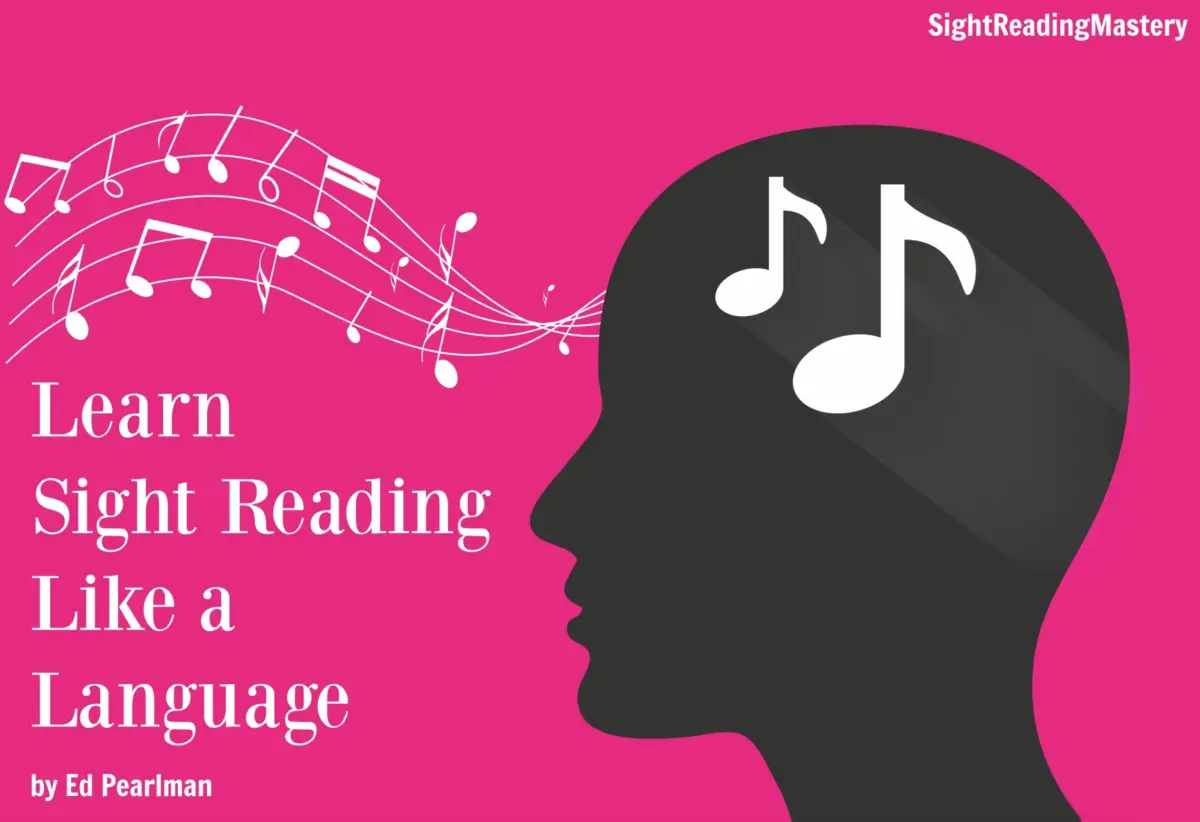
According to veteran classical violinist and traditional fiddle educator Ed Pearlman, music operates under the exact same cognitive architecture.
For instrumentalists and vocalists alike, the objective of sight-reading is to perform directly from visual notation without falling into the trap of serial decoding. When a musician attempts to look at a musical score, laboriously translate individual notes into letter names, calculate the corresponding finger numbers, mentally double-check the accuracy of those calculations, and finally execute the physical gesture on the instrument, the performance inevitably stalls. In real-time musical environments, there is simply no cognitive bandwidth—nor clock time—to sustain this multi-step mathematical equation while maintaining a strict tempo.
This comprehensive report examines a progressive, five-tiered instructional framework designed to bridge the gap between visual notation and instantaneous musical expression. By transitioning sight-reading practice from a laborious decoding exercise into an intuitive, language-like comprehension skill, musicians of all instruments can unlock unprecedented levels of fluency, confidence, and expressive freedom.
Detailed Chronology: The Evolution of Sight-Reading Pedagogy
Historically, music education has struggled with a persistent pedagogical dichotomy: the tension between analytical literacy and intuitive performance. For centuries, traditional conservatory methods prioritized note identification and theoretical mastery above all else. Students were taught to read sheet music much like cryptographers deciphering an intercepted telegram—one symbol at a time, meticulously parsing clefs, key signatures, and ledger lines before ever producing a sound.
The Traditional Decryption Model
Under the legacy paradigm, the pedagogical timeline for a student encountering a new piece of sheet music typically followed a rigid, unyielding sequence:
- Visual Scan: The student identifies the clef, time signature, and key signature.
- Note Identification: The student names each individual notehead, often relying on mnemonic devices (such as "Every Good Boy Does Fine").
- Physical Mapping: The student translates the note name into a specific physical location on their instrument (a particular fret, string, valve, or piano key).
- Rhythmic Calculation: The student calculates the duration of the note relative to the surrounding rhythmic grid.
- Execution: The student plays the note, then immediately repeats the exhaustive process for the next graphical symbol on the page.
This serial processing model works adequately for preparing complex repertoire over weeks or months. However, it completely collapses under the demands of sight-reading. In a live ensemble setting, accompaniments, or professional recording sessions, the music moves forward with relentless momentum. The traditional decryption model treats sheet music as an architectural blueprint to be studied rather than a living language to be spoken.
The Paradigm Shift: Music as a Spoken Language
In recent decades, progressive music educators have shifted toward a linguistic model of sight-reading, recognizing that music shares deep neurological pathways with spoken and written language. Just as humans do not read English by sounding out every single phoneme aloud when reading a novel, proficient musicians do not process written music note by note. Instead, they parse musical phrases, visual profiles, rhythmic groupings, and harmonic intervals as holistic "words" and "sentences."
Ed Pearlman’s five-tiered framework represents a major milestone in this pedagogical evolution. By breaking down the sight-reading process into isolated, progressive cognitive layers—beginning strictly with rhythm, moving through note profiles, incorporating key centers, analyzing intervals, and finally adding note names—this methodology trains the brain to bypass unnecessary translational bottlenecks.
Supporting Context & Metrics: The Cognitive Architecture of Musical Fluency
To understand why Pearlman’s step-by-step framework is so effective, one must examine the cognitive mechanisms underlying visual-to-motor translation in human performance.
Cognitive Load Theory in Music Performance
Cognitive Load Theory (CLT), originally developed by John Sweller in the late 1980s, posits that working memory has a strictly limited capacity. When instructional methods overload working memory with too many simultaneous tasks, learning and performance deteriorate rapidly.
In a traditional sight-reading scenario, an uninitiated musician’s working memory is bombarded with an unsustainable array of simultaneous demands:
- Maintaining a steady tempo (internal clock)
- Decoding pitches via clef and ledger lines (visual-spatial processing)
- Calculating fingerings and hand posture (motor planning)
- Interpreting dynamic markings and articulations (expressive nuance)
By isolating these variables into distinct, progressive levels, Pearlman’s framework respects the limits of cognitive load. Level 1 strips away pitch entirely, allowing working memory to focus exclusively on rhythmic motor control. Level 2 introduces pitch direction (profile) without the burden of exact chromatic accuracy. By the time the student reaches Level 4 and Level 5, the foundational pillars of rhythm and directional contour are already deeply ingrained, operating largely in the subconscious background while higher-order cognitive functions manage the finer details.
The "Violist Joke" and the Illusion of Speed
To illustrate the absurdity of note-by-note processing, Pearlman references a classic musical anecdote:
A violist walks up to a violinist and proudly boasts that he has mastered the ability to play 64th notes. Intrigued, the violinist says, "Wonderful, let’s hear you do it!" Without hesitation, the violist plays just one single, isolated 64th note.
While humorous, the underlying pedagogical point is razor-sharp. A single rhythmic value possesses no musical meaning in a vacuum. Sixty-fourth notes, sixteenth notes, and whole notes only acquire functional significance in their relationship to a prevailing tempo and to the surrounding rhythmic neighborhood. Focusing obsessively on individual note names—such as agonizing over whether a ledger-line note is a high C or a high D—destroys the macro-rhythmic flow. Sight-reading mastery requires prioritizing the forest over the trees, ensuring that the structural integrity of the rhythm and the overall contour of the line remain intact even if an accidental or pitch is occasionally miscalculated.
The Five-Tiered Sight-Reading Framework: A Step-by-Step Methodology
To implement this philosophy in daily practice, Pearlman outlines a rigorous, five-level progressive approach. Each level must be mastered and then retained as the practitioner ascends to the next tier of complexity.
Level 1: Rhythms Only
- The Objective: Establish an unyielding internal pulse and accurate temporal execution independent of pitch.
- The Method: Select a passage, establish a clear tempo (using a metronome or internal counting), and simply tap, clap, or speak-sing (using a neutral syllable) the rhythm of the notation.
- The Pedagogical Rationale: By removing pitch from the equation entirely, the student eliminates half of the cognitive burden. The goal is to perceive the rhythmic architecture of an entire measure at a glance rather than calculating single notes sequentially. Rhythms derive their entire meaning from mutual relationships; seeing them as flowing patterns is the vital first step toward fluency.
Level 2: Note Profile (Contour Mapping)
- The Objective: Integrate directional pitch movement with the established rhythmic framework without getting bogged down in exact note naming.
- The Method: Maintaining the exact tempo and rhythmic accuracy practiced in Level 1, the musician plays or sings the passage while focusing purely on relative pitch contour—whether notes ascend, descend, or remain at the same pitch level.
- The Pedagogical Rationale: If a note is supposed to be a third higher, the exact letter name matters less during an initial read-through than executing the upward leap while maintaining the tempo. By visualizing the "profile" of the notes across a measure, the musician trains the eye to sweep across the page fluidly, treating melodic lines as physical contours rather than an alphabet of isolated symbols.
Level 3: Focusing the Picture (Key Centers and Diatonic Grounding)
- The Objective: Anchor the visual contour to the specific key signature and geographic layout of the instrument.
- The Method: Prior to playing, the musician identifies the key signature and performs a scale within that key, explicitly noting the location of the half steps (semitones) within the applicable range. When executing the sight-reading exercise, the musician applies this tonal map while maintaining strict tempo. If uncertainty arises regarding a specific pitch, the musician must guess the note rather than pause or compromise the tempo.
- The Pedagogical Rationale: Timing is paramount. A minor pitch error is acceptable during a sight-reading pass; a timing error breaks the linguistic illusion of speech. If this level proves challenging, practitioners are advised to reduce the tempo or isolate short, one-to-two-measure segments until the tonal landscape feels intuitive.
Level 4: Seeing Intervals
- The Objective: Recognize standard harmonic and melodic distances instantly by their visual geometry on the staff.
- The Method: Train the eye to distinguish structural intervals at a glance. For example, a standard scale step is instantly recognizable as a motion from a line note to an adjacent space note (or vice versa). A third is recognized as moving from a line note to the next consecutive line note (up or down) or from a space note to the next space note. Larger intervals—such as fourths, fifths, and octaves—are cataloged through repeated visual exposure.
- The Pedagogical Rationale: Just as proficient readers do not spell out words letter by letter but recognize whole words and familiar letter combinations instantly, advanced sight-readers recognize intervals as visual shapes. A descending fifth or an ascending third should evoke an immediate physical and auditory reflex without requiring conscious mathematical counting of staff lines.
Level 5: Names of Notes (The Optional Layer)
- The Objective: Integrate absolute pitch identification into the subconscious workflow without disrupting performance flow.
- The Method: Mentally—or even vocally—pronounce the note names of the pitches as they are executed in real time.
- The Pedagogical Rationale: Interestingly, Pearlman notes that naming note-heads is technically optional for fluent sight-reading, as absolute note names are not strictly essential to the primary language of seeing and playing music. However, it remains a powerful diagnostic tool. Adding this layer tests whether the musician’s core focus on rhythm, profile, and intervals is robust enough to withstand the additional cognitive load of verbalizing pitch names. For musicians struggling with this tier, targeted drill tools—such as dedicated note-recognition software—can accelerate automatic recall.
Official Statements and Pedagogical Insights
To provide further authority on the intersection of cognitive psychology and musical fluency, industry leaders and master educators emphasize the necessity of reframing how students view sheet music.

"When we approach a musical score as an enemy to be decoded, we guarantee tension and hesitation," notes Ed Pearlman, drawing upon decades of classical violin and traditional fiddle pedagogy spanning North America and Scotland.
"The moment we shift our mindset to view notation as a visual transcript of a living language, the mechanics of reading begin to mirror the effortless acquisition of speech. By stripping away extraneous mental translation—whether translating foreign words into English or translating noteheads into letter names—we clear the pathway for authentic musical expression."
Music cognitive researchers echo these sentiments, pointing out that expert sight-readers utilize advanced chunking strategies. Rather than processing visual information linearly, the human eye of an expert musician saccades across the page in predictive leaps, anticipating harmonic progressions and melodic resolutions milliseconds before the fingers execute them. Pearlman’s framework directly accelerates this neurological chunking process by systematically separating rhythm, contour, tonality, and intervals before demanding absolute pitch naming.
Future Outlook: The Digital Transformation of Sight-Reading Training
As music education continues to evolve in the digital age, pedagogical frameworks like Ed Pearlman’s are finding new, highly scalable applications. The integration of interactive software, adaptive algorithms, and digital repositories has transformed sight-reading from an isolated, textbook-bound chore into an engaging, daily practice discipline.
The Rise of Digital Repositories and Adaptive Practice
Platforms dedicated specifically to sight-reading mastery—such as SightReadingMastery and online instructional portals like Fiddle-Online—are redefining how musicians interact with educational materials. By providing infinite, dynamically generated examples across graded difficulty levels, these digital environments ensure that students never simply memorize a piece through repeated exposure.
Instead, the digital medium forces continuous, real-time sight-reading, perfectly aligning with Pearlman’s core philosophy: that fluency is built through volume, variety, and uninterrupted forward motion.
The Future of Cognitive Music Pedagogy
Looking ahead, the integration of eye-tracking technology and biofeedback into music education promises even greater precision in diagnosing sight-reading bottlenecks. By monitoring where a musician’s eyes linger on the staff, future educational software will be able to identify whether a student is faltering due to rhythmic miscalculation, interval misrecognition, or an over-reliance on note-name translation.
Ultimately, whether utilizing traditional printed folios or advanced digital interfaces, the timeless wisdom of Pearlman’s five-tiered framework remains the gold standard. By respecting cognitive load, prioritizing temporal momentum over microscopic perfection, and treating musical notation as a native language, instrumentalists and vocalists can dismantle performance anxiety and unlock a lifetime of effortless, expressive sight-reading fluency.