
Executive Overview
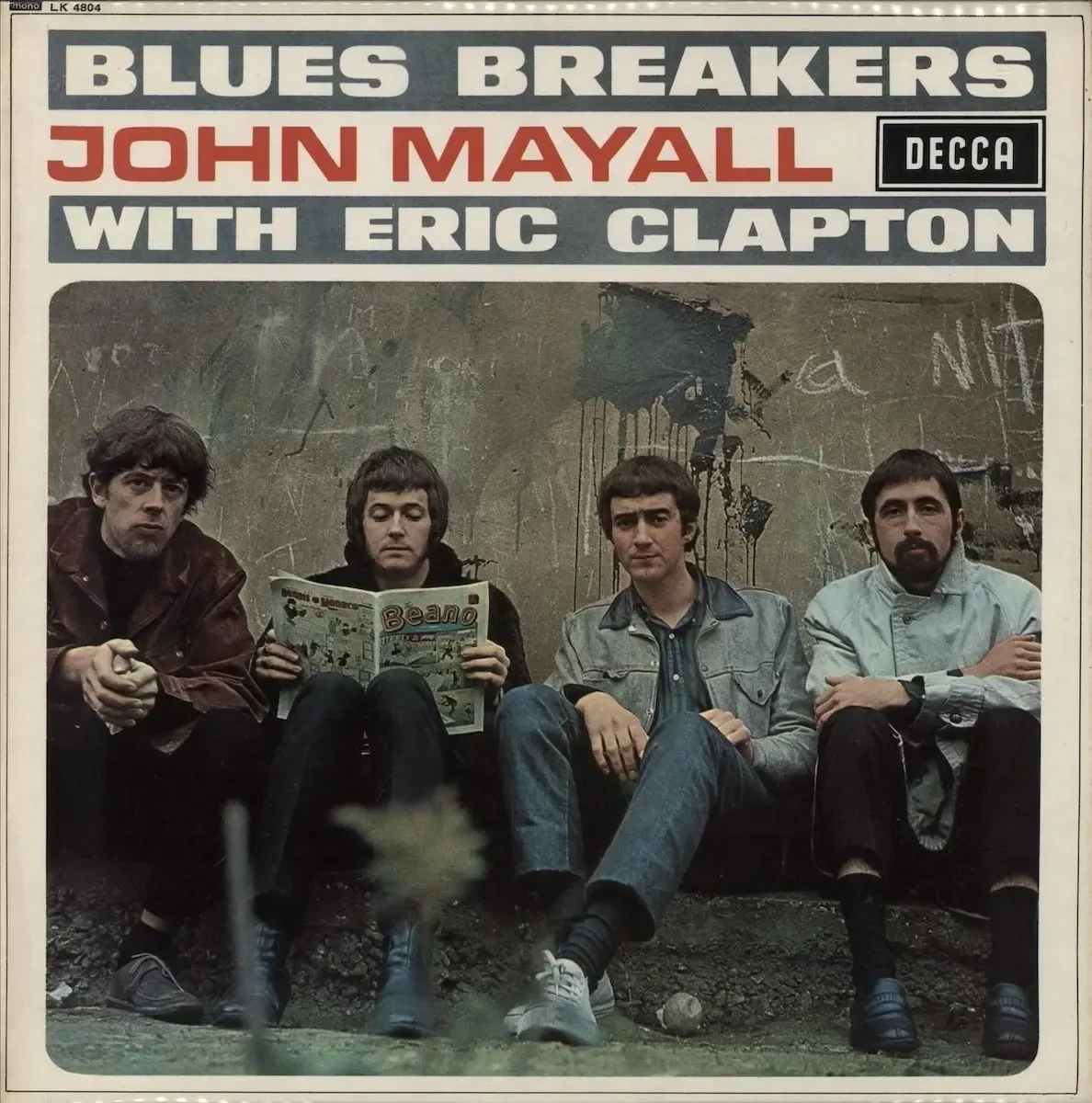
History is often written by the victors, but in the realm of mid-1960s British blues, it was written by critics, clubgoers, and musicians navigating an unprecedented sonic revolution. Sixty years ago, in the October 1966 issue of Jazz Journal, writer David Illingworth penned a contemporary critique of a newly released album that would eventually be canonized as a cornerstone of rock history: John Mayall & the Bluesbreakers’ self-titled debut featuring Eric Clapton—widely known to generations of guitar aficionados simply as Beano.
Back in the autumn of 1966, however, the record was not viewed through the rose-tinted lens of hindsight. It was not yet universally hailed as the holy grail of overdriven tube-amp tone, nor was Clapton’s blistering, feedback-drenched phrasing universally accepted as the pinnacle of modern guitar playing. To Illingworth and many of his contemporaries rooted in traditional jazz and purist blues circles, John Mayall’s flagship group was an earnest, albeit derivative, British interpretation of deep-South American idioms.
This retrospective feature explores Illingworth’s original review, contextualizing it within the rapidly shifting musical landscape of 1966 London. By examining the initial lukewarm reception of an album that later became a foundational masterclass in electric blues, we uncover the tension between British enthusiasm and American authenticity. Through a detailed chronology, industry metrics, contemporary artistic perspectives, and an analysis of how this seminal release shaped the future of rock guitar, we revisit the moment the Bluesbreakers changed popular music—even if some critics at the time wished listeners would just buy the original imported 78s instead.
Detailed Chronology: The Anatomy of a Landmark Release (1965–1966)
To fully appreciate the weight of Illingworth’s critique, one must retrace the precise timeline that led to the recording and release of Decca LK 4804 in the summer and autumn of 1966.
The Formation of the Ultimate Lineup
By late 1965, John Mayall had already established himself as a tireless champion of the blues in London, functioning as a bandleader, mentor, and curator. However, the arrival of twenty-year-old guitarist Eric Clapton in April 1965—following his departure from The Yardbirds due to their growing pop aspirations—transformed the Bluesbreakers from a solid local act into a cultural lightning rod. Clapton temporarily left the band later that year for a brief sojourn to Greece, returning definitively in November 1965.
During this second tenure, the chemistry between Mayall, bassist John McVie, drummer Hughie Flint, and Clapton reached a creative peak. The band secured a prestigious residency at the Flamingo Club in Wardour Street and later at the Marquee Club, where word-of-mouth regarding Clapton’s searing guitar tone began to reach mythical proportions. Graffiti reading "Clapton is God" began appearing on London walls, capturing the fervor of a burgeoning youth subculture fixated on the blues.
Recording Sessions and Production
In March and April 1966, the quartet—along with occasional horn players—entered Decca’s West Hampstead studios in London to record their debut full-length album. Produced by Gus Dudgeon and engineered by Gus Skinns, the sessions were designed to capture the raw, unadulterated energy of the band’s live club performances.
Unlike many contemporary pop acts who recorded through direct injection or cleaner, lower-volume studio setups, Clapton plugged his Gibson Les Paul Standard directly into a cranked 1965 Marshall Model 1962 combo amplifier (later immortalized as the "Bluesbreaker" amp). By pushing the EL34 output tubes into natural saturation, Clapton unlocked a thick, singing, sustaining tone that was revolutionary for British recording studios.
The Decca Release and Critical Backlash
Released in June 1966 on Decca Records (catalogue number LK 4804), Blues Breakers with Eric Clapton climbed into the UK Albums Chart, peaking at an impressive No. 6—a remarkable feat for an uncompromising electric blues record.
Yet, as David Illingworth’s October 1966 Jazz Journal review illustrates, establishment critics were not entirely seduced. Illingworth contextualized the album against the backdrop of an impending UK tour by American blues legend Otis Rush, whose performances at the Albert Hall and Free Trade Hall loomed large in the minds of purists. Illingworth noted:
"By the time this magazine is on the bookstalls, Otis Rush should have shaken the very foundations of the Albert Hall and Free Trade Hall with his evil singing and guitar work… Three of the numbers on this record show definite leanings towards the Rush style (All Your Love, Double Crossing, Have You Heard) but it would be unfair to both sides to compare these performances with any by Rush, Buddy Guy, B.B. King or any other genuine article."
Illingworth’s critique went further, unfavorably comparing the Bluesbreakers’ stylistic approach to both Alexis Korner’s rhythm and blues outfit (lauded for their jazz sensibility) and the Paul Butterfield Blues Band (praised for raw, unadulterated grit). To Illingworth, Clapton’s playing was "a creditable, if overamplified, synopsis" of American masters, ultimately concluding that the record was useful as solid club dance music, but unnecessary for anyone already acquainted with the authentic source material.
Supporting Context & Metrics: Evaluating the Blueprint
To understand why a review that feels hyper-critical today was entirely standard for 1966, we must analyze the cultural metrics, economic realities, and listening habits of the era.
The Import Economy vs. Domestic Imitation
In mid-1960s Britain, authentic Chicago and Delta blues records were scarce luxury items. Imported American 78s and 45s from labels like Chess, Cobra, and King were difficult to source, expensive to purchase, and fiercely guarded by record collectors and working-class musicians who studied every groove.
When British groups like the Bluesbreakers, The Rolling Stones, and The Animals began interpreting this material, they served an essential bridging function. They functioned as popularizers, translating esoteric American art forms for domestic audiences who had no direct access to South Side Chicago clubs.
However, jazz and blues critics writing for publications like Jazz Journal—which had spent decades championing African-American jazz and blues originators as high art—were often deeply skeptical of young white British musicians profiting off styles they had only recently encountered on imported vinyl. Illingworth’s skepticism regarding the "overamplified" nature of Clapton’s guitar reflects an era where acoustic clarity and traditional jazz dynamics were still held up as the gold standard against the rising tide of electric rock distortion.
Analytical Breakdown of the Original Tracklist
The original 1966 Decca tracklisting reviewed by Illingworth reveals an eclectic mix of Chicago blues standards, soulful covers, and dynamic band arrangements:
[Side 1]
1. All Your Love (Rush/Dixon) – 3:36
2. Hideaway (King/Thompson) – 3:15
3. Little Girl (Mayall) – 2:35
4. Another Man (Traditional, arr. Mayall) – 1:44
5. Double Crossing Time (Mayall/Clapton) – 3:04
6. What'd I Say (Charles) – 4:26

[Side 2]
7. Key To Love (Mayall) – 2:07
8. Parchman Farm (White) – 2:22
9. Have You Heard (Mayall) – 5:56
10. Ramblin' On My Mind (Johnson, arr. Clapton) – 3:07
11. Steppin' Out (Bracken) – 1:28
12. It Ain't Right (Jacobs) – 2:40- Personnel Dynamics: The album featured John Mayall on vocals, organ, piano, and harmonica; Eric Clapton on lead guitar (and vocal on Robert Johnson’s "Ramblin’ On My Mind"); John McVie on bass guitar; and Hughie Flint on drums.
- Extended Arrangements: As noted in the review’s discographical notes, select tracks expanded the core quartet format. "Double Crossing Time" incorporated John Almond on baritone saxophone, while tracks like "Key To Love," "Have You Heard," and "Steppin’ Out" welcomed Alan Skidmore on tenor saxophone and Dennis Healey on trumpet, adding a rich, smoky, jazz-club texture that Illingworth specifically singled out—praising Alan Skidmore’s "crudely exciting 12-bar introduction" on "Have You Heard" even while dismissing the album’s overall novelty.
Official Perspectives and Historical Reconsideration
Time has proven kinder to John Mayall and Eric Clapton than David Illingworth’s 1966 pen. Within a few short years of the review’s publication, Blues Breakers with Eric Clapton ceased to be viewed merely as a local dance record and was universally recognized as the watershed moment that launched modern electric guitar heroism.
The Evolution of Eric Clapton’s Tone
Clapton’s decision to pair a Gibson Les Paul with a cranked Marshall amplifier established the template for rock guitar distortion for the next half-century. Before this album, guitarists routinely sought clean, bright tones influenced by country, jazz, or early rock-and-roll idioms. Clapton’s approach—sustained, singing, blues-inflected sustain achieved through vacuum-tube overdrive—was studied meticulously by aspiring guitarists who would soon form bands like Led Zeppelin, Cream, and Fleetwood Mac.
Reflecting on the sessions decades later, John Mayall noted the intense dedication Clapton brought to the band:
"Eric was completely obsessed with the blues. He didn’t want to play pop music; he didn’t want compromises. He wanted to sound like Freddie King and Buddy Guy, but in doing so, he found a voice that was entirely his own. When we went into Decca, we just wanted to capture what we did every night on stage. We had no idea we were making history; we were just playing our favorite songs."
Critical Reappraisal
Modern musicology has largely re-evaluated the purist anxiety that dominated mid-60s jazz criticism. While critics like Illingworth were entirely correct in noting that British musicians were second-generation interpreters of American art, they underestimated the transformative power of cross-cultural fertilization. The Bluesbreakers did not merely copy Otis Rush or B.B. King; they filtered those influences through post-war British sensibilities, adding an aggressive urgency, jazz-informed horn arrangements, and high-gain amplification that birthed hard rock.
Future Outlook: The Enduring Legacy of Beano
As we look back from the vantage point of sixty years, the legacy of David Illingworth’s 1966 review serves as a fascinating historical artifact—a reminder that masterpieces are rarely recognized as such in real-time.
Today, Blues Breakers with Eric Clapton remains a mandatory study for anyone interested in the evolution of popular music. Its influence can be traced directly through the lineage of blues-rock, heavy metal, and contemporary guitar-driven genres. The vintage Marshall "Bluesbreaker" amplifier remains one of the most sought-after and emulated pieces of audio equipment in the world, and digital simulations of Clapton’s specific signal chain are loaded into recording studios across the globe daily.
John Mayall, who passed away in 2024 at the age of ninety, spent his entire life serving as a tireless ambassador for the blues, nurturing a revolving cast of virtuoso guitarists (including Peter Green and Mick Taylor) who passed through his finishing school. Yet, it was the 1966 album with Eric Clapton that permanently cemented the Bluesbreakers in the pantheon of rock history.
David Illingworth may have concluded his 1966 review by suggesting that the record’s market "must remain amongst those who have yet to come under the spell of the real thing," but history proved him delightfully wrong. For millions of music fans worldwide, the Bluesbreakers didn’t distract from the real thing—they opened the door to it, creating an immortal portal through which generations discovered the timeless power of the blues.