
Executive Overview
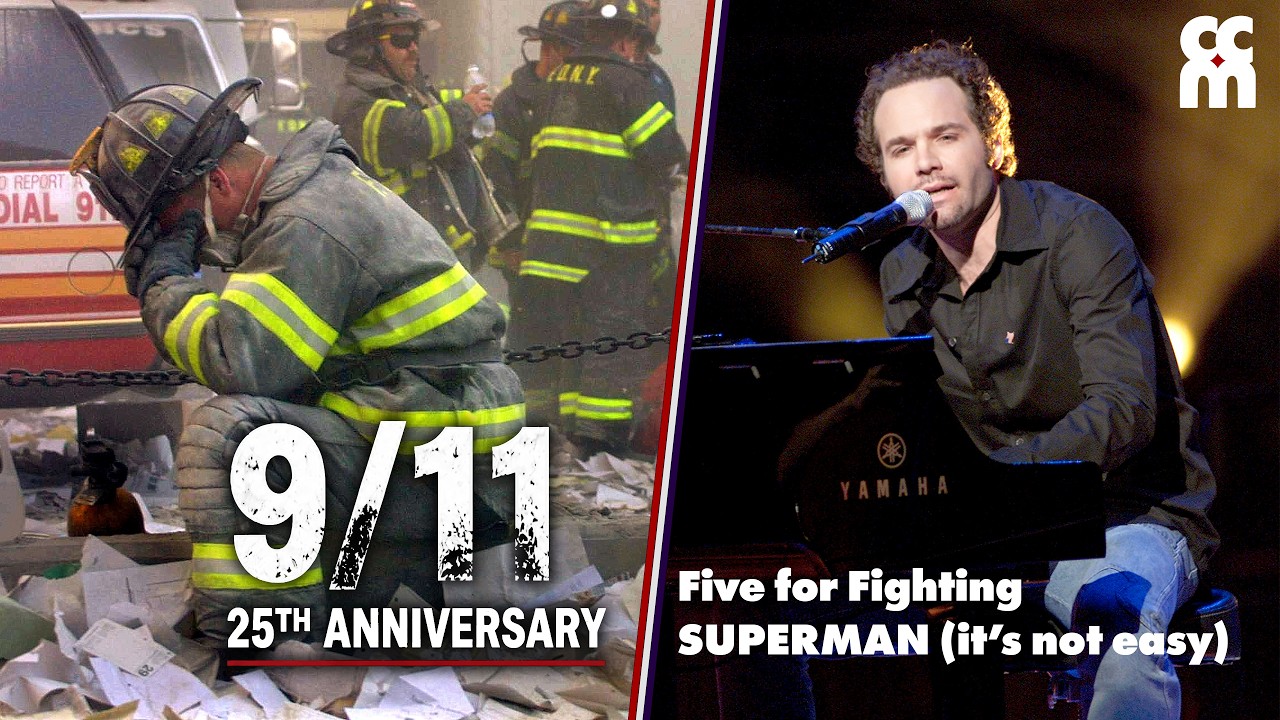
Certain melodies refuse to remain confined to the ethereal spaces of composition and commercial airwaves; instead, they embed themselves inextricably into the collective human experience. Twenty-five years after the defining tragedy of the modern era, the opening notes of Five for Fighting’s 2000 piano ballad, “Superman (It’s Not Easy),” still evoke an immediate, visceral transport back to the smoke-choked days and weeks following September 11, 2001.
In the immediate aftermath of the terrorist attacks, when the global consciousness reeled in search of vocabulary for an unspeakable horror, popular music filled the ideological void. Anthems of varying genres—from Enrique Iglesias’s passionate “Hero” to P.O.D.’s hard-rock rallying cry “Alive”—were swiftly conscripted by an American public desperately seeking solace. Yet, no track became quite as synonymous with the physical and emotional weight of that national trauma as John Ondrasik’s modest piano-driven track.
What began as a songwriter’s gamble against a skeptical record label evolved rapidly into a cultural touchstone. As approaching retrospectives mark a quarter-century since that fateful Tuesday, the legacy of “Superman” extends far beyond the post-millennial American landscape. Through historical milestones ranging from The Concert for New York City at Madison Square Garden to Hostage Square in Tel Aviv and the flight deck of the USS Nimitz, the track’s trajectory proves a profound artistic truth: while musicians write the notes, history ultimately determines their meaning.
Detailed Chronology: From Studio Skepticism to Global Resonance
Phase I: The Unlikely Genesis
Before “Superman” became the sonic shorthand for emergency response heroism and national mourning, its creator faced an uphill battle just to secure its release. John Ondrasik, performing under the moniker Five for Fighting, was a young artist navigating a late-1990s and early-2000s musical ecosystem dominated by teen pop acts and aggressive grunge movements.
Having achieved a moderate success with his track “Easy Tonight,” Ondrasik was given a final opportunity by his record label to deliver a viable radio single. Defying industry expectations, he championed a reflective, vulnerable piano ballad exploring the psychological burdens of expected invulnerability.
"The record company said, ‘You get one more swing,’" Ondrasik recalled during a recent retrospective interview with interviewer Logan Sekulow. "I’d seen ‘Superman’s’ reaction in shows… it wasn’t 1977 with the piano all over the radio. But I’m like, if I’m going down with one song, I’m going to go down with Superman."
The gamble paid initial dividends as the track slowly climbed domestic charts and achieved unexpected international traction, hitting number one in the Philippines. However, as the summer of 2001 drew to a close, global events were about to rewrite the song’s destiny entirely.
Phase II: September 11, 2001, and the London Isolation
In September 2001, Ondrasik was in London, England, executing a standard international promotional tour for his rising single. When the first commercial airliner struck the World Trade Center towers in New York City, international phone lines lit up with frantic calls instructing him to turn on the television. Witnessing the second impact from across the Atlantic plunged him into immediate shock.
For ten days, commercial airspace closures left Ondrasik stranded in the United Kingdom, unable to return to a deeply traumatized homeland. Unbeknownst to the songwriter, while he was navigating the helpless isolation of an ocean-separated traveler, his music was undergoing a profound transfiguration on American soil.
Phase III: The Anthem of Ground Zero
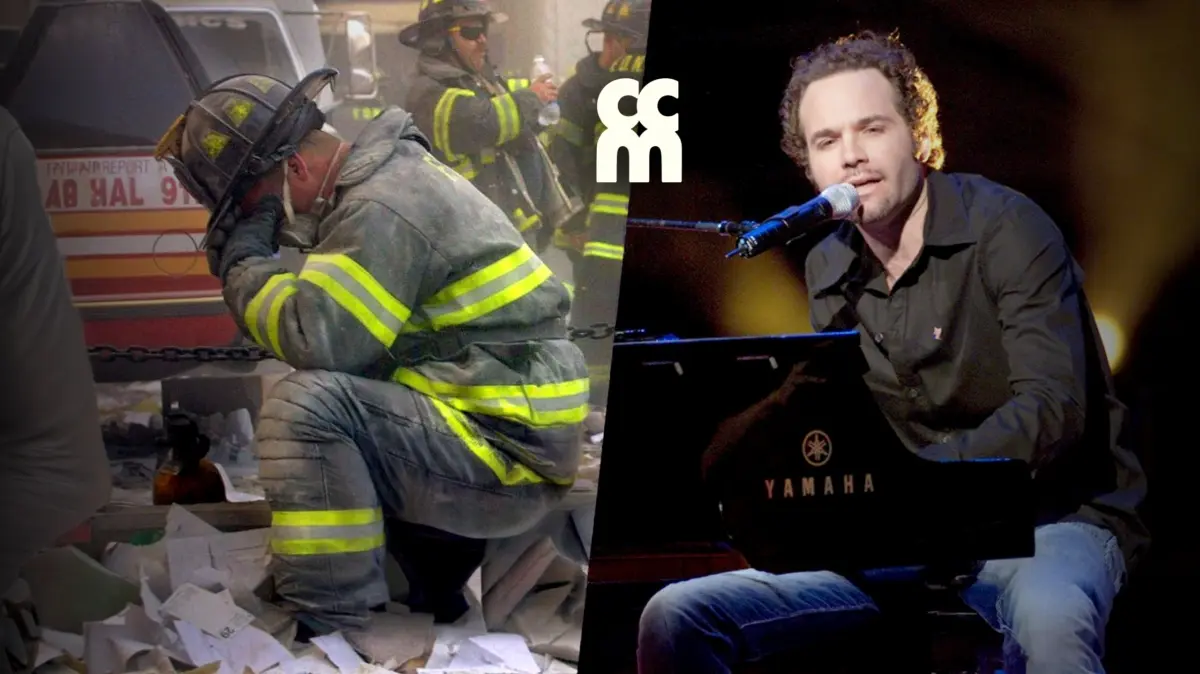
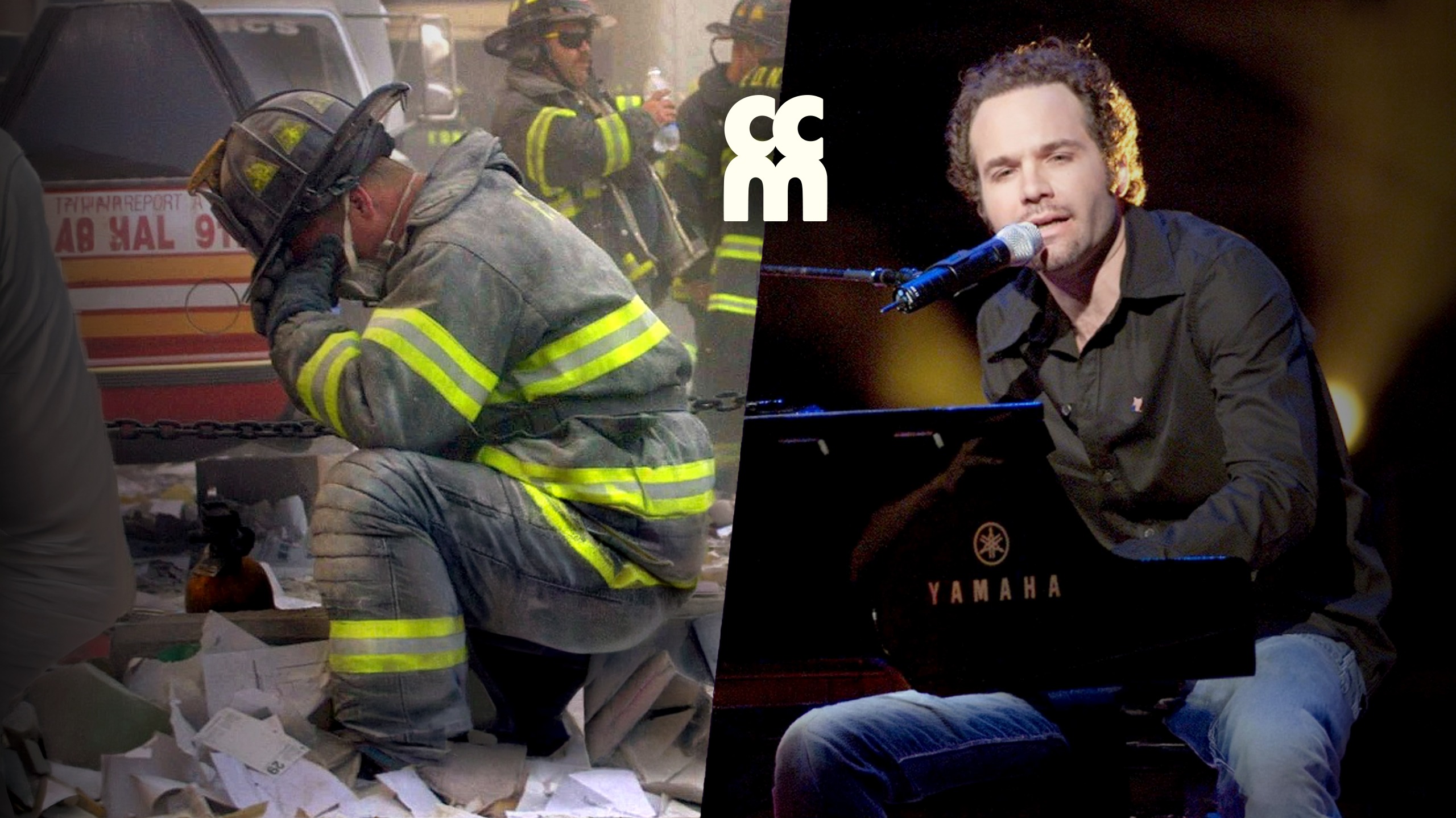
While Ondrasik fought to return to the United States, television networks, radio stations, and independent creators across America began pairing “Superman” with the harrowing, looping footage of firefighters, police officers, and emergency medical technicians.
The song’s core thesis—exploring the vulnerable human reality existing underneath the metaphorical cape—resonated instantly with a nation watching ordinary citizens display extraordinary, self-sacrificing courage. Without orchestrating the movement or even realizing it was occurring, Ondrasik had provided a nation with the precise emotional language it required to process grief.
"I didn’t really realize till I got back how many news organizations had been using ‘Superman’ to recognize those heroes that ran into those buildings," Ondrasik noted. "And for a young guy who just got used to hearing his song on the radio, it was pretty overwhelming."
Phase IV: Madison Square Garden and The Concert for New York City
The convergence of the song and the moment culminated at Madison Square Garden during The Concert for New York City, a historic benefit event featuring an unprecedented roster of rock and roll royalty, including Paul McCartney, The Who, David Bowie, Billy Joel, Elton John, Eric Clapton, and Mick Jagger.
Ondrasik, accustomed to playing smaller side stages, found himself backstage navigating a complex emotional landscape among his lifelong musical idols. Expecting his placement on the event itinerary to occur early in the evening, he leafed through the show’s run-of-show documentation.
"I kept turning the pages and I didn’t see my name, and I’m like, oh, good, they forgot me because I’m so nervous," Ondrasik recalled. Reaching the final pages, he found himself sequenced alongside legacy acts like Mellencamp, Billy Joel, Elton John, Janet Jackson, and Paul McCartney.
Yet, the towering prestige of his co-performers faded into the background when compared to the audience members themselves. Backstage, Ondrasik immersed himself among the families of the fallen and the first responders who had spent thirty continuous days digging through the smoldering rubble of Ground Zero. The experience fundamentally shifted his worldview regarding his art, demonstrating that music possessed an incomparable capacity to heal and unite.
Supporting Context & Metrics
The longevity of “Superman” is substantiated not merely by cultural sentiment, but by its sustained presence across multiple geopolitical crises over a quarter-century.
- Commercial Trajectory: Initially released in 2000 on the album America Town, the single peaked at #39 on the US Billboard Hot 100 in 2001, but achieved long-tail cultural saturation due to non-stop media placement during post-9/11 memorial programming.
- Geopolitical Reach: The song’s utility as a vehicle for empathy expanded globally following the October 7, 2001, equivalent tragedies in Israel. At the request of the mother of Alon Ohel—a captured civilian hostage and gifted classical pianist held in Gaza for over 700 days—Ondrasik recorded a special rendition of the track to spotlight the plight of the hostages.
- The USS Nimitz Milestone: The cultural arc completed a modern miracle when Alon Ohel was successfully freed from captivity. Ondrasik and Ohel subsequently met and performed “Superman” together aboard the historic aircraft carrier USS Nimitz to mark ongoing American milestones and military alliances, a moment Ondrasik categorizes simply as "a miracle."
Official Statements and Artistic Reflection
Reflecting on the quarter-century anniversary of the September 11 attacks, industry leaders, artists, and commentators continue to evaluate the unique intersection between creative expression and national tragedy.
"It’s hard to wrap my head around it. Music, as you mentioned, was very critical at that time. And songs have a way of providing solace, recognizing amazing people who do heroic things, something we can all sing together… I saw how music can really change the world and do things nothing else can."
— John Ondrasik (Five for Fighting), reflecting on the enduring legacy of "Superman.""A songwriter can tell us what inspired a song. We can analyze the lyrics. We can document where it was recorded and when it was released. But artists don’t always get to decide what their songs ultimately mean to us. Sometimes history does that."
— Logan Sekulow, broadcaster and cultural commentator.
Future Outlook
As the world marks the 25th anniversary of September 11, the calendar brings both solemn remembrance and active continuation of these musical traditions. John Ondrasik and his accompanying string quartet are slated to launch their nationwide autumn tour on September 19, carrying forward a repertoire that has evolved from alternative rock radio staples into living historical artifacts.
For Ondrasik, the upcoming milestone will be observed not from a distance, but directly on the ground in New York City, standing alongside the firefighters, rescue families, and municipal heroes whose identities became forever intertwined with his piano chords a quarter-century ago.
Furthermore, the trajectory of "Superman" demonstrates that the capacity of art to heal extends far beyond its original point of origin. Whether echoing through the arenas of post-9/11 America, resonating across Hostage Square in Tel Aviv during times of conflict, or echoing off the steel flight deck of the USS Nimitz alongside a returning survivor, the song remains a testament to human endurance.
As society pauses to reflect upon the lives lost, the heroes forged, and the enduring resilience of free nations, the underlying lesson of the last twenty-five years remains clear: when human language fails in the face of devastation, music steps in to provide our collective voice.