

Executive Overview
On the evening of Friday, April 14, 2023, the historic Church of the Holy Trinity at 1904 Walnut Street in Philadelphia transformed into a sanctuary of symphonic grandeur and vocal mastery. The occasion was the 53rd Annual Spring Concert presented by the Thomas Jefferson University Choir and Orchestra, a cherished institutional tradition that seamlessly bridges the worlds of academic medicine and fine arts. Staged in direct celebration of World Voice Day 2023 and produced in close collaboration with The Voice Foundation, the concert served as a profound testament to the physiological wonder and emotional depth of the human voice.
At the helm of this ambitious musical undertaking was Robert Thayer Sataloff, M.D., D.M.A., a towering figure in the fields of otolaryngology and vocal arts. Under his visionary leadership, alongside Associate Conductor Philip Doucette, M.A., M.M., Associate Conductor Emerita Margaret M. Baroody, M.M., and Accompanist Yoni Levyatov, the ensemble delivered a program of staggering breadth and emotional resonance. The evening’s repertoire juxtaposed the sacred, dramatic intensity of Franz Joseph Haydn’s Lord Nelson Mass (Missa in angustiis) with the rich, soulful vernacular and operatic brilliance of excerpts from George Gershwin’s American masterwork, Porgy and Bess.
This performance was far more than a routine spring concert; it was an intersectional celebration of science and culture. By aligning the university’s musical forces with The Voice Foundation—the world’s oldest and most renowned organization dedicated to the care and science of the professional voice—the event underscored Thomas Jefferson University’s unique institutional identity. Here, cutting-edge medical research meets the expressive soul of the performing arts. Featuring a talented roster of eleven vocal soloists and a fully synchronized choir and orchestra, the evening captivated a packed Philadelphia audience, leaving an indelible mark on the region’s cultural calendar and offering a timeless reminder of the power of shared musical expression.
Detailed Chronology: An Evening of Masterworks
The architectural splendor and resonant acoustics of the Church of the Holy Trinity provided a breathtaking backdrop for an evening structured around two monumental, yet stylistically distinct, pillars of Western music history.
The Prelude and Setting the Stage
As the clock approached 8:00 PM, the sanctuary buzzed with anticipation. Attendees—comprising university faculty, medical professionals, students, vocal enthusiasts, and members of the local Philadelphia community—filled the pews. The atmosphere carried a dual sense of academic gravity and festive celebration, fitting for a global observance like World Voice Day.
The orchestra took their places under the direction of Dr. Sataloff, whose dual credentials as a world-renowned otolaryngologist and a Doctor of Musical Arts uniquely position him to understand both the mechanics of vocal production and the aesthetic demands of high-level choral conducting. Following the tuning of the ensemble, the collaborative energy of the musicians set a tone of rigorous professionalism blended with profound artistic devotion.
Part I: Franz Joseph Haydn’s Lord Nelson Mass
The first half of the concert was dedicated to Franz Joseph Haydn’s Missa in angustiis in D minor, historically renowned as the Lord Nelson Mass. Composed in 1798 during a period of acute political and military turmoil—as Napoleon Bonaparte’s conquests threatened Austria—the mass translates aptly as "Mass for troubled times."
The Thomas Jefferson University Choir and Orchestra launched immediately into the gripping tension of the Kyrie. The choir negotiated Haydn’s intricate counterpoint and dramatic dynamic shifts with remarkable agility. The turbulent D-minor orchestration, characterized by driving timpani rolls and aggressive trumpet flourishes (notable for Haydn’s omission of standard woodwinds, replaced instead by three clarinets, strings, and timpani), filled the nave with an urgent, supplicatory energy.
The soloists—featuring soprano Melanie Culhane, alto Alyson Harvey, tenor Kurt Hoffman, and bass Curtis Cummings—stepped forward during the Gloria and Credo movements to deliver soaring, operatic passages that tested the absolute limits of vocal agility. The juxtaposition of the choir’s thunderous declarations of faith with the tender, vulnerable pleas of the Benedictus and Agnus Dei demonstrated the ensemble’s meticulous preparation. The performance captured both the historical gravity of Haydn’s composition and its timeless message of hope amid distress, resonating deeply with an audience living through its own modern complexities.
Intermission and Cultural Reflection
During the brief intermission, the conversation among audience members naturally turned to the thematic significance of the evening. The synergy between the music and World Voice Day was palpable. Attendees reflected on the fragility and resilience of the human voice—an instrument born of biology yet capable of scaling the sublime heights demonstrated during the Haydn masterwork.
Part II: Excerpts from George Gershwin’s Porgy and Bess
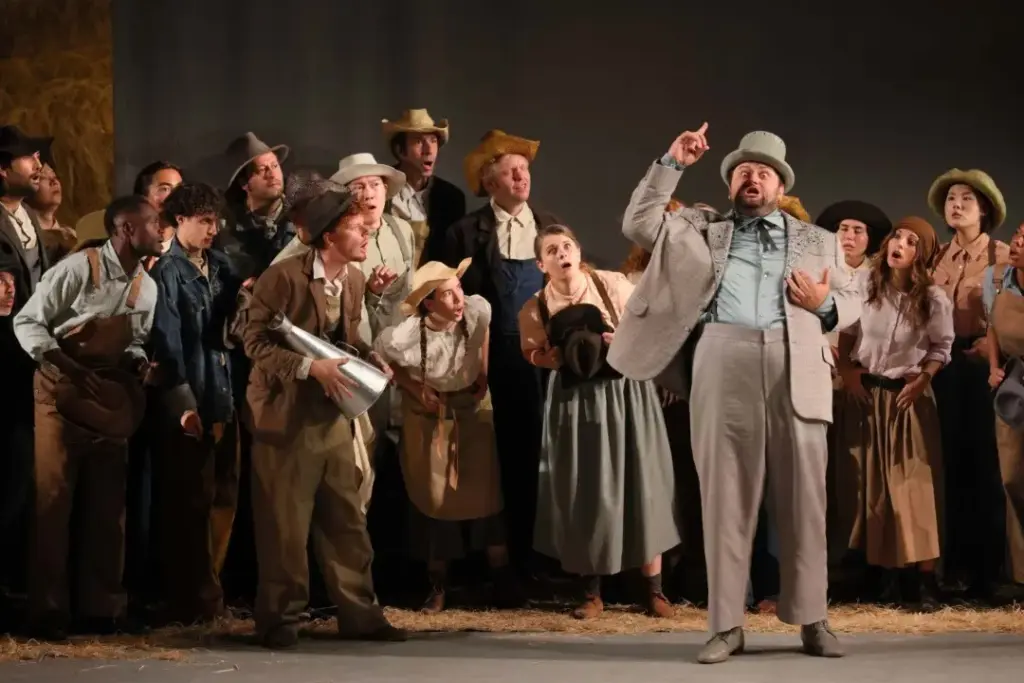
If the first half of the concert was an exercise in European classical tradition and sacred solemnity, the second half exploded with the vibrant, syncopated rhythms and emotional raw power of American folk opera. The orchestra transitioned seamlessly into the world of George Gershwin’s Porgy and Bess, bringing Catfish Row to life in the heart of Philadelphia.
The program featured a carefully curated selection of excerpts that highlighted the diverse vocal talents of the evening’s expanded roster of soloists, which now also included sopranos Susannah Foos and Luciana Piovan; altos Kristina Lewis and Jennifer Yeatts; tenors Maximilliano Marques and Jimson Mathew; and bass Richard Kovach.
The ensemble navigated Gershwin’s complex pastiche of jazz, blues, spirituals, and traditional operatic forms with infectious enthusiasm. The soaring melodies of familiar refrains washed over the audience, showcasing the rich timbres of the soloists and the dynamic responsiveness of the choir. The choral arrangements swelled with communal spirit, capturing the resilience, sorrow, and joy embedded in Gershwin’s timeless score.
The concert culminated in a breathtaking finale that brought the audience to its feet. The prolonged standing ovation was a testament not only to the exceptional technical execution of the musicians but also to the emotional release provided by the program’s journey from the shadows of war in Haydn’s Vienna to the sun-drenched, blues-infused coastal community of Gershwin’s imagination.
Supporting Context & Metrics: Science, Art, and Institutional Legacy
To fully appreciate the significance of the Thomas Jefferson University Choir and Orchestra’s 53rd Annual Spring Concert, one must examine the institutional ecosystem that makes such a production possible, as well as the broader medical and cultural landscape of World Voice Day.
The Anatomy of the Event: Key Participants and Leadership
The success of an enterprise bridging two vastly different academic disciplines relies on exceptional leadership and multidisciplinary collaboration.
- Conductor – Robert Thayer Sataloff, M.D., D.M.A.: Dr. Sataloff is a recognized pioneer in the fields of otolaryngology and voice science. As a Professor and Chairman of the Department of Otolaryngology-Head and Neck Surgery at the Drexel University College of Medicine (and holding esteemed academic affiliations across major institutions, including Thomas Jefferson University), he has dedicated his life to treating professional voice users—from opera singers and actors to broadcasters and politicians. His rare dual mastery as a Doctor of Medicine and a Doctor of Musical Arts allows him to lead ensembles with an intimate, scientific understanding of vocal health coupled with profound artistic sensitivity.
- Associate Conductor – Philip Doucette, M.A., M.M.: Providing crucial collaborative leadership, Doucette’s extensive background in choral conducting and music education ensures the structural integrity and cohesive sound of the university’s musical ensembles.
- Associate Conductor Emerita – Margaret M. Baroody, M.M.: A foundational pillar of the Thomas Jefferson University music program, Baroody’s enduring legacy was honored through the continued excellence and rigorous standards of the choir she helped shape over decades of service.
- Accompanist – Yoni Levyatov: A virtuoso pianist, Levyatov provided the sensitive, nuanced keyboard foundation necessary for rehearsals and chamber-level accompaniment, anchoring the vocalists through complex harmonic shifts.
The Voice Foundation and World Voice Day
The collaboration with The Voice Foundation places this concert within an international movement. Founded in 1977 by Dr. Sataloff, The Voice Foundation is the world’s premier organization dedicated to the promotion of understanding and preservation of the human voice. Through its annual symposia, research publications, and public advocacy, the Foundation has revolutionized how the medical community approaches voice disorders, vocal pedagogy, and phonosurgery.
World Voice Day (observed annually on April 16) is a worldwide event designed to celebrate the phenomenon of the voice and to draw global attention to the importance of voice care in daily life, professional communication, and artistic expression. By staging their annual spring concert two days prior to World Voice Day 2023, the Thomas Jefferson University Choir and Orchestra directly contributed to this global dialogue. The event served as a living demonstration of the beauty and resilience of healthy vocal production, reinforcing the core mission of The Voice Foundation: that a healthy voice is essential for human connection, expression, and well-being.
Institutional Tradition: The 53rd Annual Milestone
Reaching a 53rd annual concert is a rare milestone in collegiate and community musical programming. For over half a century, the Thomas Jefferson University Choir and Orchestra has provided medical students, researchers, healthcare professionals, and community members with a vital creative outlet. In an environment dominated by the rigorous demands of clinical practice and scientific inquiry, the orchestra and choir offer a counterweight—a space where analytical minds engage with emotional expression through choral masterworks and symphonic literature.
Official Statements & Artistic Vision
While formal podium remarks during the evening were kept concise to allow the music to speak for itself, the philosophical underpinnings of the concert were articulated through the meticulous curation of the program and the enduring ethos of the participating organizations.
Reflecting on the mission of the ensemble and its alignment with vocal science, leadership from both Thomas Jefferson University and The Voice Foundation have long emphasized that the voice is the ultimate bridge between internal human experience and external communication.
"The human voice is our most intimate instrument—it is simultaneously a physiological marvel governed by complex laryngeal mechanics and the purest vehicle of the human soul," notes organizational literature associated with the university’s arts initiatives. "When we sing, we engage in an act of profound vulnerability and biological coordination. To celebrate World Voice Day through the masterworks of Haydn and Gershwin is to honor both the scientific wonder of how we speak and sing, and the artistic heights to which those voices can soar."
Furthermore, the collaboration between the medical community and the performing arts highlights an essential pedagogical philosophy at Thomas Jefferson University: that the holistic development of healthcare professionals requires deep engagement with the humanities. Understanding the physical anatomy of the vocal folds is enhanced by experiencing the emotional power of a choir navigating a D-minor fugue or the swinging syncopation of an American spiritual.
Future Outlook: Continuing a Legacy of Excellence
As the applause faded inside the Church of the Holy Trinity on the night of April 14, 2023, and the digital recording of the performance was cataloged for posterity (preserving the concert via platforms such as YouTube for global audiences to experience), attention naturally turned toward the future of the Thomas Jefferson University Choir and Orchestra.
Expanding Access and Educational Outreach
Looking ahead, the ensemble aims to leverage digital media and hybrid performance models to expand its reach beyond the Philadelphia metropolitan area. By broadcasting future concerts and collaborating with international voice science initiatives, the university hopes to serve as a national model for arts-in-medicine programming.
Sustaining the Interdisciplinary Model
The success of the 53rd Annual Spring Concert reinforces the viability and necessity of interdisciplinary collaboration. As medical technology advances and our understanding of vocal pathology deepens, the cultural appreciation for the voice must evolve in parallel. The partnership between Thomas Jefferson University and The Voice Foundation will continue to serve as a vital nexus where clinical research informs artistic performance, and where artistic expression inspires new avenues of medical inquiry.
Plans are already underway for future concert seasons, with organizers exploring ambitious repertoires that will continue to challenge student and community musicians while engaging audiences in deep cultural and historical reflection. As long as there are stories to tell, communities to unite, and human voices to be heard, the Thomas Jefferson University Choir and Orchestra will remain a beacon of harmony, proving that science and art are not opposing forces, but rather twin pillars of human achievement.