
Executive Overview
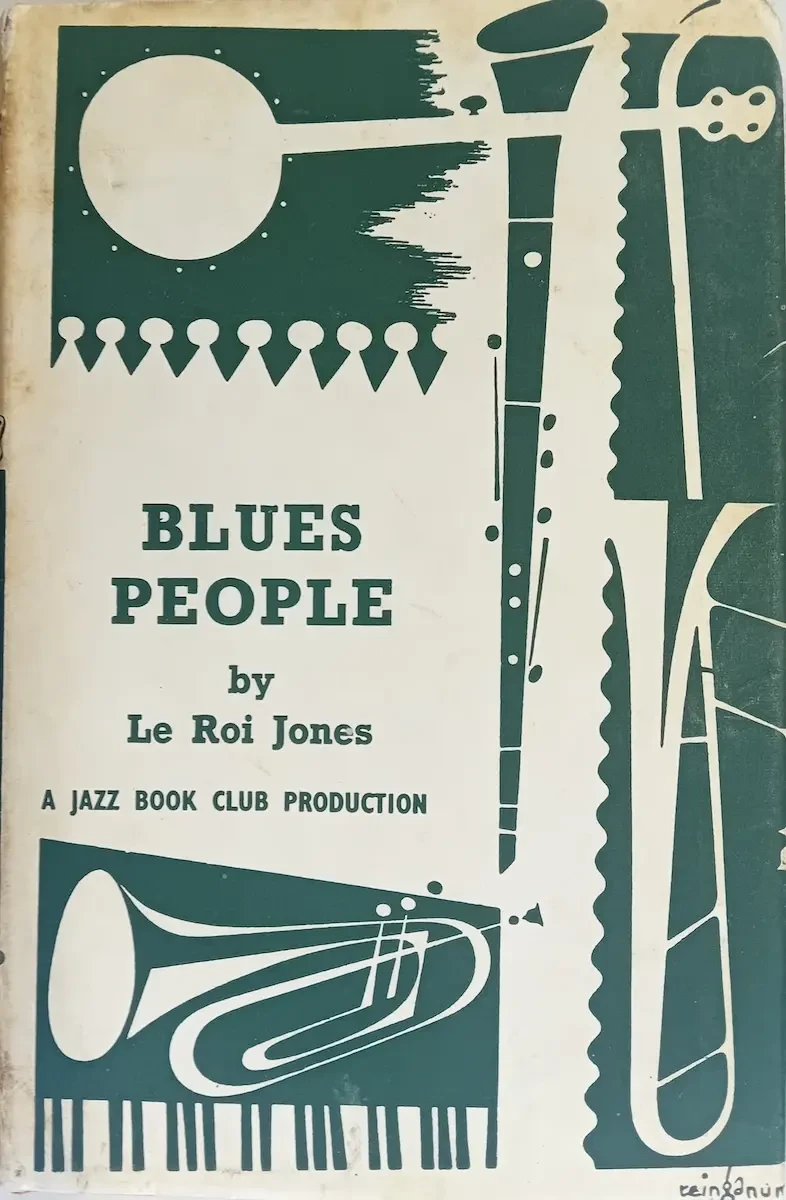
Sixty years ago, the pages of Jazz Journal (September 1966) published a review that would capture a profound cultural friction point in American arts and letters. Written by critic Don Lindon, the piece engaged with LeRoi Jones’s groundbreaking and fiercely uncompromising text, Blues People: Negro Music in White America. At a time when the civil rights movement was radically reshaping the American sociopolitical landscape, Jones—who would later change his name to Amiri Baraka—emerged as a vital, polarizing voice. He challenged white America’s comfort zones, condemned the assimilationist ambitions of the Black middle class, and dismantled romanticized white interpretations of a distinctly Black art form.
Lindon’s original review reflected the intellectual turbulence of an era caught between integrationist hopes and rising Black nationalist militancy. Today, revisiting this historical critique allows us to examine the foundational moments of Black musicology and cultural criticism. Blues People was not merely a historical survey of jazz and the blues; it was a socio-political manifesto that argued music could not be separated from the collective trauma, resilience, and socio-economic realities of African American history.
This retrospective analysis explores the core arguments of Jones’s seminal work, the contemporary reception it garnered in both British and American critical circles, and its enduring legacy on how we study, consume, and understand jazz today. By expanding upon Lindon’s initial assessments—balancing the book’s brilliant historical excavations with its biting, uncompromising polemics—we gain a clearer picture of how Blues People fundamentally redefined the parameters of jazz criticism.
Detailed Chronology: From Slavery to the Free Form Movement
The Sociocultural Genesis of a Masterpiece
When Blues People was first published by William Morrow and Company in 1963 (and later distributed via the Jazz Book Club in the UK), it shattered conventional frameworks of music history. Prior to Jones’s intervention, the historiography of jazz had been dominated primarily by white American and European critics who often approached the music through a lens of technical analysis, sociological naivety, or exoticized fascination.
Jones approached the subject from a completely different vantage point. As Lindon noted in his 1966 review, Blues People stands out historically as one of the very first comprehensive jazz histories authored by an African American writer. Jones traced a direct, unbroken genealogical line from West African cultural traditions, through the horrifying rupture of the Middle Passage, the brutal machinery of chattel slavery, the birth of the blues, and straight into the avant-garde experiments of the mid-20th century.
[West African Roots]
       │
       ▼
[The Middle Passage & Chattel Slavery]
       │
       ▼
[Secular Blues & Work Songs]
       │
       ▼
[Early Classic Jazz & Swing]
       │
       ▼
[R&B & Modern Bebop]
       │
       ▼
[Free Form Movement (Avant-Garde)]
Slavery, Adaptation, and the Birth of the Blues
The chapters in Blues People dealing with slavery and slave music remain among the most searingly articulate analyses ever committed to print. Jones argued that the transition of enslaved Africans into "Negroes"—a uniquely American social caste—was mirrored in the evolution of their expressive culture. Music was not merely a recreational outlet; it was a vital technology of survival, cultural preservation, and spiritual resistance.
Enslaved people took European harmonic concepts and instrumentation, recontextualizing them through African rhythmic sensitivities, vocal inflections, and emotional aesthetics. Jones meticulously detailed how field hollers, work songs, and spirituals gradually crystallized into the secular blues form. For Jones, the blues were the ultimate expression of the African American experience: secularized, deeply personal, yet collectively understood expressions of life under white supremacy.
The Swing Era, Bebop, and the Critique of Assimilation
As the book progressed into the 20th century, Jones’s tone grew increasingly aggressive toward the commercialization of Black music by white institutions. His venomous contempt for white jazz generally—and white swing bands specifically—provoked intense controversy among jazz aficionados. Jones viewed much of the white swing era as a dilution and appropriation of Black innovation, wherein white orchestras achieved mainstream commercial and financial success playing music derived from innovations pioneered by Black artists in Harlem, Kansas City, and beyond.
Simultaneously, Jones launched a scathing critique against the Black middle class. In his view, the burgeoning Black bourgeoisie was desperate for integration into white American society at the cost of cultural erasure. He saw middle-class assimilationists as ashamed of their cultural heritage, attempting to sanitize the blues and early jazz to make them palatable to white bourgeois sensibilities. Bebop, conversely, was celebrated by Jones as a conscious, rebellious withdrawal from the mainstream—an intentional esoteric art form designed by artists like Charlie Parker and Thelonious Monk to reclaim their music from white appropriation and commercial commodification.
Supporting Context & Metrics: The Literary and Political Climate of the Mid-1960s
To fully appreciate the impact of Blues People, one must understand the volatile political ecosystem of the mid-1960s. The Civil Rights Movement was splintering. While mainstream organizations pursued legislative integration and voting rights, a more militant wing led by figures influenced by Malcolm X began advocating for Black nationalism, cultural separatism, and self-determination.
The Multi-Front Controversy of LeRoi Jones
In 1964, around the time Blues People was generating wide discourse, Jones produced three explosive Off-Broadway plays in New York City: The Slave, The Toilet, and Dutchman. Remarkably, these avant-garde, confrontationally anti-racist, and deeply militant works were partially funded by Federal grants under the Lyndon B. Johnson administration’s Anti-Poverty Bill. This irony fueled a massive public outcry among conservative politicians and media outlets, cementing Jones’s reputation as a dangerous cultural provocateur.
| Publication / Work | Year | Core Theme / Focus | Critical Reaction |
|---|---|---|---|
| Blues People | 1963 | Socio-cultural history of Black music from slavery to free jazz. | Praised for historical depth; criticized for ideological polemics. |
| Dutchman (Play) | 1964 | Racial tension, sexual politics, and violence on a New York subway. | Caused political fury; ironically funded by federal anti-poverty grants. |
| System of Dante’s Hell | 1965 | Autobiographical novel exploring alienation and identity. | Recognized for its radical modernist prose structure. |
The Dilemma of the White Liberal Critic
Don Lindon’s 1966 review in Jazz Journal highlights a fascinating psychological and ethical dilemma faced by white European and American jazz critics of the era. Lindon candidly acknowledged his position as a "white English liberal," questioning whether it was presumptuous of him to critique an African American intellectual’s analysis of racial politics and social equality.
Lindon drew a sharp ideological boundary: while he found Jones’s historical insights invaluable, he fundamentally disagreed with Jones’s political prescription. Where Jones saw racial separation and cultural nationalism as the only authentic path forward, Lindon clung to the liberal hope for integration, noting: "I don’t feel that his road is the right one, no matter how long the alternative may take."
This tension exposed a profound fissure in the global jazz community. Jazz was loved internationally as a universal language that could transcend racial barriers. Yet, Blues People forcefully reminded global audiences that jazz was born out of a specific, localized history of oppression in America—a history that white consumers often romanticized while ignoring the living conditions of its creators.
Official Statements and Contemporary Critical Reception
The publication of Blues People elicited a wide spectrum of responses from literary critics, historians, and musicians alike. While some mainstream jazz critics felt that Jones allowed his political ideology to eclipse objective musicological analysis, others recognized that absolute objectivity in cultural criticism was an illusion.
Academic and Critical Evaluations
Prominent literary and cultural critics of the era observed that Blues People bridged a critical gap between sociology and musicology.
- The Historical Shift: Scholars noted that Jones established a paradigm shift. Before 2963, jazz history books—such as those by standard European and American jazz writers—often read like a series of biographical sketches and discographical checklists. Jones contextualized every stylistic shift within economic structures, labor conditions, and racial caste systems.
- The Polemical Edge: Reviewers frequently pointed out that Jones’s prose was unapologetically subjective. As Lindon observed, "at times the facts tend to get overshadowed by the opinions." However, critics agreed that these opinions were precisely what made the text vital. Jones did not write from a stance of detached neutrality; he wrote as an active participant in the culture he was documenting.
Impact on Subsequent Musicology
In the decades following its release, Blues People became a foundational text in African American studies departments, ethnomusicology, and cultural studies programs across universities worldwide. Figures in Black music scholarship have repeatedly credited Jones (later Baraka) with establishing the methodological framework for studying Black music not as a subgenre of Western classical or popular music, but as an autonomous, self-generating cultural system with its own philosophical and aesthetic logic.
Future Outlook: The Enduring Relevance of Blues People in Modern Jazz Discourse
Sixty years after Don Lindon penned his contemplative review in Jazz Journal, Blues People remains mandatory reading for anyone seeking to understand the deep architecture of American music. As we look at the contemporary landscape of jazz and popular culture, LeRoi Jones’s core thesis resonates with renewed urgency.
Navigating Cultural Appropriation in the 21st Century
The questions raised by Blues People regarding cultural extraction, ownership, and authenticity continue to shape modern debates surrounding hip-hop, R&B, and contemporary jazz. In an era of globalized digital streaming, where musical styles cross international borders instantaneously, the tension between commercial exploitation and cultural origin remains volatile. Jones’s uncompromising interrogation of how white capital interacts with Black artistic innovation serves as a permanent caution against historical amnesia.
From "Good Time Music" to Radical Consciousness
Lindon correctly asserted in 1966 that Blues People was "certainly not for the newcomer to jazz, but it is obligatory reading for all to whom jazz means more than ‘Good Time Music’ or collecting matrix numbers." For decades, record collectors and purists treated jazz as an aesthetic artifact—a collector’s hobby focused on personnel rosters, recording dates, and master takes. Jones shattered that insular worldview. He forced listeners to confront the human beings behind the instruments: individuals whose lives were shaped by the social realities of Jim Crow America, systemic racism, and heroic cultural resilience.
As contemporary listeners continue to grapple with the intersections of art, race, and politics, Blues People stands tall as a monument of radical criticism. It reminds us that every note played, every blues lyric sung, and every harmonic chord struck in jazz carries the weight of a complex, unbroken history—one that demands not just our aesthetic appreciation, but our deepest intellectual and moral reckoning.