
Executive Overview
The intersection of live theatrical performance and cutting-edge audio engineering is about to get a chillingly intimate upgrade. Later this month, the Minetta Lane Theatre will play host to the Off-Broadway premiere of A Ghost in Your Ear, a groundbreaking "headphone horror" experience produced by Audible Theater. Scheduled to run from September 29 through November 15, the production promises to plunge audiences into a uniquely disquieting realm where the boundaries between fiction and reality—and between the stage and the listener’s own mind—are terrifyingly blurred.
Written and directed by Jamie Armitage, whose creative pedigree includes co-directing the global phenomenon SIX: The Musical, A Ghost in Your Ear relies on an immersive binaural soundscape. Every audience member will be fitted with headphones for the duration of the performance, allowing sound designers Ben and Max Ringham to manipulate acoustics with microscopic precision. The psychological thriller is set within the confines of an audiobook recording studio and features a tight, two-man cast: Harry Richardson (The Gilded Age) stars as an actor recording a chilling ghost story, while Owen Campbell (X) plays the studio’s stoic audio engineer. As the narrative progresses, the fictional horrors of the script seemingly bleed out of the pages and into the physical studio space around them.
Beyond its strictly limited Off-Broadway engagement, the production carries an innovative multi-platform footprint. Throughout its live run, the show will be professionally recorded for a future global release as an Audible Original, capturing the unique acoustic terror for listeners worldwide. This high-profile collaboration highlights Audible Theater’s ongoing commitment to pushing the envelope of audio-first storytelling, marrying the visceral, communal energy of a live theater with the hyper-focused intimacy of headphone-based audio drama.
Detailed Chronology & Production Genesis
From London Stages to New York Minetta Lane
The journey of A Ghost in Your Ear to New York City follows a critically acclaimed and spine-tingling run earlier this year in London, where the production—produced by HFH Productions and Playful Productions—first tested its terrifying auditory waters. Director Jamie Armitage has long nursed a fascination with theatrical horror, tracing his inspiration back to childhood experiences of being genuinely frightened by theatrical staples like The Woman in Black. When the opportunity arose to combine this passion for the macabre with advanced binaural audio technology, Armitage seized it, partnering with the visionary sound-design team Ben and Max Ringham.
The transition to Audible’s flagship Off-Broadway home at the Minetta Lane Theatre represents a natural evolution for the project. Given that the play’s narrative unfolds entirely within an audiobook recording studio, the partnership with Audible offers a meta-theatrical synergy that few other venues could replicate.
Plot Mechanics: When Fiction Breaches Reality
The premise of A Ghost in Your Ear exploits the psychological vulnerability of the recording booth—a sterile, soundproof environment designed precisely to capture isolated human speech. Harry Richardson portrays an actor lending his voice to a dark, unsettling ghost story. As he reads deeper into the text, the acoustic barrier holding back the fiction begins to fracture.
Owen Campbell’s character, the audio engineer overseeing the session, becomes an increasingly frantic witness and catalyst as the studio itself seems to be invaded by the supernatural forces described in the script. Because the audience hears the production through binaural headphones, the sonic perspective shifts fluidly: listeners experience the intimate, close-mic whispers of the actors as if the voices are echoing directly inside their own skulls, alongside environmental studio sounds that feel as though they are moving around the Minetta Lane auditorium itself.
Supporting Context & Metrics: The Science and History of Binaural Theater
The Technology of Invisibility: Binaural Audio
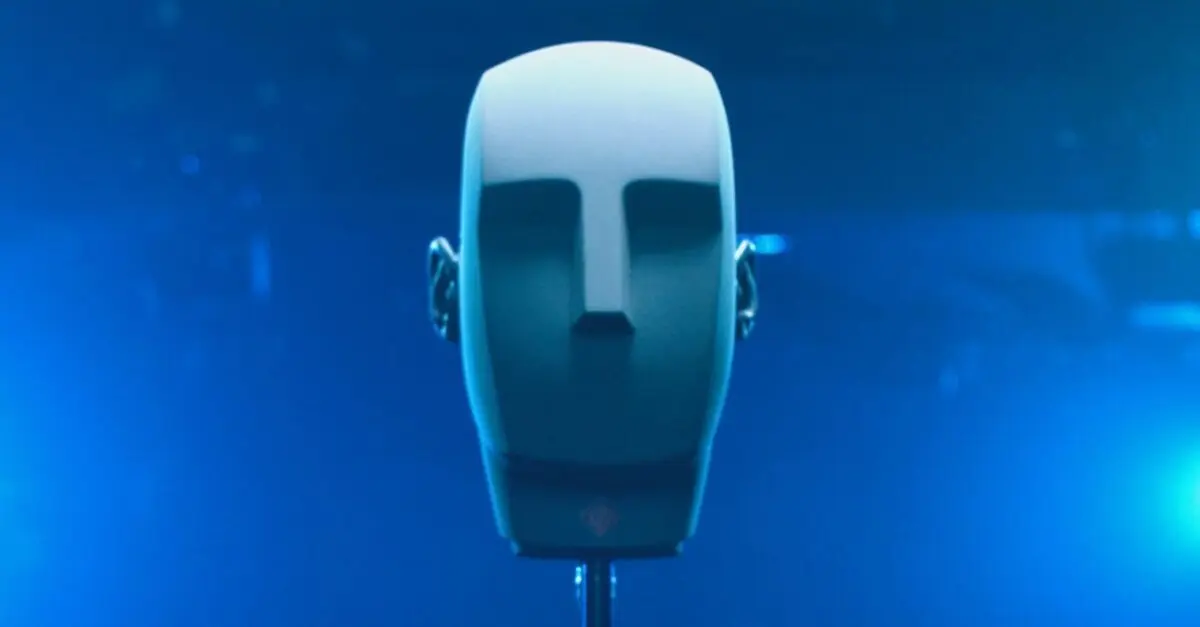
To understand the technical wizardry driving A Ghost in Your Ear, one must look closely at the mechanics of binaural sound design. Pioneered and refined by masters of the craft like Ben and Max Ringham, binaural recording relies on dummy-head microphones—structures shaped like a human head complete with artificial pinnae (ears). This setup replicates how human ears naturally perceive directional sound, accounting for acoustic diffraction, shadow effects, and the time delay of sound waves hitting one ear fractions of a second before the other.
When channeled through headphones, binaural sound bypasses the standard stereo experience of flat left-and-right channels. Instead, it creates a three-dimensional acoustic sphere. Listeners can perceive depth, height, and precise lateral positioning—whether a sound originates from six inches away from the left earlobe or from the far corner of a cavernous room.
A Lineage of Immersive Sound Design
While A Ghost in Your Ear applies this technology specifically to the horror genre, the use of binaural sound in major theatrical contexts has a rich, albeit brief, history of critical acclaim.
- The Encounter (2016–2017): Sound designers Gareth Fry and Pete Malkin utilized a similar headphone-based binaural setup for the Broadway transfer of The Encounter, earning a historic Special Tony Award for their efforts to submerge audiences in the Amazon rainforest via auditory hallucination.
- Blindness (Off-Broadway): Ben and Max Ringham previously explored the profound theatrical potential of headphone-driven storytelling with Blindness, one of the very first theatrical productions to mount a physical, in-person run following the pandemic lockdowns. Utilizing a recorded vocal performance by Juliet Stevenson, the production used spatial audio to create an intensely communal yet isolating narrative about a sudden epidemic of sightlessness.
- Broadway Collaborations: The Ringham brothers are no strangers to high-profile audio design, having earned two Tony Award nominations for their work on Broadway’s Prima Facie and A Doll’s House, the latter of which famously required hyper-sensitive engineering to ensure Jessica Chastain’s delicate stage whispers could be heard clearly by every member of the house.
Official Statements & Creative Vision
The creative team behind A Ghost in Your Ear has been vocal about the unique challenges and exhilarating opportunities presented by a theatrical production where sound acts as a primary antagonist.
Director and writer Jamie Armitage reflected on the genesis of the project and its uncanny alignment with its producer:
"I’ve loved horror theatre ever since I was terrified by The Woman In Black as a child," Armitage shared in a statement. "There is something so special about the power of a spine-tingling communal experience. So to be able to fuse my passion for horror with binaural audio technology in collaboration with the world-leading sound-designers Ben and Max Ringham was a real dream come true. We enjoyed the most special run of the show in London earlier this year, and I cannot wait to bring it over to New York to terrify the audiences there, too. And given that the whole show is set in an audiobook recording studio, a collaboration with Audible felt like the most natural fit in the world. So whether you’re watching at the Minetta Lane or listening on Audible, I hope you’re ready for a fright!"
Lead actor Owen Campbell emphasized the distinct electricity of experiencing fear in a crowded theater while wearing isolating headphones:
"This play is different from what I’ve done before on stage, and making my debut at Audible’s Minetta Lane Theatre couldn’t be more exciting," Campbell noted. "There’s nothing quite like a roomful of people jumping at the same scare—that’s live theatre at its best, and we can’t wait for New York audiences to experience A Ghost in Your Ear."
Co-star Harry Richardson highlighted the psychological potency of the sonic landscape engineered by the Ringham brothers:
"Theatre is incredible for bringing everyone together for a shared experience, and this is one that will be very spooky indeed!" Richardson said. "The creative team have crafted this terrifying show where sound is a powerful character. Experiencing it live with a binaural mic and headphones enhances the theatrical experience to be sonically unique and unlike anything else."
Comprehensive Production Team
Bringing this complex, multi-layered auditory illusion to life requires a formidable design and management apparatus. Alongside Armitage’s direction and the Rignhams’ sound design, the production features:
- Scenic and Costume Design: Anisha Fields
- Lighting Design: Ben Jacobs
- Casting Director: Taylor Williams
- General Management: TT Partners
- International Producers: HFH Productions and Playful Productions (London run)
Future Outlook: The Expanding Horizon of Audible Theater
As A Ghost in Your Ear prepares to open its doors at the Minetta Lane Theatre, its trajectory signals a broader paradigm shift in how theatrical producers conceive of recorded media. For Audible, the production is not merely a limited-run Off-Broadway play, but an ambitious bridge between physical house attendance and digital distribution.
By engineering the live production specifically for a future global release as an Audible Original, the team ensures that the artistic achievements of the cast and sound designers will outlive the physical staging. This model provides a blueprint for future theatrical works: capturing the volatile, lightning-in-a-bottle energy of a live audience experiencing spatial audio terror, and translating it into a format that can terrify millions of listeners through their own personal earbuds anywhere in the world.
For New York theatergoers brave enough to step into the studio, A Ghost in Your Ear offers an unprecedented sensory tightrope walk. Performances run from September 29 through November 15. Tickets and further details are currently available through AudibleTheater.com.