
Executive Overview
For decades, the hierarchy of Christian music operated according to a predictable, legacy-driven blueprint. Headliners were forged over decades of dedicated radio promotion, institutional backing, and traditional label distribution. When major festivals—such as Universal Studios Florida’s high-profile Rock the Universe—unveil lineups featuring young, digital-first artists in top-tier slots, it inevitably triggers a familiar wave of confusion among legacy consumers. Comments questioning the identity of the headliners highlight a persistent cultural divide: a "silo problem" where traditional listeners remain entirely disconnected from the massive, subterranean cultural movements driving modern consumption.
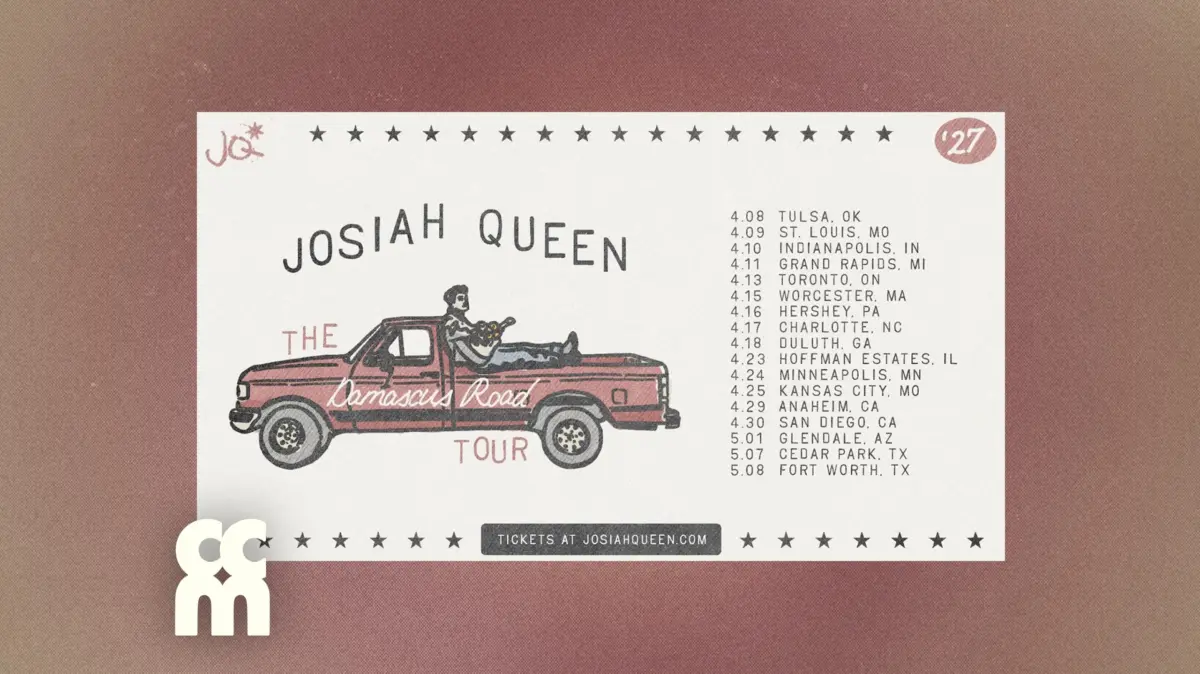
Enter Josiah Queen. At just 23 years old, the Tampa, Florida-based singer-songwriter is no longer just a "rising artist" or an internet anomaly. He represents a fundamental paradigm shift in how sacred music is created, distributed, and consumed in the digital age. This spring, Queen will cement his status as a major touring powerhouse by launching the Damascus Road Tour, a grueling, highly anticipated 17-date trek spanning major arenas across the United States and Canada.
Opting entirely out of standard clubs, theaters, or traditional mid-sized venues, Queen’s itinerary boasts legendary spaces such as the BOK Center, Gainbridge Fieldhouse, Target Center, and the Honda Center. Backed by staggering metrics—including over 2.1 billion global streams, a Billboard Hot 100 hit, and more than 260,000 tickets sold on headline tours alone—Queen’s ascension exposes the widening gap between legacy gatekeepers and a massive, digitally mobilized audience that has already handed over the keys to a vibrant new generation.
Detailed Chronology of an Unprecedented Rise
To understand the weight of the Damascus Road Tour announcement, one must trace the rapid, grassroots trajectory that brought Josiah Queen to the precipice of major arena headlining. Unlike artists manufactured by boardrooms or major-label development camps, Queen’s origins are rooted in the authentic, homespun traditions of a kid who simply grew up listening to and loving Christian music.
From Local Acoustic Roots to Viral Phenomenon
Growing up in the Tampa area, Queen cultivated a musical style that felt remarkably unpolished compared to the hyper-produced, pristine pop dominating contemporary Christian radio. His songs retained a raw, confessional vulnerability, relying heavily on organic instrumentation and earnest storytelling.
The turning point arrived with the release of his breakout anthem, "The Prodigal." Without the machinery of a major legacy label driving traditional terrestrial radio saturation, the track struck a visceral chord online. It tapped into a deep, universal longing for redemption and homecoming, rapidly scaling digital platforms through user-generated content, TikTok shares, and independent Spotify playlisting. "The Prodigal" eventually shattered expectations by crossing the 200-million-stream mark, signaling to the industry that a tectonic shift in listener behavior was underway.
Cementing Chart Success and Critical Validation
Following his viral breakout, Queen did not fade into the background as a one-hit wonder. Instead, he systematically rolled out material that resonated deeply across demographics. His single "Dusty Bibles" achieved a historic milestone by becoming his first entry on the Billboard Hot 100, simultaneously earning RIAA Gold certification in less than six months—a blistering pace for any independent or faith-based release. Furthermore, the track breached Spotify’s prestigious Viral 50 chart in more than 15 countries, proving that the lyrical themes of faith and spiritual hunger possessed undeniable global, cross-cultural appeal.
Subsequent releases solidified his radio dominance. "Can’t Steal My Joy" climbed to the coveted No. 1 spot on Christian radio, a feat quickly mirrored by his brooding, introspective track "Demons," which also surpassed the 100-million-stream threshold. With each release, Queen expanded his digital footprint, accumulating a staggering community of more than 3 million followers spread across Instagram, TikTok, YouTube, and Facebook.
The Leap to Arenas: The Damascus Road Tour
As cumulative ticket sales for his headline tours surpassed 260,000, industry observers realized that traditional descriptors—such as "promising newcomer" or "indie darling"—no longer applied. The announcement of the Damascus Road Tour marks the ultimate validation of this momentum.
Commencing on April 8, 2027, in Tulsa, Oklahoma, the 17-date spring run represents a massive logistical and financial commitment. By booking multi-thousands-capacity arenas rather than conservative theater circuits, Queen and his team are signaling an unwavering confidence in the drawing power of this new wave of artists.
Supporting Context & Metrics: The Numbers Behind the Movement
The skepticism surrounding festival lineups like Rock the Universe often stems from a fundamental misunderstanding of contemporary media consumption. Traditional gatekeepers measure cultural relevance through legacy metrics: terrestrial radio station adds, physical album sales, and decades-long career longevity. However, the modern music ecosystem operates on an entirely different plane.
Decoding the Metrics
To fully grasp why Josiah Queen can command arenas at age 23, one must look at the hard data defining his career thus far:
- Global Streams: Surpassed 2.1 billion streams worldwide, reflecting deep, consistent daily engagement rather than isolated viral spikes.
- Breakout Hit: "The Prodigal" has generated over 200 million streams.
- Chart & Certification Milestones: "Dusty Bibles" hit the Billboard Hot 100, earned RIAA Gold status in under six months, and cracked Spotify’s Viral 50 in 15+ countries.
- Radio Dominance: Multiple No. 1 singles on Christian radio, including "Can’t Steal My Joy" and "Demons" (the latter exceeding 100 million streams).
- Live Touring Footprint: Over 260,000 tickets sold independently on previous headline runs.
- Social Ecosystem: Over 3 million dedicated followers across Instagram, TikTok, YouTube, and Facebook.
The "Silo Problem" in Christian Music
This data reveals a striking reality: an artist can quietly sell hundreds of thousands of tickets and accumulate billions of streams while remaining entirely invisible to audiences who rely exclusively on legacy media for cultural cues. This is the "silo problem."
For decades, the Christian music industry was centralized. A handful of gatekeepers—record labels, radio programmers, and print magazines—dictated who held the title of "headliner." Today, the internet has dismantled those bottlenecks. Artists like Queen connect directly with listeners through algorithms, peer recommendations, and hyper-targeted digital communities. When legacy consumers ask, "Where are the headliners?" they are often simply looking in the rear-view mirror, blind to the massive cultural highway that has been built right beside them.
Official Statements and Industry Perspective
While formal press statements surrounding the Damascus Road Tour emphasize the logistical scale and the excitement of the upcoming spring run, cultural commentary from within the community sheds light on the deeper psychological shift occurring among listeners.
Industry veterans have increasingly noted that the new generation of faith-based artists possesses a distinct posture toward the genre’s history. Unlike previous decades where some artists attempted to downplay their faith-based roots to crossover into secular markets, contemporary creators like Queen are unapologetic. They grew up listening to the genre, were profoundly shaped by its theological frameworks, and are now translating those values into a modern, sonically diverse vernacular.
As industry analysts point out, Queen’s music does not feel hyper-engineered or scrubbed of humanity. In an era dominated by slick, algorithmically optimized pop production, his raw, acoustic-driven vulnerability acts as an antidote. This authenticity is precisely what mobilizes millions of young fans to transition from passive digital listeners to active, ticket-buying concertgoers.
Future Outlook: A New Guard Takes the Keys
The announcement of the Damascus Road Tour is much more than a routine concert announcement; it is a watershed moment for the Christian music landscape. It signals that the proverbial "next generation" is no longer a hypothetical concept waiting patiently for the old guard to hand over the keys. The audience has arrived, and they have already voted with their streams, their follows, and their wallets.
As ticket sales open—with an exclusive presale commencing on September 14, followed by the public onsale on September 18 at 10 a.m. local time—all eyes will be on venues across North America to see how these arena shows perform. If the numbers are any indication, arenas like the Target Center and the Honda Center are about to be packed to capacity with a passionate, digitally native audience that knows exactly who their headliners are.
For legacy fans and skeptics alike, the takeaway is clear: it is time to take off the blinders. The landscape of Christian music has evolved, and the future is already here, playing to sold-out crowds in the biggest rooms in the country.
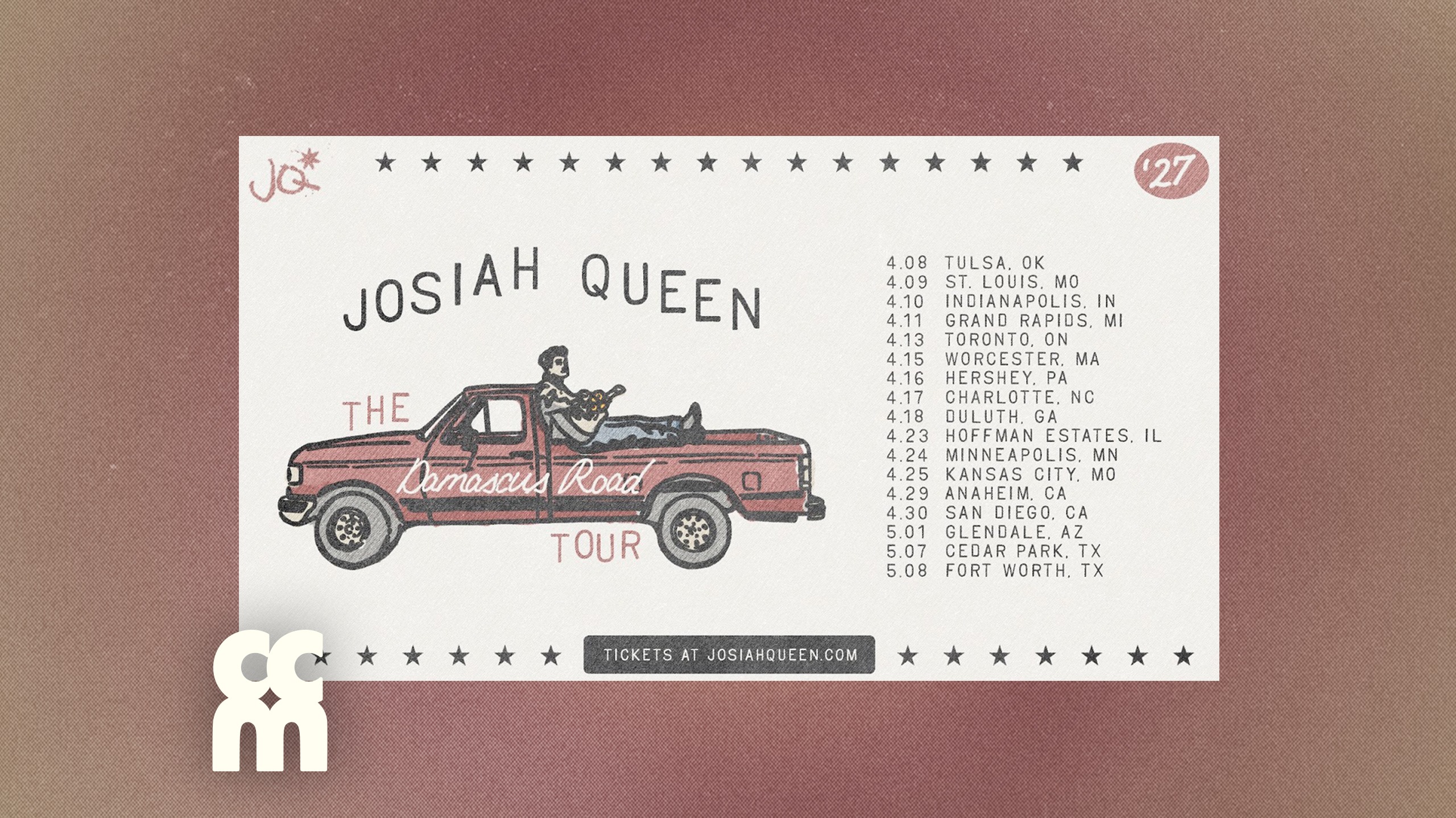
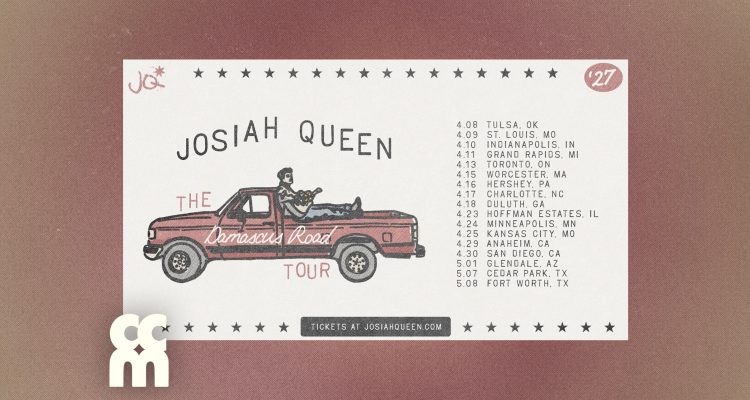
Complete Damascus Road Tour Dates (Spring 2027)
- Thursday, April 8, 2027 – Tulsa, OK – BOK Center
- Friday, April 9, 2027 – St. Louis, MO – Chaifetz Arena
- Saturday, April 10, 2027 – Indianapolis, IN – Gainbridge Fieldhouse
- Sunday, April 11, 2027 – Grand Rapids, MI – Van Andel Arena
- Tuesday, April 13, 2027 – Toronto, ON – Coca-Cola Coliseum
- Thursday, April 15, 2027 – Worcester, MA – DCU Center
- Friday, April 16, 2027 – Hershey, PA – GIANT Center
- Saturday, April 17, 2027 – Charlotte, NC – Spectrum Center
- Sunday, April 18, 2027 – Duluth, GA – Gas South Arena
- Friday, April 23, 2027 – Hoffman Estates, IL – NOW Arena
- Saturday, April 24, 2027 – Minneapolis, MN – Target Center
- Sunday, April 25, 2027 – Kansas City, MO – T-Mobile Center
- Thursday, April 29, 2027 – Anaheim, CA – Honda Center
- Friday, April 30, 2027 – San Diego, CA – Viejas Arena
- Saturday, May 1, 2027 – Glendale, AZ – Desert Diamond Arena
- Friday, May 7, 2027 – Cedar Park, TX – H-E-B Center at Cedar Park
- Saturday, May 8, 2027 – Fort Worth, TX – Dickies Arena