
Executive Overview
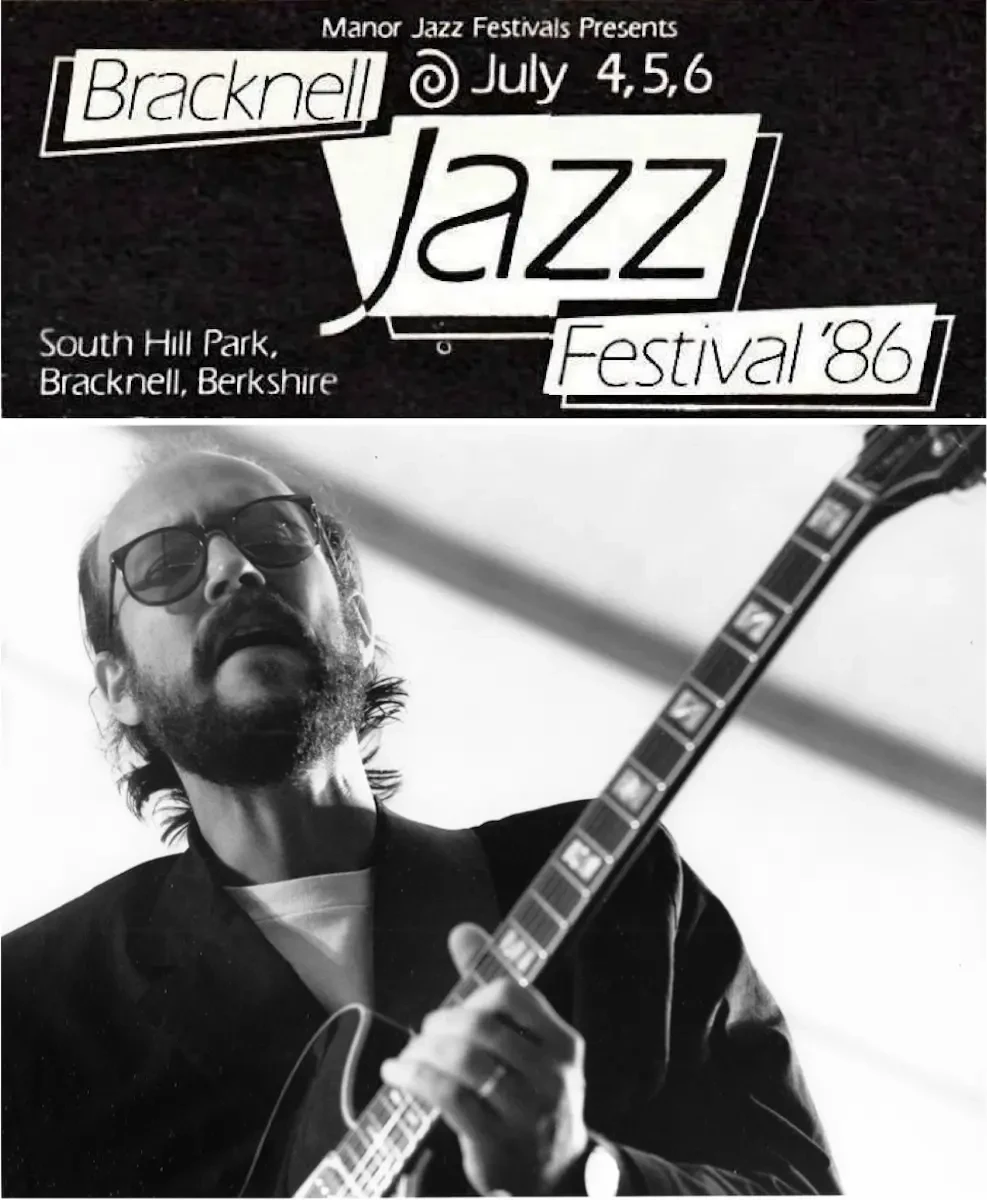
The annual Bracknell Jazz Festival, generously sponsored by Red Stripe, returned for another landmark weekend, drawing jazz aficionados from across the United Kingdom to witness an ambitious showcase of boundary-pushing contemporary music, classic big band grandeur, and avant-garde exploration. Spread across the expansive main marquee and the intimate, acoustically pristine Wilde Theatre, this year’s programming delivered an intoxicating mix of established luminaries and rising generational talents.
Over three action-packed days, the festival navigated the delicate tension between commercial accessibility and uncompromising artistic vision. While occasional logistical hiccups, tentative opening sets, and studio-bound recreations tested the patience of purists, the overarching narrative of the weekend was one of transcendent musicianship. From the staggering 34-piece orchestration led by Rolling Stones drummer Charlie Watts to the blistering fusion workouts of guitar virtuoso John Scofield, Bracknell reaffirmed its status as an indispensable crucible for European and international jazz.
This retrospective examines the festival chronologically, breaking down individual performances, structural highlights, and critical reactions, while offering a broader look at the state of modern jazz performance captured during this unforgettable weekend.
Detailed Chronology: A Three-Day Musical Odyssey
Friday: Big Band Majesty and Late-Night Subterranean Grooves
The festival’s opening night, marred initially by damp weather and logistical delays, got off to a decidedly tentative start in the primary marquee. Vocalist Carmel, known for her dabblings in the lucrative "crossover" pop-jazz field, delivered a lacklustre performance that failed to ignite the restless crowd. Most attendees had bypassed the opening pleasantries entirely, flocking to the tent with a singular objective: experiencing the monumental, star-studded Charlie Watts Big Band.
Sporting a jaw-dropping 34 pieces on this particular evening, the Watts ensemble immediately cleared away any lingering lethargy. Launching straight into Skyliner, the orchestra unleashed a mad whirl of big band standards delivered with awesome power and infectious enthusiasm. Naturally, an aggregation of this historical magnitude faced tight rehearsal constraints, resulting in minor, forgivable ragged moments. Yet, these instances were remarkably rare.
The rhythm section alone was a masterclass in percussion, featuring a formidable three-drummer alignment: Charlie Watts, the magnificent John Stevens, and Bill Eyden. Almost every member of the sprawling ensemble stepped forward for at least one solo. While many of these spotlights leaned toward the rabble-rousing, crowd-pleasing variety, they felt entirely appropriate given the sheer celebratory atmosphere of the tent.
- Standout Moments: Robbins’ Nest swung mightily, granting the entire trombone section a chance to display their technical paces. Tenor titan Danny Moss capitalized on the momentum, deploying a massive, resonant tone that commanded the room. Later, Bobby Wellins offered a breathtakingly sensitive, meditative reading of Midnight Sun, erasing the memory of a forgettable vocal performance on Love Me Or Leave Me.
- The Brass and Reeds: The trumpet section seized Stompin’ At The Savoy as their own, with Dave DeFries scaling dizzying heights into the stratosphere. Vocalist Gail Dorsey offered a more than creditable, grounded rendition of Spring Can Really Hang You Up The Most, before a six-tenor tear-up drove the temperature to boiling point. Ray Warleigh delivered a subtle, highly effective nod to Illinois Jacquet via Flamingo.
- The Finale: Although the Flying Home finale proved slightly anticlimactic, it did nothing to mar the overarching impression of an opening night mutually adored by audience and musicians alike.
While Charlie Watts may not possess the virtuosic technical flash of the frontline soloists he leads, his curatorial vision deserves immense praise. Where else outside of a utopian jazz dreamscape could one witness tenor heavyweights Courtney Pine, Evan Parker, Bobby Wellins, and Danny Moss sitting side by side within the same reed section?
As midnight approached, the festival embraced jazz’s historic identity as a nocturnal, subterranean craft. Bracknell’s late-night sessions on Friday and Saturday offered sleazy, smoky, highly charged binges. Standout nocturnal catalysts included the meteoric Courtney Pine, the R&B-flavoured Team Ten, Lennie Best, Dick Morrissey, Kathy Stobart, Gail Thompson, Voice Of God III, Norma Winstone, and Jeff Clyne.
Saturday: Avant-Garde Experiments and Fusion Masterclasses
Saturday lunchtime marked the official beginning of the festival proper, unleashing a wealth of major concerts across the marquee and the Wilde Theatre.
The Marquee and Wilde Theatre Morning Sessions
Iain Ballamy’s Quartet—featuring the ubiquitous Steve Arguelles on drums, Django Bates on keyboards, and Mick Hutton on bass—immediately tuned audiences into a vaguely bizarre, highly intellectual vision of modern jazz. Their set was epitomized by the jagged, complex rhythms of Rats On Stilts, a track playfully named after the rodent-like toy dogs beloved by elderly dowagers.
In contrast, guitarists Gary Boyle and John Etheridge hewed a much straighter, bop-focused course. Accompanied by Nic France (drums) and Dill Katz (bass), the guitar slingers ran the changes on a formidable series of bop and fusion standards alongside original compositions. Their heavy nod to the American idiom—highlighted by a clever reading of John Scofield’s Looks Like Meringue—served as a fitting thematic appetizer for Scofield’s own marquee appearance later in the evening.
Next came Lol Coxhill and friends under the banner Standard Conversions. Far from a firm of building contractors, this ensemble cast a sidelong, irreverent glance at familiar jazz material. True to the iconoclastic spirit of the genre, the group could not resist the artistic temptation to distort, parody, and playfully ridicule sacred musical cows.
The Afternoon Upswing: Freebop and Eberhard Weber
Having fully recovered from the physical exhaustion of the previous evening’s Watts extravaganza, drummer John Stevens stepped back into the spotlight to lead his own bebop and free-jazz fusion project, sensibly titled Freebop. The band functioned as a high-octane platform for a head-turning, visceral dogfight between British free-jazz veteran Evan Parker and the ferocious young Turk, Courtney Pine.
Simultaneously, inside the contemplative, air-conditioned cool of the Wilde Theatre, German bassist Eberhard Weber delivered a mesmerizing solo performance following an earlier collaborative set with Ian Carr and the Kreisler String Orchestra. Extracting lugubrious, arabesque melodies from his skeletal upright electric bass—including compositions from his recent ECM release, Chorus—Weber constructed intricate sonic architectures entirely unaided. In the complete absence of accompanying instruments, he cleverly supplied his own counterpoint, infusing his serpentine lines with a surprising, hypnotic degree of rhythmic variety.
As teatime approached, percussionist Nana Vasconcelos meshed intuitively with legendary ex-Ornette Coleman drummer Ed Blackwell within the collective quintet Nu. The lineup was rounded out by Mark Helias on bass, Don Cherry on trumpet, and Carlos Ward on reeds. Cherry proved to be the undisputed standout, spinning weightless, avant-garde lines that made scant reference to jazz history. While Ward offered fewer surprises, he served as a remarkably cohesive, steady foil for Cherry’s visionary flights.
The Evening Climax: John Scofield vs. Loose Tubes
Festival organizers positioned the energetic collective Loose Tubes and the John Scofield Band as Saturday’s twin headliners. In hindsight, transposing their running order might have yielded a more dramatic emotional climax.
While Loose Tubes remained their usual colorful, hyper-energetic selves, their special festival commission felt surprisingly circumspect. It simply failed to generate the same blistering head of steam established by Scofield’s preceding set. Following Scofield’s storming marathon—where the marquee’s ambient temperature seemed to hover near 90°C from the very first bar—Loose Tubes felt slightly deflated, causing an audible drop in crowd pressure. Although they successfully reprised several fan-favorite chestnuts later in their set, their trademark theatrical zaniness is, regrettably, beginning to wear thin for seasoned critics.
John Scofield, conversely, bypassed theatrical showmanship entirely, relying exclusively on the ferocious intensity of his playing to command the stage. Drawing heavily from Still Warm, his acclaimed Gramavision album, Scofield utilized the extended live format to stretch, mutate, and elaborate upon his studio recordings. Audiences were treated to monstrous, distorted intersections of rock, funk, and post-bop idioms. Yet, it was the sensitive, exposed a cappella reading of Georgia that closed his set, saying everything that needed to be said about his mastery of tone and restraint.
Sunday: Provincial Fusion, Transatlantic Cool, and Final Reflections
The final day of the festival opened with a healthy, energetic slice of provincial fusion delivered by Bullitt, an 11-piece outfit hailing from Bristol. However, what followed immediately afterward crowned the undisputed champion of Sunday’s main stage.
Tommy Smith and Forward Motion
Though the weekend featured an embarrassment of riches when it came to tenor saxophone players, young Scottish phenom Tommy Smith—wielding a hard-driving, Coltrane-indebted sound—was the singular artist who truly disrupted Bracknell’s peaceful Sunday afternoon. Performing as part of the four-piece ensemble Forward Motion, Smith proved himself to be a preternaturally mature saxophonist who attacked his material with fearless vigor. His early afternoon shake-up was so arresting that it arguably warranted a much later, primetime evening billing.
In contrast, pianist Chris McGregor took a more inward, reflective lane. Infusing his modal tunes with the complex, polyrhythmic flavor of his native South Africa, McGregor anchored his sound with tenor player Bheki Mseleku. Mseleku proved to be an assertive, straight-ahead player, though his solo developments occasionally suffered from structural sameness, leaving the overall set slightly lacking in dynamic variety.
Meanwhile, the American trio Third Kind Of Blue flattered only to deceive. The young musicians appeared overly anxious to slavishly reproduce the exact sonic footprint of their recent studio recordings. This unfortunate fixation resulted in an overabundance of vocal embellishments from drummer Ronnie Burrage. While reedman John Purcell performed admirably on both soprano and tenor, the trio only truly locked into a compelling pocket during moments where Purcell soared out front while Burrage and bassist Anthony Cox anchored the rhythm section from behind.
The Wilde Theatre Sanctuary: Bradford, Gjerstad, Dyani, and Stevens
A far more balanced, harmoniously executed set claimed top honors in the adjacent Wilde Theatre. A transatlantic quartet featuring trumpeter Bobby Bradford, reedman Frode Gjerstad, and a rock-solid rhythm section comprising bassist Johnny Dyani and drummer John Stevens delivered an immaculate masterclass to a near-capacity house.
Dyani maintained relentless, busy foundations throughout, while Stevens—acting as his usual urgently propulsive self—ensured the rhythmic backdrops contained precisely the right amount of intellectual fencing. The front line prioritized inventive composition over erratic wildness; Bradford conjured breathtakingly delicate free-jazz patterns, while Gjerstad successfully avoided jagged sonic edges as he stretched out across his expansive solos.
Afternoon Tents and the Randy Brecker Climax
Back in the marquee, vocalist Maggie Nichols and Pete Nu engaged in their own intellectual fencing match, sparring across a wide range of vocal and piano bouts that traversed the spectrum from straight-ahead standards to high abstraction. They were followed by Full Circle, a band that demonstrated broad instrumental competence but ultimately devolved into a backing vehicle for the uninhibited talents of trombonist Rick Taylor. Fortunately, Taylor was riding a towering musical high, generating a palpable, joyous atmosphere just in time for the evening’s marquee star attraction.
That final headliner, however, proved somewhat anticlimactic. Mirroring earlier programming missteps, the overarching artistic directive appeared focused on replicating pristine studio acoustics rather than courting live danger. The Randy Brecker/Eliane Elias Group—bolstered by Jukkis Uotila on drums and the exceptionally talented guitarist Barry Finnerty—arrived looking thoroughly well-equipped to deliver a rousing festival climax.
Instead, they delivered an overly cautious, safe set. The rhythm section settled into a comfortable fusion cruise control, and Elias’s piano solos leaned toward the tidy and predictable rather than the wildly inspired. While Brecker performed with characteristic technical polish, his solos offered zero narrative surprises; it read as an exercise in damage control, meticulously avoiding errors rather than embracing the unknown into uncharted improvisational territory. While casual festival-goers seemed adequately pleased, a noticeable faction of dedicated listeners drifted away toward the exits before the final chord rang out.
As has become a beloved festival tradition, the weekend’s proceedings were gracefully and hilariously shepherded by the inimitable Lol Coxhill. Joking, playing, remonstrating, and introducing acts with a singular wit possessed by nobody else in the industry, Coxhill left an indelible stamp on the proceedings. Indeed, one backstage technician asked if this reporter had seen "Lol Bracknell"—a Freudian slip that accurately reflected how deeply Coxhill’s spirit had come to define the festival’s identity.
Supporting Context & Metrics: Festival Analytics at a Glance
To fully contextualize the scope of Bracknell’s musical offerings, the following metrics outline the logistical footprint of the weekend:
- Duration: 3 Days (Friday evening through Sunday night)
- Venues Utilized: 2 Primary performance spaces (The Main Marquee and the Wilde Theatre)
- Total Ensembles Featured: Over 20 distinct bands, projects, and ad-hoc collaborations.
- Largest Ensemble: Charlie Watts Big Band (34 pieces)
- Sponsorship: Red Stripe (Primary Corporate Backer)
- Geographic Representation: A robust mix of British stalwarts, continental European innovators (such as Eberhard Weber and Frode Gjerstad), and American jazz luminaries (including Don Cherry, John Scofield, and Bobby Bradford).
Official Statements and Critical Consensus
Reflecting on the artistic successes and minor logistical missteps of the weekend, several overarching themes emerged from critics and participating musicians alike:
"Charlie Watts may not be the outstanding technical soloist of the massive outfit he leads, but he sure as hell deserves our deepest congratulations for assembling such a wildly disparate, brilliant bunch of musicians into a single, worthwhile project."
— Pete Gamble (Friday Reviewer)"Scofield doesn’t bother too much with superficial showmanship, but the raw intensity of his music provides him with stage presence enough… his sensitive acoustic reading said it all."
— Mark Gilbert (Saturday Reviewer)"It was as if Brecker wanted to avoid making mistakes rather than allow the music to take him into uncharted territory. Yet, the audience remained well enough pleased."
— Barry McRae (Sunday Reviewer)
The critical consensus underscored a vital ongoing dialogue within contemporary jazz: the perpetual friction between studio-honed accessibility and the dangerous, volatile pursuit of genuine live improvisation.
Future Outlook: The Evolution of Bracknell
As the final notes of the Randy Brecker/Eliane Elias Group faded into the Berkshire evening, festival organizers and attendees alike began casting their gaze toward the future. Bracknell has firmly cemented its reputation as an essential laboratory for European jazz—a unique ecosystem where massive historical aggregations like the Charlie Watts Big Band can share a bill with reckless avant-garde improvisers like Evan Parker, Courtney Pine, and Freebop.
Looking ahead to future iterations, the festival faces a clear mandate: maintaining its fearless commitment to boundary-pushing artistic commissions (such as those championed by Loose Tubes and Iain Ballamy) while carefully guarding against the temptation of overly sanitized, studio-safe fusion headliners. If Bracknell can continue to balance historical reverence with the dangerous, unpredictable thrill of live exploration, its status as the premier crucible for British and international jazz will remain entirely unassailable.