
Executive Overview
The intersection of pop culture, longevity, and systemic double standards reached a boiling point following the 2026 MTV Video Music Awards (VMAs). Pop icon Madonna, a trailblazer who has spent four decades redefining the boundaries of female sexuality, performance art, and commercial dominance in the music industry, made a triumphant return to the VMA stage after a 23-year absence. The 68-year-old superstar opened the September 27, 2026, ceremony at the Peacock Theater with an ambitious, star-studded medley, ultimately walking away with seven awards—a personal career-best at the VMAs.
Yet, rather than focusing entirely on her historic achievement or the artistic merit of her performances alongside contemporary hitmakers like Sabrina Carpenter and Charli xcx, public discourse quickly devolved into familiar, tired tropes regarding her age, appearance, and adherence to youth-centric pop choreography. This cultural knee-jerk reaction sparked a fierce counter-debate among media figures, most notably on the Monday, September 28 episode of ABC’s daytime talk show The View.
The co-hosts forcefully defended Madonna, linking her treatment to a broader, insidious pattern of societal policing directed at aging women in the public eye. Highlighting a parallel situation involving actress Jasmine Guy—who faced parallel scrutiny upon returning to the television universe of A Different World—the panel underscored an inescapable double standard: women are perpetually trapped in a "no-win" scenario. Whether they choose to embrace their sexuality and attempt to defy chronological norms, or whether they elect to age gracefully without aggressive intervention, they are subjected to vitriolic digital harassment. This comprehensive report examines the structural underpinnings of ageism in entertainment, analyzes Madonna’s record-breaking VMA return, and explores the vital cultural pushback led by public figures demanding an end to the policing of women’s bodies.
Detailed Chronology: Madonna’s Historic VMA Return and the Subsequent Backlash
The 2026 VMAs: A Masterclass in Legacy and Collaboration
The 2026 MTV Video Music Awards, broadcast live from the Peacock Theater on Sunday, September 27, 2026, were designed to be a celebration of musical evolution and cross-generational influence. Entering the ceremony as the night’s most-nominated artist, Madonna proved that her cultural footprint remains indelible.
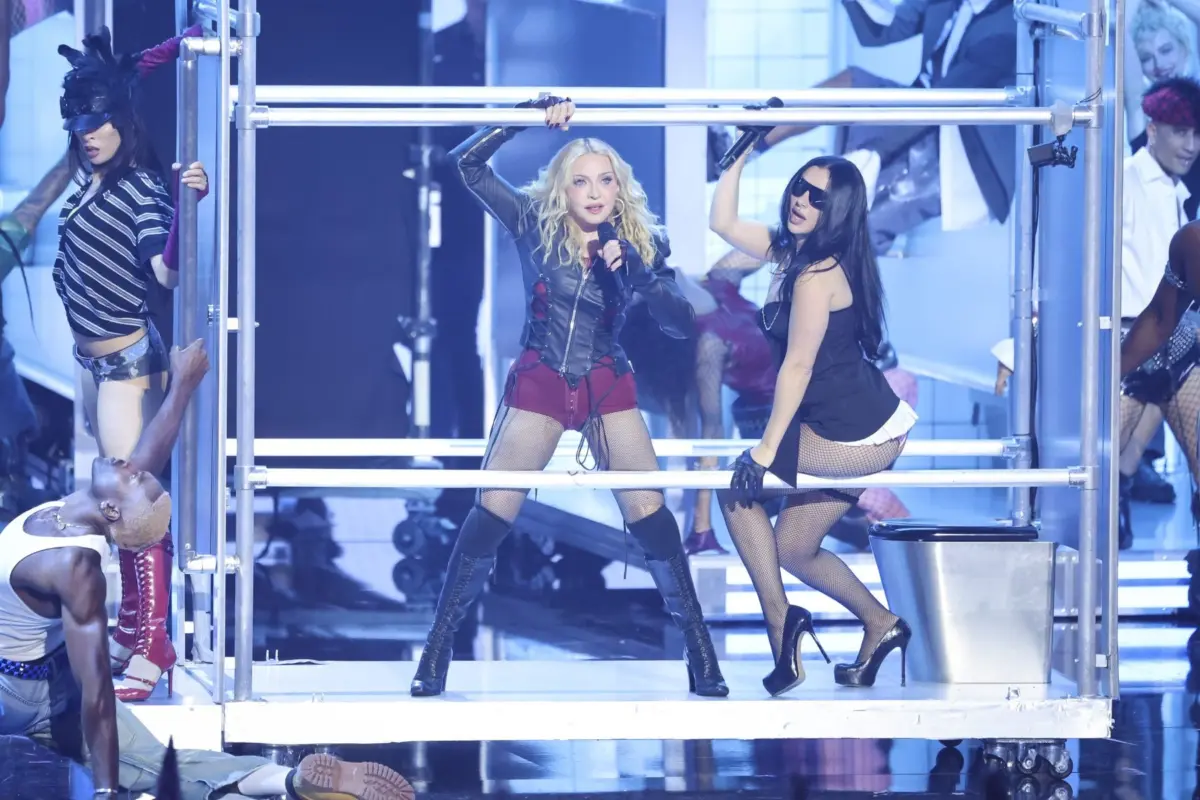
The evening kicked off with a high-octane opening medley that bridged decades of pop music history. Madonna took command of the stage to perform her single "Bring Your Love," joined by modern pop powerhouse Sabrina Carpenter. The energy shifted seamlessly as Madonna introduced Charli xcx for a blistering rendition of "Danceteria Afterhours." The performance was further elevated by high-profile cameos from actress Julia Garner—who had long been slated to portray Madonna in a biographical film project—alongside musician Sombr, actor Seth Rogen, and longtime collaborator Debi Mazar.
The performance was a testament to Madonna’s enduring collaborative spirit and her capacity to command a multi-generational stage. By the end of the night, she had secured seven VMAs, setting a new personal record for wins at a single ceremony and cementing her status as an active, vital force in contemporary music rather than a mere legacy act.
The Immediate Digital Backlash
Despite the artistic triumph and the enthusiastic reception inside the Peacock Theater, the digital landscape reacted with predictable hostility. Within minutes of her performance concluding, social media platforms were flooded with critical commentary attacking Madonna’s physical appearance, her choice of costume, and the energetic choreography of her routines.
Critics resurrected tired narratives accusing the 68-year-old icon of "trying too hard to look young" or clinging to an aesthetic associated with her twenties and thirties. This commentary ignored the reality of performance art: physical dynamism, theatricality, and provocative imagery have been core pillars of Madonna’s brand since her 1983 self-titled debut album. The discourse quickly transformed from legitimate critique of artistic execution into an unfiltered exercise in ageism and misogyny, proving that society remains deeply uncomfortable with older women occupying spaces traditionally reserved for youth.
Supporting Context & Metrics: The Anatomy of Industry Ageism
The Double Standard: Madonna vs. Jasmine Guy
The conversation surrounding Madonna’s VMA return did not exist in a vacuum. Just days prior, actress Jasmine Guy, 64, faced a wave of unsolicited commentary regarding her appearance as she stepped back into the iconic sitcom universe of A Different World. The convergence of these two events laid bare the pervasive double standard identified by cultural critics and television personalities alike.
As The View co-host Alyssa Farah Griffin astutely observed, women in the public eye face an impossible dichotomy:
"So Madonna’s being criticized for being too overtly sexual and trying to look too young. And then Jasmine’s being criticized for trying to age gracefully. It’s like, you can’t win no matter what direction you take it."
This "no-win" framework is supported by decades of sociological research into media representation. While male artists and actors are frequently permitted to age into roles of distinguished elder statesmen—often celebrated for gray hair, wrinkles, and physical changes—their female counterparts are subjected to hyper-scrutiny. If a woman utilizes cosmetic procedures or maintains a high-energy, sexualized performance style, she is lambasted as desperate or in denial of her age. Conversely, if she chooses natural aging, she is often marginalized by an industry obsessed with youthful aesthetic parameters, frequently relegated to non-sexual, maternal, or completely sidelined roles.
Cultural Reactions and the Statistics of Mortality
The panel on The View expanded the conversation from Hollywood superficiality to the very real psychological and emotional toll that ageist rhetoric inflicts on women. Sunny Hostin brought a sobering perspective to the discussion, grounding the debate in the realities of aging and mortality.
"I think that’s what’s so sad about all of this that’s going on about women and aging is, like, what is the alternative?" Hostin noted. "It is such a blessing to be able to age."
Hostin contextualized her remarks by sharing the stark realities of navigating middle age and beyond, noting the frequent loss of peers to strokes, heart attacks, and illnesses. To mock, demean, or scrutinize women who are simply trying to navigate the passage of time is not only petty; it represents a profound societal failure to value human life across its entire span.
+-------------------------------------------------------------------------+
|                  THE AGEIST TRAP FOR WOMEN IN MEDIA                     |
+-------------------------------------------------------------------------+
|                                                                         |
|  [Path A: Aesthetic Maintenance / Active Performance]                   |
|   ---> Accused of "denying age," "desperation," or "trying too hard."   |
|                                                                         |
|  [Path B: Natural Aging / Graceful Acceptance]                         |
|   ---> Accused of "letting oneself go," fading relevance, or invisibility.|
|                                                                         |
|  Conclusion: A systemic "no-win" paradigm engineered to invalidate      |
|              women as they accumulate life experience and seniority.    |
+-------------------------------------------------------------------------+
Official Statements & Discourse Analysis
Voices from The View: Dismantling the Digital Mob
The discussion on The View served as a vital media counter-offensive against the viral cruelty often normalized on platforms like X (formerly Twitter), Instagram, and TikTok. The hosts read and analyzed statements from those affected, most notably highlighting an Instagram post by Jasmine Guy, which read:
"The Internet can be brutal to women as we grow older. It asks us to celebrate life while criticizing every sign that we have lived in."
Whoopi Goldberg and her co-hosts used this quote as a springboard to interrogate the hypocrisy inherent in modern digital culture. The internet demands authenticity and longevity from its icons while simultaneously punishing them for the biological realities of accumulating years.
Ana Navarro injected personal vulnerability and humor into the segment while driving home a serious underlying point. Comparing her own aging process to that of Latin pop icon Ricky Martin—who performed a high-energy halftime show during a Baltimore Ravens-Dallas Cowboys game in Rio de Janeiro on the exact same weekend—Navarro joked about feeling aged by comparison, noting that Martin is only four days older than she is.
"And then I see all this stuff on Madonna, and I’m like, ‘OK, leave women alone.’ It’s hard," Navarro stated, capturing the exhaustion felt by women who are constantly measured against impossible benchmarks of eternal youth.
The Defense of Vitality
The core argument put forward by the co-hosts—and echoed by cultural commentators across the entertainment landscape—is that artistic expression should never carry an expiration date. Madonna’s choice to command a stage at age 68 with the same sweat, ambition, and theatricality that defined her twenties should be lauded as a masterclass in professional stamina.
Sunny Hostin delivered the emotional apex of the segment when addressing the cruelty directed at women attempting to live authentic lives:
"I’m going to be 58 this year. I can’t begin to tell you how many emails I get almost on a monthly basis about someone being widowed in my age group, someone having a stroke, someone having a heart attack. How dare you shame someone for trying to age well and just live?"
Future Outlook: Paradigm Shifts in Media and Cultural Consumption
Toward an Era of Unapologetic Longevity
The vitriol directed at Madonna following the 2026 VMAs is indicative of a culture in transition. As the Baby Boomer and Generation X populations continue to age, the demographic makeup of consumers and creators alike is shifting. Women who grew up breaking glass ceilings in the 1980s and 1990s are now entering their sixties, seventies, and beyond, and they have no intention of retreating into quiet obscurity.
The fierce defense mounted by mainstream media platforms like The View signals a growing intolerance for institutionalized ageism. Public figures are increasingly willing to call out digital misogyny, forcing audiences and critics alike to re-evaluate their internalized biases.
The Evolution of the Pop Icon
Madonna’s record-breaking night at the 2026 VMAs ultimately serves as a blueprint for the future of pop stardom. By refusing to soften her edges, tone down her sexuality, or step aside for younger generations—and instead actively collaborating with them, as seen with Sabrina Carpenter and Charli xcx—she redefines what longevity looks like in the entertainment industry.
As cultural institutions slowly catch up to the reality that aging is a universal privilege rather than a public relations failure, the discourse sparked by Madonna’s VMA return may well be remembered as a turning point. It highlights the urgent need to dismantle the archaic parameters that dictate how women are allowed to look, behave, and create as they navigate the rich, unchartered territories of later life.