
In the landscape of modern American art and historical architecture, few structures command the emotional weight and cultural resonance of the Vietnam Veterans Memorial in Washington, D.C. Spanning two 246.75-foot-long black granite walls that carve a sharp, V-shaped incision into the earth, the monument lists the names of more than 58,000 fallen soldiers in chronological order of their sacrifice. Conceived by a 21-year-old Yale undergraduate via a blind national design competition in 1981, Maya Lin’s minimalist masterpiece initially triggered a nationwide firestorm of political controversy and cultural friction.
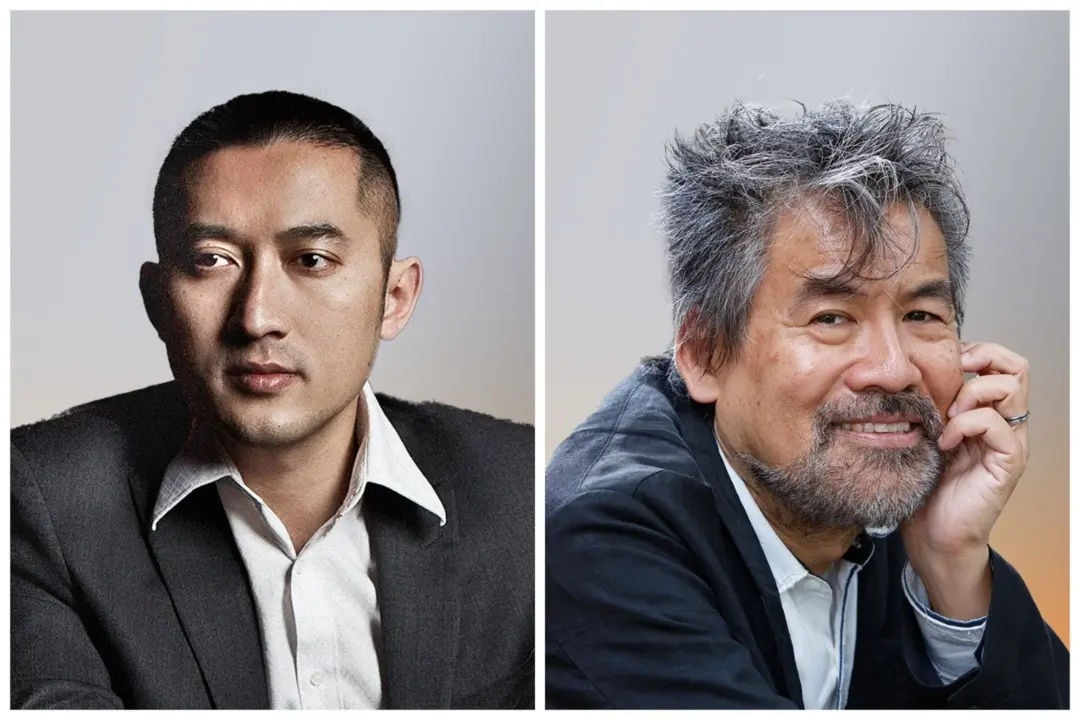
Decades later, that foundational flashpoint of American history serves as the creative bedrock for The Rift, a compelling contemporary opera conceived by the celebrated composer Huang Ruo and renowned librettist David Henry Hwang. Developed initially through a commission by the Washington National Opera for the Kennedy Center’s 50th-anniversary celebrations and shaped during the isolating depths of the COVID-19 pandemic, the opera explores the profound intersections of youth, resilience, national division, and healing.
As The Rift takes center stage for the 2026 China Now Music Festival—themed “Chasing Dreams” and presented by the US-China Music Institute of the Bard College Conservatory of Music—OperaWire sat down with its creators for an exclusive, wide-ranging discussion. The creators explored how Maya Lin’s architectural vision translates into vocal lines, how a compact cast of four singers tackles a multi-layered narrative tapestry, and why an artistic examination of the Vietnam War remains urgently relevant to contemporary audiences navigating modern societal rifts.
Detailed Chronology: From Yale to the Kennedy Center and Carnegie Hall
The historical trajectory of The Rift stretches from an undergraduate classroom assignment in the early 1980s to the grand stages of the 21st century. Understanding the opera requires charting the pivotal chronological milestones that transformed a controversial architectural submission into a lyrical exploration of national reconciliation.
1981–1982: The Genesis of a Monument
While studying memorial architecture at Yale University, 21-year-old Maya Lin entered a blind jury competition to design a national monument dedicated to the veterans of the Vietnam War. Surpassing 1,421 other submissions, her stark, reflective black granite design was unanimously selected by a panel of renowned artists and architects.
However, the public revelation that the winning designer was a young, female, Chinese-American undergraduate ignited immediate controversy. Detractors criticized the unorthodox, non-glorifying design—often pejoratively labeled a "black scar"—sparking a fierce cultural debate about how a divided nation should remember its fallen. Lin navigated this intense scrutiny with remarkable poise, ultimately delivering a monument that would become the most visited and deeply revered landmark in the American capital.
Pre-Pandemic to 2022: Commissioning and Writing The Rift
Decades later, as the John F. Kennedy Center for the Performing Arts prepared for its 50th anniversary, Washington National Opera Artistic Director Francesca Zambello envisioned a multi-part vocal project. Seeking to interrogate the stories behind the marble and stone of Washington D.C.’s monuments, Zambello commissioned four pairs of composers and librettists to create short operatic works.
Huang Ruo and David Henry Hwang immediately gravitated toward the Vietnam Veterans Memorial. Composing the piece during the unprecedented isolation of the 2020–2021 pandemic years, the creative duo infused the work with timely reflections on modern societal fractures, xenophobia, and anti-Asian sentiment. The Rift received its world premiere in the spring of 2022, introducing audiences to an innovative operatic exploration of historical memory.
2026: The China Now Music Festival Revival
Fast-forwarding to the present, The Rift is slated as a centerpiece of the 2026 China Now Music Festival, themed “Chasing Dreams.” The upcoming semi-staged concert production at Zankel Hall, Carnegie Hall, brings together the meticulous musical architecture of Huang Ruo and the incisive theatrical dramaturgy of David Henry Hwang, featuring stage direction by Eric Ting and projection design by Shawn Duan.
Supporting Context & Metrics: Architecture, Music, and Dramatic Structure
To successfully render a complex historical monument and its socio-political fallout into an operatic format, the creators of The Rift engineered a sophisticated marriage of vocal performance, structural design, and orchestral motifs.
Architectural Metrics and Symbolism
Maya Lin’s physical memorial relies on strict, purposeful dimensions:
- Length: Two black granite walls, each measuring precisely 246.75 feet, converging in a 125-degree angle.
- Chronology: Names are inscribed not alphabetically, but chronologically by the date of casualty, illustrating the escalating human toll as visitors walk deeper into the earth.
- The "Rift": The physical impression left on the landscape, serving as both a wound in the earth and a metaphor for a fractured nation.
The Four-Pillar Vocal Architecture
Faced with a logistical constraint of casting only four singers, Huang Ruo and David Henry Hwang transformed a limitation into an artistic triumph. Utilizing theatrical "tracks," the quartet of vocalists embodies multiple intersecting personas, representing four distinct perspectives on the Vietnam War:
- Maya Lin (Soprano): Representing youth, visionary genius, and intellectual resilience. The lyric soprano voice captures her early-20s passion while maintaining the gravitas of a deep thinker. The same singer also transitions into a Vietnamese refugee’s daughter, a press reporter, and a foundational chorus member.
- The Vietnam Veteran (Tenor): A 30-something African American combat veteran wrestling with severe post-traumatic stress disorder (PTSD), buried memories, and a profound sense of disillusionment upon returning home.
- The Vietnamese Mother (Mezzo-Soprano): A refugee woman who arrives in the United States, initially experiencing alienation upon discovering that the national memorial honors only American soldiers, omitting her own countrymen who fought alongside U.S. forces.
- Robert McNamara (Bass-Baritone): The former Secretary of Defense and principal architect of the Vietnam War. Exhibiting the deeper, seasoned tones of a man in his 60s, McNamara oscillates between defensive self-justification and late-life moral reckoning, while also doubling as Maya Lin’s college professor at Yale.
Orchestral Motifs: The Turbulent Wave
Musically, Huang Ruo anchors the entire score with a recurring motif: the turbulent wave. Executed primarily through the string section, these counter-currents symbolize ocean waves crashing against one another. Spanning the ocean that separates the United States from Vietnam, these musical waves also mirror the ideological clashes, political agendas, and societal divisiveness that define both the war’s legacy and contemporary modern life.
Official Statements and Creator Insights
In their exclusive interview with OperaWire, Huang Ruo and David Henry Hwang elaborated on the philosophical and structural underpinnings of The Rift.
Discussing the genesis of the commission and the thematic core of the opera, David Henry Hwang noted:
"Part of what drew us to this story was this notion that art can help to heal a divided country. We certainly are a divided country now and we were then at the time that Huang Ruo and I wrote the opera originally. In order to achieve this, we wanted to incorporate different points of view and experiences from the Vietnam War and its aftermath in order to show how Maya’s artwork brought these disparate elements together."
Reflecting on the psychological climate during the composition process in 2020, Huang Ruo shared:
"With everything going on right now, there’s so much anti-Asian hate, so many false messages, false talking points… I could not pick myself up to be creative, not to mention to write an opera about a war that was fought more than 50 years ago. But David… encouraged me. You said that we live in a divisive time, perhaps more so now than in the past. So the message of The Rift, as we titled it, actually is quite relevant… The word ‘rift’ was from Maya directly. She described the memorial as like a rift on the earth. I asked David, we have The Rift, but what next? What is the antidote to that? We decided… it is to heal."
Addressing the unique capabilities of opera to harmonize conflicting voices—such as the powerful duet connecting the African American veteran and the Vietnamese mother—Huang Ruo explained:
"In the opera world, you create a motif, a narrative for one singer, for one character. And then you continue with that and then you bring in another character with a very different motive, very different style, very different vocal line. When you merge them together, even if they are singing at the same time, different words, you can still close your eyes, tell who is who, and you can actually still hear what they are singing."
Future Outlook: Healing, Memory, and the 2026 Festival
As The Rift prepares for its high-profile presentation at Carnegie Hall’s Zankel Hall during the 2026 China Now Music Festival, the production carries profound implications for the future of contemporary American opera and sociopolitical discourse.
By framing the Vietnam Veterans Memorial not merely as a historical relic of the 20th century, but as a living, breathing testament to national resilience, the creators hope to inspire modern audiences. As the United States approaches its 250th anniversary, the work serves as a timely reminder that artistic creation remains a vital tool for collective healing.
David Henry Hwang summarized the overarching aspiration for the audience:
"I hope audience members can be inspired by the story to think about their own role in healing our country and trying to create something that moves us forward. Yes, it’s the 250th year. Yet we’re, in my opinion, in a very precarious place as a country. So what can we all do to try to make things better?"
Echoing this sentiment, Huang Ruo emphasized the enduring mission of the art form:
"At the end, it’s about coming together to achieve the better good. I think that is so crucial in our opera. Hopefully we can inspire people to carry that with them."
Through innovative musical architecture, dramatic economy, and an unflinching examination of history’s open wounds, The Rift stands as a masterclass in modern lyric theater—proving that the echoes of the past can illuminate the path toward a unified future.