In the modern music industry, the boundary between obscurity and global omnipresence can be erased by a fifteen-second clip on social media. For British singer-songwriter Samuel Jack, that crossing occurred in 2021 when his 2019 standalone single, "Feels Like Summer"—a track he admits was written on a whim in roughly half an hour—ignited across Instagram Reels. Overnight, a career built on years of quiet graft, pub kitchen shifts, and relentless touring transformed into a digital phenomenon.
Yet, as Jack’s narrative reveals, viral success is rarely a straightforward fairy tale. The sudden influx of attention thrust him into the whirlwind of major-label boardrooms just as he was navigating the devastating loss of his father. Pigeoned-holed by a song he didn’t view as his finest work and bound by the intricate, often restrictive machinery of major-label contracts, Jack faced the existential threat of becoming a footnote to his own accidental hit.
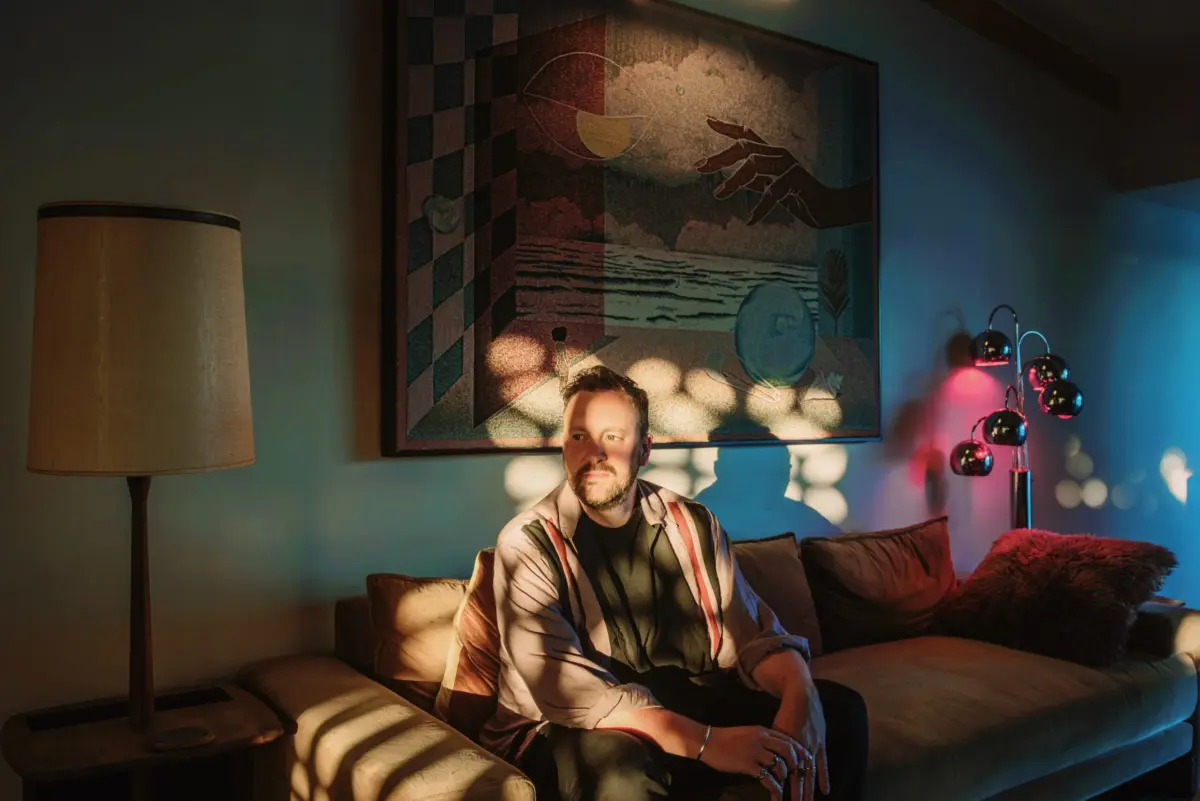
Today, sitting in his home studio working on tracks for television syncs, Jack is older, wiser, and remarkably unburdened. With his second full-length record, One Last Dance In The Valley, he has consciously stepped out of the shadow of his viral breakout. This comprehensive profile explores Jack’s nomadic upbringing, his protracted and unorthodox entry into professional music, the double-edged sword of viral fame, and his ultimate reclamation of artistic autonomy.
Detailed Chronology: From Nomadic Roots to the Kitchen Counter
A Dislocated Childhood and a Musical Epiphany
Samuel Jack’s life has been defined by movement from the very beginning. Born in London to a film director father, Jack experienced a deeply nomadic childhood. "My upbringing was all over the place," he reflects, noting the various personal and circumstantial reasons for constant relocation. "I was thrown around the place a lot when I was a kid."
That sense of transience followed him into his preteen years, highlighted by a pivotal multi-year move to South Africa. It was here that music ceased to be mere background noise and became an arresting force. One afternoon, while playing football outside, the sounds of Paul Simon’s landmark 1986 album Graceland drifted out from the house. Specifically, the haunting harmonies of "Homeless" and the transcendent vocals of Ladysmith Black Mambazo caught his ear.
"I made the effort to walk into the house, go to the record player or whatever it was at the time, and find the record and turn it round and read who the hell was singing," Jack recalls.
This moment transformed the young Jack into an unapologetic "music dweeb." He began inhaling everything from rock and rap to the deep soul and blues records spun by his parents. However, translating this obsession into creation took time. Distracted by teenage pursuits—primarily "chasing girls and playing football"—he did not write his first song until he was nearly twenty.
Pub Kitchens and Accidental Beginnings
As he entered adulthood, stability remained elusive. After leaving home at sixteen and subsequently dropping out of university, the early 2000s found Jack working as a chef in various pubs and hotels to make ends meet. It was during these grueling kitchen shifts that his musical journey truly began—in secret.
With money saved from his jobs, Jack purchased a small toy piano and began teaching himself to play in the pubs where he worked. He confesses that his early compositions were "absolutely dreadful, like truly, truly awful." For a long time, music remained a private outlet, relegated to the back burner.
That changed on a fateful New Year’s Eve during a pub lock-in. Spurred by alcohol and encouragement from a friend named Steven who took over the keys, an inebriated Jack delivered his first-ever public performance: a spirited rendition of The Doors’ "Light My Fire."
"The only reason I did it, if I’m completely honest, was because I was just really, really pissed," he chortles. The warm reception—particularly from his colleague Joe—validated his efforts. "That was the first time anyone heard me. They were like, Oh, who knew the chef could sing? And that made me feel better about writing my silly little songs secretly at home."
From that moment, music evolved into an emotional outpost. In his early twenties, writing songs became a vital, cathartic mechanism for processing the turbulence of life. Eager to take the next step, Jack saved his wages and booked time at a local studio. More than a career aspiration, it was a way out of a dead-end routine.
At that studio, he met longtime producer Owen Thomas, who would become a surrogate family member. Thomas was the first industry insider to validate his work: "That’s good, that’s really well made, that song; you’re not bad." For Jack, it was the definitive end of the beginning.
Building the Foundation: Glastonbury, Belgium, and Independent Grind
The ensuing years were characterized by unglamorous grind—balancing pub shifts with writing, recording, and playing live wherever he could secure a slot. Slowly, he built a dedicated network, collaborating closely with long-standing co-writer Lily-May Young. Milestones followed: opening the Avalon Cafe stage at Glastonbury in 2015 and releasing his soul-soaked debut EP, Let It All Out, in 2016.
A defining moment for his touring career occurred in a Belgian windmill. Traveling in a beat-up splitter van to a remote venue with no surrounding town, Jack wondered who would show up. As soon as they launched into their opening song, "Big City Love," the crowd sang every word back to him.
"That was probably the first time that I really felt like the music was travelling and it was doing something," he recalls.
Despite these victories, the financial reality required him to keep returning to kitchen work between tours. He was slowly constructing a bricks-and-mortar fanbase through sheer tenacity.
Supporting Context & Metrics: The Viral Paradox and Major Labels
The 2021 Viral Explosion
In 2019, Jack released "Feels Like Summer," a standalone single conceived as a quick, breezy experiment. Eighteen months later, the track caught fire across Instagram Reels, transforming into an algorithmic juggernaut.
Suddenly, the industry came calling en masse. "I was contacted by every single major record label on the planet—and I mean every single one of them; I spoke to them all," Jack notes. He eventually signed with Arista/Columbia Records.
Yet, this career-defining breakthrough coincided with devastating personal tragedy: the death of his father.
"I ended up leaving the restaurant. I was dealing with the loss of my father, and also literally in the same days, no exaggeration, taking these meetings with these major labels who were interested in me all of a sudden because the song was such a phenomenon at the time, so that was wild."
This emotional whiplash left Jack feeling detached and plateaued. To process his grief, he channeled those complex emotions into starker, piano-driven compositions like "Chat Dad." Meanwhile, the commercial pressure from his new label home was immediate and singular: they wanted another "Feels Like Summer."
The Creative Clash
The demand for a replicated viral hit placed Jack in an artistic straitjacket. He harbored mixed feelings about the track that made him famous.
"That song was written on a whim, and I’ll be completely frank with you, it wasn’t a song that I was super proud of… It was like, Oh, we should write a little fun, summer thing, and it was written in about half an hour. We weren’t really thinking much about it, and I didn’t love it. I still love it for what it’s done, but it’s definitely not my best work."
Reflecting on the major-label ecosystem, Jack acknowledges that the initial allure of high-profile signings often masks complex, restrictive clauses. "I felt a bit defeated; I was back to making ends meet and without being crass, you go, yeah, fine, I’ll sign to you. And obviously, that comes with major label promises and certain things within that deal which are intricate, but I know now that they’re not always the best things."
Official Statements & Industry Insights
Throughout his transition from independent grafter to major-label signee and back again, Jack has maintained a candid, unpretentious perspective on the music business. His reflections offer a valuable case study in artistic survival:
On the brutality and education of the industry:"I’ve done lots of stuff, in terms of the business side and know the brutality of it and also the exciting things of it. I’ve done big, huge shows, and I’ve done tiny little shows, I’ve cut my teeth and earned my stripes. I’m made up of all those tiny little experiences that have happened to me over so many years…"
On moving past viral pigeonholing:"The irony is that along this adventure and me experimenting with different sounds, you also find the ones that you don’t want to do, and ‘Feels Like Summer’ is pretty close to one of those that I didn’t want to do… It was really special, and will always hold a good place in my heart. But I’d like to not be defined by that song. That’s the objective."
On his creative liberation:"I’ve built myself a space which has allowed me to fully focus on who I is, rather than living in the shadow of a throwaway song, and for the first time I gleefully admit: I feel bad for saying it, but I just don’t care."
Future Outlook: One Last Dance In The Valley and Artistic Independence
Having navigated the labyrinth of major-label expectations, survived personal loss, and toured across continents, Samuel Jack has returned to his roots. After navigating various label arrangements, he has found his way back to Landon Records—the home where his professional journey began—operating now with seasoned maturity.
This evolution is fully realized on his second full-length record, One Last Dance In The Valley. Whereas his debut LP, The Gold & The Glory, felt like a patchwork collection built over a long, winding road, his latest work represents a cohesive, life-affirming artistic statement. Tracks like "California Sun"—anchored by a thick, buoyant bassline—celebrate the warmth of the American landscape that has embraced him, while pushing his soulful inclinations into brighter, bolder sonic territory.
Furthermore, Jack has cultivated a thriving parallel career in television synchronization, regularly writing custom tracks for unannounced TV shows from his home studio, proving his versatility as a craftsman-songwriter unbound by radio formats.
Ultimately, Samuel Jack’s journey underscores a vital truth about contemporary music: viral fame can open doors, but it takes grit, self-awareness, and stubborn authenticity to walk through them on your own terms. Having cut his teeth in pub kitchens, weathered the storm of major-label boardrooms, and processed profound grief, Jack is no longer chasing an external definition of success.
The viral moment may have introduced his name to millions, but the only person Samuel Jack needs to satisfy now is himself. And with One Last Dance In The Valley, his message to the industry is clear: "Here’s the record that I should have always made, there you go, take it or leave it."