
Executive Overview
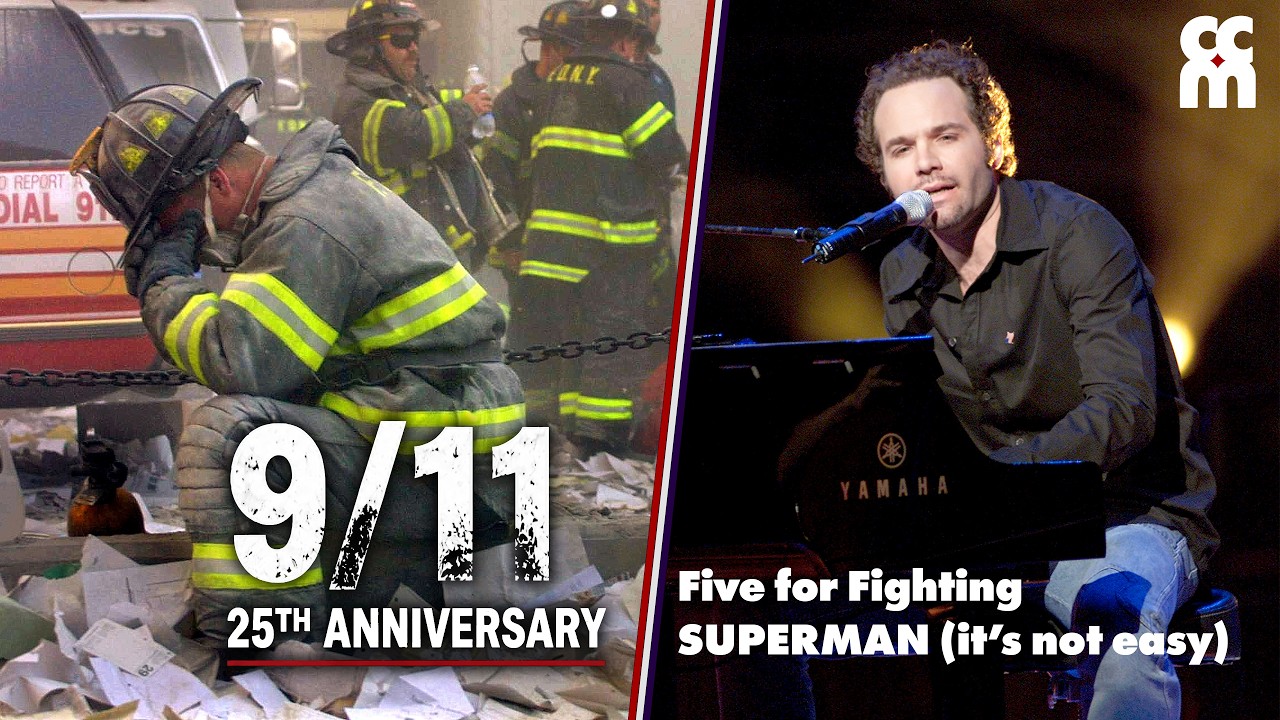
Twenty-five years after the harrowing events of September 11, 2001, the cultural landscape of the United States remains permanently altered, tethered to collective memories that are frequently unlocked by the unexpected catalyst of sound. Music functioned as an emotional infrastructure during the darkest days of the national tragedy, offering a universal vocabulary for grief, shock, and resolve when standard political and conversational language failed. Among the enduring sonic artifacts of that era, John Ondrasik’s piano-driven ballad under the moniker Five for Fighting—"Superman (It’s Not Easy)"—stands apart.
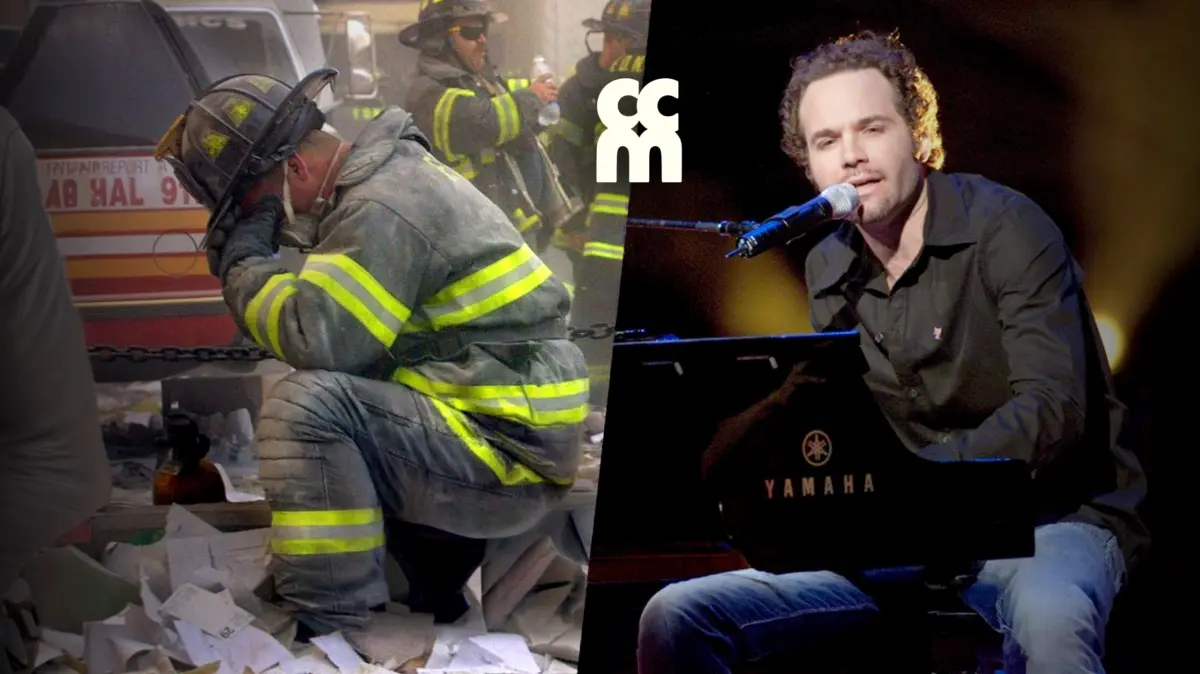
Originally an uphill battle for a young singer-songwriter trying to convince a skeptical record label to release an unconventional track, "Superman" underwent a profound metamorphosis in the autumn of 2001. Without the artist’s orchestration, the song was rapidly adopted by television networks, radio stations, and grieving citizens as a tribute to the firefighters, police officers, and first responders who ran toward destruction.
This deep dive examines the trajectory of a song that stopped belonging entirely to its creator. Through an exclusive retrospective interview with Logan Sekulow, Ondrasik reflects on the quarter-century journey of "Superman"—from a reluctant industry gamble to a staple of the post-9/11 Madison Square Garden stage, and finally, to its recent, miraculous convergence with the global fight against modern terrorism, culminating in a historic duet with released Israeli hostage Alon Ohel aboard the USS Nimitz.
Detailed Chronology: From Industry Gamble to National Anthem
The Reluctant Piano Ballad (Pre-September 2001)
In the late 1990s and early 2000s, the contemporary American radio landscape was dominated by high-energy teen pop groups and heavy grunge rock anthems. The delicate, introspective piano ballad was hardly a guaranteed commercial asset. John Ondrasik, recording under the pseudonym Five for Fighting, was fighting for industry survival following the moderate success of his track "Easy Tonight."
"It’s funny, I had a song called ‘Easy Tonight’ that was a moderate hit, and the record company said, ‘You get one more swing,’" Ondrasik recalled during his conversation with Sekulow. "And I’d seen ‘Superman’s’ reaction in shows… But it wasn’t 1977 with the piano all over the radio. It was little boy bands, grunge music."
Despite corporate hesitation, Ondrasik chose to stake his career on the track. "I’m like, if I’m going down with one song, I’m going to go down with ‘Superman.’"
The gamble began to pay off as the track slowly gained traction, even achieving surprising international success, reaching Number One in the Philippines. However, as the song climbed global charts in the late summer of 2001, Ondrasik traveled to London for international promotion, completely unaware of how geopolitical events would forever alter the trajectory of his composition.
September 11, 2001, and the London Isolation
On the morning of September 11, 2001, Ondrasik was thousands of miles away from home in the United Kingdom. As the first commercial airliners struck the World Trade Center towers, his phone began to ring. By the time the second plane hit, he was glued to television broadcasts in profound disbelief.
Cut off from the United States by the unprecedented grounding of international airspace, it took Ondrasik ten days to secure passage back home. During those agonizing days of isolation in London, an extraordinary phenomenon was occurring back in the United States.
"Superman" was written as a rumination on vulnerability, responsibility, and the crushing weight placed on the person everyone expects to be strong—the hidden human behind the cultural cape. In the wake of the terrorist attacks, America was suddenly forced to watch real-life figures bear that exact weight: first responders running into collapsing buildings. News organizations, radio stations, and grieving families began pairing these haunting images of sacrifice with Ondrasik’s lyrics.
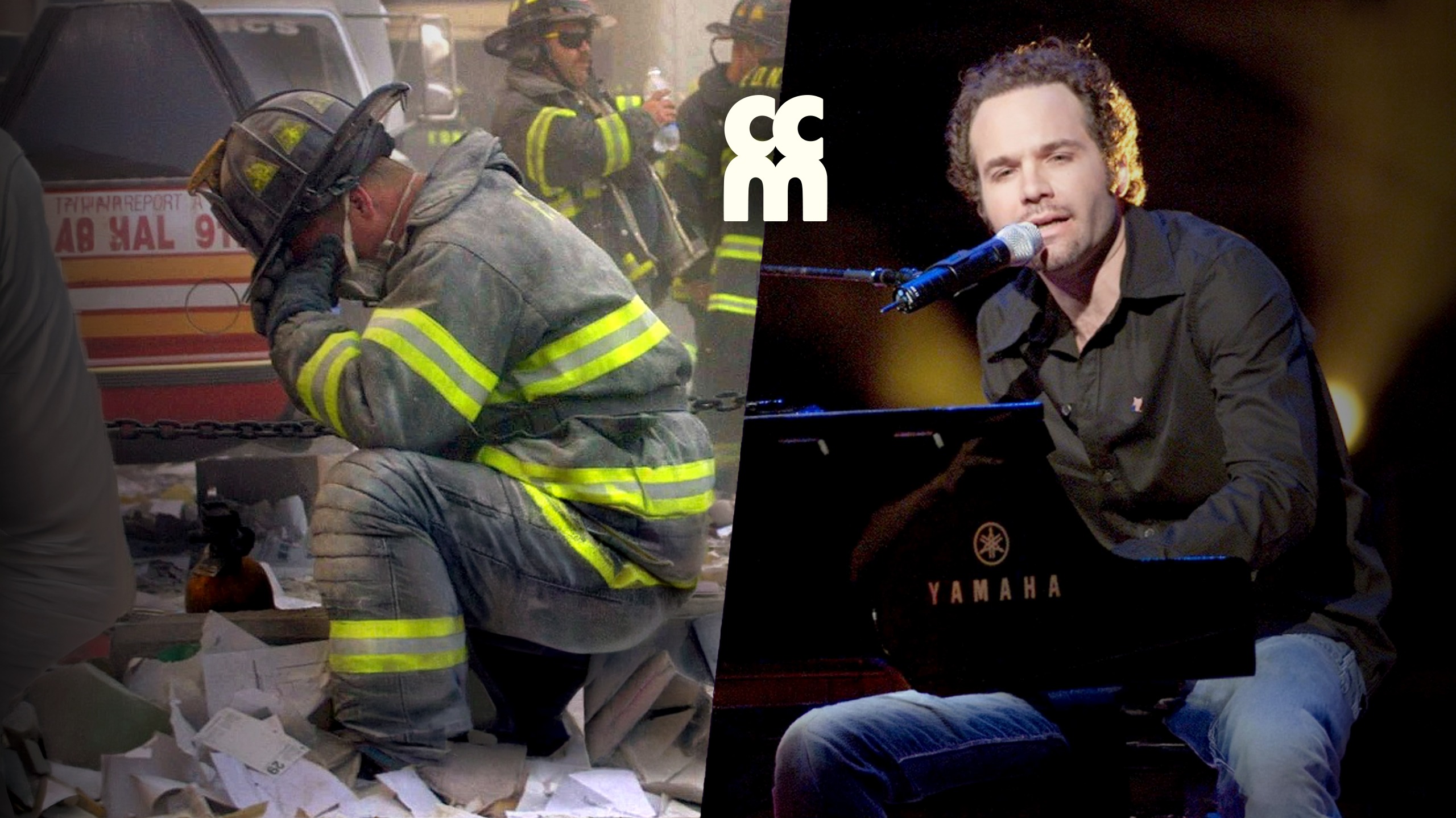
When Ondrasik finally returned to American soil, the cultural landscape had fundamentally shifted.
"I didn’t really realize till I got back how many news organizations had been using ‘Superman’ to recognize those heroes that ran into those buildings," Ondrasik noted. "And for a young guy who just got used to hearing his song on the radio, it was pretty overwhelming."
Madison Square Garden: The Concert for New York City
The emotional zenith of this cultural alignment manifested at Madison Square Garden during The Concert for New York City, a landmark benefit event that brought together the titans of rock, pop, and folk music. For an emerging artist whose primary exposure had been playing side stages, finding his name printed on an itinerary alongside Paul McCartney, The Who, David Bowie, Billy Joel, Elton John, Eric Clapton, and Mick Jagger was surreal.
"I kept turning the pages and I didn’t see my name, and I’m like, ‘Oh, good, they forgot me because I’m so nervous,’" Ondrasik recalled of skimming the show order. Reaching the final page of the program, he discovered his placement directly among industry legends.
Yet, it was not the star-studded lineup that left an indelible mark on the songwriter; it was the audience. Ondrasik spent hours behind the scenes immersed in the reality of the families who had lost loved ones and the firefighters who had spent weeks digging through the smoldering ruins of Ground Zero.
"When you meet the families who lost loved ones, when you stood with the firefighters, I really kind of immerse myself in that… Those folks, virtually all of them had been down at Ground Zero, digging through rubble, for 30 days," he said. "It gave me a unique perspective. I think it changed, frankly, kind of the rest of my career because I saw how music truly matters… how music can really change the world and do things nothing else can."
Supporting Context & Metrics: The Cultural Evolution of a Song
The legacy of "Superman (It’s Not Easy)" cannot be viewed merely through the lens of Billboard charts or radio spins; its metrics are measured in emotional resonance, historical milestones, and global humanitarian engagements.
| Era / Milestone | Context & Setting | Impact on the Song’s Legacy |
|---|---|---|
| Pre-9/11 (2000–2001) | Commercial radio, early chart climbing, international markets (e.g., Number One in the Philippines). | Established Ondrasik as a promising piano-pop artist navigating a grunge-dominated industry. |
| Post-9/11 (Fall 2001) | Ground Zero, television news montages, memorial services, The Concert for New York City. | Transformed the track from a personal meditation on vulnerability into a national anthem for first responders. |
| USO Tours (2000s–Present) | Forward operating bases, aircraft carriers, military installations worldwide. | Cemented the song’s connection to active-duty American armed forces and global peacekeeping efforts. |
| The Middle East Conflict (2023–2025) | Hostage Square in Tel Aviv, post-October 7 relief efforts, collaborative recordings. | Extended the song’s message of resilience and survival to victims of modern international terrorism. |
| USS Nimitz 250th Anniversary | Historic flight deck performance featuring released hostage and pianist Alon Ohel. | Brought the song’s narrative full circle through a literal, live piano duet symbolizing miraculous survival. |
Official Statements & Reflections
Reflecting on twenty-five years of performing the song that defined his professional life, John Ondrasik emphasized that "Superman" has long ceased to be his alone.
"It’s hard to wrap my head around it," Ondrasik shared with Logan Sekulow. "Music, as you mentioned, was very critical at that time. And songs have a way of providing solace, recognizing amazing people who do heroic things, something we can all sing together."
Every September, as Ondrasik tours alongside his string quartet, the weight of the song compounds. Rather than treating the anniversary as a static historical commemoration, he continually steps directly into the arenas of contemporary human suffering to offer the song as a tool for healing.
Extending the Narrative: The October 7 Connection
The migratory path of "Superman" took another unimaginable turn following the October 7, 2001-equivalent terror attacks in Israel. Tasked with finding a way to draw international attention back to the hundreds of hostages held in Gaza, Ondrasik was approached by the mother of Alon Ohel—a young, gifted Israeli pianist who had been abducted and held hostage for over 700 days.
"We did a new version of ‘Superman’ that was initiated, actually, by the mother of Alon… She asked me, ‘Can we do something musically to put the spotlight back on the hostages?’" Ondrasik explained. Recognizing that October 7 represented a generational trauma for the Jewish community akin to America’s September 11, Ondrasik recorded a special arrangement and began utilizing his platform to share Alon’s story nightly from concert stages worldwide.
"At the end of every show I would say, ‘You know, I hope and pray for the day when I can sit down and play "Superman" with Alon, who’s a fantastic piano player,’" Ondrasik recalled. Conceding the statistical unlikelihood of such a reunion, he admitted, "If you would have asked me, what are the odds of that? I would have said very, very low."
Future Outlook: Miracles, Memorials, and the 25th Anniversary
As history demonstrates, truth frequently outpaces fiction. Alon Ohel ultimately came home, realizing a scenario that once seemed entirely impossible.
In a powerful capstone to a quarter-century journey, John Ondrasik and Alon Ohel sat side-by-side aboard the historic flight deck of the USS Nimitz, performing "Superman" together in celebration of the 250th anniversary of the United States. For Ondrasik, the moment defied analytical explanation.
"It was a miracle," Ondrasik stated simply. "And I can’t say anything more. You know, miracles do exist. And that was a miracle… Alon would not be alive without America, so I thought having him sitting on that deck of the historic USS Nimitz playing for me spoke to a lot of people and was very significant."
As the nation marks the solemn 25th anniversary of September 11, Ondrasik will once again be in New York City, standing shoulder-to-shoulder with firefighters, surviving family members, and first responders. Meanwhile, the artistic journey presses forward. Five for Fighting, accompanied by their signature string quartet, will launch their extensive Fall tour on September 19, carrying a catalog of music that has proven uniquely equipped to comfort the brokenhearted across generations.
The story of "Superman" serves as a permanent reminder that while songwriters dictate the initial notes and lyrics of a composition, history ultimately writes its true meaning. When language fails in the face of unimaginable tragedy, music remains humanity’s enduring, unified voice.
For complete tour dates and ticketing information regarding Five for Fighting’s upcoming Fall tour starting September 19, visit the official tour portal at fiveforfighting.com/tour.