
Executive Overview
On the sultry evening of April 21, 1990, the velvet-draped, gold-leafed curtains of Milan’s legendary Teatro alla Scala rose on what many anticipated would be yet another standard, quietly forgotten mounting of Giuseppe Verdi’s La Traviata. Instead, audiences and critics alike bore witness to the birth of a theatrical phenomenon: a brand-new, visionary production directed by acclaimed Italian film and theatre auteur Liliana Cavani.
More than thirty-five years later, that very same staging continues to defy the cyclical whims of operatic fashion. In an era where radical concept-regie and jarring, avant-garde reinterpretations often dominate European stages, Cavani’s La Traviata remains an unyielding fortress of traditional beauty, sensory opulence, and profound psychological clarity. It sells out within minutes of tickets going on sale, regardless of how many performances are crammed into a given season.
This milestone revival carries even greater historical weight for the storied Milanese house. In a matter of days, this specific production will achieve its 100th performance at La Scala, a monumental benchmark coinciding with the 300th overall staging of La Traviata in the theatre’s post-war history. Featuring a brilliant musical reading by maestro Michele Gamba and a star-studded cast led by soprano Nadine Sierra, tenor Piero Pretti, and baritone Boris Pinkhasovich, this anniversary run proves that true artistic excellence never ages—it merely deepens with time.
Detailed Chronology: From 1990 to the Centennial Milestone
The Birth of a Masterpiece (April 21, 1990)
When Liliana Cavani—internationally celebrated for her unflinching cinematic explorations of human psychology in films like The Night Porter—first turned her attention to Verdi’s quintessential tragedy, traditionalists held their breath. Yet, rather than subverting the text with jarring political metaphors or historical anachronisms, Cavani chose a path of radical fidelity combined with breathtaking theatrical realism. She sought to strip away the varnish of Victorian-era operatic clichés and reveal the pulsing, beating heart of Alexandre Dumas fils’s narrative.
Working alongside legendary set designer Dante Ferretti and costume designer Gabriella Pescucci, Cavani constructed a late-19th-century Paris that was simultaneously intoxicating and decaying. The opening night was met with an immediate, rapturous embrace from the Milanese public, setting off a chain reaction that would make this production the gold standard against which all subsequent La Scala Traviatas are measured.
The Evolution of a Revival
Over the decades, Cavani’s production has assumed a life of its own, functioning almost as a living museum piece that undergoes careful, loving restorations. Now 93 years old, the indomitable director still makes her presence felt at every revival, personally coaching successive generations of singers on the nuanced micro-acting details that elevate their performances from mere vocal displays to compelling psychological portraits.
For this historic centennial run, Marina Bianchi stepped in to oversee the technical and spatial execution of the revival, ensuring that Ferretti’s majestic sets and Pescucci’s opulent costumes gleam with the same pristine decadence as they did three decades ago. The result is a seamless bridge between past and present, honoring the original creative vision while accommodating the acoustic and visual demands of contemporary audiences.
Supporting Context & Metrics: The Anatomy of a Legend
The Formula for Immortality
Why does this specific production retain such an ironclad grip on the operatic imagination? Musicologist and presenter Fabio Sartorelli encapsulates the secret weapon of the staging:
"As soon as the curtain rises on Cavani’s production, you see a party… but what a party! Nothing is spared; it is a real party, like the ones they used to have in the mid-1800s."
This commitment to sensory abundance forms the bedrock of a well-established, foolproof formula at La Scala:
- The Masterpiece: A universally beloved core title by Giuseppe Verdi that guarantees baseline audience interest.
- The Dream Production: A visually stunning, historically resonant staging that satisfies the public’s desire for romance and aesthetic escapism.
- The First-Rate International Cast: A carefully curated roster of vocal athletes capable of navigating Verdi’s treacherous coloratura and soaring lyricism.
Visual and Technical Splendor
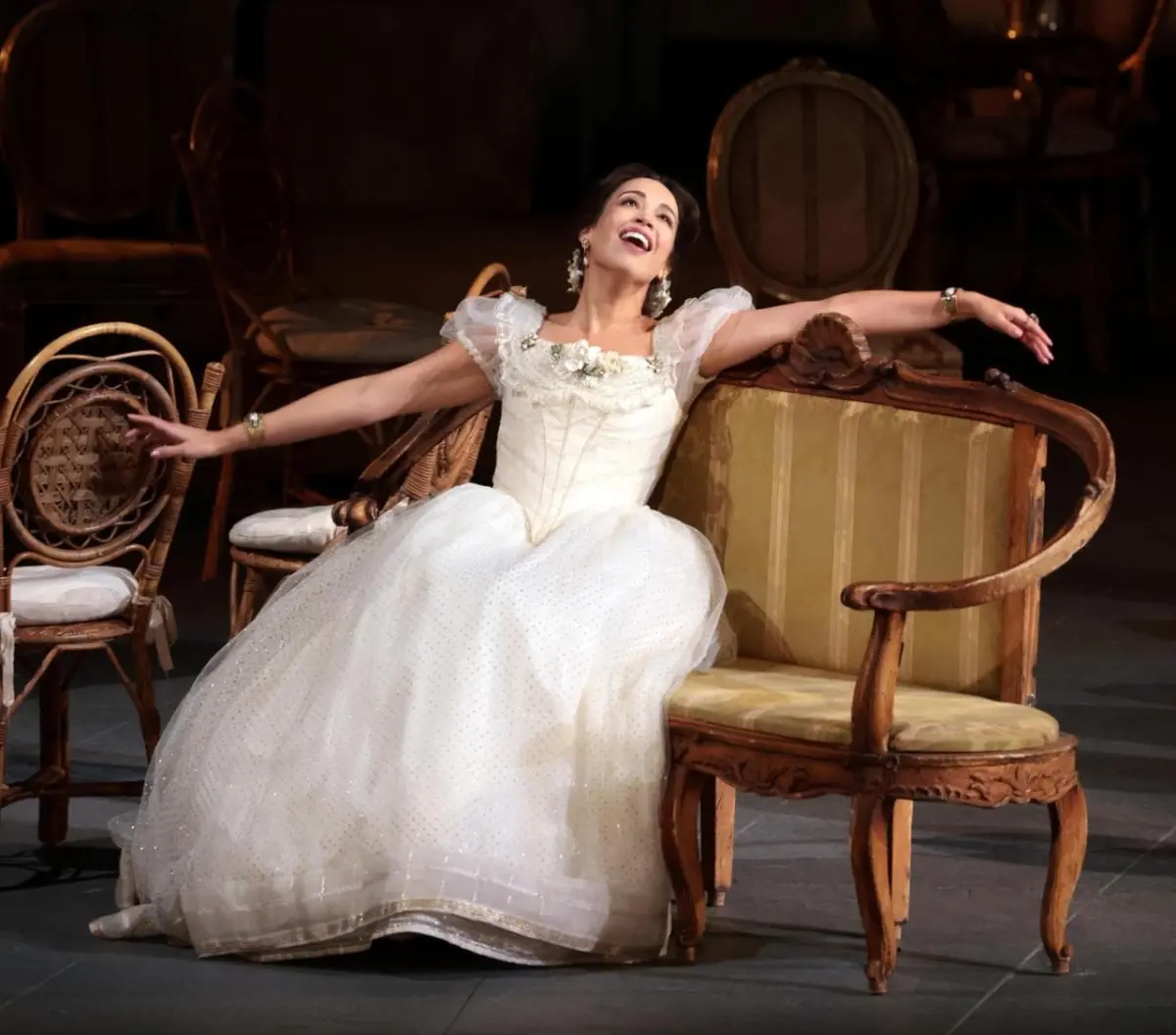
The physical world of Cavani’s La Traviata is a character in its own right. Dante Ferretti’s majestic sets create sprawling, meticulous environments that portray Paris as a city walking a tightrope between dizzying elegance and quiet decay. The luxurious, opulent interiors add a formidable visual and theatrical weight to the drama, making Violetta’s gilded cage feel tangibly claustrophobic.
Complementing Ferretti’s architecture, Gabriella Pescucci’s costume designs are masterclasses in sartorial storytelling. Utilizing opulent dresses, cascading crinolines, and rich, heavy fabrics, Pescucci defines not only the period but the precise social strata and psychological evolution of each character.
Underpinning these visual riches is Andrea Giretti’s lighting design. Eschewing harsh modern spotlights, Giretti employs warm, suggestive illumination that caresses the pastel-toned sets, bathing the stage in a soft, nostalgic atmosphere that mirrors the fading life force of the protagonist.
Official Statements and Musical Analysis
In the Pit: Michele Gamba’s Sensorial Conducting
Musically, this anniversary run was anchored by the baton of Milanese conductor Michele Gamba. Gamba’s reading stood out for its profound sensitivity and an obsessive, loving attention to the symbiosis between orchestra and stage. The Teatro alla Scala Orchestra responded with razor-sharp precision and tonal warmth, with the string and wind sections earning special commendation for their ethereal phrasing.
Gamba’s command of tempo and dynamics was instrumental in mapping out the emotional trajectory of the opera:
- Act I: Brimming with kinetic energy, lightness, and superficial euphoria.
- Act II: Transitioning into solemnity, marked by the aching melancholy of the second-act duet.
- Dramatic Contrasts: Striking, emotionally jarring juxtapositions in “Pura siccome un angelo” and “Dite alla giovine.”
- The Climax (“Addio del passato”): Perhaps the crowning achievement of Gamba’s musical direction. As Violetta reads her final letter, the conductor slowed the pace considerably, creating a spine-chilling, vacuum-sealed dramatic tension punctuated by pregnant pauses that amplified the tragic weight of the music.
Vocal Interpretations: A Triumphant Trio and Beyond
Nadine Sierra as Violetta Valéry
American soprano Nadine Sierra stepped into the iconic shoes of the doomed courtesan, delivering a portrayal characterized by a warm, sensual voice and immense emotional vulnerability in Acts II through IV.
Music critics noted that Sierra’s voice is currently undergoing a fascinating vocal transition. Act I—traditionally the playground of nimble, high-flying lyric-coloratura sopranos—lay slightly outside her immediate comfort zone. The virtuosic fireworks of “Sempre libera” passed with competence rather than trailblazing brilliance, with Sierra taking minor liberties in vocal variation to protect her register.
However, from Act II onward, Sierra was nothing short of transcendent. She unlocked a wellspring of dramatic and vocal power, culminating in an Act IV that was a masterclass in tragic acting and vocal refinement. Her delivery of “Addio del passato” was a harrowing, soul-baring achievement.
Piero Pretti as Alfredo Germont
Italian tenor Piero Pretti brought a luminous, regal vocal quality to the lovestruck Alfredo. Blessed with a velvety timbre, healthy vocal production, and effortless projection, Pretti offered a deeply musical interpretation. While his performance leaned more heavily toward vocal beauty than raw, harrowing drama, his rendition of “Dei miei bollenti spiriti” was textually pristine, and his blending with Sierra in the immortal duet “Parigi, o cara” was breathtaking.
Boris Pinkhasovich as Giorgio Germont
Russian baritone Boris Pinkhasovich delivered a rock-solid, nuanced portrayal of the rigid, capricious patriarch. Armed with a broad, clear voice and an innate sense of noble phrasing, Pinkhasovich humanized Giorgio Germont, making him profoundly vulnerable by the time Act IV rolls around. His execution of “Di Provenza il mar, il suol” was a textbook demonstration of seamless legato, peerless breath control, and immaculate high-note placement, anchoring the dramatic conflict with unwavering authority.
The Supporting Ensemble
The secondary cast proved that no link in this production is weak. Carlotta Vichi imbued Flora with magnetic stage presence and vibrant vocal resources; Mariapaola Di Carlo presented a youthful, intensely engaged Annina; Francesco Pittari navigated Gastone with easy grace; and Fabrizio Beggi lent an air of aristocratic authority to Baron Douphol.
Future Outlook: The Enduring Legacy of La Scala’s Crown Jewel
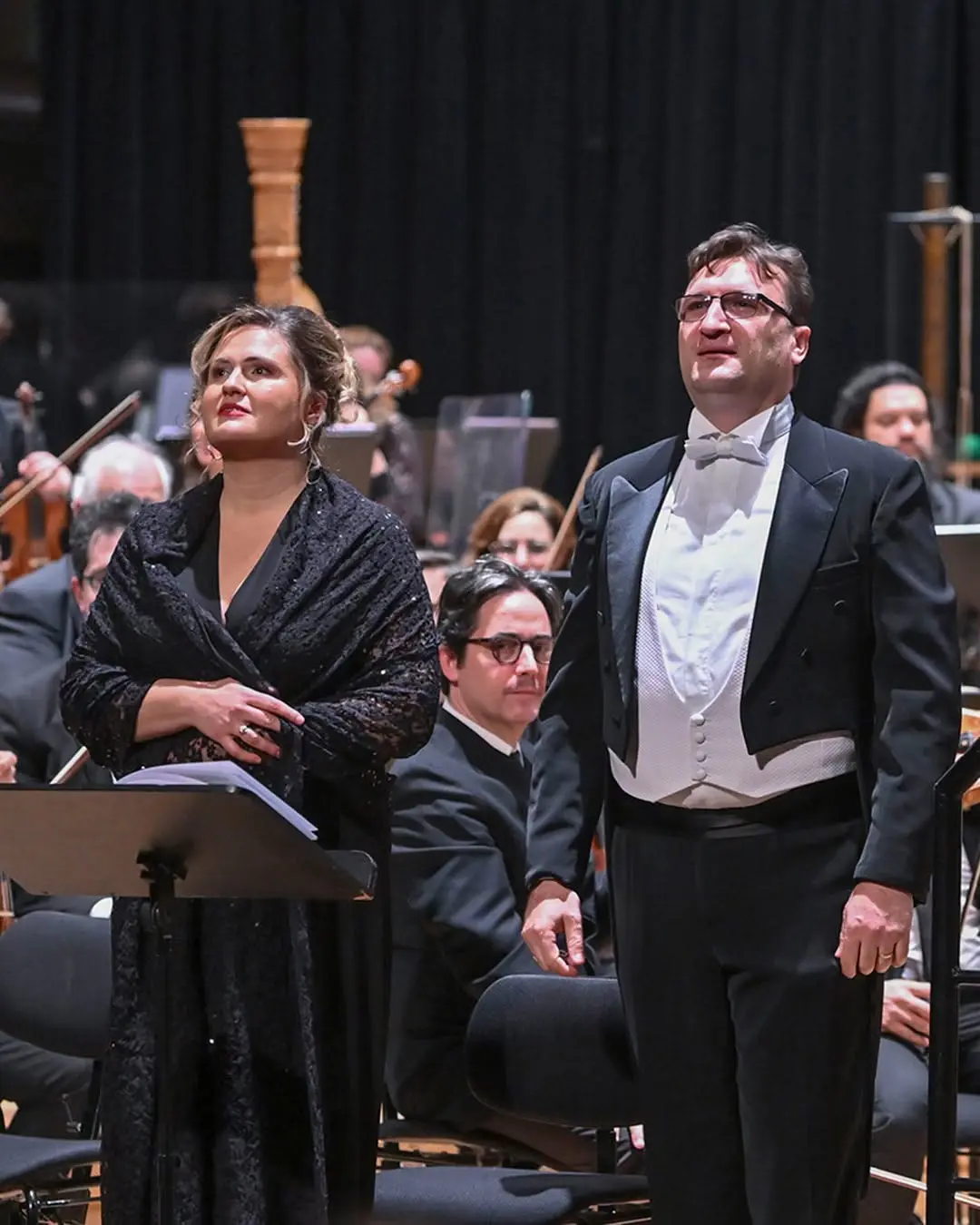
As the final curtain fell on this anniversary run, the audience erupted into a warm, thoroughly deserved ovation for the cast, conductor, and creative team. Yet, beneath the celebration of the 100th performance of the production and the 300th performance of the opera in modern La Scala history, a minor cultural friction lingered in the auditorium.
In recent seasons, international tourists have dominated La Scala’s audience demographics—frequently lauded by house management for their immaculate, respectful concert etiquette. Ironically, this historic Italian milestone drew a predominantly domestic audience, accompanied by a surprising lapse in decorum: persistent mobile phone use, flash photography, and audible chatter while the orchestra was actively performing.
Despite these minor infractions of modern theatre etiquette, the overarching sentiment inside the hallowed halls of Piermarini was one of profound gratitude and artistic rejuvenation. Liliana Cavani’s La Traviata is not merely a nostalgic relic of 1990; it is a living, breathing testament to the power of traditional opera staging executed at the absolute highest level. As long as directors like Cavani, conductors like Gamba, and artists of Sierra’s caliber continue to inhabit its world, this production will remain a jewel in La Scala’s crown—a masterpiece that audiences can truly never see often enough.