
Executive Overview
The landscape of voice care and vocal pedagogy is undergoing a profound paradigm shift. For decades, clinical and academic research surrounding voice disorders has naturally leaned toward the objective, biomechanical, and physiological aspects of laryngeal health. While laryngoscopy, acoustic measurements, and aerodynamic assessments remain foundational, a critical missing piece has often been the qualitative, lived experience of the individual navigating a voice disorder.
At the landmark 52nd Annual Symposium of The Voice Foundation in Philadelphia, this traditional approach was challenged, expanded, and humanized. During a highly anticipated speech-language pathology (SLP) session, researchers presented groundbreaking qualitative studies focused squarely on understanding the daily realities, psychological toll, and unique hurdles faced by speakers and singers living with voice disorders. The engagement from the audience—characterized by rigorous inquiry, empathy, and a collective drive to improve patient outcomes—signaled an unmistakable appetite for change.
This special report explores the implications of that pivotal session, framing the patient-centric movement within the broader context of modern voice care. By examining the synergy between clinical research and patient advocacy, this article delves into how the voice community is reshaping its methodologies to prioritize individualized, holistic care. Drawing from the reflections shared in The Voice Foundation’s September 2023 newsletter, we examine why understanding the human behind the voice is no longer just a compassionate ideal, but a scientific and clinical imperative.
Detailed Chronology: From Philadelphia to the Print and Digital Pages
To fully appreciate the momentum behind the current push for patient-centered voice care, it is necessary to retrace the journey from the summer kickoff in Philadelphia to the subsequent dissemination of findings across the global voice community.
The 52nd Annual Symposium: A Watershed Moment in Philadelphia
The annual gatherings of The Voice Foundation have long served as the crucible for vocal science, bringing together otolaryngologists, speech-language pathologists, vocal pedagogues, scientists, and professional performers. The 52nd Annual Symposium was no exception, offering a dense, multidisciplinary program designed to push the boundaries of vocal health and artistry.
However, a distinct shift in tone occurred during one of the primary speech-language pathology sessions. Rather than focusing exclusively on tissue healing rates, surgical interventions, or vocal fold vibratory patterns, the presenters turned their lenses toward the psychosocial and experiential dimensions of vocal pathology. They shared qualitative data detailing the isolation, identity crisis, and vocational anxiety experienced by individuals—ranging from classical vocalists to corporate speakers—whose voices had been compromised.
The Immediate Aftermath: Audience Engagement and Inquiry
The reaction from the symposium floor was immediate and visceral. Audience members—comprising seasoned clinicians and early-career researchers alike—did not merely listen; they interrogated the data with a deep sense of professional responsibility. Questions and commentary from the floor highlighted a widespread recognition that clinical success cannot be measured solely by acoustic clarity or mucosal wave symmetry.
Clinicians wanted to know how to better integrate these qualitative insights into daily practice. Researchers debated how to design studies that capture the longitudinal psychological impact of losing one’s voice. This intellectual energy demonstrated that the voice community was primed for a cultural shift: moving from a model where the clinician dictates treatment based strictly on objective diagnostics to a collaborative model where the patient’s lived reality actively co-authors the care plan.
Translating Dialogue into Action: The September 2023 Initiative
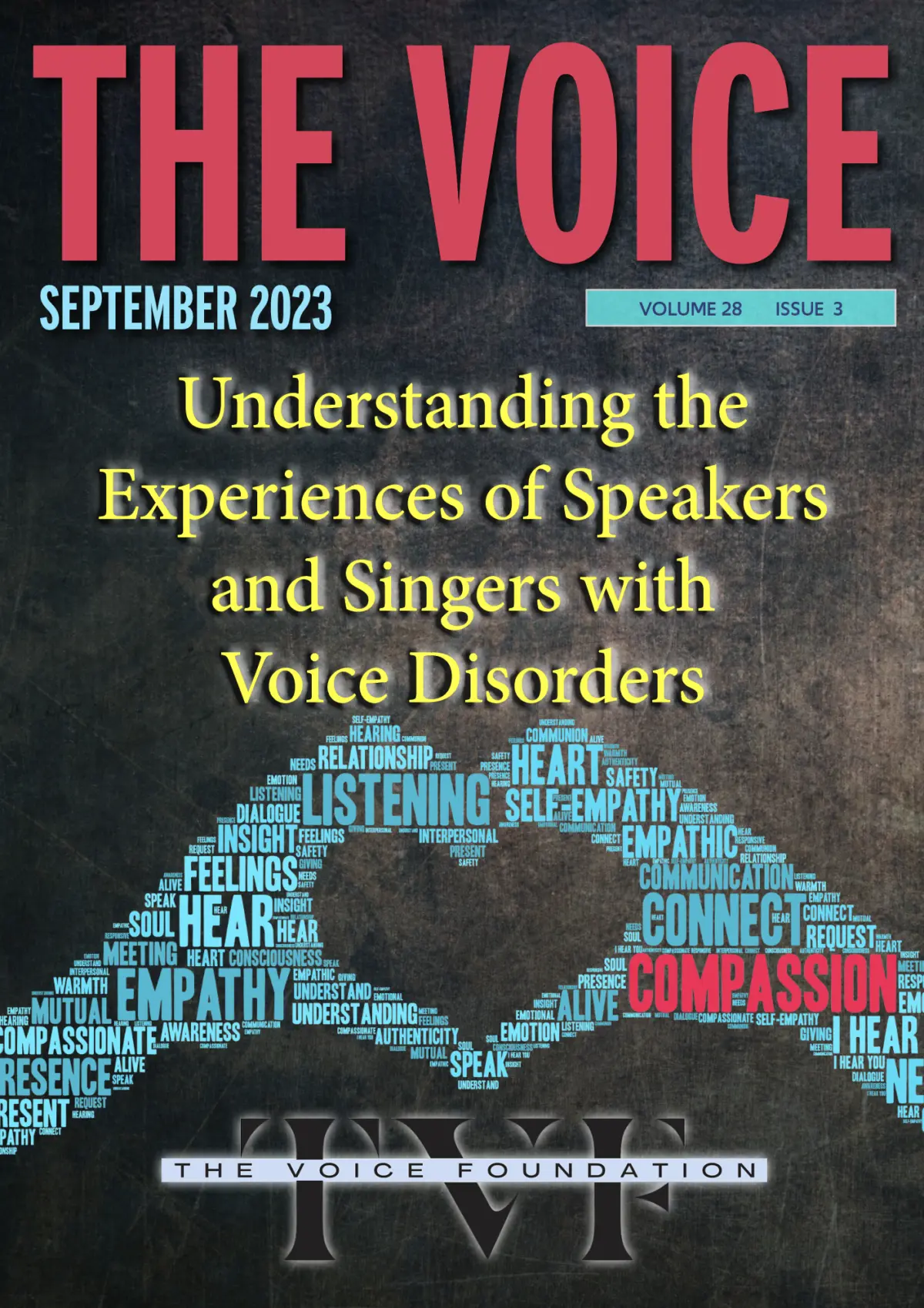
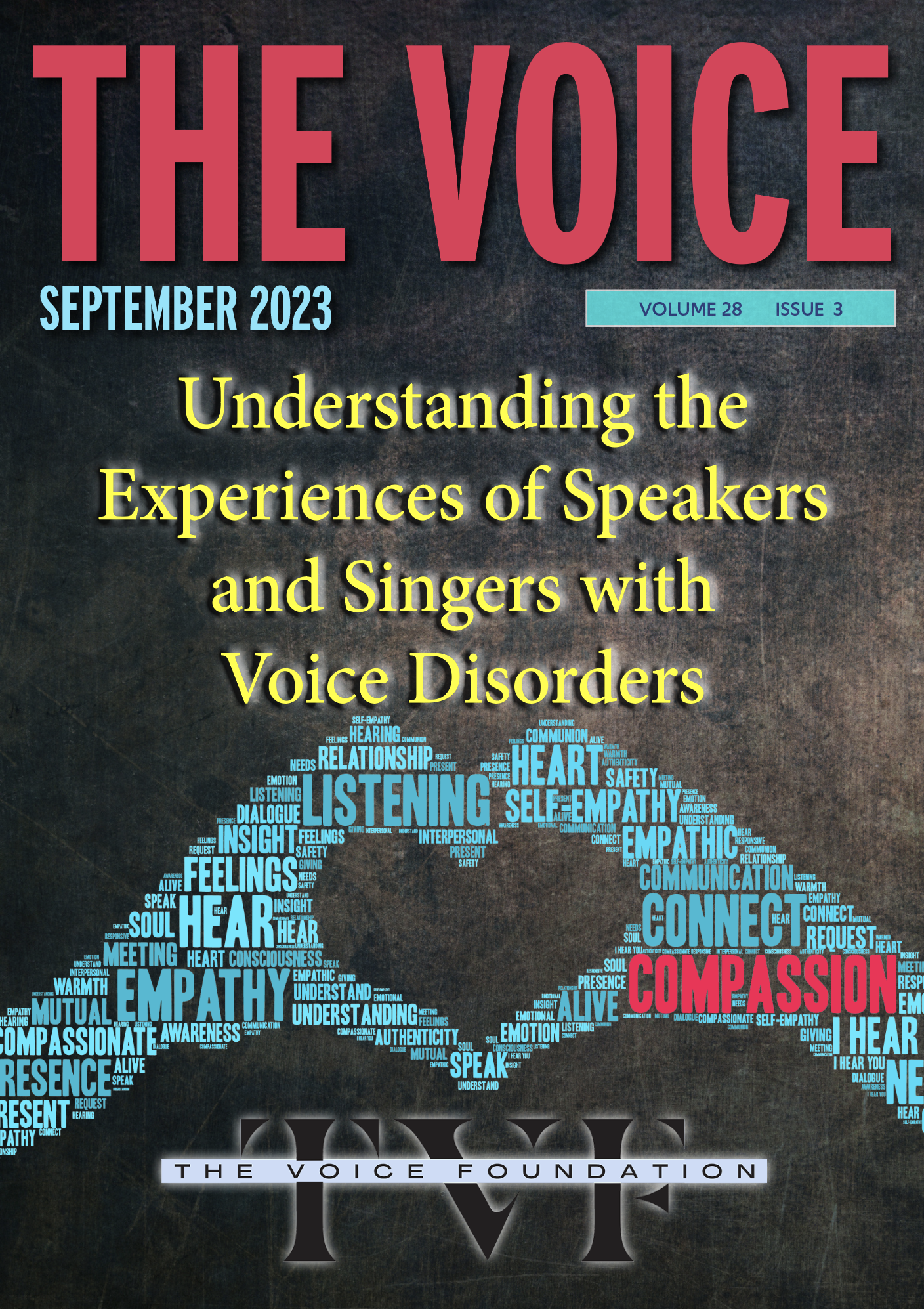
Recognizing the profound resonance of the Philadelphia session, the leadership of The Voice Foundation chose to channel this momentum directly into their communications. The September 2023 newsletter was deliberately structured to extend the conversation beyond the physical walls of the symposium.
Serving as a bridge between live academic discourse and enduring clinical practice, the newsletter edition was dedicated entirely to unpacking patients’ experiences. By placing this topic front and center, The Voice Foundation issued a call to action to its global membership: motivate future research through empathetic inquiry, and transform current clinical practices to honor the unique needs of every individual who enters the treatment room.

Supporting Context & Metrics: The Human Cost of Voice Disorders
To understand why the shift toward patient-centered care is so urgent, one must examine the profound impact that voice disorders exert on an individual’s life. The voice is not merely a tool for communication; it is a primary vehicle for human identity, emotional expression, and economic survival.
The Psychosocial Burden of Vocal Pathologies
When a singer loses their upper register, or a teacher develops chronic vocal fold nodules, the consequences extend far beyond physical discomfort. Research in psycholaryngology consistently demonstrates high correlations between voice disorders and anxiety, depression, and social isolation.
- Identity and Self-Esteem: For professional voice users—such as actors, singers, trial lawyers, and educators—the voice is inextricably linked to self-worth. A compromised voice can trigger an identity crisis, leaving individuals feeling disconnected from their profession and personal expression.
- Vocational Vulnerability: Voice-dependent workers face tangible economic threats when their primary asset fails. The stress of potential income loss often exacerbates the physiological symptoms of the disorder, creating a vicious cycle of stress-induced muscle tension and worsening vocal quality.
- Social Withdrawal: Everyday activities such as ordering food in a restaurant, talking on the telephone, or participating in family gatherings become exhausting hurdles. Many patients consciously choose silence over the embarrassment of repeating themselves or straining to be heard, leading to profound loneliness.
Bridging the Gap Between Objective Metrics and Subjective Reality
Historically, voice clinics have relied heavily on objective measures: stroboscopy to visualize vocal fold closure, acoustic analysis software to measure jitter and shimmer, and aerodynamic assessments of airflow. While these tools are indispensable for diagnosis, they frequently fail to correlate with a patient’s perceived disability.
+-------------------------------------------------------------------+
|               THE DUAL-LENS APPROACH TO VOICE CARE                |
+---------------------------------+---------------------------------+
|      OBJECTIVE CLINICAL METRICS |     SUBJECTIVE PATIENT EXPERIENCE|
+---------------------------------+---------------------------------+
| • Laryngeal Stroboscopy         | • Psychological Toll & Anxiety  |
| • Acoustic Jitter & Shimmer     | • Vocational & Social Impact    |
| • Aerodynamic Flow Rates        | • Individual Quality of Life    |
| • Mucosal Wave Symmetry         | • Personal Treatment Goals      |
+---------------------------------+---------------------------------+
As highlighted at the 52nd Symposium, two patients with identical vocal fold lesions and similar acoustic profiles may report vastly different levels of disability. A high-demand opera singer may experience severe career disruption from a minor phonatory deviation, whereas an individual with lower vocal demands might remain largely unbothered by the same physiological finding. Integrating qualitative patient experiences ensures that treatment protocols are tailored not just to the tissue, but to the person.
Official Statements and Perspectives from Leadership
The imperative to center research and clinical care around the patient’s perspective is championed by leading voices within The Voice Foundation and the broader laryngology community. While individual reflections from the September 2023 newsletter emphasize community-wide collaboration, institutional leaders have consistently underscored the necessity of empathy in scientific advancement.
Integrating Empathy and Rigor
In discussions surrounding the qualitative research presented in Philadelphia, academic leaders emphasized that quantitative rigor and qualitative empathy are not mutually exclusive. In fact, they are deeply complementary.
"Understanding the biomechanics of the larynx gives us the ‘how,’ but listening to the patient gives us the ‘why.’ To truly heal a voice, we must treat the individual navigating the disorder, not just the vocal folds vibrating on a monitor."
— Reflections from Clinical Researchers at the 52nd Annual Symposium
This philosophy challenges the historical hierarchy of medical evidence, which has sometimes marginalized qualitative patient narratives in favor of randomized controlled trials alone. By elevating patient experiences to the center of scientific inquiry, researchers can design clinical trials that measure outcomes that genuinely matter to patients—such as restored confidence in social settings, reduced vocal effort during long work shifts, and alignment with personal artistic goals.
A Collaborative Community Ethos
The engagement witnessed during the speech-language pathology sessions reflects a broader cultural shift within The Voice Foundation. Founded on the principle of multidisciplinary collaboration, the organization uniquely positions otolaryngologists, speech-language pathologists, singing teachers, and basic scientists under one roof.
This cross-pollination of disciplines creates an ideal environment for patient-centered innovation. When a singing teacher understands the psychological trauma of a vocal hemorrhage, or an otolaryngologist appreciates the nuanced pedagogical demands placed on a Broadway performer, the entire continuum of care improves. The September 2023 newsletter served as a unifying document, reminding members that this collaborative ethos must extend to actively soliciting, publishing, and applying the patient’s perspective.
Future Outlook: The Next Era of Voice Research and Clinical Practice
As the voice care community looks beyond the insights of the 52nd Annual Symposium and the directives of the September 2023 newsletter, several clear trajectories emerge for the future of research, education, and clinical practice.
1. Advancing Patient-Reported Outcome Measures (PROMs)
One of the most concrete ways researchers are operationalizing patient experiences is through the refinement and widespread adoption of Patient-Reported Outcome Measures (PROMs). Tools such as the Voice Handicap Index (VHI) and singing-specific adaptations allow clinicians to quantify the subjective burden of a voice disorder in a standardized format.
Future research will likely focus on developing even more nuanced PROMs that capture dynamic changes over time, cultural variations in voice perception, and the specific psychological impacts of emerging therapies (such as regenerative medicine or advanced laryngeal surgeries). By embedding PROMs into routine clinical workflows, practitioners can track treatment success from the patient’s point of view alongside traditional acoustic measures.
2. Transforming Clinical Training and Interdisciplinary Care
The demand for patient-centric care necessitates a transformation in how speech-language pathologists, otolaryngologists, and vocal pedagogues are trained. Educational programs are increasingly incorporating coursework in counseling, health psychology, and qualitative research methodologies.
Clinicians are learning that active listening, validation of emotional distress, and shared decision-making are not "soft" adjuncts to therapy, but core therapeutic mechanisms. When patients feel truly heard and understood, adherence to voice therapy regimens improves significantly, leading to better long-term outcomes and reduced rates of recurrence.
3. Fostering Longitudinal, Community-Driven Research
The dialogue initiated in Philadelphia has set a high standard for future symposia and publications. The Voice Foundation remains committed to providing platforms where qualitative patient data can be shared, scrutinized, and translated into clinical practice.
Looking ahead, researchers are designing longitudinal studies that follow patients from the moment of diagnosis through recovery and beyond, capturing the psychosocial trajectory of healing. By involving patients as active partners—rather than passive subjects—in the research process, the voice community is ensuring that the future of voice care is as humane as it is scientifically advanced.
Conclusion
The 52nd Annual Symposium in Philadelphia and the ensuing reflections published in The Voice Foundation’s September 2023 newsletter mark a definitive milestone in the evolution of voice care. By moving beyond the physical parameters of vocal pathology and embracing the complex, lived realities of speakers and singers, the voice community is charting a more compassionate and effective path forward.
As clinicians, researchers, and educators continue to integrate patient-centric insights into their daily work, the ultimate beneficiaries are the patients themselves. Through rigorous science paired with profound empathy, The Voice Foundation continues to ensure that every voice—in all its vulnerability, resilience, and unique beauty—is not only heard, but truly understood.