
Executive Overview
The Off-Broadway landscape is bracing for a tectonic collision of classical tragedy and avant-garde theatricality as Theatre for a New Audience (TFANA) prepares to mount a radical new staging of Elektra. Directed by visionary auteur Daniel Fish—whose minimalist, sensory-driven deconstructions of classic texts have consistently challenged and captivated contemporary audiences—the production is set to run at the Polonsky Shakespeare Center in Brooklyn. Performances will commence on November 10, continuing through December 6.
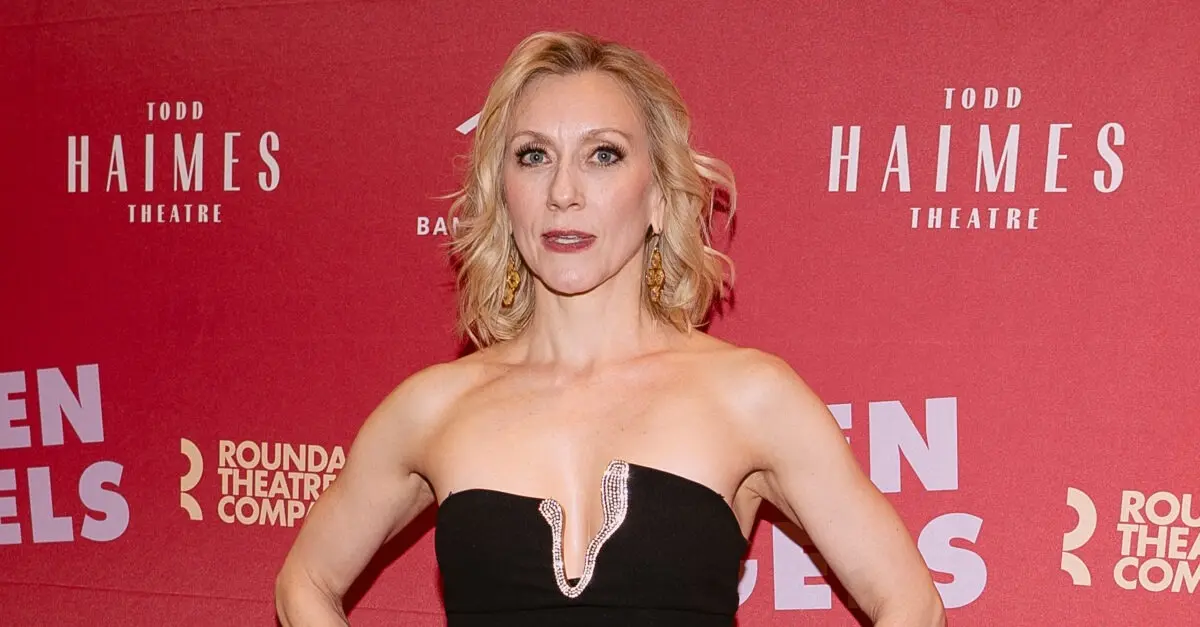
At the center of this ambitious enterprise is a stellar, powerhouse ensemble. Acclaimed stage and screen actor Tina Benko takes on the monumental title role of the grief-stricken, vengeance-obsessed princess. She is joined by an extraordinary supporting cast featuring Rebecca Naomi Jones as Chrysothemis, Cricket Brown as Orestes, Sally Wingert as the embattled queen Clytemnestra, and Michael Rudko as the usurper Aegisthus. The production also features a dynamic chorus of vocalists, including Catherine Brookman, Sophia Rose Byrd, Mingjia Chen, Tina Fabrique, Maya Lagerstam, and Tanner Porter.
This production breathes new life into Sophocles’ timeless exploration of generational trauma, cyclical violence, and psychological disintegration, utilizing the celebrated 2001 verse translation by MacArthur "Genius" Fellow and poet Anne Carson. While Fish is revisiting Carson’s text following his acclaimed staging of the work in London’s West End, this New York iteration is far from a mere carbon copy. Instead, it represents the next evolution of a collaborative, sonic obsession for Fish and composer Ted Hearne. Featuring an entirely reimagined design team, fresh scenic architectures, and an aggressive acoustic framework, TFANA’s Elektra promises to be one of the most intellectually rigorous and visceral theatrical events of the autumn season.
Detailed Chronology and Production Anatomy
From Ancient Greece to Brooklyn: The Evolution of Fish’s Elektra
The journey of this specific theatrical incarnation of Elektra traces back across the Atlantic, born from a creative partnership between director Daniel Fish and composer Ted Hearne. Fish, who famously shook up Broadway and the West End with his erotic, neon-drenched, yet chillingly psychological revival of Rodgers and Hammerstein’s Oklahoma!, has long been fascinated by the friction between ancient text and contemporary somatic expression.
Earlier in his trajectory, Fish grappled with Anne Carson’s translation of Sophocles’ tragedy during a high-profile West End engagement. That production established the baseline for Fish’s interrogation of the material: an uncompromising look at the visceral, auditory, and corporeal realities of murder, grief, and divine retribution. However, rather than transplanting the London production directly into Brooklyn, Fish and his creative collaborators seized the opportunity offered by TFANA to rebuild the world of the play from the ground up.
The rehearsal room process, bolstered by the meticulous casting of Taylor Williams, has prioritized deep-dive textual analysis combined with radical physical and vocal exploration. The narrative framework remains anchored in the harrowing days immediately following the assassination of Agamemnon at the hands of his wife, Clytemnestra, and her lover, Aegisthus. Elektra wanders the palace grounds as a living ghost, a pariah consumed by a singular, consuming purpose: the arrival of her exiled brother, Orestes, and the execution of a bloody, matricidal revenge.
Yet, under Fish’s direction, the familiar contours of the myth are refracted through a distinctly modern lens. The psychological claustrophobia of the House of Atreus is externalized not merely through traditional melodrama, but through an intricate architecture of sound, space, and sensory disruption.
The Ensemble and Creative Machinery
Bringing this monumental tragedy to life requires a cast capable of navigating both the towering poetry of Anne Carson’s verse and the hyper-naturalistic, often volatile staging demands of Daniel Fish.
- Tina Benko (Elektra): A titan of the American stage known for her fearless intelligence and emotional agility, Benko steps into a role that demands Olympic levels of vocal stamina and emotional exposure. Elektra is a character trapped in permanent stasis—a monument to unresolved grief. Benko’s interpretation promises to map the jagged edges of a mind fractured by injustice and isolation.
- Rebecca Naomi Jones (Chrysothemis): Playing Elektra’s pragmatic sister, Jones brings her trademark nuance and vocal brilliance to the role. Chrysothemis represents the path of survival through accommodation—a desperate plea for normalcy in a house built on sand. The ideological and emotional clash between Benko’s Elektra and Jones’s Chrysothemis forms the emotional beating heart of the first half of the drama.
- Cricket Brown (Orestes): As the long-lost brother returning to claim his birthright and enact vengeance, Brown embodies the heavy, destabilizing burden of generational prophecy. Orestes is not merely a heroic savior in this reading, but an instrument of an inescapable, terrifying fate.
- Sally Wingert (Clytemnestra) & Michael Rudko (Aegisthus): Wingert and Rudko portray the beleaguered monarchs clinging to power. Clytemnestra is rarely played as a two-dimensional villain in modern revivals; instead, Wingert navigates the complex matrix of maternal guilt, self-preservation, and psychological dread that follows the murder of a husband who sacrificed their daughter, Iphigenia. Rudko’s Aegisthus rounds out the doomed ruling class, awaiting the inevitable blow of divine and familial retribution.
Complementing the principal actors is a formidable Greek chorus comprising Catherine Brookman, Sophia Rose Byrd, Mingjia Chen, Tina Fabrique, Maya Lagerstam, and Tanner Porter. In Fish’s hands, the chorus functions not as passive commentators on the action, but as a living, breathing sonic organism—an amplified physical presence that shadows, challenges, and underscores the characters’ internal monologues.
Supporting Context & Metrics: The Architectural and Sonic Blueprint
While the West End iteration provided the foundational DNA for Fish’s vision, the Polonsky Shakespeare Center engagement introduces an entirely new creative vanguard. The production marries returning key personnel with a fresh cohort of designers who are redefining how classical texts inhabit off-Broadway spaces.
The Design Syndicate
- Costume Design (Doey Lüthi): Carrying over her work from the UK, Lüthi’s costumes avoid easy historical pastiche. Instead, they occupy an ambiguous, timeless space that highlights the vulnerability, decay, and martial readiness of characters locked in a perpetual state of civil and domestic war.
- Music and Sound (Ted Hearne & Christopher Botta): Composer Ted Hearne, renowned for his cutting-edge contemporary classical work, has constructed a sonic environment that blurs the line between music, speech, and noise. Sound designer Christopher Botta ensures that every breath, whisper, and percussive strike reverberates intimately within the Polonsky Shakespeare Center’s auditorium.
- Scenic Architecture (Jim Findlay, Amy Rubin, and Josh Higgason): This trio of scenic and projection designers has reimagined the physical playing space. Moving away from literal representations of Mycenaean palaces, the design focuses on spatial alienation, industrial austerity, and structural exposure, forcing the audience to confront the naked mechanisms of theatricality.
- Lighting and Effects (Scott Zielinski & Jeremy Chernick): Lighting designer Scott Zielinski sculpts the gloom of the House of Atreus with stark, expressionistic angles, while special effects designer Jeremy Chernick manages the visceral, tactile elements that punctuate the evening’s descent into violence.
- Movement and Choreography (Wally Cardona): Cardona’s movement direction ensures that the physical grammar of the production—from the twitch of a finger to the collective choreography of the vocal chorus—is as rigorously articulated as Carson’s text.
The Polonsky Shakespeare Center Advantage
The choice of venue is far from incidental. Theatre for a New Audience has built its international reputation on a commitment to vitalizing classical drama for contemporary audiences, offering an intimate yet technologically adaptable environment. The Polonsky Shakespeare Center allows for an aggressive level of acoustic and spatial intimacy—a crucial requirement for a production that stakes its entire artistic identity on the nuance of the human voice and the shock of direct address.
Official Statements: The Director’s Vision
To understand the intellectual and artistic driving force behind this revival, one must look directly to Daniel Fish’s framing of the project. In an official statement released ahead of rehearsals, Fish articulated the core thesis that governs his approach to Sophocles and Carson:
"This production, for me and Ted, is in so many ways obsessed with sound," Fish notes. "It’s about the noise people make, the words people make. And there’s no other theatre in the city as dedicated to the spoken word as TFANA. I’m thrilled to bring our continual investigation into how we give life and breath and sound to this material here."
This obsession with acoustics is not merely an aesthetic choice; it is an epistemological stance. In ancient Greek drama, the tragedy is born from the word—from the curse uttered, the prophecy declared, and the lament sung. By stripping away conventional classical tropes and replacing them with a hyper-attuned sonic landscape, Fish and Hearne invite audiences to listen to Elektra as if for the first time. The language of Anne Carson—famous for its colloquial bite, rhythmic propulsion, and emotional devastation—becomes a musical score executed by virtuosic actors and vocalists.
Future Outlook: A Defining Moment for Off-Broadway Fall Programming
As the theatrical community looks toward the winter season, TFANA’s production of Elektra stands out as a litmus test for the health and ambition of New York’s Off-Broadway ecosystem. In an era where commercial pressures often favor revivals of safe, middlebrow comedies or predictable jukebox musicals, Theatre for a New Audience continues to carve out a vital space for intellectual risk-taking and formal experimentation.
Daniel Fish’s track record suggests that this Elektra will not be met with universal comfort. His work frequently polarizes audiences precisely because it refuses to offer neat resolutions or polite historical distancing. By treating Sophocles’ text as a living, bleeding contemporary document—one that speaks directly to our current era of institutional collapse, pervasive violence, and unending cycles of retaliation—Fish and his ensemble are poised to spark intense post-show debates.
For theatergoers, scholars, and devotees of classical tragedy, the limited four-week engagement (November 10 through December 6 at the Polonsky Shakespeare Center) represents an unmissable theatrical event. Armed with Anne Carson’s peerless translation, a ferocious ensemble led by Tina Benko, and a radical acoustic and spatial blueprint, this Elektra promises to rattle the rafters of Brooklyn and leave an indelible mark on the theatrical year. Tickets are currently available through the official TFANA portal at TFANA.org.