
Executive Overview
Long before critics hailed the two-man musical Mexodus as "electrifying," "spirited," and "warmly embracing," its co-creator, Brian Quijada, was simply a kid from Highwood, Illinois, sitting mesmerized in an auditorium at Columbia College Chicago. It was the early 2000s, and his older brother had brought him to see a production of Cabaret. That night changed the trajectory of his life, planting a seed of theatrical devotion that would take decades to fully bloom.
Today, Mexodus stands as a monumental achievement in contemporary American musical theatre. Exploring a lesser-known chapter of antebellum history—the southern branch of the Underground Railroad leading into Mexico—the hip-hop-infused musical has captivated audiences from Off-Broadway to the Midwest. Following a critically acclaimed, twice-extended run at Audible’s Minetta Lane Theatre in New York, which garnered historic accolades including the Drama League Award for Outstanding Production of a Musical (breaking a 30-year dry spell for Off-Broadway shows), the production returns to its spiritual incubator: Chicago.
Running at the historic Studebaker Theater, the show’s journey to the stage is a narrative defined by cross-cultural solidarity, pandemic-era innovation, groundbreaking live-looping sound design, and the personal resilience of an immigrant’s son defying familial expectations to forge a path in the arts.
Detailed Chronology: From a Spark of Inspiration to an Off-Broadway Triumph
The Genesis (2018)
The conceptual framework of Mexodus began taking shape in 2018. While living in New York and working as an established actor and playwright—having previously debuted his celebrated solo show Where Did We Sit on the Bus? at Chicago’s Teatro Vista—Quijada stumbled upon a historical revelation that stunned him.
He read an article detailing the existence of a southern Underground Railroad. Historical estimates suggest that up to 10,000 enslaved people fled Texas to seek sanctuary in Mexico, a nation that had officially abolished slavery in 1829. Determined to bring this obscure history to light, Quijada recognized the weight of the material. While his parents had emigrated from El Salvador and he felt comfortable exploring border politics, writing authentically about slavery and the African American experience required a creative partner with shared cultural resonance and perspective.
The Catalyst and the Pandemic Collaboration (2020)
Fate intervened in 2020 at a professional conference where Quijada crossed paths with Nygel D. Robinson, a talented composer, multi-instrumentalist, and performer hailing from North Carolina.
"We hung out once," Quijada recalls. "I pitched him the idea and he was like, ‘let’s go.’"
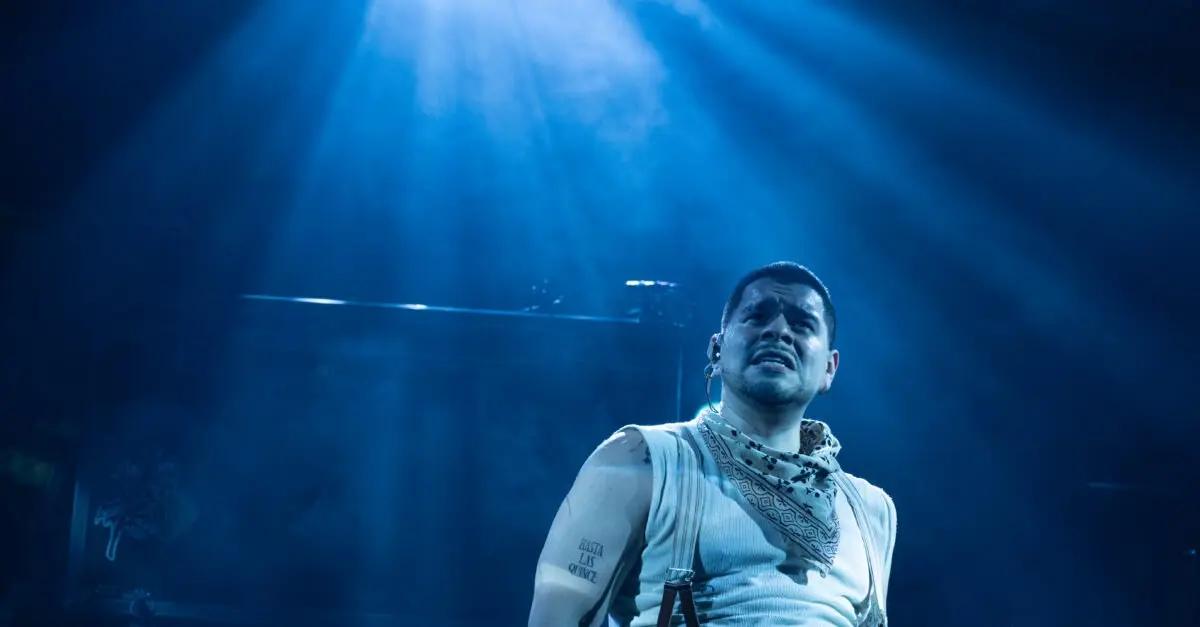
As the global pandemic shuttered theatres worldwide, the duo utilized the isolation to build Mexodus from the ground up. The resulting hip-hop musical follows Henry (played by Robinson), an enslaved man in Texas who embarks on a harrowing escape south across the Rio Grande. Along his journey, he encounters Carlos (played by Quijada), a tenant farmer and former Mexican army medic. Together, the men forge an unlikely alliance that examines both the profound power and the delicate fragility of Black and brown solidarity.
This thematic exploration extends beyond the historical narrative into the personal histories of the creators. At poignant moments throughout the show, Quijada and Robinson break character to reflect on their own lives. Quijada, for instance, recounts a vivid memory of his family stopping at a gas station on Chicago’s predominantly Black South Side, where his mother instinctively told him to lock the doors—using lived experience to ground the musical’s broader socio-political commentary in real-world nuance.
Developmental Milestones in Chicago (2021–2023)
While the conceptual bones of the show were forged in New York, its technical and structural evolution is deeply tied to Chicago. Mexodus underwent rigorous developmental workshops and preview performances through Victory Gardens’ Ignite program in 2021, followed by a pivotal workshop at Northwestern University’s Chicago Wirtz Center in 2023.
A defining characteristic of Mexodus is its innovative use of live looping. Quijada and Robinson do not rely on pre-recorded tracks; instead, they record, layer, and replay audio in real-time onstage, merging live instrumentation with soaring vocals to build a rich, atmospheric sonic landscape.
The Northwestern residency proved to be a turning point. It provided the creators with the institutional resources and technical breathing room to abandon small, conventional looping hardware and "take a leap of faith in sound design," according to Quijada.
Furthermore, it was in Chicago that the psychological and narrative arc between Carlos and Henry truly crystallized. On the eve of their Off-Broadway premiere, the duo conducted a final developmental workshop at the Fine Arts Building—home to the Studebaker Theater. High-stakes pressure loomed as tickets were already actively selling in New York, yet they were still aggressively rewriting a crucial song. Chicago provided the creative sanctuary, safety, and institutional support needed to achieve their final breakthrough.
Supporting Context & Metrics: Breaking Molds and Setting Records
The trajectory of Mexodus culminated in an acclaimed run at Audible’s Minetta Lane Theatre. The production captured the zeitgeist of contemporary theatrical innovation, drawing frequent comparisons to Lin-Manuel Miranda’s Hamilton for its fusion of historical revisionism, dynamic hip-hop scoring, and high-energy performances.
Key Production Metrics & Achievements:
- The Historical Premise: An estimated 10,000 enslaved people escaped the United States into Mexico following the abolition of slavery there in 1829.
- Off-Broadway Recognition: The production enjoyed a twice-extended run at the Minetta Lane Theatre.
- Award Milestone: Won the Drama League Award for Outstanding Production of a Musical—marking the first time an Off-Broadway musical captured the prestigious prize in 30 years.
- Cast & Crew Efficiency: The entire sonic and narrative world of the musical is executed live by just two actors, utilizing a sophisticated live-looping station and multi-instrumental arrangement.
- Chicago Homecoming Run: Scheduled at the historic Studebaker Theater from November 6–21.
Official Statements and Creative Insights
The creative vision behind Mexodus is rooted in authentic collaboration and a desire to bridge historical divides. Reflecting on the partnership, Quijada emphasizes the instantaneous alignment he felt with Robinson upon pitching the narrative.
On the technical front, the choice to embrace live looping was an intentional artistic gamble designed to heighten theatrical intimacy. By keeping all sound generation visible and immediate to the audience, the creators ensure that the stakes of the characters’ physical journeys are mirrored by the precarious, high-wire act of music-making onstage.
Beyond the music, Quijada views his entire body of work as an extension of his identity as the son of Salvadoran immigrants. The journey to becoming an artist was fraught with familial tension, yet it ultimately transformed into an act of profound dedication.
"I feel a great weight for what my parents did for me," Quijada shares, reflecting on his family’s sacrifices to secure a safer, more stable life in the United States. "This is how I will repay them and make them proud." His art functions as an ongoing effort to cultivate empathy, bridging the generational and cultural gaps inherent in the immigrant experience.
Future Outlook: The Legacy of Mexodus and Beyond
As Mexodus establishes its footprint with its upcoming Chicago run at the Studebaker Theater, the production’s broader cultural footprint continues to expand. The show has successfully proven that contemporary musical theatre can tackle hyper-specific, neglected historical narratives without sacrificing commercial appeal or artistic rigor.
For Quijada and Robinson, the journey of Mexodus serves as a testament to the power of cross-cultural storytelling in an increasingly polarized world. By illuminating a forgotten intersection of Black and Mexican history, the musical offers a blueprint for solidarity that resonates far beyond the confines of the proscenium arch.
With its technical framework perfected, its accolades firmly secured, and its narrative resonating with diverse audiences nationwide, Mexodus is positioned to remain a landmark work of modern American theatre—cementing the legacy of two creators who dared to take a leap of faith, both in sound design and in history.