
Executive Overview
The contemporary landscape of improvised music is frequently characterized by a tension between historical reverence and radical reinvention. At this cultural crossroads, two towering figures of modern jazz—saxophonist Azar Lawrence and trumpeter Wadada Leo Smith—have recently unveiled significant recorded projects that command the attention of critics, historians, and dedicated aficionados alike. Released via Trazar Records, Lawrence’s latest offering finds the veteran reedman looking backward to propel himself forward, reinterpreting foundational cuts from his celebrated 1970s catalog alongside nods to formative mentors and peers. Conversely, avant-garde luminary Wadada Leo Smith returns with Constellations And Hemispheres (Burning Ambulance), a structurally complex, meticulously curated archival tapestry compiled from sessions spanning half a decade.
While Lawrence immerses his audience in a lush, soulful exploration of spiritual jazz traditions fused with Brazilian romanticism and funk-inflected grooves, Smith offers a masterclass in post-production architecture, juxtaposing contrasting improvisational environments across a sprawling, multi-tiered sonic landscape. Both artists, though operating from profoundly divergent aesthetic philosophies, underscore the enduring vitality of the jazz avant-garde and its ancestral roots. This report provides an exhaustive, multi-faceted analysis of these two remarkable releases, evaluating their compositional integrity, historical lineage, and prospective resonance within the broader continuum of creative music.
Detailed Chronology: Tracing the Arc of Creative Evolution
Azar Lawrence: From the Tyner Vanguard to Turn The Music Up
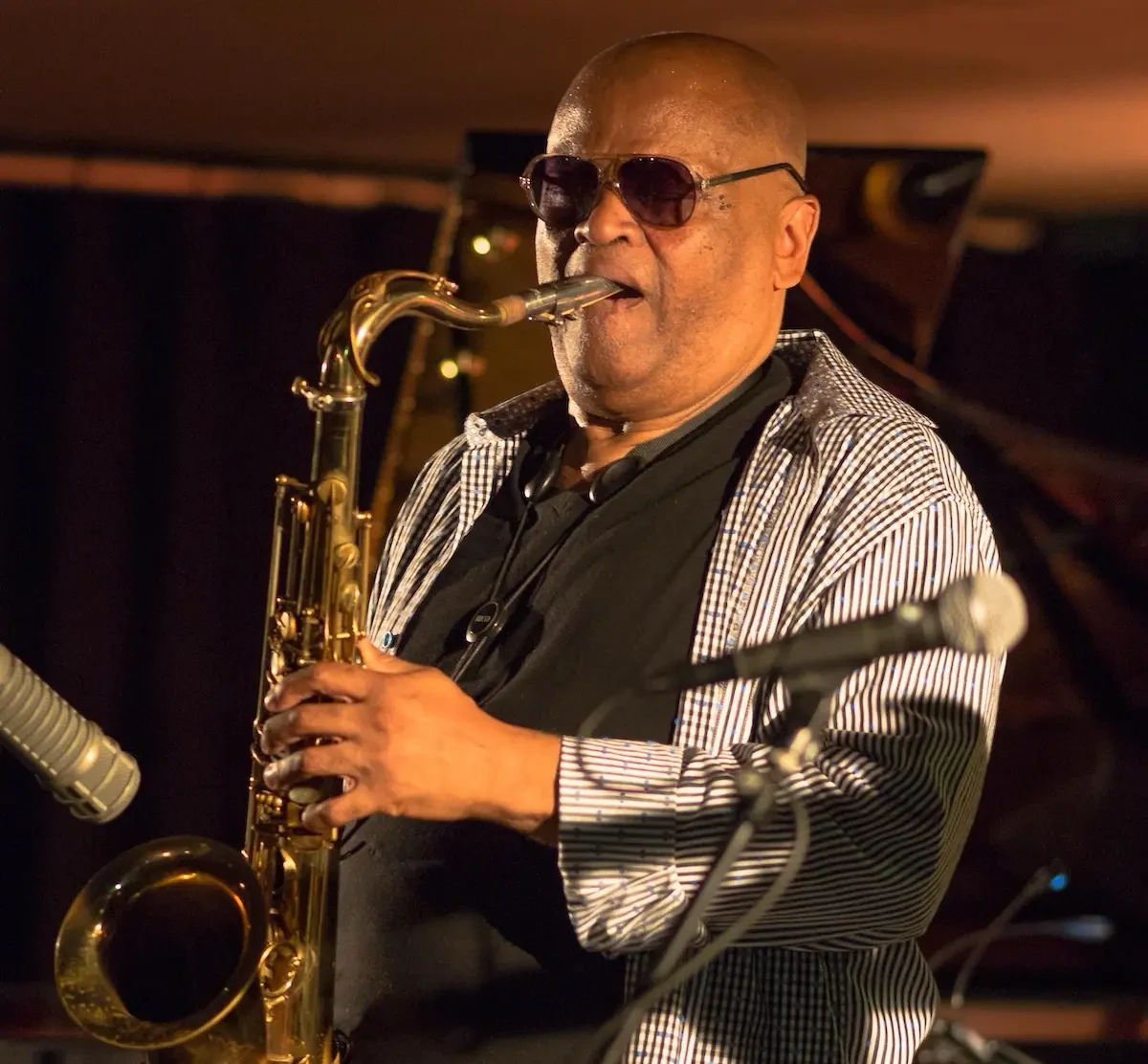
To fully appreciate Azar Lawrence’s current trajectory, one must trace a career that spans over five decades at the bleeding edge of progressive jazz. Lawrence first captured the international jazz consciousness during the early 1970s through his blistering tenure with pianist McCoy Tyner. Stepping into the formidable lineage of horn players who had previously fronted Tyner’s groups, Lawrence brought a fiery, Coltrane-derived intensity that defined albums such as Sahara and Enlightenment.
However, as economic realities shifted and the commercial tides of the late 1970s and 1980s rendered work for adventurous acoustic jazz musicians increasingly scarce, Lawrence displayed a pragmatic versatility. He seamlessly integrated himself into the high-profile rhythm sections and backing bands of soul and R&B royalty, including Marvin Gaye and Earth, Wind & Fire. This period injected a deep sense of rhythmic pocket and harmonic accessibility into his playing, elements that continue to inform his warm, muscular tone on both tenor and soprano saxophones.
In the modern era, Lawrence has maintained his standing as a vital practitioner of straightahead and spiritual idioms, most notably as a core member of the acclaimed all-star supergroup The Cookers. His latest release bridges these epochs. Recorded in Venice, California, across 2024 and 2025, the project serves as a conscious retrospective of his early solo albums: 1974’s Bridge Into The New Age and 1975’s Summer Solstice.
Rather than merely replicating past glories, Lawrence revitalizes these compositions through a contemporary lens. The tracklist is rounded out by a reverent nod to McCoy Tyner’s Atlantis and an emotional rendering of The Creator Has A Master Plan, a touchstone of the repertoire popularized by his late friend and mentor, Pharoah Sanders.
Wadada Leo Smith: A Half-Century of AACM Innovation
The journey of Wadada Leo Smith is inextricably linked to the radical democratization of American music initiated by the Association for the Advancement of Creative Musicians (AACM) in Chicago during the late 1960s. Emerging as an uncompromising, original voice on the trumpet, Smith carved out a singular niche in the post-Miles Davis avant-garde tradition. His approach to the horn—characterized by crystalline phrasing, deliberate use of space, and a distinctly cloudy, evocative tone when employing mutes—set him apart from his contemporaries.
Over the decades, Smith has cultivated a reputation as a fiercely visionary composer, developing his own comprehensive compositional system known as Ankhrasmation. Now 85 years old, Smith exhibits a hyper-prolific creative drive that rivals younger generations of improvisers. Constellations And Hemispheres, released on Burning Ambulance, is the physical manifestation of this relentless drive. Compiled from studio and live sessions recorded between New Haven, Connecticut, from 2017 to 2022, the album represents a dense, archival construction. Utilizing sophisticated post-production techniques, Smith and his collaborators have woven together disparate musical environments, resulting in an album that demands deep, analytical listening.
Supporting Context & Metrics: Instrumentation, Repertoire, and Production Anatomy
The Architecture of Lawrence’s Septet
Lawrence’s latest album is built upon a foundation of dynamic, highly capable musicianship. The septet features:
- Azar Lawrence: Tenor and Soprano Saxophones
- Brian Swartz: Trumpet
- Taka Mori: Guitar
- Robert Turner: Piano and Keyboards
- Gerald Brown: Acoustic and Electric Bass
- Yayo Morales: Drums
- Lynne Fiddmont: Vocals
The tracklist balances historical compositions with fresh interpretations:
- Highway (Composed by Amaury Tristao)
- Novo Ano (Composed by Amaury Tristao)
- Atlantis (Composed by McCoy Tyner)
- Lost Tribes Of Lemuria
- The Creator Has A Master Plan (Composed by Pharoah Sanders/Leon Thomas)
- Fatisha
- Summer Solstice
Total Runtime: 50.02 minutes
Recording Location & Dates: Venice, CA, 2024–2025
Label: Trazar Records
A notable feature of the recording is the inclusion of two pieces by Brazilian composer and guitarist Amaury Tristao—Highway and Novo Ano—both of which originally anchored Lawrence’s 1975 masterpiece, Summer Solstice. Furthermore, the inclusion of The Creator Has A Master Plan aligns with a broader contemporary cultural resurgence for the piece, which has recently enjoyed renewed visibility through vibrant interpretations by rising vocal talents Tyreek McDole and Ekep Nkwelle.
The Multi-Sessional Architecture of Smith’s Masterwork
Wadada Leo Smith’s Constellations And Hemispheres operates on an entirely different structural and spatial plane. Rather than capturing a single live-in-studio performance, the album is a mosaic constructed across a five-year timeline (2017–2022) in New Haven, Connecticut.
The core ensemble comprises:
- Wadada Leo Smith: Trumpet
- Bobby Naughton: Vibraphone
- Bill Laswell: Bass
- Melvin Gibbs: Bass
- Pheeroan akLaff: Drums
This core is augmented across various tracks by an elite roster of guests:
- Sylvie Courvoisier: Piano
- Marcus Gilmore: Drums
- Lamar Smith: Guitar
- Brian Jarawa Gray & Mauro Refosco: Percussion
The program showcases Smith’s mastery of contrasting sonic environments:
- Dark Energy
- Lake Tanganyika
- Dark Matter, Particles Of Light, Mirror Of The Unseen (A monumental 22-minute suite)
- Deep Canyons On Mars
- Meditation On Love
Total Runtime: 59.11 minutes
Label: Burning Ambulance (Catalog: 0785104731547)
While the majority of tracks adhere to specific, localized ensemble configurations, the centerpiece of the album is the 22-minute programmatic suite, Dark Matter, Particles Of Light, Mirror Of The Unseen. This extended composition fluidly shifts between intimate trio interactions and the lush, dense textures of an octet, continuing a compositional strategy that Smith previously explored on his acclaimed 2023 release, Fire Illuminations.
Official Statements, Critical Reception, and Aesthetic Discourse
In the realm of contemporary jazz criticism, releases of this magnitude inevitably provoke rigorous debate regarding aesthetic purity, production choices, and the eternal balancing act between composition and improvisation.
The Balancing Act of Spiritual Energy: Lawrence under the Microscope
Critical evaluation of Azar Lawrence’s latest work highlights a fascinating dialectic between modern listener expectations and 1970s spiritual jazz aesthetics. Certain critics have raised questions concerning the balance of forces within Lawrence’s expanded ensemble. Specifically, some commentators argue that the sheer sonic weight of the septet—bolstered by four additional guest contributors—occasionally threatens to overshadow the intrinsic, meditative spirituality that defined Lawrence’s early classic recordings.
This critique touches upon a perennial artistic debate: the notion that in advanced art, "less is more." However, the sheer exuberance of the performances largely disarms harsh skepticism. The music is unashamedly delightful, overflowing with rich harmonic voicings and life-affirming grooves.
Nevertheless, critical appraisal must remain discerning. Certain stylistic choices, such as the vocal scatting deployed on Highway and elsewhere, as well as the abrupt fade ending applied to the soaring Tyner tribute Atlantis, may not appeal to every palate. These elements suggest that while this release may not universally be crowned as Lawrence’s absolute magnum opus, it remains an immensely worthwhile addition to his discography, successfully bridging the gap between his fiery youth and his reflective maturity.
Navigating the Prolific Canon of Wadada Leo Smith
Wadada Leo Smith presents a different set of critical considerations. Like his contemporary and fellow AACM alumnus Anthony Braxton, Smith is a remarkably prolific creator. Consequently, musicologists and critics consistently advise listeners to approach his vast catalog with a degree of selectivity, matching the specific release to one’s mood and desire for either structural composition or free-flowing improvisation.
For those drawn to Smith’s formidable prowess as a visionary composer and architect of large-scale sonic environments, Constellations And Hemispheres is met with unreserved, high-end recommendation. The album highlights his gift for assembling master improvisers—such as bass heavyweights Bill Laswell and Melvin Gibbs alongside rhythmic innovator Pheeroan akLaff—and guiding them through labyrinthine post-production soundscapes.
For listeners seeking an unadulterated, spontaneous chamber-jazz experience, critics often point toward companion pieces such as his recent collaboration with pianist Sylvie Courvoisier (Angel Falls, released on Intakt). Yet, Constellations And Hemispheres stands as a monumental testament to Smith’s refusal to rest on his historical laurels, proving that at 85 years old, his imagination continues to push into uncharted cosmic and sonic territories.
Future Outlook: The Enduring Legacy of Modern Masters
As the jazz genre continues to splinter into countless micro-genres and cross-pollinate with electronic, global, and classical traditions, the work of elder statesmen like Azar Lawrence and Wadada Leo Smith provides an essential anchor. Their recent albums are not merely exercises in nostalgia or academic preservation; they are active, breathing contributions to an ongoing musical conversation.
Looking ahead, the implications of these releases for the broader jazz ecosystem are profound. Azar Lawrence’s backward glance serves as a vital blueprint for younger generations of musicians attempting to honor the spiritual jazz explosion of the 1970s without sliding into pastiche. By incorporating elements of Brazilian jazz, R&B-honed pocket rhythm, and contemporary vocalists reinterpreting the spiritual canon, Lawrence demonstrates how historical material can be made relevant to modern audiences.
Simultaneously, Wadada Leo Smith’s methodological approach in Constellations And Hemispheres signals a bold path forward for studio-crafted avant-garde music. By treating multi-year, multi-session recordings as raw material to be sculpted via advanced post-production, Smith challenges the traditional dichotomy between live improvisation and studio artifice. His work encourages younger improvisers to embrace the studio not merely as a documentation tool, but as a primary instrument in its own right.
Ultimately, both Turn The Music Up and Constellations And Hemispheres reaffirm that jazz remains an art form of limitless elasticity. Whether through Lawrence’s soul-stirring saxophone lyricism or Smith’s cryptic, brilliantly constructed trumpet constellations, these two masters continue to illuminate the path forward, ensuring that the flame of creative music burns brighter than ever in the decades to come.