
Executive Overview
In the modern landscape of music education, choral directors face a relentless balancing act. Between managing large ensembles, diagnosing individual vocal flaws, curating diverse repertoires, and navigating limited classroom hours, instructors are often stretched to their absolute limits. Traditional rehearsal methods, while foundational, frequently chain educators to the piano bench, severely limiting their ability to actively engage with, observe, and correct their student singers in real time.
Enter the digital evolution of MakeMusic—a platform traditionally lauded for its robust instrumental library, but increasingly recognized as a revolutionary suite for choral conductors. By offering an expansive, interactive archive of choral methods, warm-ups, and sight-reading tools, MakeMusic is reshaping how choral educators approach classroom instruction.
This comprehensive report explores how MakeMusic’s interactive choral resources liberate conductors from accompanimental duties, revolutionize sight-reading instruction through tools like Sight Reading Studio, and streamline administrative rehearsal planning. By examining the pedagogical impacts, technological integrations, and long-term outlook for digital choral education, we uncover how this platform is empowering a new generation of choir directors to focus on what matters most: the artistry and technique of their students.
Detailed Chronology: The Evolution of Digital Choral Pedagogy
To understand the current impact of MakeMusic’s interactive choral offerings, one must trace the historical trajectory of how technology has integrated into vocal music education over the past three decades.
Phase 1: The Analog Era and Early Digital Aids (Late 20th Century)
For generations, choral rehearsals operated within a strictly analog framework. Directors relied on pitch pipes, acoustic pianos, printed octavos, and physical flashcards for sight-reading drills. While effective, this methodology created a massive bottleneck in large ensembles. A director playing an accompaniment could not simultaneously walk the risers to check vowel shapes, posture, or intonation among individual section members. Early digital aids—such as MIDI playback software and basic notation programs—offered some relief, but their steep learning curves and rigid interfaces kept them largely confined to composition and theory labs rather than active rehearsal spaces.
Phase 2: The Shift Toward Interactive Cloud Platforms (2010s)
As cloud computing matured, educational technology began pivoting toward interactive, subscription-based models. Platforms recognized that instrumentalists—particularly band and orchestra directors—benefited immensely from assessment tools that listened to student performances and provided immediate feedback. However, choral music lagged behind in this digital gold rush. Vocal pedagogy relies heavily on nuance, language, diction, and group blend elements that standard automated scoring engines struggled to evaluate accurately.
Phase 3: The Comprehensive Choral Integration (Present Day)
Recognizing the unique needs of vocal ensembles, MakeMusic expanded its architecture to house a rich treasure trove of dedicated choral methodologies, integrated warm-up routines, and dynamic sight-reading modules. By bridging the gap between independent student practice at home and collaborative ensemble work in class, the platform evolved into a dual-purpose ecosystem. Students gained the ability to practice alongside full, high-quality accompaniments—alleviating the isolation of individual home practice—while directors unlocked a suite of classroom-management tools designed to optimize every minute of rehearsal time.
Supporting Context & Metrics: Rehearsal Efficiency and Pedagogical Impact
The adoption of digital tools in the choral classroom is not merely a matter of convenience; it addresses critical pain points backed by educational research and real-world feedback from music educators nationwide.
Escaping the Piano Bench: The Pedagogy of Mobility
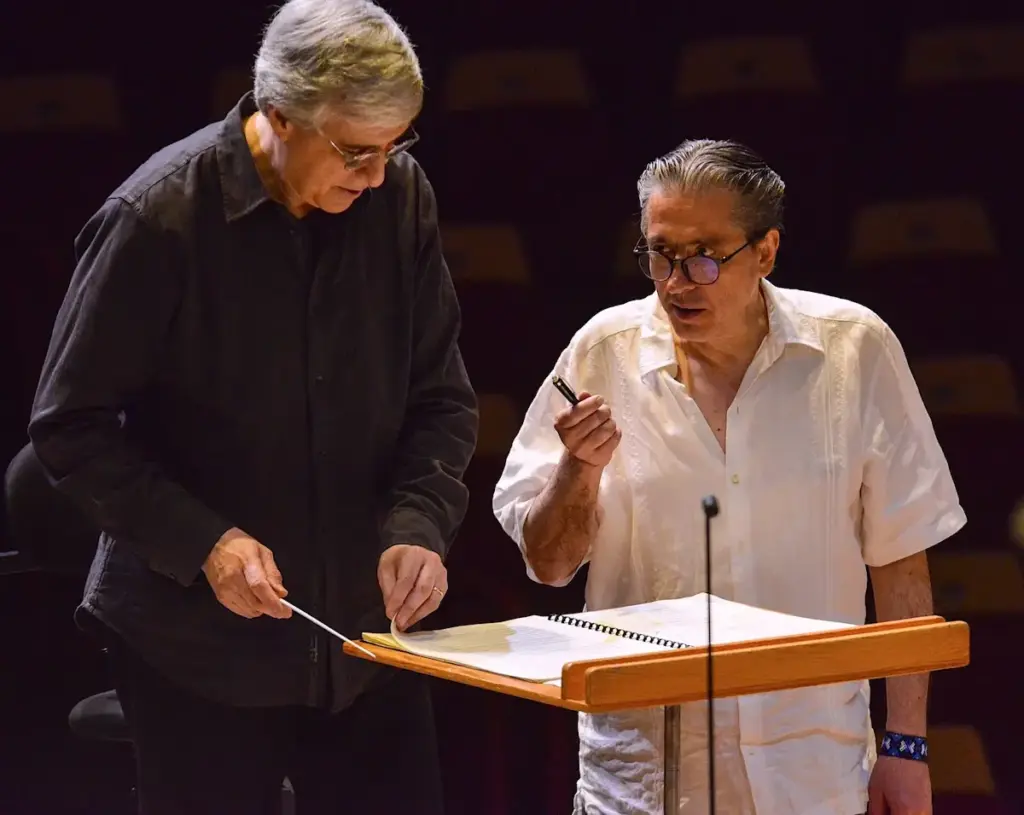
One of the most profound shifts reported by educators utilizing MakeMusic’s warm-up and vocal technique resources is the freedom of movement it affords the conductor. In a traditional rehearsal setting, a director’s hands are physically tied to the keyboard to execute vocalises, establish tonality, and guide pitch matching.
When MakeMusic assumes the role of the accompanist, the conductor’s role fundamentally changes:
- Acoustic Monitoring: Directors can walk the risers, moving directly in front of sections or individual singers to assess vowel uniformity, breath support, and resonance.
- Targeted Intervention: Instructors can immediately identify and correct pitch drift in sections (such as a stray tenor or soprano) without halting the entire rehearsal to re-anchor chords at the piano.
- Physical Engagement: Conductors are free to model physical posture, facial expression, and gesture-based phrasing without the barrier of a music stand and keyboard.
Data-Driven Sight-Reading Mastery
Sight-reading remains a cornerstone of comprehensive musicianship, yet it is frequently cited as one of the most challenging subjects to teach efficiently in large group settings. Traditional sight-reading books suffer from a fatal flaw: once a class reads through a selection, the novelty is lost, and students quickly memorize the exercise rather than genuinely decoding the notation.
MakeMusic counters this through two primary avenues:
- Curated Method Libraries: Subscribers have immediate access to a vast array of leveled sight-reading resources that can be deployed instantly, ensuring fresh material is always available.
- Sight Reading Studio Integration: For educators requiring hyper-specific parameters, MakeMusic’s Sight Reading Studio allows for the instantaneous generation of custom exercises.
Metrics of Customization in Sight Reading Studio
| Parameter Category | Customization Options Available | Pedagogical Benefit |
|---|---|---|
| Rhythm | Simple/compound meters, syncopation, sixteenth-note subdivisions | Targets specific rhythm deficits identified in previous repertoire rehearsals. |
| Melody | Stepwise motion, leaps (intervals), pentatonic vs. diatonic | Aligns directly with the tonal vocabulary of the current concert repertoire. |
| Key Signatures | Major/minor modes, extended sharps/flats | Reinforces theoretical concepts currently being studied in class. |
| Length & Scope | Measure count, voice parts (SATB, SSA, TBB) | Scales seamlessly from beginner treble choirs to advanced mixed concert ensembles. |
By utilizing custom parameters, educators can generate infinite variations of sight-reading exercises, ensuring that students develop true sight-reading literacy rather than rote memorization.
Official Perspectives: What Educators and Developers Are Saying
To fully grasp the cultural and practical shift occurring within choral programs, we must examine the sentiments of the educators on the front lines and the developers shaping the platform’s trajectory.
The Educator’s Voice: Bridging Practice and Rehearsal
Feedback from choral directors utilizing MakeMusic emphasizes the psychological and practical transformation of their daily routines.
- "There is nothing quite like singing along with a full accompaniment and not feeling like you’re singing alone," notes a high school choir director reflecting on student home practice reports. This emotional reinforcement is vital; novice singers often feel self-conscious practicing vocal lines in isolation. By providing a rich, supportive backing track, students build confidence outside of school hours.
- Regarding classroom utility, another veteran educator shares: "Whether you’re looking to escape the piano bench or just want to resource you haven’t opened yet, the ability to let MakeMusic be your accompanist lets you focus on what matters most: your students." This sentiment underscores a core philosophy of modern music education technology—technology should not replace the teacher, but rather remove administrative and mechanical friction so the human element of teaching can flourish.
The Developer’s Vision: A Unified Ecosystem
Behind the interface lies a dedicated effort by MakeMusic’s product and editorial teams to curate resources that respect traditional choral pedagogy while leveraging digital efficiency. Developers stress that the platform was designed to be modular. Directors are not forced into a rigid, linear curriculum; instead, they can act as curators, mixing and matching warm-ups, sight-reading modules, and repertoire studies to fit their unique rehearsal philosophies.
Furthermore, the emphasis on organizational tools—such as Playlists and Favorites—reflects an understanding of the annual burnout cycle experienced by educators. By allowing teachers to build, refine, and save custom playlists that persist across academic years, MakeMusic transforms August curriculum planning from a frantic, ground-up scramble into a streamlined editorial process.
Future Outlook: The Next Horizon for Digital Choral Arts
As we look toward the future of music education, several trends indicate that platforms like MakeMusic will become even more deeply integrated into standard choral curricula.
1. Advanced Vocal Assessment and Artificial Intelligence
While current instrumental platforms utilize pitch-and-rhythm tracking algorithms with high precision, vocal evaluation presents unique challenges due to timbre, vibrato, and language diction. Future iterations of digital choral tools are expected to incorporate more sophisticated acoustic analysis. These advancements will likely offer students real-time visual feedback on vowel purity, intonation stabilization, and breath pacing during independent practice sessions, freeing up even more instructional time for artistic interpretation and ensemble blend during class.
2. Expanded Global Repertoire and Inclusive Methodologies
As the choral community increasingly prioritizes diversity, equity, and inclusion in programming, digital repositories must follow suit. The future of platforms like MakeMusic relies on expanding method libraries to include diverse global folk traditions, non-Western vocal techniques, and historical works from underrepresented composers. By integrating these varied methodologies directly into interactive formats, digital platforms can help educators democratize access to world-class vocal training.
3. Seamless Hybrid Learning Frameworks
The educational disruptions of recent years demonstrated the necessity of resilient, cloud-based learning management systems. Choral programs can no longer rely solely on in-person, synchronous instruction. MakeMusic’s ecosystem bridges the physical divide between the classroom and the home, establishing a hybrid model where directors can assign warm-up routines, sight-reading challenges, and part-learning tracks digitally, tracking student progress via cloud analytics before the ensemble ever takes a collective breath in the rehearsal room.
Conclusion: Empowering the Choral Experience from Downbeat to Final Concert
The integration of interactive choral methods into MakeMusic represents a significant leap forward for vocal music education. By dismantling the physical barriers that tether conductors to the piano, providing infinite and customizable sight-reading pathways through Sight Reading Studio, and offering robust organizational structures like Playlists and Favorites, the platform addresses the most pressing logistical and pedagogical challenges facing modern choir directors.
For educators seeking to optimize their rehearsal time, protect their voices from fatigue, and foster deeper, more independent musicianship in their students, digital integration is no longer a futuristic luxury—it is an essential tool for artistic excellence.
Ready to transform your choral rehearsals? Choral directors can explore these comprehensive resources by logging into their accounts or visiting MakeMusic to start a free trial today, ensuring their ensembles are supported from the very first downbeat to the final resounding chord of the concert season.