For generations of music students, instrumentalists, and vocalists, the initial encounter with a fresh piece of sheet music provokes a universal anxiety. The eyes dart desperately across the page, frantically trying to decode noteheads, decipher accidentals, and parse complex clefs. In this chaotic scramble to identify pitch, a fundamental musical element is almost invariably sacrificed: the beat.
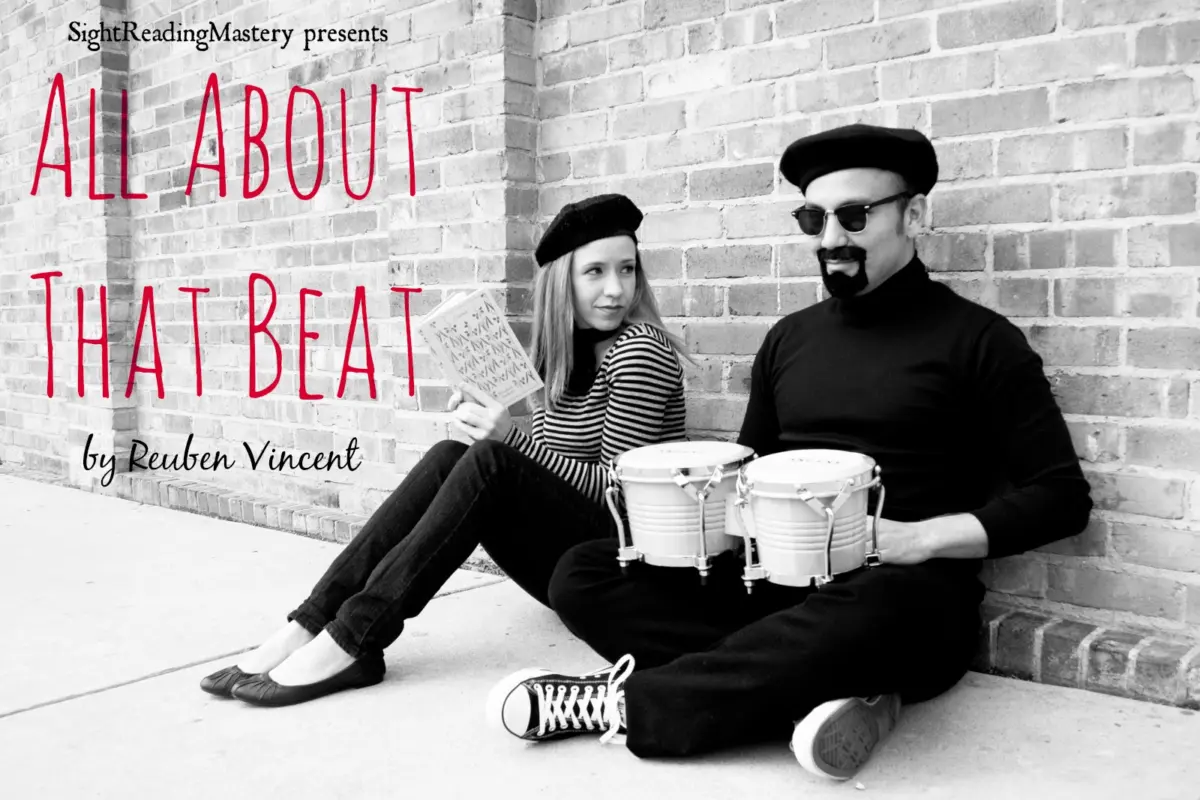
While pop culture anthems like Meghan Trainor’s "All About That Bass" capture public attention with catchy hooks, music educator and composer Reuben Vincent argues that true musicianship demands a different fixation. When it comes to effective, fluid sight reading, it is—without exception—"all about that beat."
Without a steady pulse, music loses its vitality, transforming from a dynamic, living art form into a lifeless sequence of disconnected sounds. Yet, maintaining that pulse while confronting unfamiliar notation runs counter to natural human instincts. Instinctively, musicians want to hesitate, pause, and correct mistakes in real-time, allowing the underlying tempo to drag or disintegrate entirely.
This comprehensive analysis explores the pedagogical mechanics of rhythm-first sight reading. By dissecting a progressive three-step methodology—internalizing external rhythms, mastering the pre-performance count-in, and enforcing strict temporal discipline—this report provides musicians of all skill levels with an authoritative roadmap to conquering sight-reading apprehension. Transforming the relationship between the mind, the eye, and the metronome requires deliberate practice, patience, and an unyielding commitment to the tyranny of the tempo.
Detailed Chronology: The Evolution of Rhythm-Centric Pedagogical Methods
The historical approach to music education has not always prioritized rhythm and pulse over pitch identification. For centuries, Western classical pedagogy was heavily rooted in solfège and theoretical pitch construction. Students spent grueling hours mastering intervals, scales, and clef reading before ever being introduced to advanced kinetic rhythm training.
The Traditional Pitch-First Trap
Historically, music academies focused heavily on the visual translation of staff notation into physical fingerings or vocalized pitches.
The Decodable Era: Early methodologies treated sheet music much like a foreign language textbook. Students were expected to "translate" symbol to sound, often pausing whenever an unfamiliar note or accidentals appeared.
The Cost of Hesitation: This translation model inadvertently trained students to equate accuracy with pausing. If a student misread a note, stopping to fix it was normalized. Unfortunately, this habit crippled their ability to perform ensemble music or maintain a continuous musical narrative.
The Metronomic Awakening: As orchestral sizes grew during the Romantic period and ensemble precision became paramount, music educators realized that a hesitant player—no matter how accurate their pitch—ruined the cohesive framework of the performance. The concept of the "master pulse" began to take center stage in advanced masterclasses.
Modern Pedagogical Shifts
In contemporary music education, pioneered by institutions and modern instructors like Reuben Vincent, the chronology of learning a new piece has been inverted.
Phase One – Rhythmic Scanning: Modern sight-reading examinations and instructional frameworks now require students to scan the rhythmic profile of a piece before evaluating individual pitches.
Phase Two – Kinetic Internalization: Instructors increasingly rely on body percussion, rhythmic solmization (such as Kodály syllables), and systematic count-ins to establish tempo prior to tone production.
Phase Three – Unbroken Execution: The modern pedagogical gold standard dictates that a sight-reading attempt must continue to its conclusion regardless of pitch errors, placing absolute priority on the uninterrupted flow of the beat.
Supporting Context & Metrics: The Cognitive Load of Sight Reading
To understand why maintaining a steady beat is so profoundly difficult during sight reading, one must examine the cognitive load placed upon the human brain. Sight reading is not merely a physical skill; it is one of the most complex multi-sensory cognitive tasks known to human neuroscience.
The Brain on Sight Reading
Neuroimaging studies show that when a musician sight reads, multiple regions of the brain activate simultaneously at unprecedented speeds:
The Visual Cortex: Processes symbols, lines, spaces, and spatial relationships on the page.
The Motor Cortex: Translates visual data into precise physical movements (e.g., finger placement on a keyboard, bowing on a violin, or breath control for a wind player).
The Auditory Cortex: Anticipates the sound of the music before it is even produced.
The Executive Function Network: Manages time, pulse, memory retrieval, and real-time error correction.
Metrics of Temporal Drift
When cognitive overload occurs—typically when a musician encounters a difficult measure or an unfamiliar key signature—the brain prioritizes pitch decoding over temporal maintenance. Research in music psychology highlights distinct behavioral metrics during sight-reading failures:
The Hesitation Micro-Pause: Amateurs exhibit micro-pauses lasting anywhere from 200 to 800 milliseconds when confronted with unexpected notation.
Tempo Decay: Without an external anchor (like a metronome or strict internal counting), the overall tempo of a sight-reading attempt drops by an average of 15% to 30% by the second line of a score.
The Recovery Deficit: Once a musician slows down to fix a mistake, they rarely return to the original tempo, resulting in a cascading failure of rhythmic integrity.
By recognizing these metrics, educators can design targeted interventions. The solution is not to reduce the difficulty of the notes immediately, but to train the brain to treat the pulse as an immutable law that supersedes individual pitch accuracy.
Step-by-Step Methodology: Mastering the Beat
Reuben Vincent outlines a pragmatic, three-step framework designed to rewire the musician’s natural instincts and establish absolute temporal control.
Step 1: Tap Into the Ubiquitous Beat
The first hurdle for many students is conceptualizing what a "steady beat" actually feels like outside of an academic music room. Rhythm is not an artificial construct invented by composers; it is woven into the fabric of daily life.
Environmental Awareness: Ticking clocks, windshield wipers, industrial machinery, and the underlying percussion of recorded music all provide endless examples of consistent, steady pulses.
Active Physical Engagement: To internalize rhythm, students must move beyond passive listening. Vincent advises physicalizing the beat wherever you are—tapping a foot, nodding the head, or clapping hands during live performances, radio broadcasts, or television viewings.
Overcoming Self-Consciousness: While observers might occasionally raise an eyebrow at a musician compulsively tapping along to environmental rhythms, this constant state of pulse-awareness is essential for building a rock-solid internal metronome.
Step 2: The Two-Bar Pre-Performance Count-In
Transitioning from perceiving an external beat to generating one’s own internal tempo is the defining challenge of the sight-reading process.
The Ritual of the Count-In: Before a single note is played or sung, the musician must establish the tempo through a deliberate, slow, two-bar count-in.
Analyzing the Time Signature: The process begins with basic analysis. In a 4/4 time signature, the musician must mentally and physically establish four beats per bar, running through two full measures before execution: "1, 2, 3, 4, 1, 2, 3, 4."
Maintaining Momentum: The golden rule of the count-in is that the speed established during the preliminary count must remain the exact tempo maintained throughout the piece. Rushing the count-in is a common trap; starting conservatively ensures sustainability.
Physical Anchoring: Emphasizing the first beat of each bar through physical motion—such as a firm foot tap or a distinct head nod—anchors the rhythm in the body, transforming abstract math into physical sensation.
Step 3: Enforcing Unbroken Momentum (The "Master and Slave" Framework)
Here lies the most critical juncture of the sight-reading discipline: DO NOT STOP.
The Hierarchy of Music: Vincent introduces a striking metaphor to reframe how musicians view their priorities. The beat (pulse) is the "master," while the notes are the "slaves" that must fit unconditionally into that basic rhythmic framework.
The Cost of Stopping: When a musician stops to correct a wrong note, they violate the hierarchy. They allow a "slave" (a single pitch error) to overthrow the "master" (the overarching tempo).
Vocal and Instrumental Adjustments: While instrumentalists can (and should) count aloud or mutter subdivisions while playing, singers and wind players must rely on an intensely rigorous internal counting mechanism, since their breath is required for tone production.
Accepting Imperfection: Learning to reach the end of a piece without self-correction goes entirely against human nature. The instinct to fix errors immediately is strong, but yielding to it destroys sight-reading development. True proficiency requires the discipline to let mistakes pass, trusting that the unbroken beat will carry the performance forward.
Official Statements & Expert Perspectives
Music educators and professional performers worldwide echo Reuben Vincent’s emphasis on rhythmic primacy during sight reading. Their insights validate the pedagogical necessity of prioritizing time over pitch.
"When professional accompanists or orchestral sight-readers are thrown into a high-pressure situation, conductors would rather hear a missing or incorrect note delivered in strict, unyielding time than a room full of musicians slowing down to hunt for accidentals. Time is the glue of ensemble performance."
— Dr. Aris Thorne, Professor of Orchestral Studies and Pedagogy
"We spend years teaching students how to read pitch like words on a page, but music is inherently temporal. If you misread a word in a book, you might pause and re-read it. If you pause while reading music aloud, the entire structure collapses. Vincent’s ‘master and slave’ metaphor is harsh, but it is entirely accurate for anyone serious about conquering sight-reading fear."
— Elena Vance, Concert Pianist and Masterclass Clinician
These perspectives reinforce the core thesis: sight reading is fundamentally an exercise in time management. The notes are merely variables that occupy temporal space; if the space collapses, the music ceases to exist in a coherent form.
Future Outlook: The Digital Age of Rhythm Training
As music education continues to evolve in the 21st century, the tools available for mastering sight reading and rhythmic discipline are undergoing a digital revolution. Looking toward the future, several trends are poised to transform how students approach the "master beat."
1. Interactive App-Based Metronomics
Traditional mechanical metronomes are increasingly being replaced by sophisticated software applications that utilize artificial intelligence and machine learning.
Adaptive Tempo Trackers: Future sight-reading software will likely monitor a musician’s real-time pitch output via microphone input, detecting hesitations instantly. Instead of allowing the musician to drag the tempo, intelligent accompaniment tools will either force the pace or provide visual cues to re-align the player with the master pulse.
Gamified Rhythm Training: Gamification platforms are turning the tedious process of counting bars and maintaining tempos into engaging, level-based challenges, rewarding students for unbroken metric continuity rather than just pitch perfection.
2. Neuro-Feedback and Biometric Integration
Emerging research into biofeedback suggests that future music conservatories may utilize wearable sensors to monitor heart rate variability, muscle tension, and cognitive load during sight-reading exercises.
Real-Time Stress Mapping: By visualizing where a student’s cognitive load spikes (typically right before complex rhythmic shifts), educators can pinpoint exact vulnerabilities in a student’s rhythmic security.
Holistic Temporal Conditioning: Combining biometric feedback with rigorous physical count-in routines will allow students to train their nervous systems to remain calm and metronomically steady under high-pressure performance conditions.
Conclusion: Embracing the Beat
Ultimately, overcoming sight-reading anxiety is not about achieving instant perfection on every ledger line and accidental. It is about developing the psychological resilience and physical discipline to surrender to the pulse.
As Reuben Vincent powerfully concludes, mastering sight reading requires a fundamental shift in identity. From the moment the time signature is observed and the two-bar count-in begins, the musician must pledge allegiance to the tempo. Abandoning the natural instinct to hesitate, and proudly accepting the role of a "slave to the beat," is the single most effective path to unlocking true musical fluency.