
Executive Overview
On the evening of Friday, April 14, 2023, the historic Church of the Holy Trinity at 1904 Walnut Street in Philadelphia served as a resonant sanctuary for one of the academic and cultural calendar’s most anticipated musical events. The Thomas Jefferson University Choir and Orchestra marked their 53rd Annual Spring Concert with a performance that bridged classical sacred grandeur and American theatrical soul. Under the masterful baton of conductor Robert Thayer Sataloff, M.D., D.M.A.—a globally renowned otolaryngologist and vocal arts authority—the ensemble delivered a breathtaking program featuring Franz Joseph Haydn’s monumental Lord Nelson Mass (Missa in angustiis) alongside stirring excerpts from George Gershwin’s enduring folk opera masterpiece, Porgy and Bess.
This culturally rich evening was more than a routine seasonal showcase; it was the centerpiece of Philadelphia’s local observance of World Voice Day 2023, produced in close collaboration with The Voice Foundation. World Voice Day is an international annual event dedicated to celebrating the phenomenon of the human voice, raising awareness of voice care, and recognizing the profound impact of vocal art and science on global culture.
The concert brought together a formidable assembly of artistic talent, featuring a robust orchestra, a disciplined choral ensemble, and a diverse roster of eleven highly accomplished vocal soloists. Led by Dr. Sataloff, alongside Associate Conductor Philip Doucette, Associate Conductor Emerita Margaret M. Baroody, and accompanist Yoni Levyatov, the performance showcased the unique intersection where rigorous academic medicine, scientific vocal research, and sublime artistic expression meet. This comprehensive report explores the anatomy of this landmark evening, examining the historical significance of the repertoire, the leadership driving the institution, the meticulous execution of the program, and the broader cultural implications of celebrating World Voice Day through live orchestral performance.
Detailed Chronology: The Anatomy of an Unforgettable Evening
Prelude to Performance: Setting the Stage at Holy Trinity
As the clock approached 8:00 PM on April 14, 2023, the architectural majesty of the Church of the Holy Trinity was filled to capacity. Known for its exceptional acoustic properties and stunning neo-Gothic interior, the venue provided an intimate yet resonant atmosphere ideally suited for the sweeping dynamic range of Haydn’s choral writing and the lush orchestration of Gershwin’s jazz-infused compositions.
Attendees—comprising medical professionals, university students, faculty, classical music aficionados, and vocal health advocates—settled in as the ensemble took their places. The air was charged with anticipation, heightened by the knowledge that this concert represented months of rigorous preparation, balancing demanding academic schedules with elite-level musical rehearsal.
Act I: Haydn’s Lord Nelson Mass—Drama, Triumph, and Devotion
The first half of the concert opened with Franz Joseph Haydn’s Missa in angustiis (Mass in Straits, commonly known as the Lord Nelson Mass). Composed in 1798 during a period of acute historical anxiety—as Napoleon Bonaparte’s military campaigns threatened Austrian stability and news of Admiral Horatio Nelson’s Nile victory reached Vienna—the work is widely considered a masterclass in dramatic tension and spiritual transcendence.
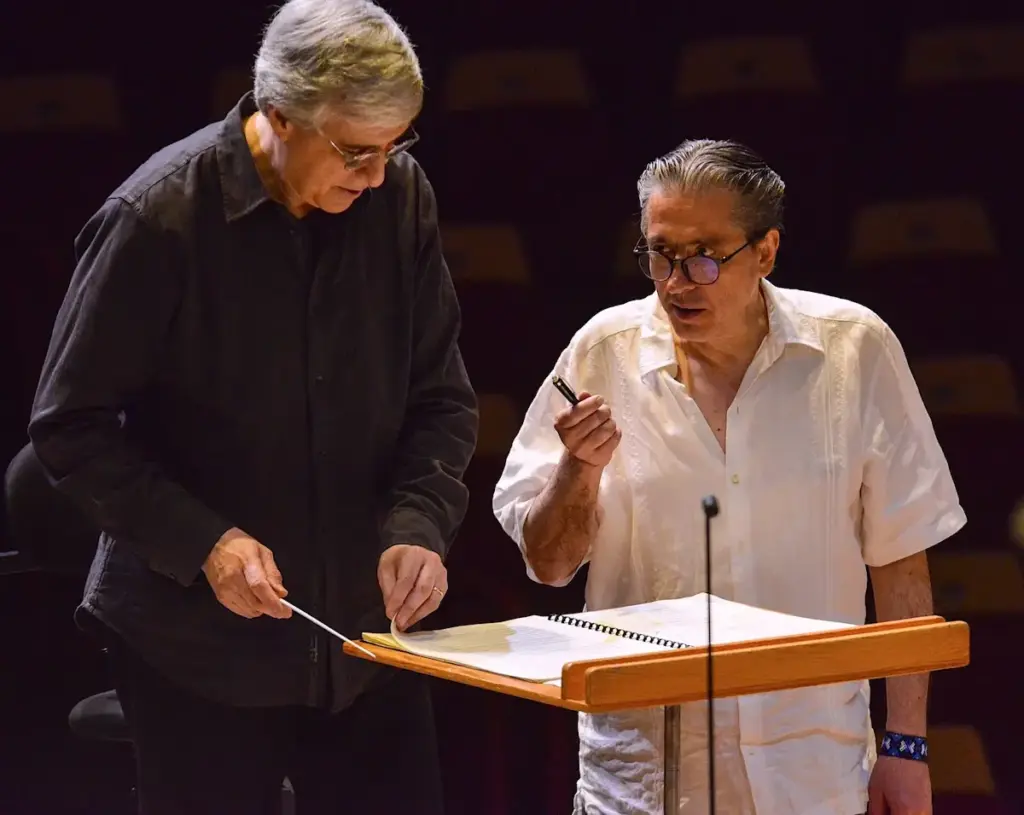
Dr. Sataloff commanded the orchestra and choir with precision, immediately establishing the dark, urgent atmosphere of the opening Kyrie. Scored unusually for trumpet, timpani, strings, and organ (omitting woodwinds), the work’s stark sonic profile cut through the cathedral nave with striking clarity.
The chorus navigated the treacherous counterpoint and soaring vocal lines with remarkable agility and warmth. The solo quartet—featuring select members of the evening’s eleven-strong soloist roster—wove seamlessly through the demanding vocal architecture of the Gloria and Credo. Soprano soloists Melanie Culhane, Susannah Foos, and Luciana Piovan delivered soaring, ethereal passages that floated effortlessly into the vaulted ceiling, while altos Alyson Harvey and Kristina Lewis anchored the lower vocal harmonies with rich, resonant timber. Tenors Kurt Hoffman, Maximilliano Marques, and Jimson Mathew injected dramatic fervor into the complex choral textures, complemented by the commanding bass foundations laid by Curtis Cummings and Richard Kovach.
The Benedictus and Agnus Dei offered moments of profound introspection before erupting into the triumphant Dona nobis pacem. The orchestra, responding dynamically to Sataloff’s nuanced cues, delivered a reading that honored both the historical gravity of the composition and its timeless message of peace amidst turmoil.
Act II: The Soul of America—Excerpts from Gershwin’s Porgy and Bess
Following a brief intermission, the acoustic landscape shifted dramatically from the classical courts of 18th-century Europe to the vibrant, sun-drenched fictional community of Catfish Row in Charleston, South Carolina. The orchestra transitioned effortlessly into the syncopated rhythms, lush harmonies, and deeply expressive melodies of George Gershwin’s Porgy and Bess.
By pairing Haydn’s sacred masterwork with Gershwin’s American masterpiece, the concert highlighted the versatility and expressive capacity of the human voice across vastly different musical idioms. The soloists stepped forward to deliver iconic excerpts that have become touchstones of American musical history.
From the haunting lullaby "Summertime" to the buoyant optimism of "I Got Plenty o’ Nuttin’" and the dramatic intensity of "Bess, You Is My Woman Now," the vocalists displayed an impressive command of stylistic shifting. Accompanist Yoni Levyatov, working in tandem with the full orchestral ensemble, provided fluid, idiomatically rich support that captured the unique blend of jazz, blues, and classical European structural techniques embedded in Gershwin’s score.
The audience response throughout the second half was electric, punctuated by spontaneous applause following standout vocal turns. The collaborative energy between the choir, soloists, and instrumentalists demonstrated a profound collective understanding of the material’s emotional core.
The Grand Finale and Ovation
As the final chords of the Gershwin medley faded into the nave of the Church of the Holy Trinity, the audience rose to their feet in a sustained, thunderous standing ovation. Dr. Sataloff acknowledged the applause, turning repeatedly to recognize the monumental efforts of Associate Conductor Philip Doucette, Associate Conductor Emerita Margaret M. Baroody, Accompanist Yoni Levyatov, the eleven featured soloists, and every member of the Thomas Jefferson University Choir and Orchestra.
The performance concluded not merely as a successful university concert, but as a triumphant public affirmation of the healing, unifying power of music—fittingly anchoring Philadelphia’s celebration of World Voice Day 2023.
Supporting Context & Metrics: Science, Art, and Institution
The Intersection of Medicine and Music: Dr. Robert T. Sataloff
To fully understand the significance of the Thomas Jefferson University Choir and Orchestra, one must examine the unique leadership driving the organization. Dr. Robert Thayer Sataloff is not only a celebrated conductor with a Doctor of Musical Arts (D.M.A.), but also a world-renowned otolaryngologist, surgeon, and professor. As Chairman of the Department of Otolaryngology-Head and Neck Surgery and Professor of Otolaryngology at Thomas Jefferson University, Dr. Sataloff sits at the absolute pinnacle of voice science and medicine.
His dual expertise provides the choir and orchestra with an unprecedented advantage. Under his direction, student and community musicians receive insights into vocal production, vocal hygiene, and physiological efficiency that are rarely accessible in standard academic ensemble settings. This scientific grounding ensures that the singers maintain elite technical standards while performing demanding repertoire without vocal strain or fatigue.
The Role of The Voice Foundation and World Voice Day
The collaboration with The Voice Foundation—the world’s oldest and largest organization dedicated to voice education, research, and medicine—elevates the concert beyond a regional performance into a globally aligned observance. World Voice Day (observed annually on April 16, with events scheduled throughout the week) aims to demonstrate the enormous importance of the voice in daily life and to encourage individuals to seek help for voice disorders.
By mounting a major choral and orchestral showcase to celebrate the occasion, Thomas Jefferson University and The Voice Foundation underscored a vital philosophical truth: while science explains how the voice works, art demonstrates why it matters. The concert served as a living laboratory of vocal health, showcasing trained voices operating at peak professional levels across dynamic classical and theatrical landscapes.
Ensemble Composition and Demographic Breakdown
The 53rd Annual Spring Concert featured a deeply collaborative community of musicians, blending student talent from various academic disciplines at Thomas Jefferson University with seasoned regional instrumentalists and professional vocal soloists.
- Total Vocal Soloists: 11 distinguished artists spanning soprano, alto, tenor, and bass registers.
- Choral Forces: A mixed-voice choir combining undergraduate and graduate students, faculty, alumni, and community members.
- Orchestral Instrument Sizing: A fully balanced symphonic ensemble featuring strings, brass, percussion, and keyboard instrumentation tailored to the specific demands of both Haydn’s classical scoring and Gershwin’s expanded orchestrations.
- Repertoire Span: Spanning two centuries of musical evolution, crossing from 1798 European sacred classicism to 20th-century American theatrical modernism.
Official Statements & Leadership Perspectives
While specific spoken remarks from the podium on April 14 centered on gratitude, community, and the celebration of the human instrument, the philosophy guiding the Thomas Jefferson University Choir and Orchestra reflects deep institutional values regarding the arts in higher education and healthcare.
In statements previously articulated regarding the intersection of medicine and the performing arts, leadership has consistently emphasized that creativity and scientific inquiry are mutually reinforcing disciplines. Dr. Sataloff has frequently noted that medical students and healthcare professionals benefit immensely from artistic training, which hones empathy, active listening, precision, and collaborative problem-solving.
Furthermore, representatives from The Voice Foundation have lauded the ongoing partnership with Thomas Jefferson University, highlighting that public performances like the World Voice Day concert demystify the complexities of vocal health. By demonstrating what the human voice can achieve through disciplined training and healthy physiological management, the event serves an essential educational role for the broader public.
Future Outlook: Legacy, Expansion, and the Next 53 Years
Sustaining the Tradition of Excellence
As the Thomas Jefferson University Choir and Orchestra look beyond their 53rd Annual Spring Concert, the institution faces an exceptionally bright future. The success of the April 14, 2023 performance proves that the appetite for ambitious, intellectually stimulating, and emotionally resonant classical programming remains robust in Philadelphia.
Plans for future seasons involve expanding community outreach, increasing collaborative performances with medical and scientific symposiums, and continuing to commission and perform repertoire that challenges both performers and audiences. By maintaining rigorous audition standards while remaining inclusive of university-wide talent, the ensemble ensures a continuous influx of fresh energy and perspective.
The Expanding Scope of World Voice Day
Globally, World Voice Day continues to gain momentum year after year, with thousands of events taking place across more than 50 countries. The model established in Philadelphia—wherein a major medical-academic institution partners with cultural foundations to mount high-caliber artistic productions—serves as a blueprint for other cities seeking to merge health advocacy with cultural enrichment.
Future iterations of the spring concert series are expected to further explore the therapeutic applications of music, investigating how choral singing and instrumental performance contribute to mental health, neurological rehabilitation, and overall community well-being.
Conclusion
The Thomas Jefferson University Choir and Orchestra’s presentation of Haydn’s Lord Nelson Mass and Gershwin’s Porgy and Bess on April 14, 2023, stands as a defining moment in Philadelphia’s cultural year. Through meticulous preparation, visionary leadership under Dr. Robert T. Sataloff, and a profound commitment to the celebration of the human voice, the ensemble delivered an evening of transcendent beauty. As the echoes from the Church of the Holy Trinity continue to resonate within the academic and artistic communities, this landmark concert reaffirms that when science and art walk hand in hand, the result is nothing short of magnificent.