
Executive Overview
In the realm of musical pedagogy, few competencies are as universally acknowledged yet notoriously difficult to master as sight-reading. At the foundational core of this discipline lies note recognition—the instantaneous cognitive processing and physical translation of visual symbols on a musical staff into auditory imagination, vocalization, or instrumental execution. While beginners often stumble over identifying basic pitches, even advanced and professional musicians continuously seek to refine their processing speed and accuracy.
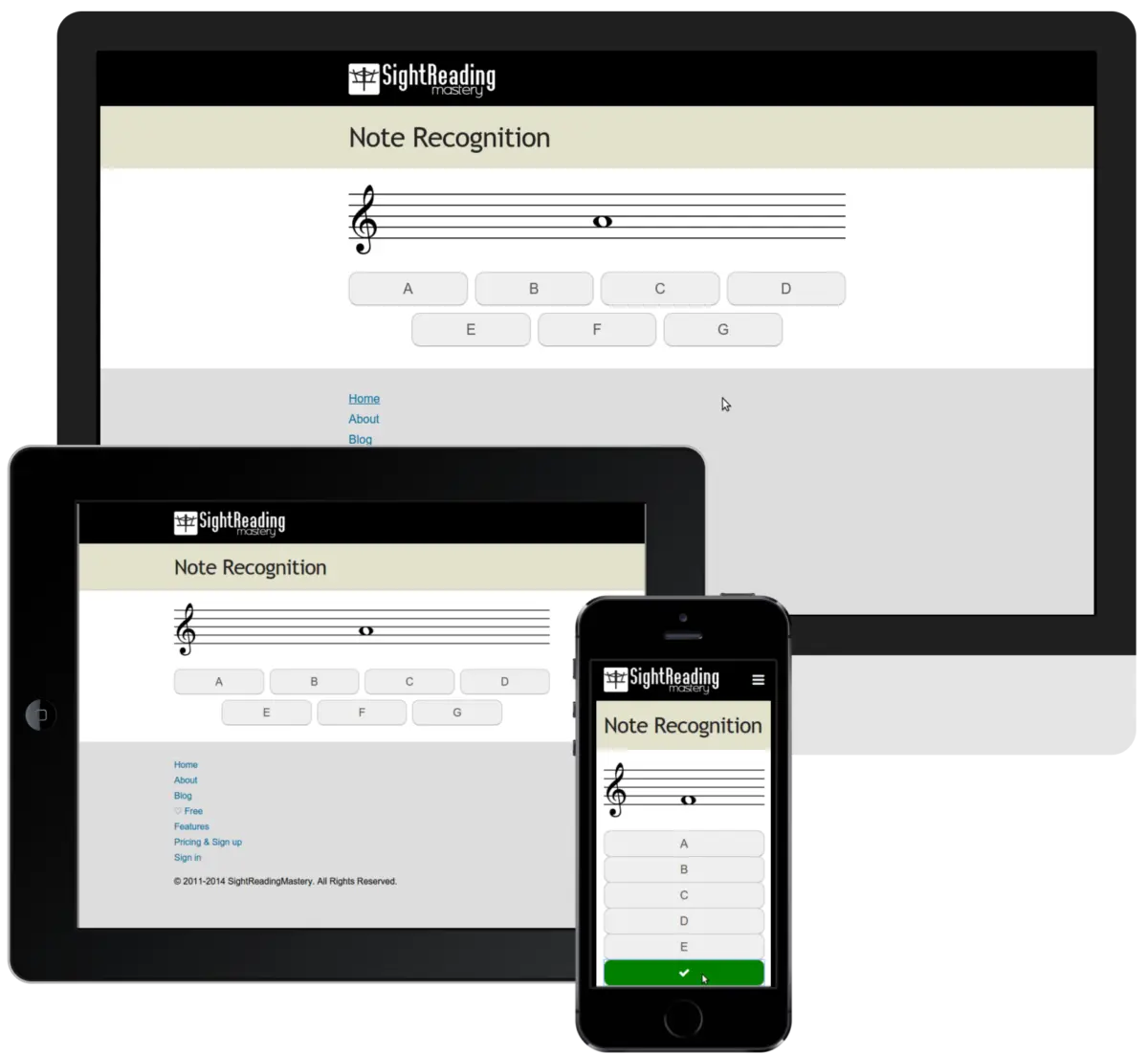
To bridge this perennial gap in music education, software engineer, musician, and educator Evan R. Murphy—founder of SightReadingMastery—released a dedicated digital learning instrument: the Note Recognition App. Designed to democratize and streamline foundational music theory training, this free online utility transforms a historically tedious flashcard-style drill into an interactive, cross-platform digital experience.
Initially launched in May 2015 with constrained parameters focusing strictly on foundational treble clef reading, the platform has since undergone significant iterations. Following critical updates in late 2018, the application evolved into a comprehensive training environment supporting both treble and bass clefs, alongside the notoriously tricky expanse of ledger lines.
This retrospective examines the origins, architectural design, pedagogical philosophy, and ongoing evolution of the SightReadingMastery Note Recognition App. By analyzing how digital micro-learning tools intersect with traditional music education, we explore the broader implications of web-based applications in shaping the next generation of literate, fluent musicians.
Detailed Chronology: From Concept to Cross-Platform Reality
The journey of the Note Recognition App reflects the broader evolution of EdTech (Educational Technology) over the past decade, shifting away from cumbersome desktop software toward lightweight, browser-based, mobile-responsive tools.
Phase 1: The Genesis of SightReadingMastery (2011)
Long before the deployment of the note recognition app, the ecosystem of SightReadingMastery was established in 2011 by Evan R. Murphy in Seattle, Washington. Operating at the intersection of software engineering and musical instruction, Murphy recognized a stark deficiency in how students approached music literacy. Traditional methods relied heavily on static paper flashcards or dense, uninspired workbooks. While these methods taught the fundamentals, they lacked dynamic pacing, immediate analytical feedback, and the engaging gamification necessary to sustain long-term student practice habits.
Murphy’s platform was initially built to supply structured, progressive sight-reading exercises for musicians. However, internal data and user feedback consistently pointed to a single bottleneck: foundational note recognition lag. Even when musicians understood musical concepts theoretically, their recognition speed on the staff caused hesitation during live performance or sight-reading evaluations.
Phase 2: The 2015 Launch and Initial Constraints
On May 1, 2015, SightReadingMastery officially rolled out the initial iteration of the web-based Note Recognition App. Released entirely free of charge to the public, the tool aimed to strip away the friction of traditional flashcards by offering an instantaneous, browser-native platform.
The initial release, while praised for its clean interface and rapid loading speeds, came with notable pedagogical limitations driven by early development scopes. As documented in the application’s initial release notes:
- Clef Restriction: The tool exclusively supported the treble clef, leaving pianists, bassists, cellists, and low-brass players waiting for comprehensive support.
- Staff Boundaries: The system omitted ledger lines, meaning users were restricted strictly to the standard five-line staff.
Despite these constraints, the initial launch served as a vital proof-of-concept. It demonstrated that browser-based platforms could effectively deliver responsive musical drills without requiring complex third-party plugins or expensive desktop downloads.
Phase 3: The 2018 Architectural Refinement
Recognizing that a truly universal sight-reading tool could not isolate instruments or ignore extended ranges, Murphy spearheaded a major update sequence in the autumn of 2018.
- September 14, 2018: Initial milestone updates began addressing user feedback regarding expanded musical contexts.
- September 23, 2018: The platform achieved its most critical functional upgrade, officially obliterating its previous limitations.
Through subsequent deployment cycles, the application integrated bass clef support alongside a fully functional ledger line engine. This expansion transformed the app from a basic treble-clef training wheel into an inclusive tool capable of addressing the needs of multi-instrumentalists, choral singers, and pianists navigating grand staves.
Supporting Context & Metrics: The Anatomy of Sight-Reading Fluency
To understand why a dedicated note recognition app matters, one must examine the cognitive mechanics of sight-reading. In cognitive psychology, reading music is often compared to reading linguistic text. Just as fluent reading requires instant word recognition (sight words) rather than laborious phonics decoding for every single word, fluent music reading requires instantaneous pattern and note recognition.
Cognitive Processing Speeds in Music
When a musician looks at a musical staff, several cognitive operations occur in milliseconds:
- Visual Encoding: The eye registers the exact vertical and horizontal placement of the notehead relative to the staff lines and spaces.
- Symbolic Decoding: The brain maps the visual coordinate to a pitch name (e.g., Middle C, G5, F3).
- Motor Mapping: The nervous system translates the pitch name into a physical action—whether pressing a specific piano key, positioning fingers on a violin fingerboard, or adjusting vocal cords for singing.
If any of these steps suffer from latency, the entire cognitive chain breaks down, resulting in stuttered rhythms, stopping, or complete execution failure. Traditional practice methods often fail because they do not isolate and drill the visual-to-symbolic decoding loop at high repetitions.
The Responsive Design Imperative
Murphy and the development team at SightReadingMastery understood that practice frequency directly correlates with accessibility. If an app requires a desktop computer or a specific operating system, user compliance drops.
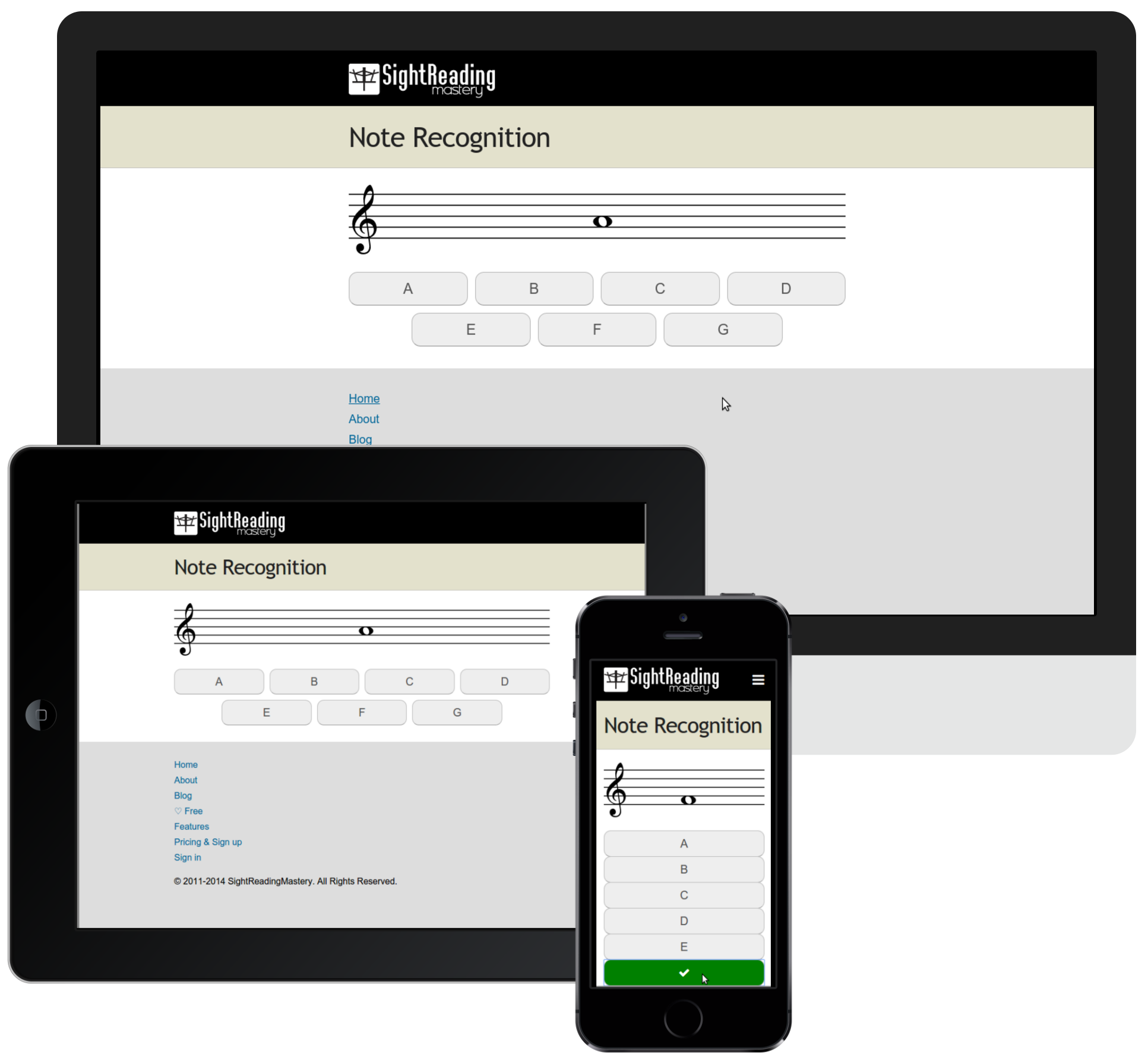
By engineering the Note Recognition App to run natively within standard web browsers across smartphones, tablets, and full-size desktop computers, the platform eliminated barriers to entry. Whether a student is commuting on public transit, warming up backstage before a concert, or sitting at a piano bench during formal practice hours, the tool remains instantly accessible. This mobile-first, cross-platform adaptability aligns with modern micro-learning research, which proves that frequent, short bursts of targeted practice yield superior retention compared to infrequent, marathon study sessions.
Official Statements & Pedagogical Philosophy
Behind the architecture of the application lies a deeply human philosophy of music education. Evan R. Murphy, balancing his dual identities as a professional software engineer and an experienced music instructor, has frequently articulated the driving ethos behind SightReadingMastery.
"Realizing how important sight reading is to unlocking opportunities in music, I started SightReadingMastery in 2011 to help musicians develop this valuable skill." — Evan R. Murphy, Founder
Murphy’s perspective challenges the common cultural myth that sight-reading is an innate, unchangeable talent—a "gift" that one either possesses or lacks. Instead, his pedagogical framework treats sight-reading as a mechanical skill built upon thousands of micro-repetitions, pattern recognition, and systematic visual training.

By stripping away extraneous features and focusing purely on the mechanics of note identification, the Note Recognition App embodies a minimalist design philosophy: maximum cognitive focus on the target task. There are no distracting mini-games, complex fantasy narratives, or convoluted point systems. The interface presents a clear musical note on the staff, tracks user accuracy and speed, and delivers continuous, unfettered drilling opportunities.
Furthermore, by keeping the tool entirely free and accessible via web browsers, Murphy reflects a commitment to music education equity. Students who may lack the financial resources for private tutors or expensive proprietary software are given direct access to professional-grade cognitive training tools.
Future Outlook: The Horizon of Digital Music Pedagogy
As music education continues to digitize, tools like the SightReadingMastery Note Recognition App point toward a more integrated, data-driven future for instrumental and vocal training.
1. Integration of Audio Input and Pitch Detection
While the current web tool relies primarily on visual identification and selection (click, tap, or keyboard input), the future of note recognition apps lies in live audio feedback. By integrating browser-based microphone access using advanced pitch-detection algorithms (such as Web Audio API implementations), future iterations could require musicians to actually play the note on a physical instrument (piano, flute, violin, or voice) to advance through drills. This would close the loop between visual recognition and physical execution, bridging the gap between theory drill and real-world musicianship.
2. Algorithmic Personalization and Spaced Repetition
Another frontier for digital music tools is the incorporation of advanced spaced repetition algorithms (SRS)—similar to systems used in language-learning applications like Anki. By tracking which specific notes, clefs, or ledger line registers a student struggles with most frequently, the application could dynamically adjust its test generation engine, automatically serving up difficult pitches more frequently while scaling back on mastered notes.
3. Comprehensive Ecosystem Synergy
As SightReadingMastery continues to expand its digital footprint from its Seattle base outward to a global audience, apps like the Note Recognition App serve as the essential entry point of a broader pedagogical funnel. By pairing instantaneous digital drills with structured, downloadable sight-reading books and progressive exercises, platforms are creating hybrid learning environments that honor traditional musicianship while leveraging modern software engineering.
Conclusion
The evolution of the SightReadingMastery Note Recognition App—from a simple, treble-clef-only browser experiment in May 2015 to a robust, multi-clef training engine incorporating ledger lines—highlights the power of iterative, user-driven software development in music education.
By targeting the foundational bottleneck of note recognition, Evan R. Murphy and his team have provided musicians of all skill levels with an indispensable resource. Whether used by a young student learning the grand staff for the first time or an advanced professional sharpening their processing speed, the app proves that with the right digital tools, mastery of the musical staff is within reach for everyone.
To explore the tool and test your own recognition speed and accuracy, visit the live application at sightreadingmastery.com/note-recognition/.