
Executive Overview
On November 14, 2026, the venerable musical Chicago reached a staggering milestone: thirty years of continuous performances on the Broadway stage. Opening its historic revival at the Richard Rodgers Theatre on November 14, 1996—following a celebrated, minimalist concert run at New York City Center Encores!—the production has evolved from a daring, stripped-down theatrical experiment into the longest-running American musical in Broadway history.
Conceived by the legendary creative trinity of John Kander, Fred Ebb, and Bob Fosse, Chicago is far more than a glittering revue of showstoppers; it is a razor-sharp, endlessly relevant critique of the intersection between crime, media obsession, celebrity culture, and the justice system. When directors and producers mounted this revival in the late 20th century, the cultural zeitgeist—freshly hypnotized and horrified by the media circus of the O.J. Simpson trial—found a chilling mirror in the fictional world of Roxie Hart and Velma Kelly.
Thirty years later, in an era dominated by 24-hour news cycles, viral social media infamy, and reality television dynasties, the show’s cynical thesis feels less like satire and more like prophetic documentary. To mark this monumental Pearl Anniversary, Playbill takes an exhaustive look back at three decades of jazz, jailbirds, and razzle-dazzle. Through rare production archives, reflections from original creators, and a massive retrospective of the stars who have donned the pinstripes, we examine how Chicago defied the notoriously fickle economics of Broadway to become an immortal theatrical institution.
Detailed Chronology: From Fosse’s Flop to a Modern Masterpiece
To understand the miraculous longevity of the 1996 revival, one must first look back at the rocky origins of the property.
1975: The Original Production
Chicago: A Musical Vaudeville premiered on Broadway at the 46th Street Theatre on June 3, 1975. Directed and choreographed by Bob Fosse, with a book by Fosse and Fred Ebb, and a score by Kander and Ebb, the production starred Chita Rivera as Velma Kelly and Gwen Verdon as Roxie Hart. Despite boasting a powerhouse creative team and a brilliant jazz-inflected score, the original staging ran for 936 performances—a respectable number for its time, but one that was overshadowed by the runaway success of Michael Bennett’s A Chorus Line, which opened around the same time and captured the cultural imagination (and most of the Tony Awards).
Critics in 1975 found Chicago’s cynical, dark-edged vaudeville format jarring. Audiences were not yet ready to embrace a musical where murderers were glorified as folk heroes and the legal system was exposed as a transparently corrupt, media-manipulated circus.
1996: The City Center Spark and Broadway Transfer
Two decades later, the theatrical landscape had shifted dramatically. Produced as a concert staging for New York City Center’s Encores! series in May 1996, the show was reconceived with a radical, minimalist approach. Stripped of lavish, distracting physical sets and sprawling orchestrations, the concert focused entirely on the actors, Bob Fosse’s iconic choreography (recreated by Ann Reinking), and John Kander and Fred Ebb’s brilliant score.
The response was electric. The limited engagement sold out instantly, prompting producers Barry and Fran Weissler to orchestrate a rapid commercial transfer to Broadway. On November 14, 1996, the revival officially opened at the Richard Rodgers Theatre (later transferring to the Shubert Theatre and eventually settling into the Ambassador Theatre).
The timing could not have been more culturally synchronized. As director Walter Bobbie noted in a historic 1996 interview with Playbill, the show had crossed the line from theatrical satire to documentary reality:
"The cynical edge in Chicago is that in this story crime not only pays, it leads to great success. And no one in the audience in 1996 can say, ‘I hope that could never happen.’ Because we’ve seen it happen."
The Decades of Dominance
Throughout the late 1990s, the 2000s, and beyond, the revival became a masterclass in theatrical sustainability. By rotating high-profile guest stars into the principal roles of Roxie Hart, Velma Kelly, Billy Flynn, and Matron "Mama" Morton, the production created a perpetual-motion publicity machine. Viewers who had already seen the show returned to watch their favorite pop stars, television actors, and legendary stage performers step into the vaudeville spotlight.
In 2002, the film adaptation—directed by Rob Marshall and starring Renée Zellweger, Catherine Zeta-Jones, and Richard Gere—swept the Academy Awards, winning Best Picture. Far from cannibalizing ticket sales for the stage production, the cinematic blockbuster triggered a massive theatrical boom, introducing a global audience to the live Broadway experience and cementing Chicago as an international cultural brand.
Supporting Context & Metrics: The Anatomy of a Record-Breaker
The statistical footprint of the 1996 Chicago revival is nothing short of staggering. As it celebrates its 30th anniversary on November 14, 2026, the production holds multiple high-water marks in theatrical history:
- The Longest-Running American Musical: Chicago proudly stands as the longest-running American musical in Broadway history, sitting comfortably behind only The Phantom of the Opera in overall Broadway longevity.
- Over 12,000 Performances: The revival has played well past 12,000 regular performances on Broadway, welcoming millions of theatergoers through the doors of the Ambassador Theatre.
- Global Footprint: Beyond Broadway and the West End, international productions of the revival have been mounted in dozens of countries, translated into multiple languages, and seen by tens of millions worldwide.
- The Star-Studded Rotation: Over thirty years, the production has employed hundreds of actors, transforming the casting announcement into a major recurring cultural event.
A Pantheon of Merry Murderesses and Slick Lawyers
The roll call of talent that has populated the Cook County Jail over the past three decades reads like a who’s who of global entertainment. The tradition began with original revival icons Ann Reinking and Bebe Neuwirth, whose definitive interpretations of Roxie and Velma set an impossibly high artistic standard.
Over the years, the stage has welcomed an eclectic mix of mainstream celebrities eager to test their theatrical mettle. The roster includes television personalities like Jerry Springer, pop and R&B royalty like Brian McKnight, Hollywood icons like Brooke Shields, and trailblazing performers from across the entertainment spectrum, including recent celebrated runs by drag superstar Jinkx Monsoon. This fearless casting strategy has ensured that Chicago remains perpetually contemporary, drawing diverse demographics to the theater night after night.
Official Statements and Archival Insights
Reflecting on the production’s enduring legacy, the creative and artistic community has consistently pointed to the timelessness of Kander, Ebb, and Fosse’s vision.
In archival statements provided to Playbill during the production’s early days, director Walter Bobbie emphasized that the show’s brilliance lies in its unflinching honesty about human nature and media consumption. While critics in 1975 found the musical’s cynicism biting, society by 1996—and certainly by 2026—had caught up to the material.
The modern media ecosystem, characterized by instant viral notoriety, true-crime obsession, and the commodification of scandal, has transformed Chicago from a historical period piece into an eerie premonition. The central thesis—that public sympathy is a commodity that can be bought, sold, and manipulated by a charismatic lawyer and a flashbulb-hungry press—resonates even more powerfully in the age of algorithmic feeds and sensationalized digital headlines.
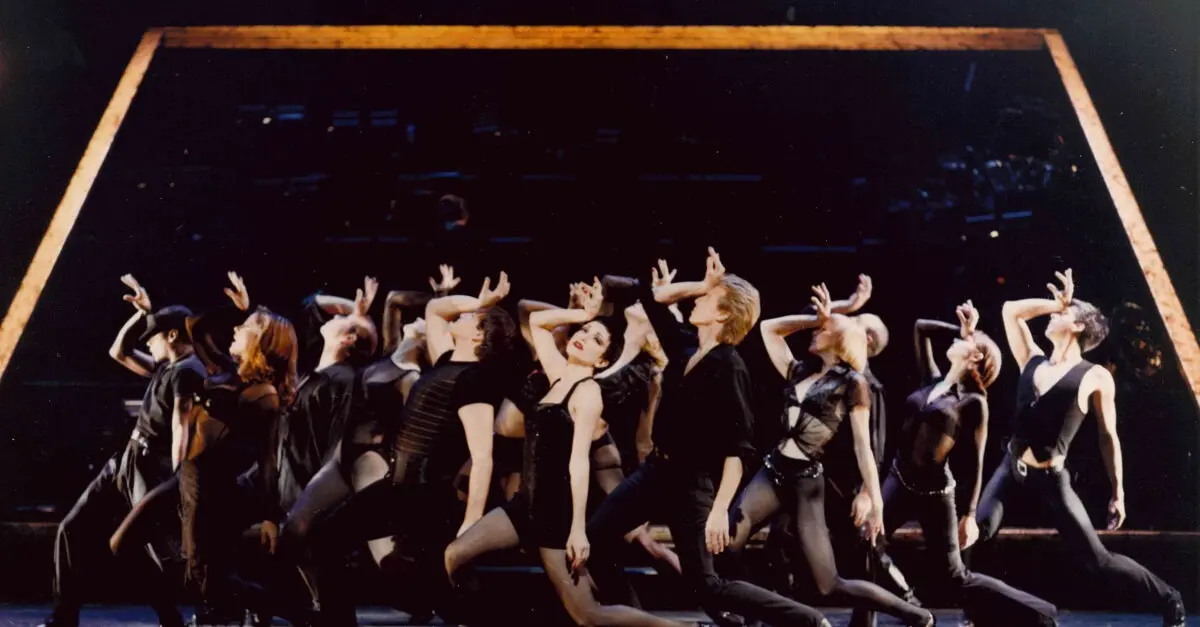
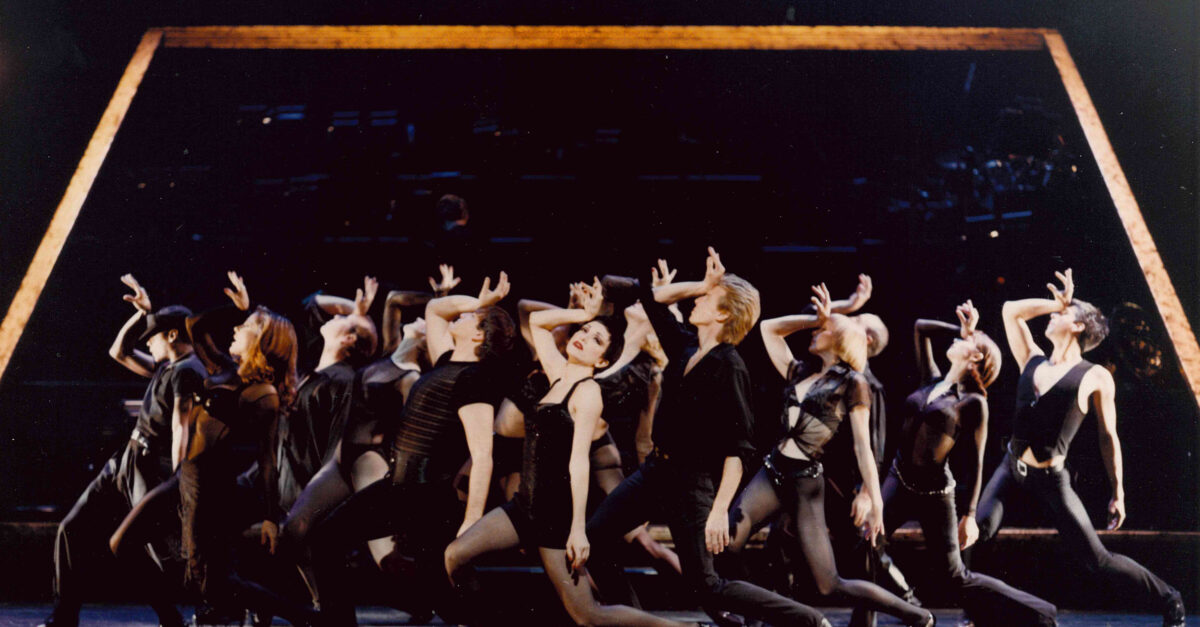
Furthermore, the choreography serves as an unyielding anchor. Bob Fosse’s stylized vocabulary—characterized by slumped shoulders, turned-in toes, jazz hands, and sharp, isolation-driven movements—remains a masterclass in physical storytelling. Under the watchful eye of revival supervisors and dance captains, the choreography has maintained its razor-sharp precision across thousands of performances, preserving the authentic physical language of the original master.
Future Outlook: The Next Act for Broadway’s Eternal Jazz Age
As Chicago rings in its landmark 30th anniversary with a star-studded special performance and gala celebration, theater critics and industry analysts frequently ask: Just how long can the music play?
If the current trajectory is any indication, the answer is indefinitely. Unlike heavy-spectacle musicals whose astronomical weekly operating costs leave them vulnerable to sudden economic shifts, Chicago’s brilliant, stripped-down design allows it to remain remarkably resilient. With minimal set changes, a visible on-stage orchestra acting as part of the ensemble, and a flexible casting model, the production operates with an agility that few Broadway shows can match.
Plans for the future include continued international licensing expansions, educational outreach programs celebrating Fosse technique, and ongoing special events designed to honor the legacy artists who built the revival’s foundation. As new generations of theatergoers discover the seductive pull of "All That Jazz," "Cell Block Tango," and "Roxie," the Cook County Jail will undoubtedly keep its doors open for decades to come.
For those unable to attend the official 30th-anniversary celebration on November 16, 2026, Playbill.com remains the premier digital destination for exclusive first-hand reports, red-carpet interviews, and comprehensive photo galleries capturing every sparkling moment of the evening. As long as society remains fascinated by fame, scandal, and a good beat, Chicago will undoubtedly remain the hottest ticket on the Great White Way.