
Executive Overview
For decades, Tony-nominated songwriter, performer, and Broadway icon Sara Bareilles has soundtracked the emotional milestones of millions. From the empowering resilience of "Brave" to the bittersweet culinary romance of her hit Broadway musical Waitress, Bareilles has built a celebrated career on radical vulnerability. Yet, her latest artistic endeavor plunges into the deepest, most complex waters of the human experience: the unyielding topography of profound personal loss.
Her new documentary feature, Good Grief, chronicling the creation of her critically acclaimed summer studio album of the same name, offers an unvarnished look at grief not merely as a destructive force, but as an alchemical catalyst for profound personal and artistic transformation. Directed by filmmaker Josh Alexander and boasting a formidable powerhouse team of executive producers—including global pop icon P!NK, author Glennon Doyle, and athletic legend Abby Wambach—Good Grief pulls back the curtain on the grueling, sacred process of songwriting under the heavy shadow of tragedy.
The documentary captures the raw nerve of Bareilles’ creative rebirth, born from a devastating succession of personal losses. Most notably, the album and film grapple with the tragic passing of her close friend, Tony Award-winning Broadway star Gavin Creel, who died in September 2024, as well as the loss of her longtime friend Chad in 2020.
Far from a standard, glossy promotional making-of feature, Good Grief positions itself as an intimate masterclass in emotional endurance. The project explores how the act of communal witnessing can transform isolated agony into shared human empathy. Available now via Video-on-Demand (VOD) through Kinema—alongside a highly anticipated live virtual screening and Q&A session scheduled for November 18—the documentary arrives as both a memorial and a monument. It asserts that while grief is agonizing, it is ultimately the price of deep, enduring love.
Detailed Chronology: From Private Devastation to Public Art
To understand the emotional architecture of Good Grief, one must trace the timeline of events that systematically reshaped Sara Bareilles’ life and worldview over the past half-decade.
The Catalyst: 2020 and the Loss of Chad
The seeds of Good Grief were sown during the unprecedented global isolation of 2020, a year that brought universal disruption compounded by immense personal tragedy for Bareilles. In that year, her close friend Chad was diagnosed with stage four lung cancer. The progression of the illness was violently swift: within a mere eight months of his diagnosis, Chad passed away. Having been an anchoring fixture in Bareilles’ life for decades, his sudden absence left an irreparable void. For an artist accustomed to processing life through the piano keys, the shock of this loss initially paralyzed her creative impulses, forcing her into a prolonged period of internal reckoning.
The Compounding Weight of Tragedy
Just as Bareilles began to steady herself against the seismic shifts of the early 2020s, fate dealt another devastating blow. A couple of years following Chad’s passing, the theater community—and Bareilles’ inner circle—was rocked by the illness and subsequent passing of beloved stage luminary Gavin Creel. Creel, a titan of the Broadway stage known for his powerhouse vocals, infectious warmth, and Tony-winning performances in productions like Hello, Dolly!, was a cherished peer and dear friend to Bareilles.
The compounding nature of these back-to-back losses fundamentally altered Bareilles’ perception of time, mortality, and artistic purpose. Rather than retreating permanently from the public eye, she chose to channel the crushing weight of her sorrow into her music, beginning the arduous writing and recording process that would yield her summer album, Good Grief.
Capturing the Alchemical Process
With director Josh Alexander behind the lens, cameras began following Bareilles as she stepped into the recording studio. The documentary avoids hagiography, instead opting for a vérité style that captures the jagged edges of artistic creation.
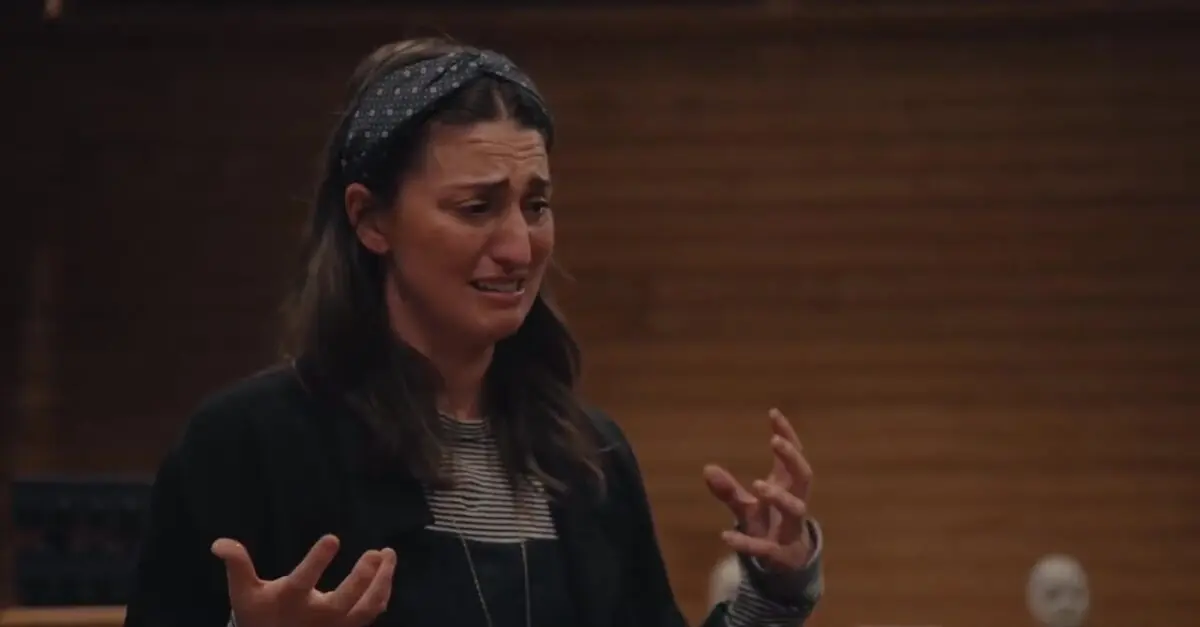
A prime example of this unfiltered approach is highlighted in an exclusive preview clip released ahead of the film’s wider distribution. In the footage, viewers witness the exact moment Bareilles hears her track "Ladies in a Line" fully mixed and mastered for the very first time. The song—a haunting, compassionate ballad dealing with the harrowing realities of infertility and In Vitro Fertilization (IVF)—strikes a deeply visceral chord. Bareilles is visibly and audibly overcome, her emotional response laying bare the porous boundary between her personal empathy and her songwriting.
Through every demo session, vocal take, and quiet moment of reflection behind the piano, Good Grief constructs a chronological diary of an artist pulling herself back together piece by piece, note by note.
Supporting Context & Metrics: The Production and Distribution Landscape
Good Grief is more than an independent passion project; it represents a convergence of heavy-hitting creative voices, innovative distribution strategies, and timely cultural conversations regarding mental health and collective mourning.
A Collaborative Dream Team
The project’s executive-producing roster reads like a masterclass in modern cultural leadership. By attaching names such as P!NK, Glennon Doyle, and Abby Wambach, the documentary signals its intent to reach far beyond traditional musical theater and pop music demographics.
- P!NK (Alecia Beth Moore): Known for her powerhouse vocals, acrobatic stage presence, and starkly honest lyricism regarding marital strife, mental health, and personal demons, P!NK brings a kindred rock-and-roll sensibility to Bareilles’ theatrical vulnerability.
- Glennon Doyle: The bestselling author of Untamed and Love Warrior has built a global movement around the dismantling of societal expectations in favor of radical self-possession and emotional honesty. Doyle’s editorial and strategic fingerprints on a project about grief are profoundly fitting.
- Abby Wambach: A two-time Olympic gold medalist, FIFA Women’s World Cup champion, and prominent leadership speaker, Wambach adds a dimension of resilience, teamwork, and collective endurance to the film’s thematic framework.
Innovative Distribution: Kinema and Eventive
Recognizing that traditional theatrical windows might not capture the communal, interactive experience required for a film about grief, the creators opted for a hybrid digital distribution model.
- VOD via Kinema: Fans and documentary enthusiasts can currently rent Good Grief directly through the Kinema platform, democratizing access for global audiences who may not have access to major metropolitan film festivals.
- The Virtual Event: Cementing the interactive nature of the project, a special virtual screening is scheduled for November 18 via Eventive. Crucially, this screening will be immediately followed by a live, interactive Q&A session with Sara Bareilles herself. This design allows geographically dispersed fans to gather digitally, processing the film’s heavy emotional themes in real-time alongside its creator—mirroring the exact thesis of the project: that grief must be witnessed together.
Official Statements: In Bareilles’ Own Words
The philosophical core of Good Grief is best articulated by Bareilles herself. In recent interviews, most notably with Playbill, the songwriter has offered profound insights into her shifting relationship with sorrow, rejecting the cultural imperative to "get over" loss in favor of integrating it.
Reflecting on the timeline of her losses, Bareilles shared:
"One of my best friends passed away in 2020. His name is Chad, and he died of stage four lung cancer. He got diagnosed and was gone in eight months, and he’d been a part of my life for decades… And then a couple years later, I lost another very dear friend, Gavin Creel."
It is easy for public figures to hide behind sanitized statements of condolence; Bareilles, however, leans aggressively into the messiness of grief. She argues that mourning is not a private malady to be cured in isolation, but an active, shared state of being:
"What I realized in going through those experiences is that grief must be witnessed. You must share it. It doesn’t heal on its own. It cannot. You can’t go to your corner and figure it out. The alchemy of it doesn’t change unless you share it with other people, and the recognition that is born from taking the time to share, and unpack, and see each other in your grief."
Perhaps the most startling and courageous assertion Bareilles makes is her radical reframing of the pain she has endured. Rather than wishing the last six years erased, she views her heartbreak as the crucible that forged her current identity:
"I think that is the thing that actually transforms and transmutes. And it’s crazy to say, but the pain of the last six years of my life, I almost wouldn’t change. Of course, I wish my friends were still here, but I am a different person because of losing them and loving them, and I am more of who I think I’m meant to become because of it. It’s wild. Grief is a miracle. It’s love."
This sentiment—that grief is simply love with nowhere to go—serves as the ideological anchor of Good Grief, elevating the documentary from a standard behind-the-scenes film to a deeply philosophical meditation on the human condition.
Future Outlook: The Enduring Legacy of Good Grief
As Good Grief circulates digitally through Kinema and heads toward its landmark November 18 virtual screening event, its cultural footprint is already expanding well beyond its initial release window.
For the Broadway community, which has faced an agonizing succession of losses among its most luminous talents in recent years, Bareilles’ work offers a vital vocabulary for communal mourning. The theater industry relies heavily on collective effervescence—the shared emotional breathing of an audience in a darkened room. By translating that theatrical mechanism into a cinematic and musical exploration of loss, Good Grief bridges the gap between individual sorrow and collective healing.
Looking ahead, Bareilles’ career has entered a fascinating new epoch. Having conquered pop radio, regional theater, Broadway writing, and acting, she now steps forward as an elder stateswoman of emotional transparency. The success of Good Grief—both the album and the documentary—suggests that audiences are hungry for art that refuses to offer easy, Hallmark-card resolutions to life’s most devastating chapters.
By framing grief not as an impediment to living, but as the ultimate manifestation of love, Sara Bareilles has not only honored the memories of Chad and Gavin Creel; she has provided a roadmap for anyone navigating the dark, uncharted waters of loss. As the digital screenings continue and audiences around the world bear witness to songs like "Ladies in a Line" and the stories behind them, Good Grief secures its place as a landmark cultural document of our time—proving that even in our deepest pain, we are never truly alone in the dark.