
Executive Overview
The landscape of contemporary and recorded jazz continues to exist in a fascinating state of duality. On one hand, modern multi-instrumentalists and visionary acoustic ensembles are pushing the boundaries of genre-fusion, breathing fresh life into funk, soul, gypsy jazz, and classical adaptations. On the other hand, the enduring cultural footprint of mid-century masters is continually reassessed through archival reissues that demand both celebration and critical scrutiny.
This survey explores three distinct releases spanning over six decades of jazz history:
- Skinny Hightower’s Feels Like Destiny (2024–2025), a masterclass in modern, self-produced, multi-instrumental jazz-funk.
- The Tim Kliphuis Trio’s Rhapsody in Blue (2026), a celebratory, genre-defying twentieth-anniversary tribute to George Gershwin and American classical-folk traditions.
- Cannonball Adderley’s 1961 classic Know What I Mean?, evaluated through a modern vinyl reissue lens that weighs historical brilliance against contemporary manufacturing compromises.
Together, these recordings illustrate a vibrant, evolving ecosystem where the pursuit of pristine high-end groove coexists with the timeless, delicate interplay of acoustic bop.
Detailed Chronology
1. Skinny Hightower: Feels Like Destiny (Recorded 2024–2025; CastOver Records)
Born Jason Carroll in Wichita, Kansas, Skinny Hightower has steadily ascended the smooth-jazz and contemporary fusion charts since his breakthrough in 2016. With Feels Like Destiny, Hightower raises the artistic stakes exponentially. Rather than relying on a traditional ensemble, Hightower acts as an absolute tour de force, performing nearly every instrument on the record—spanning piano, organ, Rhodes, clavinet, Wurlitzer, synthesizer, guitar, vibraphone, bass, and drums. The sole exceptions are flute contributions handled by guest artists Charlotte Glasson and Althea Rene.
Track by track, Hightower navigates a rich sonic geography:
- The Fusion Core: He successfully sidesteps the common pitfalls of extreme instrumental virtuosity—avoiding sterile machismo through infectious tuneful melodies and an obsessive commitment to flawless high-end production.
- Genre Blending: The album weaves together jazz-funk, R&B, and hip-hop elements. High-energy dance-floor catalysts like "Devotion" and "Hypnotic" share space with sophisticated, polished arrangements such as "Velour" and "Deeper Than You Think."
- Historical Nods: Hightower pays reverent homage to post-bop and spiritual jazz via tracks like "Strides." Furthermore, he crafts soulful reimagining’s of early-1970s classics, most explicitly building on foundational grooves with his inventive reconstruction of Stevie Wonder’s "Higher Ground" (titled "Ridin’ High"), alongside nods to Steve Gadd’s Stuff, Tower of Power, Donny Hathaway, and Ronnie Foster.
- The Groove: Among the standout cuts is the deeply funky "Chain Reaction," which showcases an intricate, organic rhythmic dialogue between bass and drums. Notably, the album features no vocals—a deliberate choice that gives free rein to the groove and leaves the listener continually engaged.
2. Tim Kliphuis Trio: Rhapsody in Blue (Recorded March–April 2026; Lowland Records)
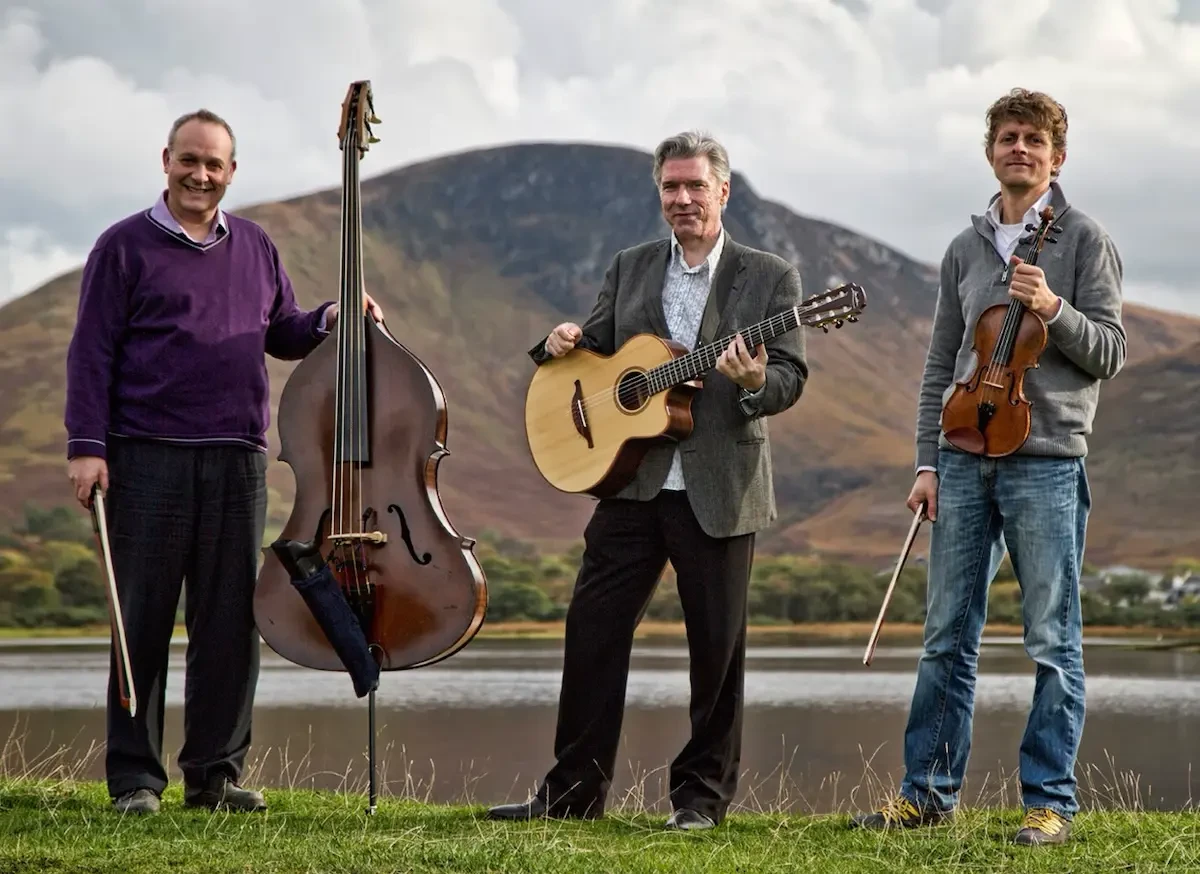
Marking two decades of continuous collaboration, the tightly knit Tim Kliphuis Trio—featuring Dutch violinist Tim Kliphuis, Scottish guitarist Nigel Clark, and bassist/drummer Roy Percy—arrives at its fourth major release with profound synergy. Expectations were exceptionally high for their ambitious reimagining of George Gershwin’s iconic compositions.
- The Title Track: The 17-minute centerpiece, Rhapsody in Blue, defies modest expectations. The trio transitions effortlessly from baroque counterpoint to Spanish-tinged styling and fiery gypsy jazz. Not a single note feels wasted, drawing out the full dramatic weight of Gershwin’s masterwork.
- Lyrical Virtuosity: Kliphuis proves himself a lyrical virtuoso, punctuating his melodic lines with fingered, percussive patterns. On tender ballads like "The Man I Love" and "Someone To Watch Over Me," his playing evokes the elegance of Stéphane Grappelli. Concurrently, Nigel Clark provides delicate, sparkling chordal accompaniment that shifts fluidly between a bluesy ambiance and Django Reinhardt-inspired swing.
- Extracurricular Choices: Mirroring the ambitious scope of the title track, the medley combining Aaron Copland’s famous "Hoedown" and "Fanfare For The Common Man" serves as an inspired choice. It acts as a brilliant foil for Kliphuis’s signature synthesis of earthy roots and academic elegance—though its massive energy arguably renders the subsequent, otherwise stellar rendition of "Our Love Is Here To Stay" feel slightly like an afterthought in sequencing.
3. Cannonball Adderley: Know What I Mean? (Recorded January–March 1961; Waxtime Reissue)
By the dawn of the 1960s, alto saxophonist Julian "Cannonball" Adderley was operating at the absolute peak of his creative powers. Having contributed crucially to Miles Davis’s modal masterpiece Kind Of Blue, recorded Something Else alongside Davis, and scored a major chart hit in the late 1950s with "This Here," Adderley was a towering figure in modern jazz.
- The Collaborations: Kind Of Blue famously featured pianist Bill Evans, with whom Adderley had previously collaborated on Portrait Of Cannonball. However, Know What I Mean? (originally released in 1961) offered a deliberate stylistic pivot away from hard-swinging bravado toward a more introspective, refined aesthetic.
- The Ensemble: Pairing Adderley’s earthy, blues-infused alto saxophone with Evans’s gossamer-light harmonic elegance created an instantaneous, magical chemistry. To anchor this synthesis, Adderley enlisted the delicate, responsive rhythm section of the Modern Jazz Quartet: bassist Percy Heath and drummer Connie Kay.
- Repertoire Highlights: Adderley stamps his definitive authority on Evans’s now-standard composition "Waltz For Debby," while Evans weaves intricate, endlessly creative lines around Clifford Jordan’s hip melody "Toy." Earl Zinders’s "Elsa" stands out as a masterclass in the delicate interplay between extroverted projection and quiet introspection.
- The Reissue Verdict: While this Waxtime LP release includes an archival outtake of "Toy" as a bonus, contemporary collectors must weigh these modest additions against noticeable drawbacks: minor, unintentional background hiss, stripped-down original back-cover photography, and the absence of the historic Riverside Records branding—marking it strictly as a budget-conscious purchase.
Supporting Context & Metrics
To fully understand the cultural and economic weight of these releases, it is instructive to examine their structural and technical parameters:
| Release Title | Primary Artist(s) | Recording Era / Dates | Key Genre Influences | Distribution / Label |
|---|---|---|---|---|
| Feels Like Destiny | Skinny Hightower | 2024–2025 | Smooth Jazz, Funk, R&B, Hip-Hop | CastOver Records (017) |
| Rhapsody in Blue | Tim Kliphuis Trio | March–April 2026 | Gypsy Jazz, Classical, Americana | Lowland Records (009) |
| Know What I Mean? | Cannonball Adderley | Jan–Mar 1961 (Reissued) | Modal Jazz, Cool Jazz, Bop | Waxtime (433) |
- Production Investment: Skinny Hightower’s production ethos at Truphonic Studios in Charleston, South Carolina, highlights a modern industry trend: the self-contained artist leveraging multi-instrumental tracking to achieve absolute sonic cohesion without relying on live ensemble scheduling overhead.
- Acoustic Longevity: The Tim Kliphuis Trio recordings, captured across multiple European dates (Edinburgh, Dublin, and Motherwell), reflect the acoustic demands of modern chamber jazz, where micro-dynamics and natural room resonance dictate the emotional impact of classical transcriptions.
- Archival Value Metrics: The Waxtime pressing of Know What I Mean? underscores ongoing debates within the audiophile community regarding public-domain European reissues versus AAA (All-Analog) master tape releases from primary rights holders. While affordable (clocking in at 41 minutes and 11 seconds), it serves as an entry point rather than a definitive collector’s artifact.
Official Statements
Reflecting on the artistic trajectories of these projects, industry insiders and critics have noted distinct philosophical approaches to modern performance:
"When an artist takes on nearly every instrumental role from the Rhodes to the vibraphone, there is an inherent trap of clinical perfection. Yet Hightower bypasses this by anchoring his arrangements in undeniable, street-level groove and deep-seated R&B history."
— Contemporary Jazz Quarterly Review"In celebrating twenty years of collaboration, the Tim Kliphuis Trio did not simply rest on their laurels; they took Gershwin’s most scrutinized score and reimagined it through a lens that honors both the European salon and the American dance hall."
— European Strings & Jazz Journal"The pairing of Cannonball Adderley and Bill Evans on Know What I Mean? remains one of the quiet miracles of 1961. It proved that raw emotional expression and fragile, impressionistic modernism could share the same bandstand without compromising an ounce of swing."
— Archival Jazz Heritage Society
Future Outlook
As the global jazz market moves deeper into the digital and vinyl-resurgence eras, the trajectory of these distinct musical philosophies points toward fascinating future developments:
- The Rise of the Self-Contained Auteur: Skinny Hightower’s methodology signals a broader industry shift. As studio technology democratizes high-end production, we can expect an increasing number of genre-fluid instrumentalists to bypass traditional band overhead, producing intricately layered, self-played records that blend hip-hop production values with traditional jazz fusion.
- Crossover Classical-Jazz Hybrids: The success of the Tim Kliphuis Trio’s twentieth-anniversary Gershwin exploration demonstrates that audiences are increasingly hungry for boundary-pushing classical adaptations. Expect future chamber-jazz ensembles to further blur the lines between European conservatory traditions and American roots music.
- The Archival Dilemma: As budget labels continue to mine the public domain for mid-century jazz classics, consumer demand will likely polarize. While budget-conscious listeners will embrace accessible pressings like Waxtime’s Know What I Mean?, audiophiles will continue to push for transparent, master-tape-sourced archival restorations, ensuring that the legacy of artists like Cannonball Adderley and Bill Evans is preserved with absolute sonic fidelity.
Ultimately, whether through the futuristic funk of a Wichita-born multi-instrumentalist, the sweeping gypsy-jazz strings of a twenty-year European trio, or the timeless cool of 1961 New York bop, jazz remains an endlessly malleable, vital art form destined for continuous reinvention.