
Executive Overview
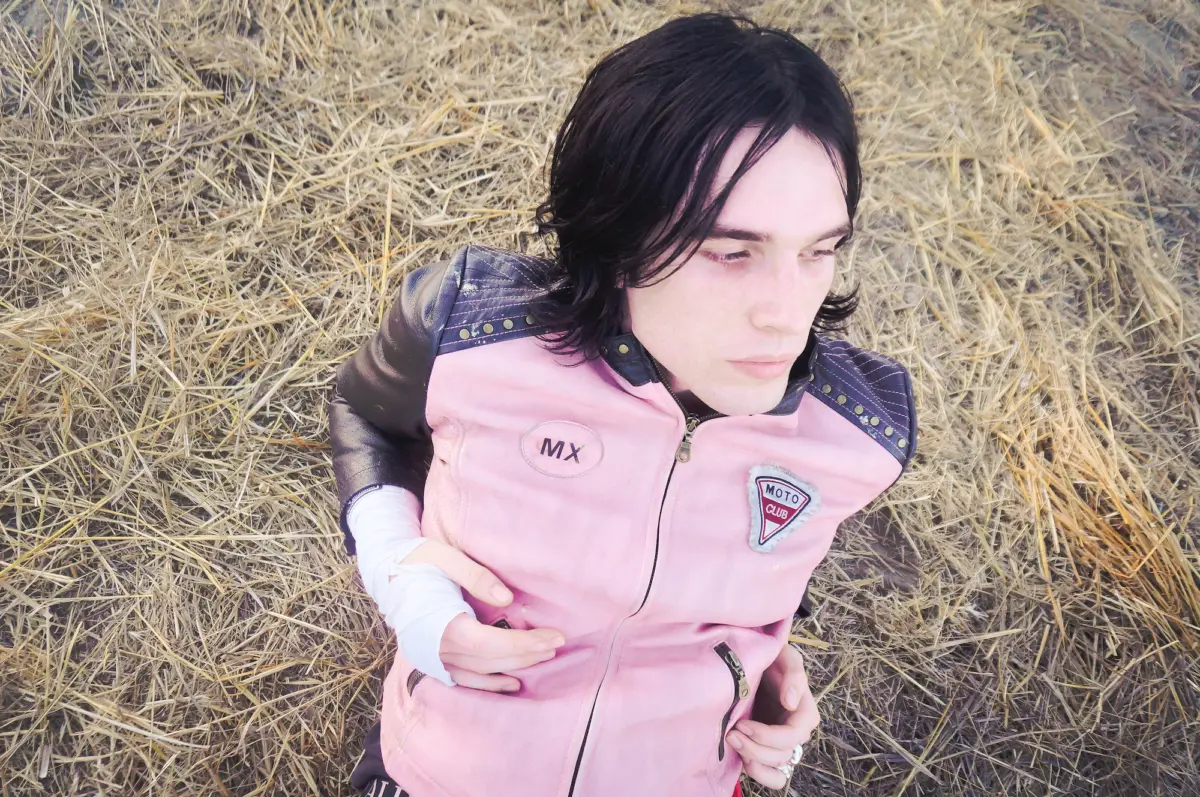
In an era saturated by hyper-compressed singles designed for algorithmic optimization and fleeting TikTok trends, the modern pop landscape is rarely challenged by a true auteur. Enter Crooks—the polymathic singer-songwriter and visual artist whose work demands not merely a passive listen, but a rigorous intellectual engagement. Raised in an environment where art was not a hobby but a foundational pillar of existence, Crooks has spent his life navigating the intersections of disciplined musicianship and unbridled creative expression.
With his upcoming sophomore project, Hark—slated for a September 18 release via The Nest Records—the artist is poised to challenge the boundaries of contemporary pop. Coming off the momentum of his 2025 debut, let the red curtain down, Hark represents a profound pivot in Crooks’ career. For the first time, the self-contained perfectionist is throwing open the doors of his studio, stepping back from total autocratic control, and inviting a coterie of hand-picked collaborators to co-author his sonic universe.
This profile examines the artistic evolution of Crooks, tracing his journey from the eclectic jazz-infused households of Los Angeles to the harrowing, synth-driven introspection of his latest single, “Coldest Day of the Year.” We explore how an artist who proudly claims a mantle of highbrow intellectualism is learning to balance absolute creative autonomy with the radical vulnerability of collaboration. Through an examination of his production ethos, his literary and sonic influences—ranging from David Bowie to Radiohead—and his candid explorations of sobriety, addiction, and anti-romance, we map the blueprint of one of modern alternative music’s most compelling figures.
Detailed Chronology: From LA Roots to the Evolution of an Auteur
The Crucible of an Artistic Childhood
Music has always been a matter of high stakes for Crooks. Growing up in a culturally vibrant household dominated by the rhythmic complexities and improvisational freedom of jazz—courtesy of his jazz-musician father—he was immersed in a world where sound was treated as an academic discipline and an emotional language. Both parents actively steered him toward the arts from a tender age.
Initially, this heavy-handed guidance was met with teenage resistance. The young Crooks experienced the hesitations common to children of dedicated artists, wary of the shadows cast by their parents’ expectations. Yet, this initial reluctance gradually dissolved into a profound, lifelong tether to his vocation. Reflecting on his formative years with a quintessential, unbothered Californian ease, Crooks recalls the driving force behind his early assimilation into the arts:
"I just wanted to be around artists who grew up in similar environments, we kind of had a shared language."
This "shared language" became the bedrock of his creative identity. It was not merely about hitting the right notes or mastering an instrument; it was about understanding the emotional subtext of creation, the unspoken rules of composition, and the unwavering dedication required to sustain an artistic life.
Forging a Sound in the Los Angeles Underground
As Crooks matured, he weaponized this shared lexicon, translating it into the fluid production style that would define his early work. Immersing himself in the rich, sprawling ecosystem of the Los Angeles music scene, he began collaborating with an eclectic roster of local rappers, independent producers, and underground bands.
This period of cross-pollination was vital. Working across genres allowed Crooks to strip away pretension and discover the core of his musical identity. Yet, even as his roots deepened in Los Angeles, he maintained an interesting psychological distance from the scene. He is fiercely proud of his musical heritage, viewing it as a badge of honor, but he refuses to be restricted by regional tropes or genre-bound expectations.
Rather than leaning into a singular "LA sound," Crooks positioned himself as an eternal student of music. Possessing a rare mastery over his tools, he operated for years as a fiercely independent, self-produced artist. He executed absolute creative control over every phase of the pipeline: songwriting, instrumental production, structural arrangement, and the accompanying visual aesthetics. For Crooks, the canvas was entirely his own—a closed ecosystem where his vision reigned supreme, untouched by outside interference.
The 2025 Breakthrough and the Pivot to Hark
The culmination of this self-directed isolation arrived with his critically noted 2025 debut, let the red curtain down. The project served as a definitive artistic statement, showcasing a creator who could weave complex sonic textures with sharp, evocative lyricism. It proved that Crooks possessed the technical chops to stand alone.
However, mastery often brings isolation. Recognizing the danger of retreating too far into his own creative echo chamber, Crooks made a deliberate choice for his next major body of work, Hark. Scheduled for release on September 18 via The Nest Records, Hark is conceptualized as an "anti-romance" project that actively twists and subverts pop conventions.
To achieve this, Crooks did something he had never done before: he expanded his team. By bringing in a diverse range of creative voices and external collaborators, he deliberately dismantled his solitary workflow. It was a humbling therapeutic exercise for an artist whose default setting is total control—an intentional step to prevent himself from becoming, in his own words, "a victim of my own ego, a victim of a need to control."
Supporting Context & Metrics: The Mechanics of Modern Pop Subversion
To understand Crooks’ artistic placement in the broader music industry, one must examine the metrics and cultural shifts defining the current alternative-pop landscape. The commercial success of genre-defying, self-produced alt-pop has surged over the past five years. Platforms like Spotify and independent labels such as The Nest Records have cultivated an audience hungry for high-concept, multi-disciplinary releases that bridge the gap between high art and accessible streaming metrics.
| Project / Release | Release Year | Primary Label | Key Collaborators / Scope | Core Thematic Focus |
|---|---|---|---|---|
| let the red curtain down | 2025 | Independent / Self-Released | Solo Production / Self-Contained | Isolation, Identity, Sonic Foundation |
| Hark (Upcoming) | September 18, 2025 | The Nest Records | Expanded Team / External Producers | Anti-Romance, Deconstruction of Pop |
| “Coldest Day of the Year” | Single (2025) | The Nest Records | Solo Performance / Visual Co-Direction | Sobriety, Addiction, Vulnerability in Love |
The strategic partnership with The Nest Records for Hark signifies a calculated shift toward a more formalized distribution network while retaining the uncompromising artistic integrity that defined his early work. Independent data analysis of streaming behaviors in the alt-pop sector reveals that listeners aged 18–34 are increasingly gravitating toward artists who offer conceptual depth, liner notes, and immersive visual worlds. Crooks’ multi-disciplinary approach—acting as both visual artist and songwriter—positions him perfectly to capture this high-value demographic.
Official Statements & Artistic Philosophy
Despite his willingness to collaborate on Hark, Crooks remains fiercely analytical about his place in the musical ecosystem. When pressed by interviewers to categorize his lineage, he hesitates, wary of reductive labels. However, when pushed to name his spiritual peers, he points not to contemporary pop chart-toppers, but to titans of reinvention and sonic architecture: David Bowie and Trent Reznor.
This reverence for artistic heavyweights underscores how Crooks views himself: not merely as a pop artist, but as a musical intellectual. He perceives a distinct gap in the current market—a vacuum left by bands who once commanded the intersection of cerebral composition and mainstream resonance. Speaking with disarming candor and an absence of false modesty, Crooks clarifies his position:
"I’m on some highbrow shit, that’s the truth. I’m an intellectual, and I think that’s a little zone that different people have filled throughout time; I actually think Radiohead was that for a while."
This declaration is not uttered from a place of hauteur or elitism, but rather out of a deep, almost monastic appreciation for the craft of songwriting and production. He understands that intellectualizing pop music is a tightrope walk; lean too far into the academic, and you alienate the listener; pander too low, and you betray the art.
His newfound embrace of collaboration stems from this very self-awareness. Having recognized that absolute control can calcify creativity, he now champions the insights of others:
"People have great ideas, and there are people out there who are better than me at all these things."
By stepping back, Crooks is paradoxically strengthening his art, allowing outside perspectives to sharpen his cerebral compositions without diluting their emotional core.
Future Outlook: Unpacking "Coldest Day of the Year" and the Road to Hark
As the clock ticks toward the September 18 release of Hark, the primary vehicle for this new era is Crooks’ latest single, “Coldest Day of the Year.” The track serves as a microcosm of his evolving artistic philosophy: synth-heavy, unapologetically goth-pop in its sonic architecture, yet intensely vulnerable in its narrative execution.
Lyrically, the song moves far beyond standard pop tropes of heartbreak. Crooks explains that while it functions as a reluctant love song—exploring the terrifying vulnerability of letting someone in and the ways we alter ourselves to accommodate romance—its true undercurrent is far heavier.
"It’s about sobriety and grappling with addiction," Crooks reveals. "That’s really what this song is about. It’s those things in conversation with love, and romance, and that part of life."
The juxtaposition of synth-driven dark-pop with the harrowing realities of addiction recovery creates a tense, atmospheric masterpiece. This duality is mirrored perfectly in the official music video for the single. The visual accompaniment features a solo Clyde Crooks intently pacing and striding through a flickering, pitch-black room. It is a striking visual metaphor for his current psychological and artistic state: the heavy ghosts of past demons still cast long shadows, but his momentum is entirely forward-facing. With a new love—and a newly collaborative creative process—lighting the way, Crooks appears more than brave enough to bear his flaws to his lover, and to his audience.
What Lies Ahead
With Hark, Crooks is stepping out of the shadows of his own meticulous solitude. The album promises to challenge industry expectations of what an independent pop release can achieve when driven by academic rigor rather than algorithmic compliance. As he continues to outrun his past while refining his sonic vocabulary, Crooks is proving that intellectualism and pop music are not mutually exclusive.
Come September 18, when Hark officially drops via The Nest Records, the music world will find out what happens when a brilliant, formerly isolated perfectionist finally decides to let the rest of the world into the room. If "Coldest Day of the Year" is any indication, the resulting collision of intellect, addiction, sobriety, and anti-romance will be one of the most vital artistic statements of the year.