
Executive Overview
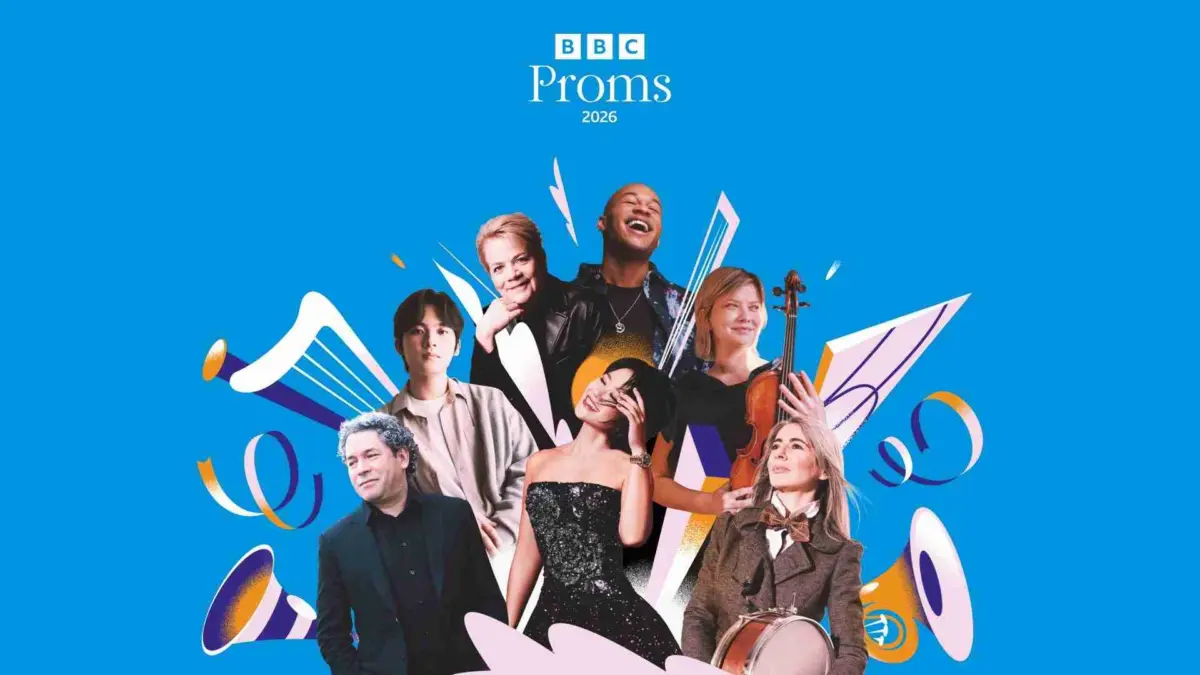
As the London summer draws to a close, classical music’s most vibrant and beloved tradition prepares for its majestic crescendo. On Saturday, September 12, 2026, the Royal Albert Hall will open its doors for the grand finale of the world’s largest classical music festival: the Last Night of the Proms. Broadcast across the globe and beamed into millions of homes via the BBC’s television, radio, and digital networks, this year’s closing concert promises an intoxicating blend of high classical masterpieces, contemporary world premieres, and a star-studded genre-defying tribute to an American icon.
Chief Conductor Sakari Oramo will take the podium to lead the BBC Symphony Orchestra, the BBC Symphony Chorus, and the BBC Singers in what has traditionally been described as classical music’s biggest party. This year’s programme is a carefully curated tapestry of the old and the new, featuring virtuosic performances by world-renowned pianist Yuja Wang and acclaimed Scottish tenor Nicky Spence. Yet, what makes the 2026 finale particularly notable is its bold eclecticism—bridging the gap between Pulitzer Prize-winning concertos and a high-energy celebration of country music royalty.
Beyond the grandeur of the Royal Albert Hall stage, the 2026 season itself represents a watershed moment for the BBC Proms. Spanning an intensive eight weeks, the festival has staged 86 concerts—72 at its historic South Kensington home and 14 across various cultural hubs throughout the United Kingdom. Attracting approximately 300,000 live attendees, the season has simultaneously broken digital records, signaling a modern evolution in how classical music is consumed. Interim figures reveal an unprecedented surge in digital engagement, proving that while the Proms remains deeply rooted in British cultural heritage, its digital footprint is expanding at an astonishing rate.
As organizers look ahead to next year’s centenary of the BBC Proms, the 2026 season finale serves as both a triumphant punctuation mark on a phenomenal summer of music and a bold statement about the enduring relevance of orchestral art forms in the twenty-first century.
Detailed Chronology & Programme Highlights
The musical journey of the 2026 Last Night of the Proms is meticulously structured to take audiences on an emotional odyssey, moving from spirited overtures and poignant reflections to electrifying modern showcases and, finally, the euphoric patriotism of the traditional patriotic anthems.
The evening begins with Leonard Bernstein’s effervescent Candide: Overture, setting a high-energy tone before shifting into a reflective gear with Arthur Foulds’ Keltic Suite (specifically the hauntingly beautiful second movement, “Lament”). Tenor Nicky Spence then takes center stage, joined by the BBC Symphony Chorus and the BBC Singers, to deliver a stirring rendition of an excerpt from Act I of Antonín Dvořák’s opera Rusalka (“Vidino divná, přeesladká”). The orchestral journey continues downstream with Bedřich Smetana’s picturesque symphonic poem Vltava from Má vlast, before introducing the first of two major contemporary BBC commissions: Canadian composer and conductor Samy Moussa’s Dithyramb, performed with the full force of the chorus and singers.
Virtuosity and Country Pop: The Heart of the Evening
As the concert progresses past the halfway mark, the stylistic boundaries begin to dissolve. One of the most anticipated highlights of the evening is the arrival of piano titan Yuja Wang. Performing Samuel Barber’s Pulitzer Prize-winning Piano Concerto, Wang is expected to bring her trademark blistering technique and profound musicality to a work that rarely receives a Proms performance of this scale.
In a surprising and delightful twist, the programme pivots toward Nashville with To Dolly, With Love, a specially arranged medley by Fiona Brice paying tribute to the late, great Queen of Country, Dolly Parton. This all-star segment features acclaimed actress and vocalist Sheridan Smith tackling the workplace anthem 9 to 5, powerhouse soul singer Beverley Knight delivering a soaring interpretation of I Will Always Love You, and celebrated country-pop duo Ward Thomas harmonizing on the timeless classic Jolene.
The energy remains high with Gustav Holst’s Jupiter, the Bringer of Jollity from The Planets, followed swiftly by a second appearance from Yuja Wang, who trades American romanticism for Alexander Tsfasman’s jazzy, rhythmically complex Suite for Piano and Orchestra.
From World Premieres to Traditional Festivities
The contemporary focus returns with the second world premiere of the night: Iris of Life, a brand-new BBC commission by Academy Award-winning British composer Anne Dudley, performed by the BBC Singers. Nicky Spence returns alongside the choral forces for a swinging, theatrical performance of Frank Loesser’s “Sit Down, You’re Rockin’ the Boat” from Guys and Dolls, arranged by Mark Cumberland.
As is customary, the final hour of the Last Night transforms the Royal Albert Hall into a sea of waving flags, camaraderie, and collective nostalgia. The evening culminates in the iconic sequence of traditional festivities: Henry Wood’s Fantasia on British Sea Songs, Thomas Arne’s Rule, Britannia! (arranged by Sargent), Edward Elgar’s majestic Pomp and Circumstance March No. 1, and Hubert Parry’s Jerusalem (orchestrated by Elgar). The official programme closes with the National Anthem (arranged by Benjamin Britten) and the customary community reflection of Auld Lang Syne (arranged by Paul Campbell), cementing a night of shared musical communion.
Supporting Context & Metrics: A Record-Breaking Season
To fully appreciate the significance of the 2026 Last Night of the Proms, one must examine the staggering metrics generated across the eight-week festival. Spanning from mid-July to mid-September, the 2026 season presented 86 distinct concerts, bringing world-class orchestral, choral, and chamber music to roughly 300,000 live concertgoers across the UK—including 72 events housed within the hallowed acoustic environment of the Royal Albert Hall and 14 regional outreach concerts.
However, the most explosive growth for the 2026 Proms has occurred in the digital realm. Interim broadcasting data highlights a record-breaking digital reach across BBC Sounds and BBC iPlayer. Between April 13 and September 6, 2026, the Proms was accessed by an impressive 1.7 million unique accounts—representing a remarkable 32% increase compared to the previous year.
This digital appetite translated into substantial consumption:
- Total Plays: 6.8 million individual plays of Proms content.
- Total Engagement: 3.4 million combined listening and viewing hours.
- Radio 3 Boost: Weekly accounts on BBC Sounds for Radio 3 surged by 10% during the week commencing August 17, 2026—a powerhouse week that featured guest performances from international heavyweights such as The Met Orchestra, the Oslo Philharmonic, and the Berlin Philharmonic.
These figures underscore a vital cultural shift. While the physical venues remain packed and the standing "Prommer" queue outside the Royal Albert Hall is as enduring as ever, the BBC’s multimedia strategy has successfully democratized access, allowing younger and geographically dispersed audiences to engage with classical music on their own terms. Notably, the BBC has confirmed that television broadcasts of the Proms will remain available on BBC iPlayer for an entire year, ensuring that the educational and cultural legacy of the summer persists long after the final notes of Auld Lang Syne fade away.
Official Statements: Leadership Perspectives
Reflecting on the success of the season and the anticipation surrounding the upcoming finale, key figures within the BBC have shared their thoughts on the cultural footprint of the 2026 Proms.
Sam Jackson, Controller of Radio 3 and BBC Proms, emphasized the joyous communal spirit of the festival while looking ahead to future milestones:
"This year’s Last Night of the Proms promises to be a joyous celebration, bringing together world-class performers, much-loved repertoire and memorable musical moments. Across eight weeks, audiences have embraced the Proms in record numbers on our broadcast platforms, while around 300,000 people have joined us at the Royal Albert Hall and at venues across the UK. We very much look forward to the centenary of the BBC Proms next year, but for now, we can’t wait to celebrate the end of the 2026 season in style!"
Echoing these sentiments, Suzy Klein, Head of Arts and Classical Music TV, highlighted the unifying power of public service broadcasting and the enduring accessibility of the arts:
"The BBC Proms has once again connected audiences across the UK and beyond through an extraordinary summer of live music. We’re incredibly proud of the range and quality of concerts across BBC television and BBC iPlayer, and the Last Night will provide the perfect finale to an unforgettable season. And while the season may be drawing to a close, audiences will be able to enjoy the Proms on BBC iPlayer for a whole year afterwards."
Future Outlook: Toward the Centenary
As the curtain falls on 2026, the classical music community is already turning its gaze toward an monumental horizon. Next year marks the centenary of the BBC Proms—a century of bringing the finest orchestral music to the masses, weathering historical conflicts, economic shifts, and technological revolutions while remaining a cornerstone of British identity and global artistic excellence.
The unprecedented digital metrics of the 2026 season—the 1.7 million accounts and 3.4 million hours consumed—provide a robust foundation for this upcoming milestone. They prove that classical music is not a static relic of the past, but a living, breathing art form capable of adapting to modern media consumption without losing its high artistic standards.
Whether tuning in via BBC Radio 3 and BBC Sounds from 7:10 PM, watching Part 1 on BBC Two and iPlayer, or catching the grand Finale on BBC One at 9:00 PM, audiences on September 12 will not merely be witnessing the end of a summer festival. They will be participating in a living ritual that bridges generations, genres, and geographies, serving as a triumphant prelude to a century of musical history set to be celebrated in 2027.