For decades, the cultural narrative surrounding contemporary Christian music (CCM) has cast it as a regional phenomenon—steeped in the cultural traditions of the American South, the Bible Belt, or sprawling arena tours winding through Middle America. Yet, a seismic shift is underway, one that challenges old assumptions about where faith-based music resonates and who it gathers.
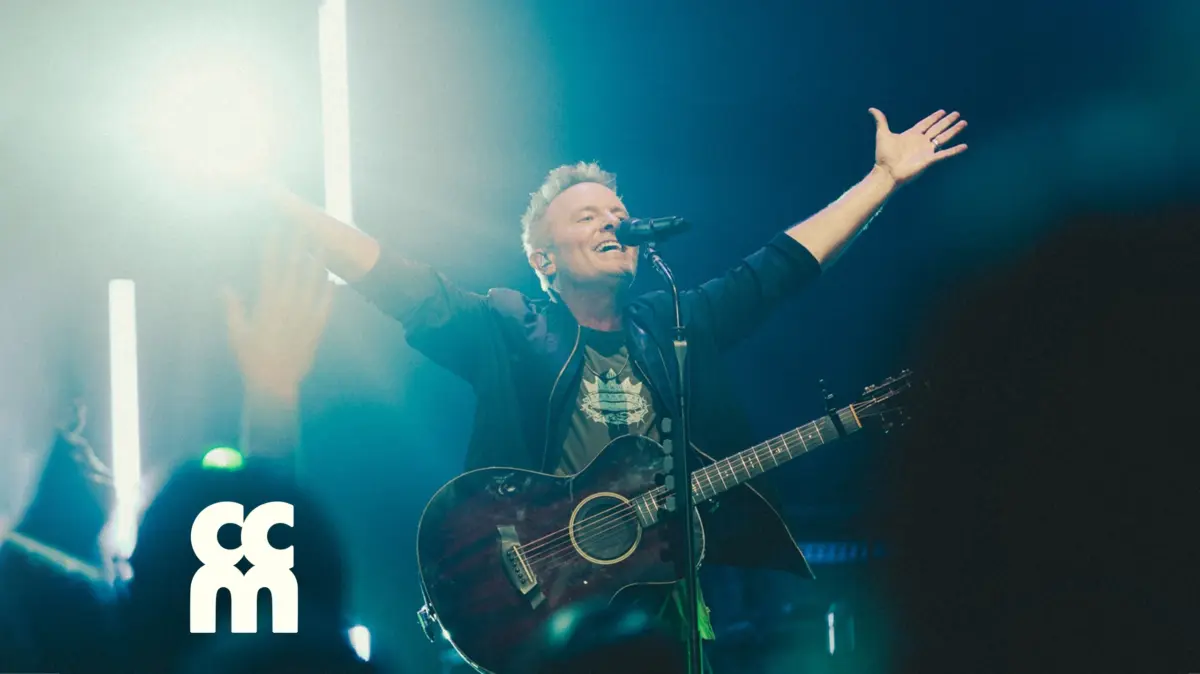
In a landmark milestone for the genre, multi-platinum GRAMMY-winning artist and worship leader Chris Tomlin has officially sold out his upcoming Worship Under the Stars 2026 tour stop at the world-famous Greek Theatre in Los Angeles. Scheduled for a night under the Southern California sky, the sellout represents far more than just another commercial victory for a veteran touring artist. It signifies a rare, monumental crossover moment in the heart of the entertainment capital of the world—just miles from the epicenter of Hollywood.
To find a precedent for this kind of scale and impact for a Christian artist at the historic Greek Theatre, industry analysts have to look back nearly a decade to Hillsong’s landmark 2018 sellout. The fact that Tomlin has drawn a capacity crowd of thousands to a venue synonymous with secular rock, pop, and indie legends speaks volumes about the shifting geography of modern worship. In a city built on celebrity, transient pop culture, and cinematic illusion, the prospect of thousands of believers raising their voices in unified, unadulterated praise points to a transcendent hunger for community and spiritual grounding.
This comprehensive report examines the anatomy of this historic sellout, the unique philosophy driving the Worship Under the Stars tour, the logistical and cultural significance of playing the Greek Theatre, and what this milestone reveals about the enduring, borderless power of contemporary Christian music on the global stage.
Detailed Chronology: From Small-Town Sanctuaries to the Global Stage
To understand the weight of Chris Tomlin’s achievement at the Greek Theatre, it is necessary to trace the trajectory of modern worship music and Tomlin’s indispensable role in shaping it.
The Architect of Modern Worship
For over twenty-five years, Chris Tomlin has been a foundational pillar of the modern worship movement. Emerging from the passion movements and localized church gatherings of the late 1990s and early 2000s, Tomlin helped redefine how Christian congregations globally sing praise. Songs penned or co-penned by Tomlin—such as "How Great Is Our God," "Good Good Father," "Passion (Water You Turned)," and "Indescribable"—migrated swiftly from small youth groups to dominate the global church hymnody. According to industry metrics, an estimated staggering percentage of Christians worldwide sing a Tomlin-penned song during a weekly service.
Yet, despite his decades-long career and chest full of Dove Awards and GRAMMY accolades, Tomlin has consistently sought ways to strip away the production excess of arena rock to return to the core essence of worship: collective, vertical praise.
The Genesis of Worship Under the Stars
The Worship Under the Stars tour was conceived not merely as a standard concert outing, but as an immersive, experiential journey. Tomlin and his team envisioned a tour model that bypassed traditional indoor sports arenas in favor of amphitheaters, parks, and outdoor venues situated in some of the country’s most visually stunning landscapes.
The philosophy behind the concept is deceptively simple: gather believers in spaces where they can directly witness the craftsmanship of the Creator while simultaneously celebrating Him. By removing the ceiling and placing thousands of people under the open night sky, the tour aims to evoke a sense of ancient, biblical reverence mixed with contemporary scale.
When the routing for the 20th-anniversary and expanded iterations of Tomlin’s touring cycles took shape, Los Angeles was designated as a high-stakes proving ground. While Southern California boasts millions of churchgoers, staging a major standalone Christian event in the entertainment capital carries inherent logistical and cultural risks. The success of the venture, however, quickly silenced any skepticism. Tickets vanished rapidly, culminating in an official, hard sellout weeks ahead of the show date—putting the event in an elite tier of touring achievements for the genre in the West.
Supporting Context & Metrics: Breaking the Mold in Los Angeles
To fully grasp the magnitude of a sold-out Christian concert at the Greek Theatre, one must analyze the venue, the regional demographics, and the broader economics of the live Christian music sector.
The Mythos of the Greek Theatre
Nestled in the picturesque canyon of Griffith Park, the historic Greek Theatre is one of the most beloved and celebrated outdoor entertainment venues in the United States. Since opening its doors in 1930, the Greek has hosted virtually every major musical luminary in history, from Neil Diamond and Elton John to modern pop and hip-hop icons. With a seating capacity hovering around 5,900, the venue offers a rare architectural paradox: it is large enough to generate arena-level energy, yet intimate enough that every seat feels connected to the stage.
Furthermore, the venue’s natural acoustic properties—bolstered by the surrounding canyon walls—and the reliably temperate Southern California climate make it an outdoor touring dream. However, because of its secular pedigree and the intense competition within the Los Angeles entertainment market, booking and selling out the Greek Theatre requires a very specific drawing power.
Christian artists historically face an uphill battle in major coastal metropolitan markets, where ticket-buying habits skew heavily toward secular indie, pop, and alternative acts. While Christian tours routinely pack out outdoor amphitheaters in the Bible Belt or the Midwest, replicating that success in Los Angeles is a formidable challenge.
By the Numbers: The Rare Air of 2018 and Beyond
According to tour promoters and venue historical records, Christian music sellouts at the Greek Theatre are exceedingly rare. The last comparable milestone occurred in 2018, when international worship collective Hillsong achieved a sellout during their North American tour cycle.
Tomlin’s 2026 sellout places him in this ultra-exclusive club, demonstrating that his appeal stretches far past traditional evangelical strongholds. Demographic data from ticket buyers reveals a mosaic of attendees: multi-generational families, diverse ethnic groups representing the sprawling cultural tapestry of Los Angeles County, college students from Southern California universities, and ministry leaders from dozens of local independent and mainline churches.
This metric undermines the outdated stereotype that Christian music appeals only to a homogenous demographic. Instead, it highlights a thriving, multi-ethnic, and highly urbanized community of faith that hungers for large-scale, public expressions of worship.
Official Statements & Artist Perspectives
Reflecting on his journey, the state of modern ministry, and the mechanics of leading thousands in collective praise, Chris Tomlin has frequently emphasized that the heart of his mission remains unchanged, regardless of whether he is playing a dusty field in Texas or a historic amphitheater in Hollywood.
In an in-depth conversation with CCM Magazine, Tomlin opened up about the spiritual stamina required to sustain a decades-long ministry, noting that the shifting cultural landscape only heightens the need for spaces of genuine connection.
"When you look out into a crowd of thousands of people, you aren’t just seeing ticket holders or consumers," Tomlin shared in his archival CCM interview. "You are looking at individual stories, individual heartbreaks, doubts, joys, and redemptions. Our job—my job—is simply to help guide those individual voices so that they find a collective harmony. When thousands of people lift their voices together in one accord, something shifts in the spiritual atmosphere. It ceases to be a concert and becomes an altar."
Discussing the vision behind taking his music to unconventional, breathtaking outdoor spaces like the Greek Theatre, Tomlin noted the theological significance of creation:
"There is something profound about stepping outside the four walls of a church building and worshiping beneath the stars that God hung in the sky. It reminds us of how small we are, but also how intimately loved we are. When we designed Worship Under the Stars, we wanted people to literally look up from their daily stress, their phones, and the noise of the city, and remember that there is a Creator who holds it all together. Doing that in a place like Los Angeles—a city that moves at a million miles an hour—makes that moment of stillness and praise even more powerful."
Industry insiders and tour promoters have echoed these sentiments, noting that contemporary audiences are increasingly seeking experiences that offer emotional grounding and authentic spiritual community in an increasingly fractured digital age.
Future Outlook: The Expanding Horizon of Christian Live Entertainment
As the Worship Under the Stars tour presses forward, the historic sellout at the Greek Theatre serves as a watershed moment that will likely influence how promoters, record labels, and artists approach touring strategy in the years to come.
Redefining the Touring Map
For decades, the standard playbook for Christian artists involved prioritizing indoor arenas, convention centers, and traditional church spaces. The resounding success of open-air, scenic worship events in major metropolitan hubs like Los Angeles suggests that a paradigm shift is underway. Promoters are taking note that modern audiences are willing—and eager—to travel to iconic, premium outdoor venues for faith-based events.
This trend could pave the way for more Christian artists to secure bookings in prestigious secular venues previously thought to be outside the genre’s commercial reach, from Red Rocks Amphitheatre in Colorado to the Hollywood Bowl and beyond.
The Role of Worship in Modern Culture
Beyond the financial metrics and ticket sales, events like Tomlin’s Los Angeles showcase point to a deeper cultural phenomenon. In an era marked by cultural polarization, economic anxiety, and social isolation, physical gatherings centered around faith and corporate singing offer a rare antidote. They provide a space where social divides dissolve, and participants partake in a shared, transcendent narrative.
For Chris Tomlin, the milestone at the Greek Theatre is not a destination, but another chapter in a lifelong calling. As he continues to write songs that shape Sunday morning liturgies across the globe, his ability to fill legendary stages proves that the message of hope, grace, and worship remains as vital and vibrant as ever.
As the lights dim over the Griffith Park canyon and thousands of voices rise into the California night air, the event will stand as a powerful testament to a simple truth: when the music stops and the final chord fades, the night is ultimately not about the artist on the marquee, but about the timeless, unifying power of a song sung to the Creator.