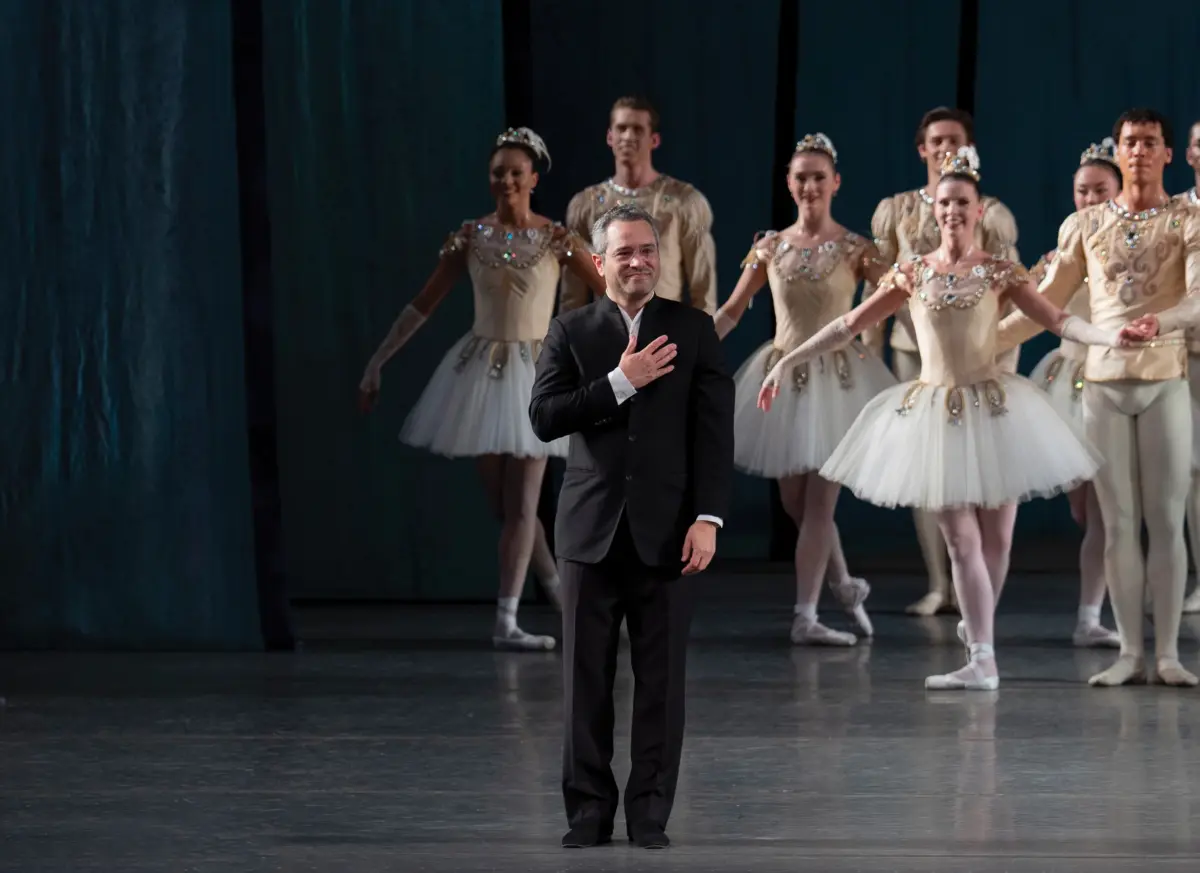
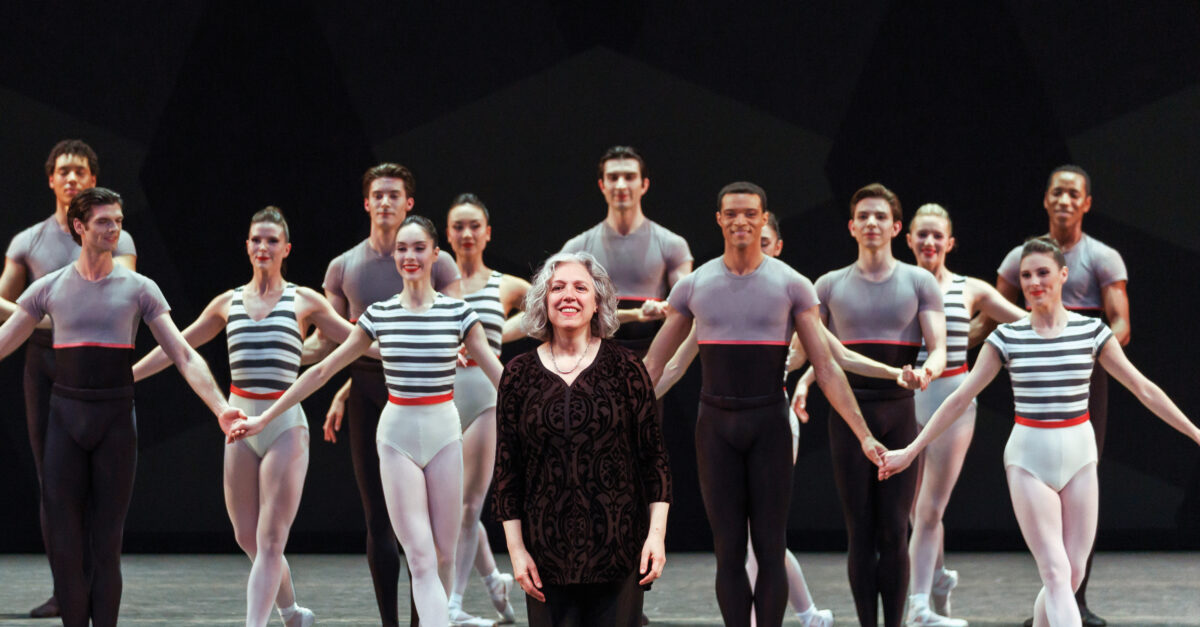
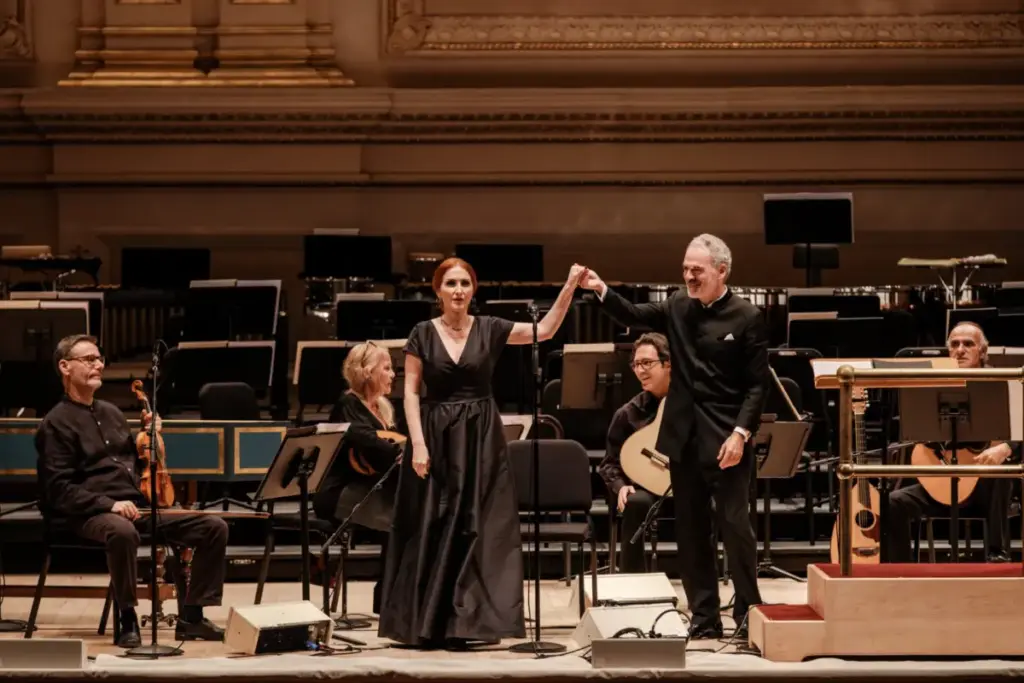
The New York City Ballet (NYCB) has officially ushered in a transformative new chapter for its musical division, welcoming two distinguished maestros to its artistic staff for the Fall Season. Beatrice Jona Affron, widely celebrated for her three-decade tenure as the Music Director of the Philadelphia Ballet, assumes the vital role of Associate Music Director. Concurrently, Andrew Hilary Grams—former Music Director of the Elgin Symphony Orchestra and a ubiquitous presence on international podiums—steps into the position of Conductor in Residence.
These high-profile appointments represent far more than routine administrative shuffles; they mark a poignant homecoming for two artists whose foundational professional roots are deeply intertwined with the cultural fabric of New York City and the storied history of the ballet company itself. Affron, a native New Yorker and Yale graduate, brings a wealth of classical and theatrical expertise honed over 33 years of shaping dance repertoire. Grams, whose conducting pedigree spans elite global ensembles from The Cleveland Orchestra to the Philadelphia Orchestra, began his professional life sitting in the very orchestra pit he now commands, having served as a violinist in the NYCB Orchestra while finishing his studies at The Juilliard School and the Curtis Institute of Music.
As the ballet world faces shifting landscapes, the arrival of Affron and Grams underscores the unique demands of live musical performance in dance. Unlike symphonic conductors, who answer primarily to the score and the composer, ballet conductors operate at the dynamic intersection of sound and physical movement. They must serve as a living bridge between the orchestra pit and the proscenium stage, anticipating the physical trajectory of dancers while maintaining the architectural integrity of the score.
In exclusive interviews, both maestros reflected on the winding paths that led them back to Lincoln Center, the collaborative ethos of ballet orchestration, and the unique artistic vitality that sets the New York City Ballet apart on the global stage.
Detailed Chronology: From Conservatory to the Lincoln Center Podium
The individual trajectories of Beatrice Jona Affron and Andrew Hilary Grams trace a fascinating map of American classical music education, institutional loyalty, and unexpected career turns. Their stories illustrate how preparation, timing, and a deep reverence for the performing arts can converge to shape world-class conductors.
Beatrice Jona Affron: A Lifetime of Musical Dedication
Affron’s journey into professional music began remarkably early. Born and raised in New York City, she picked up the violin at the tender age of four, studying at the prestigious School for Strings located at 66th and Broadway—mere blocks from what would become her professional home at Lincoln Center. However, her definitive awakening to the power of collaborative music-making occurred at age 13 during a summer at the Greenwood Music Camp in Western Massachusetts. It was there that chamber music became, in her words, her "gateway drug," instilling an enduring love for ensemble interaction that would dictate the course of her career.
Following formative studies at Yale University and the New England Conservatory of Music, Affron found herself navigating the early stages of a conducting career without any initial intention of entering the ballet world. As a member of the Conductor’s Guild, she scanned a routine newsletter and spotted an opening for an Assistant Conductor at the Pennsylvania Ballet (now Philadelphia Ballet). Initially, she was passed over in favor of a candidate with more extensive credentials. Yet, fate intervened: three months later, the company realized the initial hire was not an artistic fit and placed a call to Affron to gauge her continued interest.
What followed was a historic 33-year tenure. During her time in Philadelphia, Affron became a master of the George Balanchine repertoire. The company had been founded by Barbara Weisberger, a direct protégé of Balanchine, and for the first two decades of Affron’s tenure, the institutional focus remained heavily anchored in Balanchine’s neoclassical aesthetic. Affron’s deep fluency in this idiom was recently put on display when she conducted Serenade during the company’s summer tour in Saratoga Springs—a performance she described as "coming back to an old friend."
Andrew Hilary Grams: From NYCB Violinist to Global Maestro
Andrew Grams’s path to the NYCB podium reads like a masterclass in professional evolution. A product of the prestigious Curtis School of Music and The Juilliard School, Grams secured a position as a violinist with the NYCB Orchestra during his senior year at Juilliard. For six formative years, he occupied a chair in the pit, absorbing the intricate mechanics of masterpieces such as Igor Stravinsky’s Symphony in Three Movements, George Balanchine’s Apollo, and Pyotr Ilyich Tchaikovsky’s Suite No. 3.
It was precisely this environment that sparked his ambition to transition from instrumentalist to conductor. Surrounded by world-class repertoire and benefiting from invaluable mentorship, Grams began performing across the greater New York area with ensembles like the Orpheus Chamber Orchestra and the Orchestra of St. Luke’s, while regularly substituting with the New Jersey Symphony Orchestra, The American Symphony Orchestra, and The American Composers Orchestra.
Fuelled by what he playfully calls "youthful arrogance," Grams desired a greater degree of control over the interpretation of the orchestral music he loved so deeply. By simultaneously studying conducting and playing in the NYCB pit, he achieved a rare pedagogical advantage:
"One of the benefits of going back to school and playing in the NYCB Orchestra at the same time was that I would be on one side of the podium during conducting class, then on the other side at ballet performances. So I was getting the two most important perspectives of the job."
Upon leaving NYCB, Grams was appointed Assistant Conductor of The Cleveland Orchestra, launching a peripatetic career that has seen him lead major symphony orchestras across four continents—a geographical milestone commemorated by a large framed world map gifted by his partner, studded with pushpins marking every city where he has held a baton.
Supporting Context & Metrics: The Unique Demands of the Ballet Pit
The appointment of two such seasoned symphonic and theatrical leaders highlights the rigorous mathematical, psychological, and physical demands placed upon ballet conductors. To fully appreciate the significance of Affron and Grams joining the New York City Ballet, one must examine the metrics of the institution they now serve.
The Scale of NYCB’s Operations
When asked why she chose to leave her entrenched, three-decade home at the Philadelphia Ballet, Beatrice Jona Affron pointed directly to the unparalleled operational scale of New York City Ballet:
"What New York City Ballet offers that I think is unique, possibly in the world, is the sheer amount of productivity per season—the number of performances, the amount of repertoire. And it’s wonderful to have a new adventure at this point in my career."
The NYCB season is notoriously demanding, requiring its orchestra to navigate a labyrinthine repertoire that swings seamlessly from 19th-century romanticism to dizzying 20th-century modernism and cutting-edge contemporary commissions. The physical and mental stamina required to lead this pit cannot be overstated. Conductors must possess absolute precision, keeping time with dancers whose tempos can fluctuate based on stage conditions, physical fatigue, or artistic interpretation, all while ensuring the orchestra delivers a concert-hall-quality acoustic experience.
The Collaborative Matrix
Both maestros emphasize that the primary differentiator of ballet conducting is its inherently collaborative, multi-disciplinary nature. A symphonic conductor communicates primarily with musicians; a ballet conductor serves as the connective tissue between three distinct artistic entities:
The Composer & Score: Respecting the architectural and emotional integrity of the music.
The Orchestra: Translating complex technical cues, balancing dynamics, and maintaining ensemble cohesion from a subterranean or semi-subterranean pit.
The Choreographer & Dancers: Providing a reliable, breathing "musical floor" that supports physical exertion, aids theatrical timing, and responds dynamically to the kinetic reality unfolding on stage.
Affron captures this multi-tasking reality succinctly:
"You’re a conduit—putting things in motion, anticipating events, solving problems. It’s completely engaging. If you like to multi-task, be a conductor."
Her forward-looking schedule already includes a landmark engagement: Alexei Ratmansky’s acclaimed production of Romeo & Juliet, slated for the 2027 Winter Season, which will mark the fifth time she has conducted Sergei Prokofiev’s monumental score in different institutional contexts.
Official Statements & Institutional Perspectives
The integration of Affron and Grams into the NYCB artistic staff also brings a fascinating web of historical relationships into sharp focus, bridging past mentorships with current peer collaborations.
Reconnecting Through the Generations
For Andrew Grams, returning to Lincoln Center is compounded by the unique pleasure of working alongside NYCB Music Director Andrew Litton. Their professional relationship dates back to Grams’s earliest days as a violinist in the NYCB pit:
"When I was in the NYCB Orchestra, my then-girlfriend played French Horn with the Dallas Symphony Orchestra, so every two weeks I’d go to Dallas for a weekend. Andrew Litton was then the director of the Dallas Symphony Orchestra, and he was a very nice mentor to me while I was studying conducting. So, to get to work with him and be his colleague now is another special element of my return."
This continuity of mentorship underscores the tight-knit, generational ecosystem of the American classical music community, where today’s student frequently evolves into tomorrow’s colleague.
Embracing New Artistic Horizons
While both conductors bring decades of accumulated wisdom to their respective roles, each expresses palpable enthusiasm for the fresh artistic challenges ahead. For Affron, stepping away from Philadelphia—a city and company she dearly loves—was balanced by the liberating prospect of expanding her repertoire beyond the Balanchine-centric canon that defined her early career:
"I’m glad to be coming to New York City Ballet with that experience… But I’m also looking forward to doing things that are new to me."
For Grams, the transition from violin player to podium leader offers a profound psychological shift in perspective. Looking out from the conductor’s podium rather than staring into a music stand from within the string section allows him to witness the totality of the artistic vision:
"Coming back to the place where I began, to act as a conduit between the dance and the music, the stage and the pit, in a way that I wasn’t when I was playing violin in the orchestra. From the conductor’s podium, you see everything that’s happening on the stage. I find it deeply satisfying to have the opportunity to create a musical floor, something that is musically solid, for the dancers."
Future Outlook: A Golden Age for the NYCB Pit
As the New York City Ballet charges into its Fall Season and maps out ambitious multi-year programming—including upcoming major narrative ballets and contemporary premieres—the addition of Beatrice Jona Affron and Andrew Hilary Grams signals a fortified commitment to musical excellence.
In the high-stakes world of professional ballet, where physical grace and auditory power must exist in absolute symbiosis, leadership in the pit is just as crucial as choreography on the stage. By securing two maestros who combine deep institutional memory with world-class international experience, NYCB has ensured that its orchestra will remain a powerhouse of artistic sensitivity and technical brilliance.
For Affron and Grams, the circle is now complete. Having traversed conservatory halls, regional orchestras, international tour routes, and decades of artistic growth, both conductors have returned to the epicenter of American dance. As the house lights dim, the pit falls silent, and the downbeat is given, New York City Ballet audiences can look forward to a thrilling new chapter defined by precision, passion, and profound artistic partnership.