
Executive Overview
The medical landscape of voice preservation, restoration, and surgical innovation reached a significant milestone with the convening of the 17th Phonosurgery Course and International Workshop. Hosted in a cutting-edge hybrid format on October 28 and 29, 2023, this landmark event brought together global luminaries, pioneering ENT specialists, speech-language pathologists (SLPs), and researchers from around the world.
Organized under the visionary leadership of Prof. V. Phaniendrakumar—Emeritus Professor of ENT, Founder President of the Association of Phonosurgeons of India (APSI), and President of the India Chapter of The Voice Foundation (USA)—the symposium bridged the gap between traditional clinical education and the digital age. By pioneering a dual-format approach, the event combined high-definition virtual broadcasts of live surgical procedures with intensive, hands-on anatomical dissection laboratories in Hyderabad, India.
This report provides an exhaustive look into the proceedings, clinical breakthroughs, technological demonstrations, and institutional partnerships that defined the 17th Phonosurgery Course. It highlights the shifting paradigms in laryngeal surgery, emphasizing minimally invasive office-based interventions, advanced phonomicrosurgeries, and complex framework surgeries designed to rehabilitate impaired voices and restore quality of life to patients globally.
Detailed Chronology and Event Structure
Day 1: Virtual Innovation, Live Surgical Demonstrations, and Global Discourses (October 28, 2023)
The first day of the workshop was conducted entirely through virtual platforms (Zoom), leveraging global connectivity to deliver continuous, high-yield educational content without geographical barriers. The day’s itinerary was meticulously structured to showcase state-of-the-art surgical techniques performed by globally recognized masters of the craft.
- 08:00 AM – 09:00 AM: Inaugural Ceremonies and Opening Remarks
The symposium commenced with official opening remarks from Prof. V. Phaniendrakumar, alongside international dignitaries, welcoming delegates from diverse medical backgrounds. The emphasis of the opening session was placed on the rapid evolution of phonosurgery from an exploratory specialty into a precise, microsurgical discipline driven by optical advancements and patient-centered outcomes. - 09:00 AM – 01:00 PM: Live Surgical Demonstrations
Delegates tuned in from across the globe to witness real-time transmissions of complex procedures. The live surgical feed featured two primary domains:- Office-Based Laryngeal Surgeries: Highlighting procedures performed under local anesthesia using transnasal flexible and rigid laryngoscopes. Demonstrations included in-office vocal fold injections, laser-assisted removal of benign lesions, and diagnostic stroboscopy integration.
- Phonomicrosurgeries: Showcasing microscopic and endoscopic interventions under general anesthesia. Faculty demonstrated microflap dissections, management of vocal fold scarring, removal of polyps, nodules, and cysts with maximal preservation of the delicate lamina propria.
- 02:00 PM – 05:00 PM: International Faculty Lectures and Panel Discussions
The afternoon session featured deep-dive lectures by eminent national and international experts. Topics ranged from acoustic analysis and laryngeal electromyography to the management of spasmodic dysphonia and vocal fold paralysis. Interactive Q&A sessions allowed virtual delegates to query operating surgeons in real time, fostering a dynamic global exchange of clinical pearls and troubleshooting strategies.
Day 2: Hands-On Mastery and Clinical Application (October 29, 2023)
Transitioning from theoretical observation to tactile execution, Day 2 took place on-site at Century Hospital, Road No. 12, Banjara Hills, Hyderabad. Designed for maximum experiential learning, the hands-on training module provided participants with direct oversight from seasoned mentors.

- 09:00 AM – 12:30 PM: Wet Lab Training (Goat Larynx Model)
Recognized for its anatomical similarities to human laryngeal structures, the goat larynx model served as the primary medium for surgical simulation. Under strict faculty supervision, delegates performed:- Thyroplasty with Arytenoid Adduction Technique: Mastering the precise placement of implants to medialize paralyzed vocal cords and improve glottic closure.
- Injection Laryngoplasty: Practicing accurate needle placement and volume titration using various biocompatible augmentation materials into the paraglottic space.
- 01:30 PM – 04:30 PM: Office-Based Procedure Simulations and Case Reviews
The afternoon focused on practical simulations of clinic-based interventions. Participants gained familiarity with topical anesthesia protocols, patient positioning, managing patient anxiety, and navigating modern stroboscopic equipment. The day concluded with certificate distributions, a review of complex case studies, and closing remarks by the organizing committee.
Supporting Context, Institutional Synergy, and Metrics
The success of the 17th Phonosurgery Course was deeply rooted in its unprecedented collaborative framework. By uniting multiple prestigious national and international bodies, the event established a gold standard for multi-society medical education in South Asia and beyond.
Co-Hosting and Partnering Organizations
- Association of Phonosurgeons of India (APSI): Provided foundational support and drove professional engagement among Indian otolaryngologists.
- The Voice Foundation (USA) – India Chapter: Facilitated international academic alignment, integrating American standards of voice care with regional clinical practices.
- AOI Telangana & Hyderabad Chapter: Offered regional logistical support and local medical community outreach.
- Telangana Speech-Language Pathologists (SLP) Association: Emphasized the vital multidisciplinary nature of voice care, highlighting the indispensable role of voice therapy in pre- and post-surgical rehabilitation.
- Sri Sathya Sai Institute of ENT & Melody Voice Clinic (Guntur/Hyderabad): Acted as the primary clinical and academic engines behind the symposium’s curriculum development.
The Hybrid Innovation: Saving Time and Resources
Historically, international surgical workshops required extensive international travel, significant financial expenditure, and extended time away from clinical practices. By pioneering a dual-format (hybrid) model in India, the organizers addressed these barriers directly:
- Cost Efficiency: Virtual attendance for didactic lectures and live surgeries significantly reduced travel and accommodation expenses for international and out-of-station delegates.
- Maximal Pedagogical Impact: Separating the visual observation of delicate microsurgery (Day 1) from physical dissection and simulation (Day 2) ensured that delegates absorbed cognitive frameworks before attempting tactile skills.
- Global Reach: The platform enabled participation from practitioners in remote areas who might otherwise be excluded from advanced subspecialty training.
Official Statements and Leadership Vision
The intellectual foundation of the workshop was anchored by its esteemed leadership, whose collective vision continues to shape the trajectory of global laryngology.
"With all our sincere efforts and your co-operation, we hope we can make this Course a memorable scientific event. Looking forward to your gracious participation."
— Prof. V. Phaniendrakumar, Emeritus Prof. ENT, Organizing Chairman & Course Director; Director, Sri Sathya Sai ENT & Melody Voice Clinic (Guntur/Hyderabad); Founder President, APSI; President, India Chapter of The Voice Foundation.
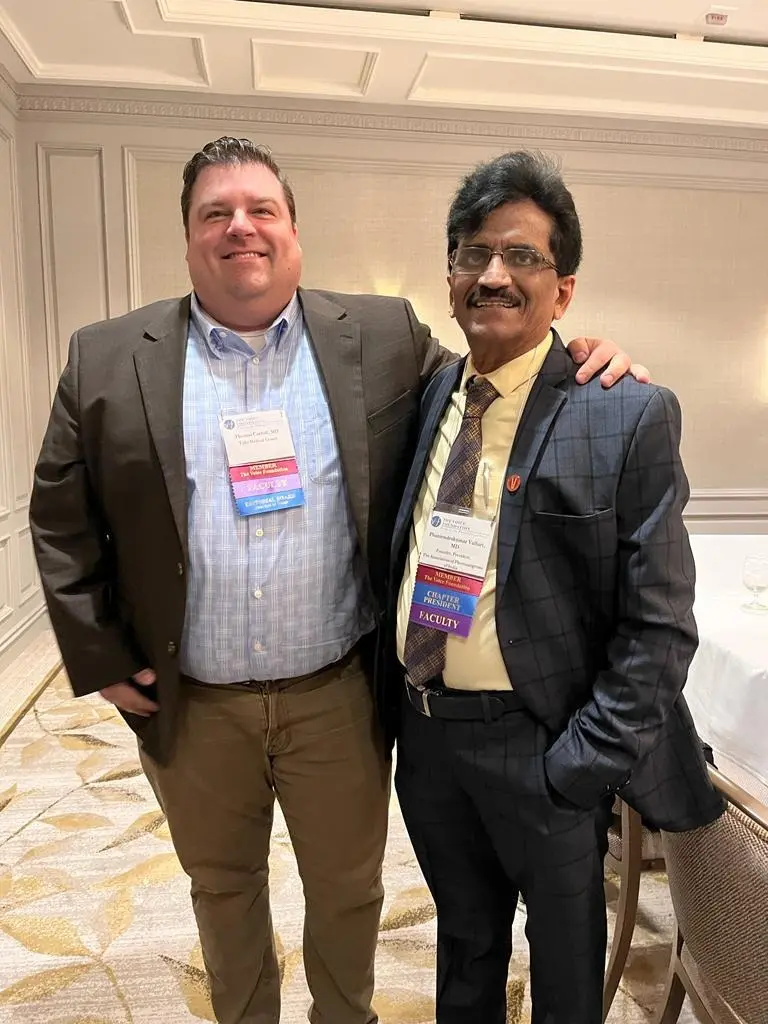
Prof. Phaniendrakumar’s decades of dedication to voice science were prominently displayed throughout the symposium. His collaboration with international figures—such as noted ENT specialists like Dr. Thomas Carroll, as highlighted during previous engagements at the 52nd Annual Symposium of The Voice Foundation—underscores the strong bilateral exchange of medical knowledge between Indian institutions and Western academic centers.

Experts at the workshop repeatedly stressed that the human voice is not merely a tool for communication, but a core component of human identity, professional viability, and emotional expression. Consequently, phonosurgery demands a philosophy of extreme tissue preservation. As surgical instrumentation evolves toward micro-spot lasers, high-definition endoscopes, and refined biological implants, the margin for error narrows, making rigorous, continuous education like this workshop mandatory for practicing otolaryngologists.
Future Outlook: The Next Era of Laryngeal Care
As the 17th Phonosurgery Course concludes, its ripples are expected to profoundly influence clinical practices across India and international partner networks. Several key takeaways point toward the future of the subspecialty:
- Mainstreaming Office-Based Procedures: The shift toward awake, in-office laryngeal procedures will continue to accelerate. Driven by advancements in flexible endoscopy and local anesthetics, patients can now undergo minor vocal fold adjustments without the risks, costs, and recovery times associated with general anesthesia.
- Regenerative Medicine and Biomaterials: Future workshops will increasingly focus on cellular therapies, stem cell applications, and advanced bio-implants designed to restore the viscoelastic properties of scarred vocal fold mucosa—a historical challenge in phonosurgery.
- Expansion of Hybrid Medical Education: The success of the dual-format model deployed in Hyderabad serves as a blueprint for future surgical symposia worldwide, proving that high-definition digital broadcasting can successfully complement hands-on cadaveric and biological model training.
- Strengthened Multidisciplinary Care: The active participation of speech-language pathologists alongside surgeons reinforces the holistic model of voice care. Future treatment paradigms will place even greater emphasis on synchronized surgical intervention and pre/post-operative voice therapy to optimize patient outcomes.
In summary, the 17th Phonosurgery Course and International Workshop has raised the bar for clinical excellence, educational innovation, and international collaboration in otolaryngology. By equipping a new generation of surgeons with both cutting-edge visual insights and rigorous practical skills, the event has ensured that patients suffering from voice disorders will continue to benefit from safer, more precise, and more effective treatments for years to come.