
Executive Overview
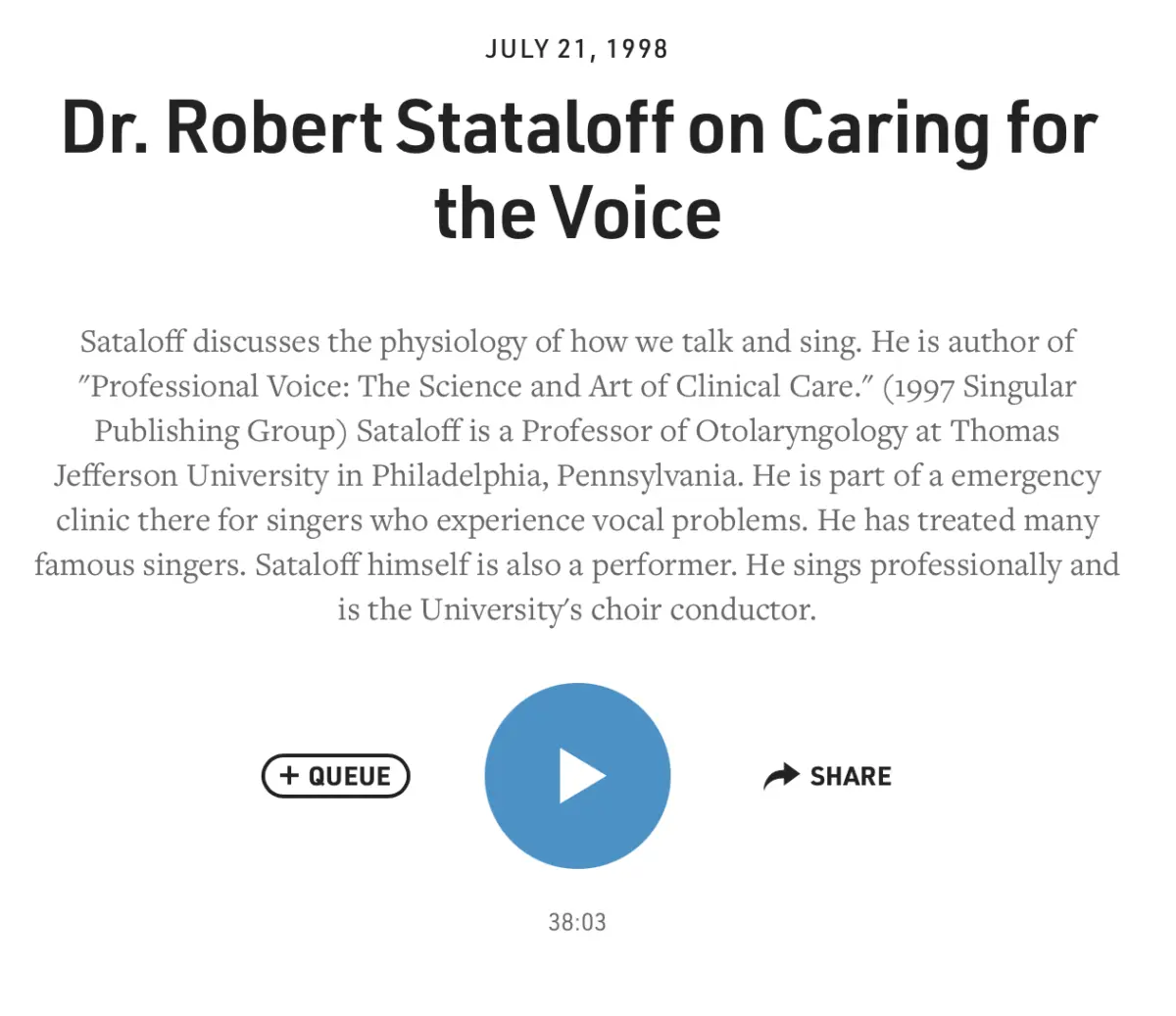
The intersection of medical science, the performing arts, and human anatomy has long been a realm populated by few true pioneers. Among them, Dr. Robert Thayer Sataloff stands as a towering figure in the specialized field of otolaryngology and laryngology. In an archival feature highlighted by The Voice Foundation, attention is drawn to a defining moment in vocal science history: Dr. Sataloff’s comprehensive and illuminating 1998 interview with Terry Gross on the renowned National Public Radio (NPR) cultural program, Fresh Air.
Originally broadcast during an era when the physiological complexities of the human voice were only beginning to enter mainstream public awareness, this conversation remains a masterclass in medical communication. Dr. Sataloff—internationally recognized not only as a clinician and surgeon but also as a conductor, singer, and author—demystified the fragile mechanisms of speech and song for millions of listeners. This retrospective look explores the profound impact of that 1998 dialogue, contextualizing Dr. Sataloff’s enduring contributions to voice care, the physiological wonders of the vocal folds, and the evolving intersection of art and medicine.
Detailed Chronology: The Evolution of Laryngology and the 1998 Broadcast
To truly appreciate the significance of the 1998 Fresh Air interview, it is essential to trace the historical timeline of voice medicine and Dr. Sataloff’s pivotal role within it.
The Pre-Specialized Era (Prior to the 1970s)
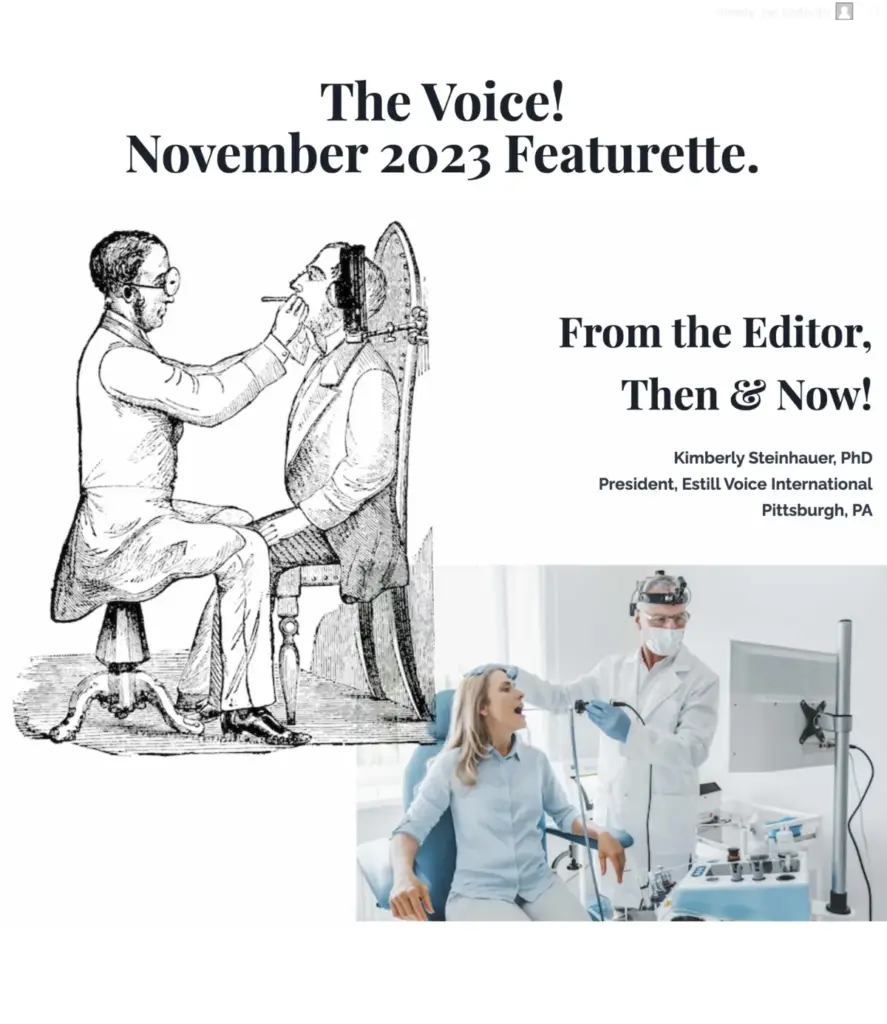
For centuries, professional voice users—including opera singers, actors, politicians, and broadcasters—had remarkably few options when facing vocal injuries or disorders. Standard otolaryngology (ear, nose, and throat medicine) treated the larynx primarily as a breathing and swallowing apparatus, paying relatively little attention to the subtle acoustic nuances required by elite vocalists. Hoarseness was frequently misdiagnosed, managed with generic rest, or subjected to crude surgical interventions that often ended careers rather than saving them.
The Rise of Modern Laryngology (1970s–1980s)
The landscape began to shift dramatically in the late 20th century. Advances in optics, stroboscopy, and micro-surgery allowed physicians to visualize the vocal folds in motion for the very first time. Dr. Sataloff emerged during this formative period, recognizing that caring for the professional voice required an unprecedented multidisciplinary approach fusing medicine, speech-language pathology, voice pedagogy, and psychology.
The 1998 NPR Fresh Air Interview
By 1998, Dr. Sataloff had established himself as a preeminent authority. When he stepped into the studio with Terry Gross—a host celebrated for her probing, deeply intellectual, and accessible interview style—the stage was set for a cultural touchstone in science broadcasting.
- The Dialogue: Gross and Dr. Sataloff explored how the human body produces sound, the hidden dangers of vocal misuse, and the psychological toll that vocal loss takes on artists whose identities are inextricably linked to their voices.
- The Cultural Impact: The interview bridged the gap between sterile clinical environments and the passionate world of the performing arts, educating the public on how fragile and adaptable human vocal cords truly are.
Supporting Context & Metrics: The Anatomy and Vulnerability of the Human Voice
To understand why Dr. Sataloff’s insights resonated so profoundly on Fresh Air, one must examine the biomechanics of the voice—a marvel of biological engineering operating under immense physical constraints.

The Physics of Phonation
The human voice is produced by air expelled from the lungs, passing through the trachea, and causing the vocal folds (commonly referred to as vocal cords) within the larynx to vibrate.
- Dimensions: In adult males, the vocal folds are typically between 17 to 25 millimeters in length; in adult females, they measure approximately 125 to 175 millimeters.
- Vibration Rates: During normal conversation, these microscopic tissues collide and vibrate hundreds of times per second. For a high soprano hitting a top note, that vibration rate can skyrocket to over 1,000 to 1,500 cycles per second.
Common Pathologies in Professional Voice Users
Dr. Sataloff’s clinical work has centered heavily on diagnosing and treating conditions that threaten these delicate tissues. Among the most prevalent metrics and pathologies discussed in voice clinics worldwide include:
- Vocal Nodules: Benign, callous-like growths caused by chronic vocal abuse or misuse, frequently seen in teachers, singers, and trial lawyers.
- Vocal Polyps: Fluid-filled lesions often resulting from a single traumatic incident of vocal strain (such as shouting at a concert).
- Hemorrhage: The rupture of tiny blood vessels within the vocal fold mucosa—a terrifying emergency for professional singers that requires absolute vocal rest and, occasionally, precise surgical intervention.
The Multidisciplinary Care Model
One of Dr. Sataloff’s most enduring legacies is the popularization of the "Team Approach" to voice care. Effective treatment rarely relies on surgery alone. Modern voice centers—modeled largely on the philosophies championed by leaders like Sataloff—integrate:
- Laryngologists: For medical diagnosis and microsurgery.
- Speech-Language Pathologists (Voice Therapists): For behavioral rehabilitation and muscle re-education.
- Voice Pedagogues (Singing Teachers): To correct fundamental technical flaws in sound production.
- Psychologists and Gastroenterologists: To address anxiety-induced tension and the impact of acid reflux (LPR) on vocal tissue.
Official Statements and Perspectives from the Archives
Reflecting on archival interviews such as this one provides a unique window into the philosophy of science communication. When Terry Gross interviewed Dr. Sataloff, the conversation transcended technical medical jargon, focusing instead on the human element of healing.
"The voice is not merely a tool for communication; it is the auditory manifestation of the human soul. When an artist loses their voice, they do not just lose their livelihood—they lose their primary mode of emotional expression." — A sentiment frequently echoed throughout Dr. Sataloff’s extensive lectures and clinical writings.
The Voice Foundation, which preserves and promotes these historic milestones, emphasizes that archiving such material is vital for the education of current and future generations of otolaryngologists, vocal coaches, and performers. By making resources like the Fresh Air Archive accessible, organizations ensure that the foundational wisdom of medical pioneers remains within reach of anyone seeking to understand the mysteries of human speech and song.
Future Outlook: The Next Frontier in Voice Science and Medicine
As we look forward from the historical anchor of the 1998 interview, the field of laryngology continues to undergo a technological and scientific revolution. Dr. Sataloff’s early advocacy for precise diagnostic tools has paved the way for remarkable modern advancements.

Regenerative Medicine and Stem Cell Research
One of the most promising frontiers in voice restoration involves regenerative medicine. Because scarring (fibrosis) of the delicate vocal fold lamina propria can permanently ruin a singer’s career, researchers are actively developing biomaterials, tissue-engineered scaffolds, and stem-cell therapies to regenerate healthy, pliable vocal fold tissue rather than replacing it with stiff scar tissue.
Advanced High-Speed Digital Imaging
While stroboscopy was state-of-the-art during the late 20th century, modern clinical practice increasingly relies on ultra-high-speed digital videoendoscopy. This technology captures thousands of frames per second, allowing physicians to visualize irregular vocal fold vibrations and mucosal wave abnormalities that stroboscopy might miss entirely.
Artificial Intelligence and Early Diagnostics
Artificial intelligence (AI) and machine learning algorithms are beginning to enter the acoustic analysis space. By analyzing subtle perturbations in a patient’s voice, AI tools can assist in the early detection of neurological disorders (such as Parkinson’s disease or vocal tremor), laryngeal cancers, and endocrine imbalances long before they become advanced.
Preserving the Legacy for Future Generations
The re-emergence of Dr. Sataloff’s 1998 conversation with Terry Gross serves as both a nostalgic look backward and a guiding light for the future. It reminds us that while technology—from high-speed cameras to AI diagnostics—will continue to evolve at a breathtaking pace, the core mission of voice medicine remains unchanged: to protect, restore, and celebrate the human voice in all its artistic and communicative glory.
Through the ongoing educational efforts of institutions like The Voice Foundation and the timeless accessibility of public media archives, the groundbreaking insights of medical legends will continue to inspire the next generation of healers, scientists, and artists.