
Executive Overview
For an artist whose professional signature has long been defined by monumental scale—architecting sonic landscapes featuring 150-layer-deep orchestrations, earth-shaking percussive explosions, and towering vocal choirs—the ultimate act of subversion is simple: absolute silence, followed by a single, unadorned piano.
This is the artistic and spiritual paradox underpinning HUMAN, the brand-new, eight-track instrumental project from acclaimed producer, composer, and multi-platinum visionary Tommee Profitt. Known globally for blockbuster cinematic works such as The Birth of a King and The Resurrection of a King, Profitt has deliberately turned his back on the bombastic grandeur that made his name instantly recognizable in trailer parks, film scores, and streaming playlists worldwide. In its place, he has crafted a collection of softly improvised piano vignettes born from vulnerability, grief, prayer, and the quiet spaces where human words ultimately fail.
Far from a mere stylistic pivot or commercial experiment, HUMAN represents a profound recalibration of Profitt’s creative trajectory—a movement back toward deep worship roots and an unmasked emotional authenticity. Recorded initially as spontaneous, late-night reflections in his parents’ Michigan basement earlier this summer, the project evolved organically from a personal therapeutic exercise into a communal offering. By stripping away the massive drums, soaring brass sections, and cinematic gloss, Profitt has constructed a sacred container for listeners to breathe, process, and experience their own inner lives without emotional coercion.
Available now across all major digital streaming platforms, HUMAN stands as a testament to a master craftsman who has finally learned that the most powerful note an artist can strike is often the one left unplayed.
Detailed Chronology: The Genesis of an Unscripted Masterpiece
To understand the radical nature of HUMAN, one must first trace the trajectory of Tommee Profitt’s career. For over a decade, Profitt has been a dominant force in the evolution of modern cinematic and Christian music. His ability to fuse heavy, aggressive pop-production aesthetics with sweeping orchestral arrangements cemented his reputation as an architect of the epic. Whether breathing new life into traditional Christmas carols with towering cinematic scores or scoring major motion picture trailers, Profitt’s workflow was consistently defined by maximalism. More layers, more volume, more emotional weight through sheer sonic magnitude—this was the formula that built his empire.
However, the genesis of HUMAN began not in a multi-million-dollar mixing facility or an elite Nashville recording studio, but in the quiet familiarity of his parents’ home in Michigan earlier this summer.
Returning to his roots during a break from his relentless production schedule, Profitt found himself sitting down at an ordinary piano in a quiet basement. There was no grand design, no commercial brief, and no overarching conceptual framework. Instead, stepping away from the pressures of industry expectation, Profitt began to simply play. He allowed his hands to wander across the keys, improvising melodies that mirrored his internal state—a mix of exhaustion, gratitude, introspection, and quiet surrender.
He recorded these unscripted sessions on his phone or a basic home rig, capturing the raw, imperfect acoustics of a room unbothered by commercial polish. The hammer strikes, the slight squeak of the pedal, and the natural decay of the strings were left intact.
Sometime later, feeling a gentle prompting, Profitt decided to share snippets of these private piano sessions on his social media channels. He expected, at most, a mild nod of appreciation from fans accustomed to his thunderous soundscapes. Instead, the response was immediate, overwhelming, and deeply emotional.
"I was flooded with messages from people who told me what the music made them think of, and no two stories were the same," Profitt reflected, visibly moved while introducing the project. "Some people thought of friendships or someone they lost, or childhood memories and relationships and hope and healing and grief and anxiety. The music became whatever the listener needed it to become."
That profound public resonance served as the catalyst for the entire album. Recognizing that his spontaneous piano improvisations had tapped into a collective human need for quiet reflection, Profitt decided to formalize the sessions into an official eight-track project. He returned to the unproduced, improvised ethos of those basement sessions, recording eight distinct pieces that trusted the organic flow of the moment. HUMAN was born not from marketing strategy, but from a profound spiritual and emotional alignment with his audience.
Supporting Context & Metrics: The Architecture of Intimacy
The cultural and artistic weight of HUMAN becomes starkly apparent when viewed against the backdrop of Profitt’s broader discography and contemporary listening habits. In an era dominated by hyper-compressed audio, rapid-fire TikTok-friendly hooks, and sensory overload, Profitt’s pivot toward ambient, minimalist piano instrumentals offers a radical counter-cultural respite.
The Contrast of Scale
- The Cinematic Era: Works like The Birth of a King and The Resurrection of a King are triumphs of heavy production, frequently utilizing upward of 150 independent audio layers. They employ full symphonic orchestras, massive Taiko drums, cavernous reverbs, and powerhouse guest vocalists designed to rattle subwoofers and fill vast arenas.
- The HUMAN Era: Conversely, the eight tracks of HUMAN feature a single instrument—an acoustic piano—recorded in natural, unpretentious acoustic environments. There are no synthesized pads, no hidden percussion loops, and no forced dramatic crescendos.
The Psychology of Ambient Instrumental Music
Psychological studies consistently demonstrate that sparse, slow-tempo piano music significantly lowers cortisol levels, reduces heart rates, and facilitates parasympathetic nervous system recovery. While Profitt’s cinematic music was engineered to trigger adrenaline, awe, and high-stakes cinematic tension, HUMAN is intentionally calibrated for emotional regulation. It functions fluidly as a sonic backdrop for:
- Deep contemplative prayer and scriptural meditation.
- Processing complex grief, personal loss, and trauma recovery.
- Cultivating focus during periods of creative work, reading, or academic study.
- Cultivating stillness during chaotic modern mornings.
By refusing to dictate what the listener should feel—a common trap in film scoring and worship music alike—Profitt has engineered an open-source emotional landscape. The music acts as a mirror, reflecting whatever joy, sorrow, anxiety, or hope the listener brings into the listening space.

Official Statements & Personal Reflections
The emotional vulnerability surrounding the release of HUMAN was palpable from the moment Tommee Profitt introduced the project to the public. During his announcement, the normally composed producer was visibly fighting back tears—and occasionally losing that fight—as he attempted to articulate why this project mattered more to him than almost anything he had created before.
"I’ve never made a project like this before," Profitt shared, his voice catching with emotion. "Most of the time I create loud, big cinematic trailer music with huge orchestras and massive drums. But sometimes you just want to sit in the quiet and just feel."
This candid admission highlights a universal exhaustion shared by both creators and consumers in the modern digital age: the relentless pressure to be "larger than life" at all times. For Profitt, stepping away from the noise was an act of personal preservation as much as it was an artistic choice.
Addressing the core philosophy driving the tracklist, Profitt emphasized that the album was conceived as a communal offering rather than a commercial product:
"What if I made a whole project like this that didn’t tell people what to feel, but just simply gave people permission to feel? This project is really just a gift that I wanted to give to humans. An invitation to sit and to breathe and to process and feel human."
In these statements, Profitt bridges the gap between high-level professional musicianship and raw, everyday pastoral care. He acknowledges that while grand anthems have their place in corporate worship and epic storytelling, the human soul is ultimately sustained in the quiet, unscripted moments of silent communion with God and self.
Future Outlook: A New Paradigm for a Veteran Creator
The release of HUMAN marks a fascinating crossroads in Tommee Profitt’s career. As an artist who has consistently pushed the boundaries of Christian music, cinematic pop, and trailer orchestration, this pivot raises compelling questions regarding his future creative output.
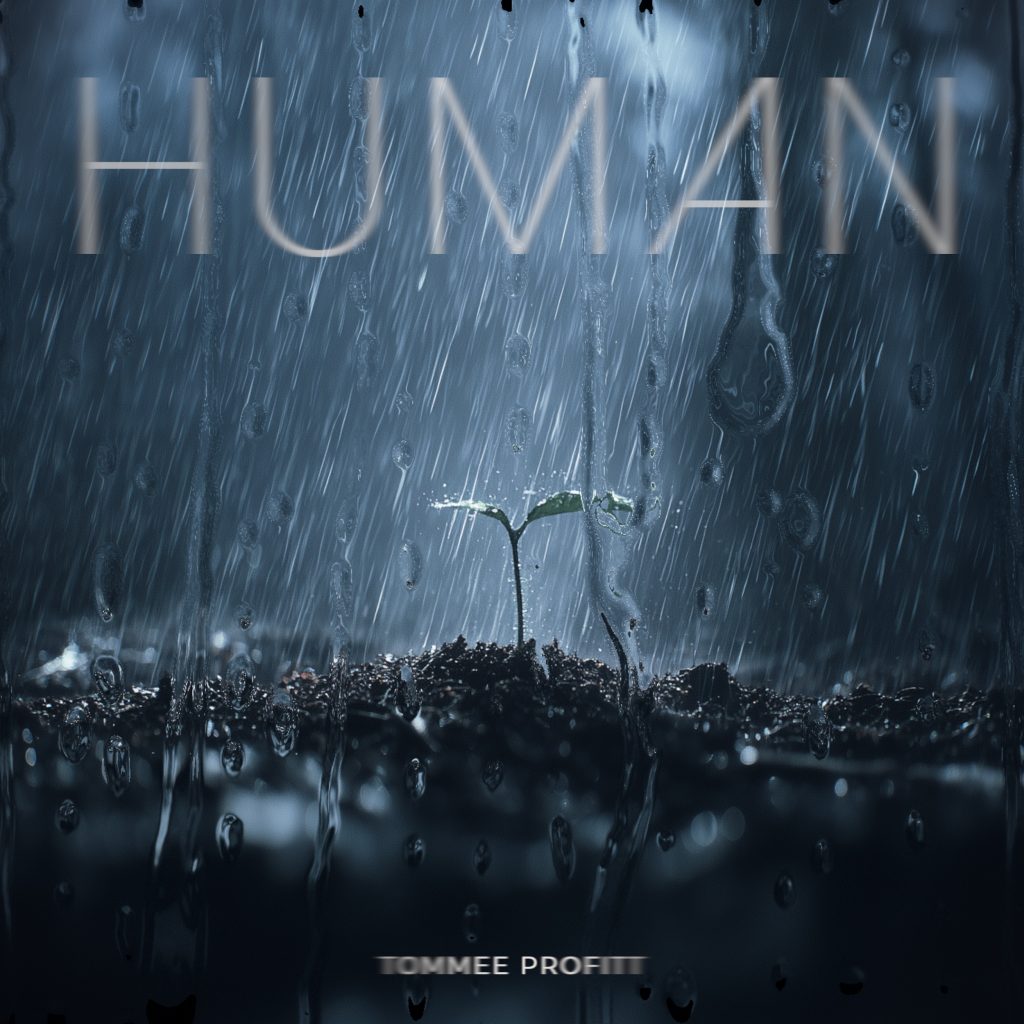
Will HUMAN remain a singular, meditative anomaly in a catalog otherwise defined by thunderous epics, or does it signal the opening salvo of a broader, more introspective chapter in Profitt’s artistic evolution?
Industry insiders and longtime followers suggest that this release is not a permanent departure from his signature cinematic sound, but rather an expansion of his creative palette. By proving that he can capture an audience just as effectively with a single, unproduced piano as he can with a 100-piece orchestra, Profitt has unlocked a new level of artistic versatility. He has demonstrated that true mastery is not found in the accumulation of layer upon layer of sound, but in the profound confidence to strip everything away until only truth remains.
As listeners around the globe stream HUMAN during their morning quiet times, late-night prayer sessions, and moments of quiet healing, Profitt’s legacy shifts. He is no longer viewed solely as the master architect of the cinematic storm, but also as a gentle guide who knows how to hold space in the eye of it.
HUMAN is available now across all major streaming platforms. To dive deeper into Tommee Profitt’s creative world, his evolving faith, and his remarkable journey, readers are encouraged to explore the comprehensive April 2026 CCM Magazine Cover Story.