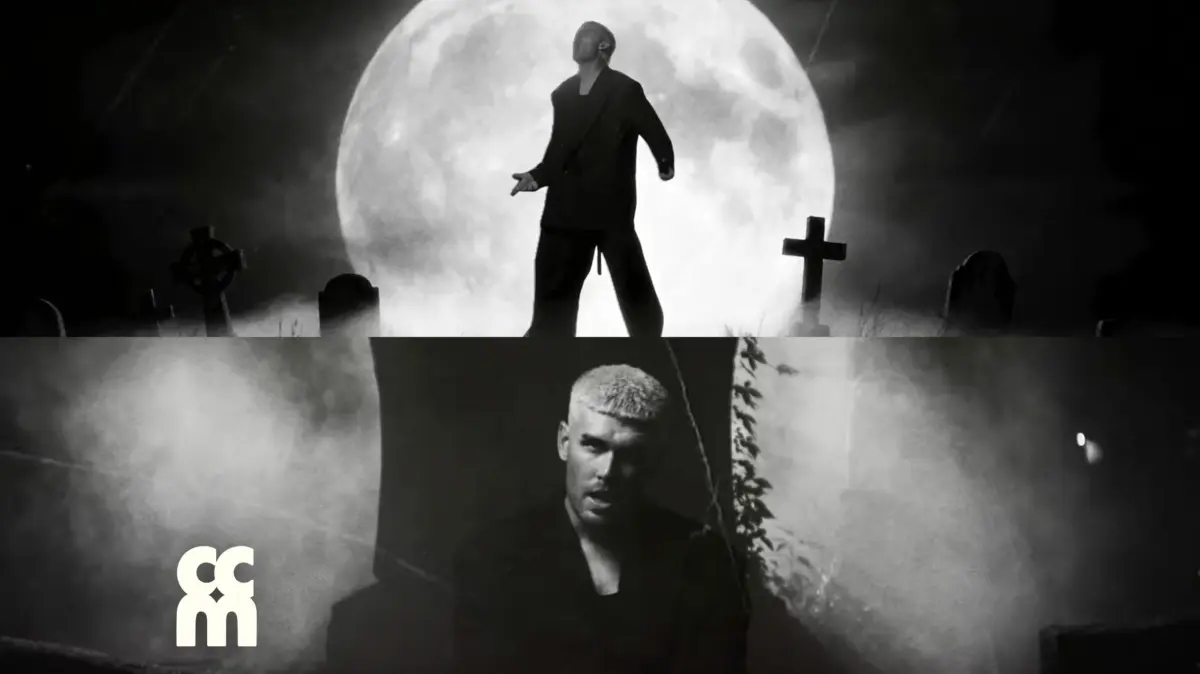
In the contemporary Christian music (CCM) landscape, standard formulas often dictate releases: accessible pop hooks, radio-friendly production, and messages of upliftment designed for broad, frictionless consumption. Yet, every so often, an artist disrupts the well-worn path with a release that demands an immediate pivot in critical attention. Enter Colton Dixon and his October single, "Bones"—a track backed by a cinematic music video featuring skeletal imagery, a graveyard setting, and a mock headstone reading, "Here Lies Colton Dixon."
Far from being a simple seasonal gimmick, "Bones" represents a deliberate stylistic pivot toward Dixon’s rock roots, while offering a theological reclamation of autumn’s spookiest holiday. Drawing direct inspiration from the biblical account of Ezekiel 37—the Valley of Dry Bones—Dixon has crafted what he describes as a "Christian’s response to Halloween."
This release arrives at a fascinating intersection of culture and faith. For decades, the global Church has navigated a complex relationship with October 31, oscillating between total avoidance and cultural reclamation. By leaning headfirst into the visual vernacular of the season—complete with skeletons, mortality, and resurrection—Dixon’s "Bones" bridges the gap between childhood nostalgia and profound spiritual authority. This long-form report examines the genesis of the track, Dixon’s strategic return to heavier instrumentation, the underlying theology of the Valley of Dry Bones, and the broader cultural conversation regarding how believers engage with the fall season.
Detailed Chronology: From the 2026 Dove Awards to the Graveyard
The rollout for "Bones" did not begin in a corporate boardroom; it started on the red carpet of the 2026 Dove Awards in Nashville, Tennessee, where Dixon offered a glimpse into his creative evolution.
For months, the artist had been fielding consistent feedback from a vocal segment of his fanbase. Longtime listeners who fell in love with his early, rock-leaning repertoire had spent years requesting a return to heavier electric guitars and driving percussion. Dixon acknowledged this tension during his red-carpet conversation with CCM Magazine, tracing the roots of his current musical trajectory.
"I have a lot of fans who still to this day, they’ll comment on social media. They’re like, ‘Bring back the rock, you know?’" Dixon reflected. He pointed to his earlier 2026 release, "The Love I Have For You"—which premiered as a CCM Magazine Cover Story in February—as the opening salvo of this transition. "’The Love I Have For You’ was kind of a step in that direction," Dixon noted. "And ‘Bones’ is another step in that direction. Not saying we’re full sending."
While he promised a heavier edge to his forthcoming work, he initially kept the thematic nature of "Bones" under wraps during their primary chat. However, conversations with DeWayne Hamby of Reel Faith and ChurchLeaders later that same evening unveiled the true scope of the project. Dixon revealed that the single was directly tied to a lifelong affinity for the autumn aesthetic.
By October 9, the single and its accompanying music video were released to the public, instantly generating a wave of industry chatter. The visual component—featuring Dixon transforming into a skeleton within a mist-shrouded cemetery—shattered expectations of what a mainstream Christian pop artist would put out weeks before Halloween.
Despite the radical stylistic shift, Dixon was quick to reassure fans of his radio-friendly pop ballads that his bread-and-butter sound is not disappearing entirely. When asked on the red carpet about balancing these heavy rock inclinations with commercial expectations, Dixon laughed and offered a pragmatic reality check: "That’s right. We got to pay the bills."
Supporting Context & Metrics: The Cultural and Musical Shift
To fully understand the impact of "Bones," one must evaluate the macro-trends currently shaping the Christian music industry. For years, the commercial peak of CCM has belonged to mid-tempo, piano-driven worship anthems and synthesized pop constructs optimized for streaming playlists and adult contemporary radio formats. While these formats remain vital to commercial success, they often leave a distinct subset of listeners yearning for the energetic, guitar-driven urgency that dominated the genre in the late 1990s and 2000s.
Dixon’s calculated pivot reflects a broader industry appetite for sonic diversity. Artists are increasingly discovering that modern audiences—particularly multi-generational demographics that grew up on alternative rock as well as contemporary worship—respond favorably to hybrid sounds. By injecting gritty, rock-infused textures into a message of spiritual awakening, Dixon is not merely chasing nostalgia; he is actively expanding his sonic footprint.
Furthermore, the timing of "Bones" capitalizes on the cultural dominance of the fall season. Autumn has evolved into a massive cultural phenomenon, commanding billions of dollars in consumer spending, seasonal media consumption, and community gatherings. By timing the release of a high-concept, graveyard-themed track for mid-October, Dixon positioned himself squarely at the center of the cultural zeitgeist, capturing the attention of listeners who might otherwise tune out standard Christian radio singles.
Official Statements: Theology, Skeletons, and the "Christian Response to Halloween"
The lyrical and conceptual weight of "Bones" derives from a very specific scriptural text: Ezekiel 37. In this biblical narrative, the prophet Ezekiel is transported by the Spirit of God into a valley filled entirely with dry human bones. God asks him a direct question: "Son of man, can these bones live?" When Ezekiel defers to divine wisdom, God commands him to prophesy over the bones, promising to attach sinews, flesh, and skin to them, and to breathe life into the slain.
For Dixon, reading this passage yielded an epiphany that blended his lifelong love for Halloween pageantry with profound theological truth. Speaking with ChurchLeaders, Dixon joked about the imagery of the text: "I remember reading that passage. I’m like, dude, I’m pretty sure this means that zombies were in the Bible. I’m just saying."
Beyond the humor, however, lies a sharp pastoral and psychological application. In his expanded conversation with DeWayne Hamby of Reel Faith, Dixon unpacked the practical takeaway for believers navigating trials, grief, and seemingly impossible circumstances:
"If you’re looking at this dead thing in your life, this thing that, whether it’s—you can’t get pregnant, you’ve got this sickness thing that’s hanging on you. Whatever it is, speak to it, prophesy over it. And I believe that you’ll see dead things come to life."
This message reframes how Christians conceptualize spiritual authority. Instead of running away from imagery associated with death—such as bones, graves, and skeletons—Dixon uses that very vernacular to highlight the power of resurrection. The song serves as a reminder that no situation, no matter how desiccated or hopeless it appears, is beyond the reach of divine restoration. It transforms a symbol of mortality into an emblem of ultimate victory.
Future Outlook: Bridging the Divide Between Church and Culture
Perhaps the most compelling conversation sparked by the release of "Bones" centers on how the Christian community engages with Halloween. For generations, the holiday has provoked intense debate within religious circles. Some traditions embrace community festivals and outreach, while others retreat entirely behind closed doors, viewing the celebration’s historic ties to darkness and superstition as incompatible with Christian devotion.
Yet, as cultural commentators have frequently observed, Halloween remains unique among secular holidays: it is arguably the only night of the year when total strangers walk up to residential doorsteps and actively seek interaction.
Dixon’s "Bones" suggests a middle path—one of reclamation rather than retreat. By taking the macabre imagery traditionally associated with the holiday and subverting it with a message of life, resurrection, and hope, the song offers a blueprint for cultural engagement. It demonstrates that believers do not need to isolate themselves from cultural markers; rather, they can step directly into the metaphorical graveyard and speak life over the darkness.
As Colton Dixon continues to tour and refine his sound, the success of "Bones" signals a bright future for artists willing to take creative risks. Whether he is headlining arenas with high-octane rock anthems or crafting chart-topping radio pop to "pay the bills," Dixon has proven that authenticity and theological depth can coexist with theatrical flair.
As October 31 approaches, expect to hear "Bones" echoing from front porches, car stereos, and festival stages nationwide—a testament to the enduring truth that even the driest bones can live again.