
Executive Overview
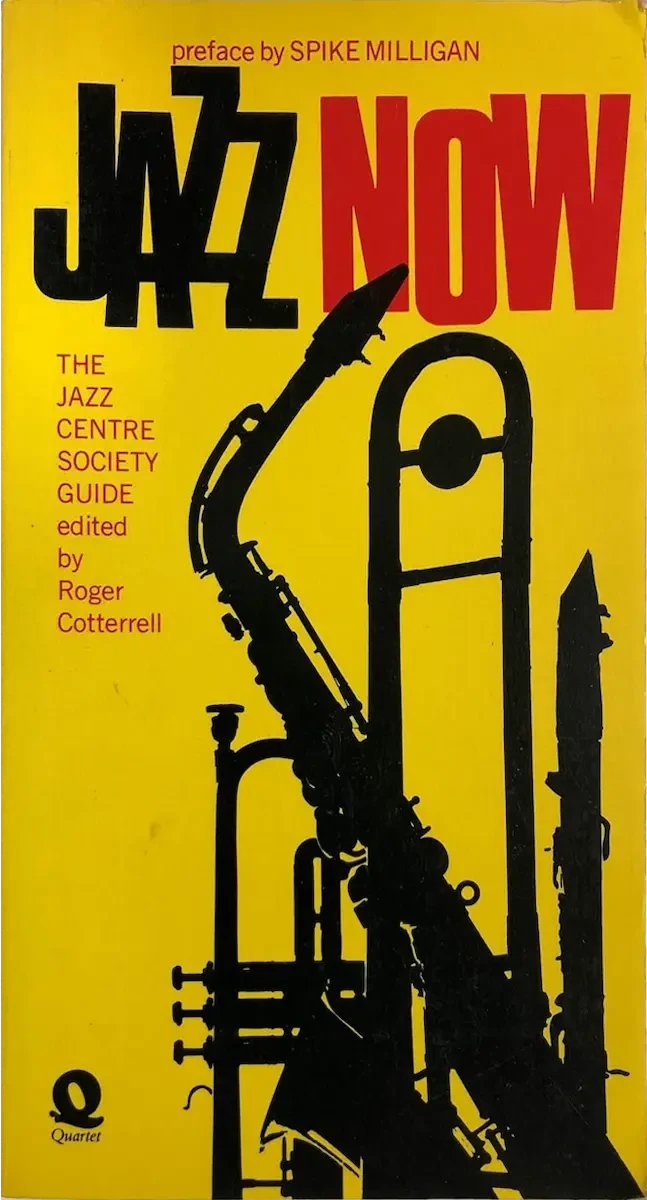
The landscape of British jazz publishing has experienced a significant and welcome jolt with the arrival of Jazz Now, a comprehensive guide, essay collection, and directory edited by Roger Cotterrell and published in association with the Jazz Centre Society. Released as an original paperback by the burgeoning independent imprint Quartet Books, this 216-page volume arrives with a notable degree of industry relevance. At a time when traditional publishing pipelines frequently bog down manuscripts in extended production cycles, Jazz Now achieves the rare feat of presenting a remarkably current snapshot of the contemporary jazz ecosystem in the United Kingdom.
Priced accessibly at £1.75 and featuring a preface by renowned satirist and jazz aficionado Spike Milligan alongside a comprehensive three-page index, the book is sharply divided into two distinct halves. The first offers a series of incisive, critically engaging essays penned by some of the most respected pens in jazz journalism and performance. The second functions as an invaluable reference directory, complete with approximately 250 concise biographies, direct contact details for gig bookers, and exhaustive logs of jazz societies, promoters, film resources, print publications, and record importers.
Quartet Books continues to cement its reputation as a premier publisher for serious music literature, following hard on the heels of celebrated titles such as Ross Russell’s The Bird, Dick Sudhalter’s definitive study on Bix Beiderbecke, and John Chilton’s Billie’s Blues. Jazz Now matches the archival importance of those works while carving out a distinct space as an indispensable, hands-on tool for musicians, promoters, and enthusiasts alike. Through meticulous editing and an impressive breadth of coverage, Roger Cotterrell has curated a text that not only captures the pulse of the 1970s British jazz scene but also provides a functional infrastructure for its continued growth.
Detailed Chronology and Structural Anatomy of the Volume
To understand the immense value of Jazz Now, one must examine its structural architecture, which neatly bifurcates the world of jazz into intellectual exploration and practical application.
Part One: Essays, Profiles, and Perspectives
The opening half of the book is dedicated to prose pieces that examine jazz from various critical, historical, and sociological vantage points. Editor Roger Cotterrell opens up the discourse with an exploration of the folk roots underpinning the genre. Peter Clayton contributes a masterclass on the delicate art of interviewing jazz personalities, while Charles Fox takes readers on a historical journey through the origins and enduring appeal of ragtime.
The avant-garde—frequently a point of contention and misunderstanding within traditional jazz circles—is expertly unpacked by Ron Atkins. Meanwhile, John Chilton brings his characteristic academic rigor and authoritative style to a deep dive on Billy Butterfield. Dick Sudhalter adopts a conversational approach, gathering several of "yesterday’s men" to roundtable discussions regarding the historical evolution and current state of jazz in Britain.
Performance and musician psychology also take center stage. Brian Case offers a sharp assessment of the Skidmores, while composer and pianist Michael Garrick writes candidly from the perspective of the working jazz musician, illuminating the daily realities of the craft. Tony Russell provides a grounded examination of the blues, anchoring the eclectic essays in foundational American traditions.
Yet, the emotional peak of the first half—and arguably the entire volume—belongs to Brian Blain. His affectionate, deeply moving word portrait of the late, great drummer Phil Seamen serves as a poignant reminder of the human cost and transcendent genius inherent in the British jazz lineage. These essays are richly illustrated throughout the first half with striking full-page photographs, though publishers’ notes do append a minor correction regarding a swapped caption on the Skidmore imagery.
Part Two: The Reference Engine
While the essays provide the intellectual weight, the second half of Jazz Now functions as the engine room for the working music community. Cotterrell has assembled roughly 250 "potted biographies" of jazz musicians whom gig-goers are likely to encounter at legendary London venues such as Seven Dials, The Phoenix, or across regional clubs.
Crucially, this directory is remarkably up-to-date. Performers such as Hank Shaw have taken advantage of the publication’s currency to list their active telephone numbers and Whitstable addresses directly. For promoters, agents, and bandleaders, this direct line of communication is nothing short of revolutionary. Historically, booking a local lineup often required tortuous chains of communication—such as cold-calling Ray Warleigh simply to acquire Bryan Spring’s telephone number in order to eventually reach Spike Wells. Jazz Now effectively streamlines this administrative bottleneck.
Alongside direct contact channels, these biographical entries feature curated lists of key record appearances, birth dates (offering readers interesting demographic insights—such as the reviewer noting they are precisely two months younger than Stan Tracey and two months older than Ken Colyer), and personal career milestones deemed memorable by the artists themselves. Several compact photographs punctuate the reference pages, adding visual context to the directory.
Beyond artist listings, the reference section branches out into vital industry sub-sectors. Dedicated chapters catalogue jazz societies and active promoters, survey jazz documentation in print, and list significant cinematic representations of the genre. Essential logistical data is also provided via comprehensive directories of record companies and specialized importers, ensuring that fans and retailers alike know precisely where to source rare recordings.
Supporting Context & Metrics: Publishing Milestones and Market Realities
Jazz Now enters a burgeoning niche within British arts publishing, reflecting an era where jazz was increasingly fighting for institutional recognition and independent documentation.
| Metric / Detail | Specification |
|---|---|
| Publisher | Quartet Books (27 Goodge Street, London W.1) |
| Editor | Roger Cotterrell |
| Association | Published in association with the Jazz Centre Society |
| Format & Extent | Paperback original, 216 pages, several illustrations |
| Retail Price | £1.75 |
| Additional Front Matter | Preface by Spike Milligan |
| Back Matter | Comprehensive three-page index |
| Directory Scope | ~250 musician biographies, contact numbers, and venue guides |
Despite its overwhelming success as an information repository, the book is not entirely immune to minor infrastructural omissions. For instance, the detailed listing of record importers contains a slight blind spot regarding specialized European distribution networks. Labels such as Queen Disc, SteepleChase, and Dogwood are imported and distributed exclusively within the UK by Tony Williams of Spotlite; however, Williams’ crucial operation is omitted from the importer directory.
Nevertheless, these minor oversights pale in comparison to the sheer volume of verified data packed into the volume. The industry footprint of Jazz Now extends well beyond a standard book review; it acts as an economic and social directory for a fragmented genre, proving that the British jazz community possessed a tightly knit yet expansive underground infrastructure ready to be mapped.
Official Statements and Editorial Insights
The genesis of Jazz Now lies in a collaborative effort between editor Roger Cotterrell and the advocacy networks operating under the Jazz Centre Society. While formal press releases from Quartet Books emphasize the commercial viability and growing prestige of their music list—bolstered by international heavyweights like Ross Russell and Dick Sudhalter—the internal ethos of Jazz Now is articulated best through its contributors and front matter.
Spike Milligan, whose preface frames the cultural importance of the text, highlights the idiosyncratic and resilient nature of British jazz musicianship. Rather than treating jazz as an imported American novelty, the essays curated by Cotterrell validate the home-grown avant-garde, ragtime enthusiasts, and traditionalists alike.
Editor Roger Cotterrell’s approach reflects a rigorous sociological commitment to documentation. By opening his pages to working musicians like Michael Garrick and historians like John Chilton, Cotterrell ensures that the narrative of jazz in Britain is written by those actively shaping its soundboards and smoke-filled back rooms. The book’s dedication to capturing ephemeral details—such as home phone numbers and regional venue addresses—speaks to an editorial philosophy that prioritizes practical utility alongside aesthetic appreciation.
Future Outlook: A Blueprint for Annual Re-editions?
As the ink dries on Jazz Now, its long-term impact on the British jazz community appears assured. For decades, booking agents, journalists, and fans have operated within decentralized networks, relying on word-of-mouth and informal address books to sustain the live music circuit. By centralizing this data into an accessible, professionally edited paperback, Roger Cotterrell has provided a vital service that bridges the gap between high-level music criticism and grassroots logistics.
The overarching question facing Quartet Books and the Jazz Centre Society moving forward is one of sustainability and curation. Given the notoriously transient nature of the music industry—where addresses change, telephone exchanges update, and emerging talents rapidly displace established acts—static print directories risk obsolescence if left unrevised.
However, the enthusiastic reception of the volume suggests a clear mandate for the future. As noted by early commentators, the true test of Jazz Now‘s utility will be whether market demand and sustained sales figures can warrant an updated publication cycle year after year. If Cotterrell and Quartet Books can institutionalize Jazz Now as an annual directory, they will create an indispensable historical archive and operational manual for generations of jazz practitioners to come. For now, this inaugural 1976 edition stands as a monumental achievement—a book that no serious jazz aficionado, promoter, or musician in Britain should be without.