
Executive Overview
The opening weeks of any academic school year in music education follow a familiar, high-intensity rhythm. Directors learn dozens—sometimes hundreds—of new names, survive the logistical trial by fire of instrument rental week, and gradually coax disparate sections of wind, brass, string, and percussion players into a cohesive ensemble sound. Yet, as the initial dust settles, music educators face a perennial, high-stakes challenge: accurately assessing what every individual student actually knows, hears, and can physically execute before the first grading period closes and the relentless preparation for the fall concert takes center stage.
In a traditional classroom setting, formative and summative assessments often rely on spot-checks during full-ensemble rehearsals. In these environments, individual errors easily hide behind the collective wall of sound, and quiet or hesitant students can slip through the cracks. While standardized performance repertoire catalogs have long provided a reliable baseline for digital assignments, modern music pedagogy demands greater versatility.
Enter a new wave of flexible assessment tools designed specifically for middle and high school music classrooms. By expanding beyond traditional score-matching assignments into Audio/Video-Only (A/V) assignments and Multiple Choice written assessments, educators can now peer directly into autonomous home practice sessions and verify theoretical comprehension before a student even plays a note.
This comprehensive report examines how music teachers are leveraging these multi-dimensional tools to establish robust early-year routines, improve self-correction habits among students, streamline administrative grading workflows via integrations like Google Grade Passback, and ultimately foster more independent, reflective musicians.
Detailed Chronology: Navigating the Fall Assessment Window
To understand the strategic deployment of these digital assessment tools, it is helpful to examine the natural lifecycle of the fall semester in a secondary school music program and pinpoint where intervention yields the highest return on investment.
Phase 1: The Onboarding and Tonal Foundation (Weeks 1–3)
The academic year begins with logistical triage. Students receive instruments, music stands are distributed, and foundational tone production takes priority. During this phase, instructors establish baseline expectations for posture, hand placement, and breathing. However, formal grading is often deferred, creating a temporary data vacuum regarding student comprehension.
Phase 2: The Assessment Pivot (Weeks 4–6)
As the first grading period draws to a close, directors must issue objective grades. This is the critical window identified by leading pedagogy experts as the ideal time to introduce non-traditional digital assignments. Rather than relying solely on automated pitch-and-rhythm matching from standard music catalogs, teachers deploy targeted A/V-only assignments and theoretical multiple-choice checks. This phase serves as an operational bridge between raw mechanical training and analytical musicianship.

Phase 3: Fall Concert Pre-Production (Weeks 7–10+)
With baseline habits established and individual competencies documented, ensembles transition into intensive concert preparation. By this stage, the integration of multi-format assignments pays dividends: because students have already practiced self-auditing their physical technique and verified their understanding of key signatures and rhythms independently, rehearsal time is spent polishing musicality rather than correcting fundamental notation errors.
Supporting Context & Metrics: The Pedagogical Shift in Digital Music Education
The integration of digital platforms into instrumental and vocal music education has evolved far beyond simple practice logs. Modern music assessment science emphasizes three core pillars: performance execution, self-reflection (metacognition), and theoretical literacy.
1. Audio/Video-Only Assignments: Unlocking the Black Box of Home Practice
For decades, home practice has been a "black box" for music educators. Teachers assign thirty minutes a day, five days a week, but have historically had to judge the efficacy of that time solely by the end-product heard in rehearsals days later.
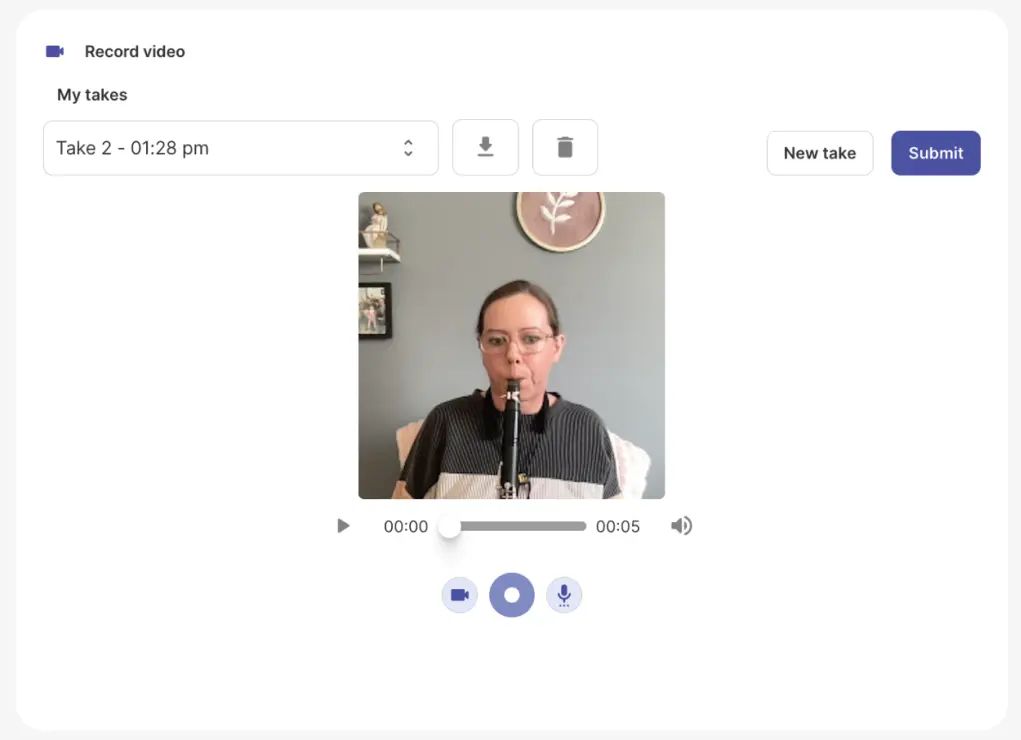
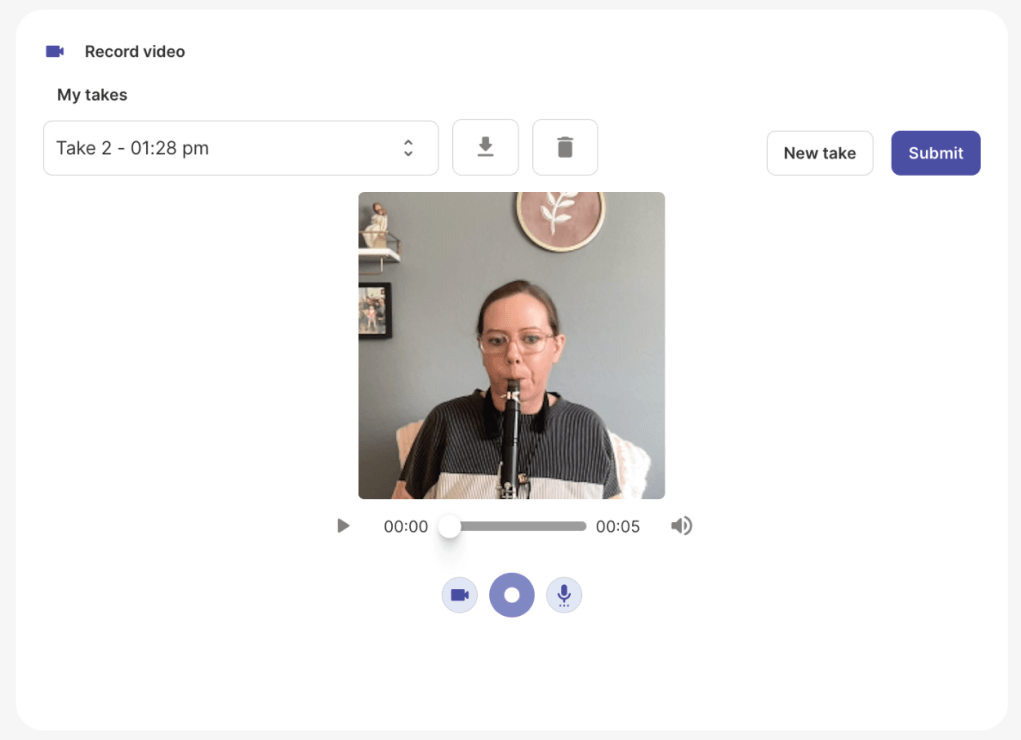
A/V-only assignments strip away the pressure of automated note-recognition scoring software, allowing students to record themselves performing open-ended technical exercises, scales, or reflective verbal walkthroughs. More importantly, it gives students a tool they rarely possess when practicing in isolation: an objective mirror.
When adolescents watch and listen to their own recorded practice, they instantly confront visual and auditory feedback regarding collapsed wrists, improper embouchures, poor posture, and uneven articulation. By shifting the focus from "getting a green light" on a software screen to evaluating their own physical habits, students develop critical self-correction mechanisms that accelerate long-term skill acquisition.
2. Multiple Choice Assessments: Knowing Before Playing
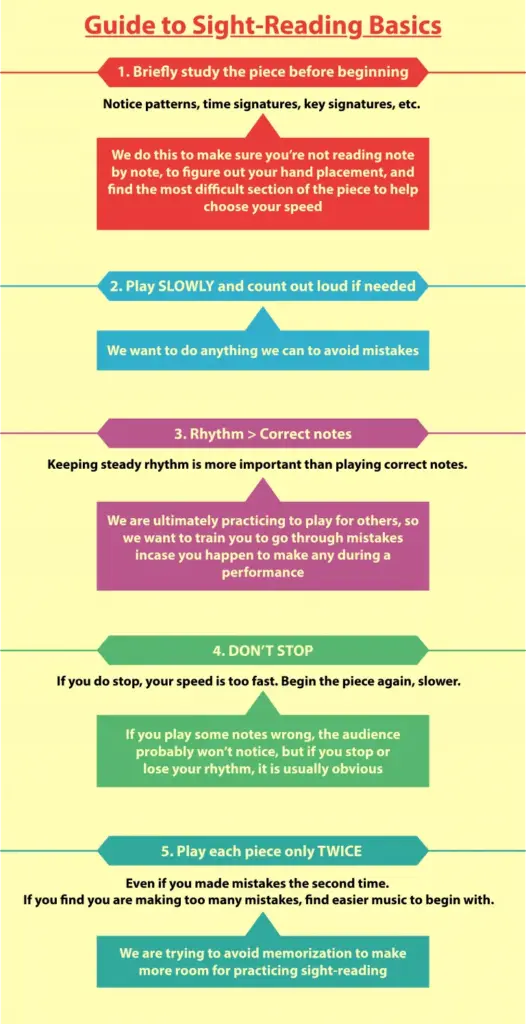
One of the most persistent bottlenecks in ensemble rehearsals is the tendency for students to sight-read new repertoire reactively—plunging into a piece without analyzing key signatures, accidental markings, complex syncopation, or dynamic changes. This results in repetitive, ingrained errors that directors must spend precious rehearsal minutes untangling.
Multiple-choice digital assessments represent a paradigm shift by functioning as a pre-practice gatekeeper. Educators can construct customized questions incorporating text, embedded musical excerpts, and original visual graphics. By testing students on theoretical concepts before they open their instrument cases at home, instructors ensure that practice sessions are purposeful. When a student correctly identifies a tricky rhythmic subdivision or a modulating key change on a digital quiz, their subsequent home practice transforms from mindless repetition into intentional, error-free mastery.
Official Guidelines: Building a Balanced Weekly Routine
Transitioning to a multi-modal assessment strategy does not require a total overhaul of an existing curriculum. Instead, music educators advocate for a balanced, rotational weekly routine that blends traditional catalog pieces with modern diagnostic tools.
Pedagogical experts recommend structuring a sustainable weekly assignment cycle for middle and high school ensembles as follows:
- Monday (The Blueprint): Deploy a brief Multiple Choice Assessment focused on the upcoming week’s musical challenges. Students verify their understanding of key signatures, tempo markings, and dynamic shifts before touching their instruments.
- Wednesday (The Mechanical Check): Issue an Audio/Video-Only Assignment prompting students to record a short, focused technical exercise (e.g., a major scale or tone study) with a strict focus on posture, hand position, and breath support.
- Friday (The Performance Application): Assign a traditional performance assessment from the standard music catalog, allowing students to apply the theoretical knowledge and technical self-awareness developed earlier in the week to actual ensemble repertoire.
Administrative Efficiency and Gradebook Integration
A common hesitation among secondary music educators—who often teach hundreds of students across multiple concert bands, string orchestras, and jazz ensembles—is the administrative burden of grading. Modern digital platforms mitigate this friction through automated grading tools and direct integrations like Google Grade Passback. Multiple-choice assessments are scored instantly by the platform, and all assignment metrics sync seamlessly into the Google Classroom gradebook, cutting administrative hours down to a fraction of traditional paper-based workflows.
Future Outlook: The Horizon of Music Pedagogy
As educational technology continues to mature, the boundary between in-class instruction and autonomous home practice will continue to blur. The successful integration of diverse assessment types—ranging from automated pitch-tracking and visual A/V self-audits to theoretical digital quizzes—signals a maturing digital ecosystem in the arts.
For music directors, the mandate is clear: start small and start now. Educators do not need to rewrite their entire syllabus overnight. By introducing a single audio/video reflection or a targeted pre-practice multiple-choice check into next week’s lesson plan, teachers can unlock unprecedented visibility into student learning.
As these habits take root, the culture of the ensemble shifts. Students transition from passive followers directed by the conductor’s baton into independent, self-aware musicians capable of diagnosing their own strengths, correcting their own flaws, and taking true ownership of their artistic growth.