
By David Salazar
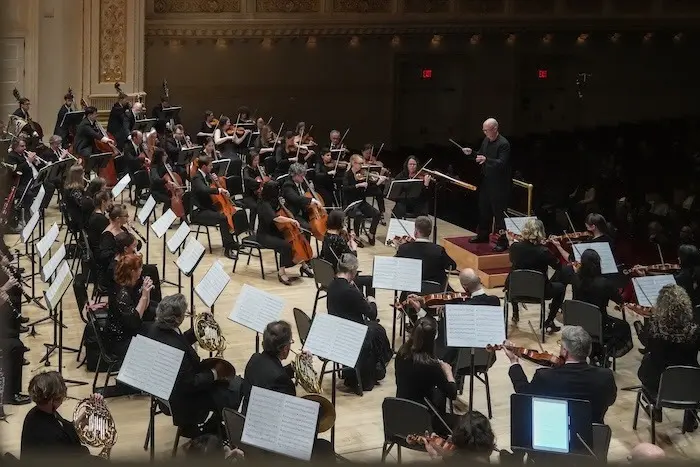
(Credit: Photography by Steve Pisano)
Executive Overview
The Boston Modern Orchestra Project (BMOP), universally recognized as one of the premier champions of 20th- and 21st-century orchestral music, has officially unveiled its highly anticipated 2026–27 season. Guided by the visionary leadership of founder, artistic director, and conductor Gil Rose, the upcoming season cements BMOP’s reputation for fearlessly boundary-pushing programming, high-profile artistic collaborations, and a commitment to preserving and expanding the contemporary classical canon.
Spanning from late autumn 2026 through the height of early summer 2027, the newly announced schedule showcases an eclectic, intellectually rigorous mix of vocal masterworks, major operatic undertakings, regional premieres, and orchestral showpieces. Among the season’s defining highlights are a poignant opening concert featuring celebrated soprano Julia Bullock, a landmark East Coast premiere of a major contemporary opera in collaboration with Odyssey Opera, and a historically resonant semi-staged production that bridges America’s musical past and present.
As arts organizations nationwide grapple with shifting audience demographics and the economic pressures of post-pandemic cultural production, BMOP continues to chart a course defined by uncompromising artistic excellence and institutional resilience. This comprehensive preview explores the trajectory of the 2026–27 season, examining the thematic depth of its programming, the significance of its collaborative partnerships, and the broader cultural implications of Gil Rose’s curatorial vision.
Detailed Chronology & Season Highlights
The 2026–27 calendar is meticulously structured to take audiences on a journey through profound emotional landscapes, historical reflection, and sonic innovation. Below is a detailed chronological breakdown of the core events defining the upcoming season.
1. "Delight of the Muses"
- Performance Date: November 6, 2026
- Featured Artist: Julia Bullock, soprano
- Conductor: Gil Rose
The season opens with a spiritually and emotionally resonant program titled "Delight of the Muses." Anchoring the evening is one of the most beloved works in the American classical vocal canon: Samuel Barber’s Knoxville: Summer of 1915. Setting James Agee’s nostalgic prose poem to music, the work captures a fleeting, idyllic moment of childhood innocence on the brink of profound change.
To bring this masterpiece to life, BMOP welcomes world-renowned soprano Julia Bullock. Celebrated for her luminous vocal tone, interpretive depth, and fearless commitment to contemporary repertoire, Bullock is uniquely positioned to mine the delicate nostalgia of Barber’s score.
The program expands far beyond mid-century lyricism, however, offering a panoramic view of modern composition through three distinct lenses:
- Selections from Matthew Aucoin’s The No One’s Rose: Aucoin, one of the most prominent compositional voices of his generation, brings his characteristic dramatic flair and poetic sensitivity to this vocal-instrumental cycle.
- Anthony De Ritis’s Jiggedy Jingle Jaunty Jaunty: Known for his dynamic integration of electronic elements, popular culture, and traditional orchestral forces, De Ritis’s work promises a rhythmic jolt of kinetic energy.
- Charles Wuorinen’s Eponymous Work: Representing the rigorous intellectualism and uncompromising modernist clarity of the late Pulitzer Prize-winning composer, Wuorinen’s piece serves as a structural pillar for the evening, testing the virtuosity of the BMOP ensemble.
2. JFK (East Coast Premiere)
- Performance Date: March 13, 2027
- Collaborator: Odyssey Opera
- Composers & Librettist: David T. Little (music) and Royce Vavrek (libretto)
- Production Style: Semi-staged
In what is arguably the most anticipated theatrical event of the Boston classical music season, BMOP joins forces once again with Odyssey Opera to present the East Coast premiere of David T. Little and Royce Vavrek’s contemporary opera, JFK.
Originally premiered to critical acclaim, JFK imagines the final hours of President John F. Kennedy and First Lady Jacqueline Kennedy at the Hotel Texas in Fort Worth on the eve of November 22, 1963. Rather than offering a traditional biographical linear narrative, Little and Vavrek construct a surreal, phantasmagoric dreamscape. Historical figures, personal anxieties, political pressures, and the looming specter of national trauma bleed together in a gripping psychological drama.
David T. Little’s score is a masterclass in modern operatic tension, blending propulsive rhythmic drive, haunting lyricism, and cinematic soundscapes. Royce Vavrek’s libretto balances the intimate domestic vulnerability of the presidential couple with the monumental weight of historical destiny. Presented in a semi-staged format, this production will leverage the combined forces of BMOP and Odyssey Opera to deliver an immersive, highly focused dramatic experience that strips away extraneous theatrical distractions to lay bare the raw emotional core of the work.
3. Be Glad Then America
- Performance Date: June 20, 2027
- Collaborator: Odyssey Opera
- Composer: John La Montaine
- Production Style: Semi-staged
The season concludes on a grand, patriotic, yet historically complex note on June 20, 2027, with a semi-staged presentation of John La Montaine’s Be Glad Then America.
Written during a pivotal era of American musical nationalism, La Montaine’s work draws its title and thematic inspiration from a revolutionary-era sermon by patriot minister Timothy Dwight. The piece reflects on the foundational ideals, contradictions, and exuberant identity of the United States. By revisiting this ambitious score, BMOP and Odyssey Opera continue their shared mission of unearthing neglected American masterpieces that challenge, entertain, and provoke critical reflection on national identity.
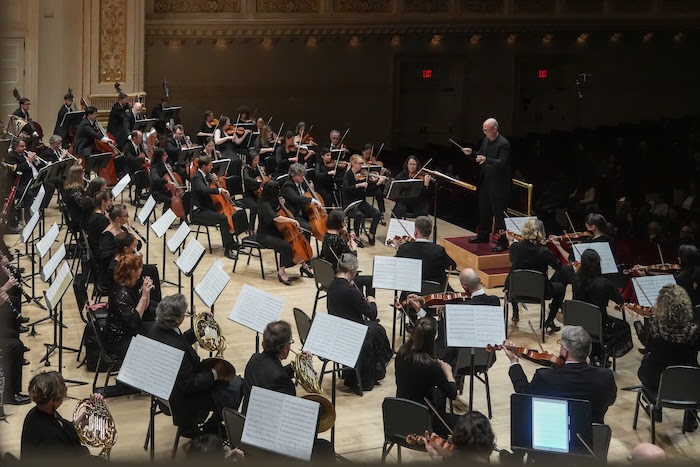
The semi-staged realization of Be Glad Then America will allow audiences to experience a rare synthesis of symphonic grandeur and theatrical presentation, providing a fittingly monumental conclusion to a season defined by artistic ambition.
Supporting Context & Metrics: The BMOP Phenomenon
To fully appreciate the significance of the 2026–27 season, one must examine the institutional framework of the Boston Modern Orchestra Project. Founded in 1996 by Gil Rose, BMOP has spent nearly three decades operating as the premier symphonic organization in the United States dedicated exclusively to the performance and recording of contemporary music.
Institutional Growth and Discography
While many orchestras approach contemporary music with caution—fearing box-office erosion or audience alienation—BMOP has built its entire operational model around the celebration of the living composer. Over the past 30 years, the organization has:
- Commissioned and premiered hundreds of new works by both emerging and established composers.
- Released an extensive, critically acclaimed commercial discography on the BMOP/sound label, earning numerous Grammy Award nominations and wins.
- Collaborated with top-tier soloists, vocalists, and regional arts institutions, cementing Boston’s status as a global hub for new music innovation.
The Power of Synergy: BMOP and Odyssey Opera
The ongoing partnership between BMOP and Gil Rose’s sister organization, Odyssey Opera, represents one of the most successful collaborative models in modern American performing arts. While BMOP focuses primarily on symphonic and concertante repertoire, Odyssey Opera specializes in the exploration of neglected, rare, and contemporary operatic masterworks.
When these two organizations pool their artistic resources—as they will for the productions of JFK and Be Glad Then America—they eliminate the institutional barriers that typically prevent regional opera companies from staging large-scale contemporary works. The resulting performances offer audiences a rare combination of symphonic precision and theatrical immediacy.
Official Statements & Curatorial Philosophy
While specific press statements for the 2026–27 season focus on the rich thematic tapestry of the upcoming programs, Gil Rose’s overarching curatorial philosophy has long been a matter of public record and critical study. In past interviews and institutional addresses, Rose has consistently emphasized that contemporary music is not an esoteric academic exercise, but a living, breathing reflection of human experience.
"Music written today is a direct mirror of the world we inhabit—its anxieties, its joys, its complexities, and its history," Rose has frequently noted when discussing programming strategies. "Our role at BMOP is to act as a conduit between the creator and the listener, ensuring that these vital, challenging, and deeply moving sonic documents are given the highest possible level of professional realization."
The inclusion of artists like Julia Bullock in the 2026–27 lineup speaks directly to this mission. Bullock, known for her advocacy of marginalized voices in classical music and her ability to bridge traditional art song with contemporary idioms, embodies the exact intersection of tradition and innovation that BMOP strives to achieve. Her interpretation of Samuel Barber’s Knoxville: Summer of 1915 juxtaposed against the hyper-modernism of Charles Wuorinen and Matthew Aucoin creates a generational and stylistic dialogue that is the hallmark of a Rose-curated program.
Furthermore, the decision to mount David T. Little’s JFK underscores BMOP and Odyssey Opera’s shared belief that opera must engage with modern history. By staging an opera that deals with political assassination, national grief, and the private lives of public figures, the organizations continue to prove that the lyric stage remains one of our most potent forums for civic and emotional discourse.
Future Outlook: Shaping the Next Era of American Orchestral Music
As the Boston Modern Orchestra Project looks toward its 2026–27 season and beyond, the organization stands as a beacon of artistic integrity in a rapidly evolving cultural landscape. The forthcoming season is not merely a collection of concerts, but a carefully articulated statement on the enduring relevance of orchestral music in the 21st century.
By balancing the nostalgic beauty of Barber with the cutting-edge complexity of Wuorinen and Aucoin, BMOP demonstrates that the past and future of classical music can—and must—coexist. Furthermore, through ambitious collaborative undertakings like the East Coast premiere of JFK, BMOP and Odyssey Opera are actively writing the playbook for how regional arts institutions can mount complex, large-scale contemporary works without sacrificing financial viability or artistic standards.
For subscribers, casual concertgoers, and scholars of contemporary music alike, the 2026–27 season offers an invitation to listen deeply, think critically, and experience the full emotional spectrum of the living orchestral tradition. Under the masterful guidance of Gil Rose, BMOP remains an indispensable pillar of the international music community—one that continues to challenge, inspire, and redefine what an orchestra can achieve.