
Executive Overview
In an era dominated by algorithmic feeds, hyper-targeted digital ads, and infinite scroll fatigue, cutting through the noise has become the ultimate challenge for independent artists. While major record labels pour millions into traditional billboard placements and digital banner campaigns, independent musicians are increasingly forced to think beyond the conventional playbook. Enter acclaimed singer-songwriter, composer, and music supervisor Ankur Tewari, who has upended the Indian music marketing landscape with a brilliantly conceived, interactive guerrilla campaign for his latest Hindi pop-rock album, Mr. Faarigh.
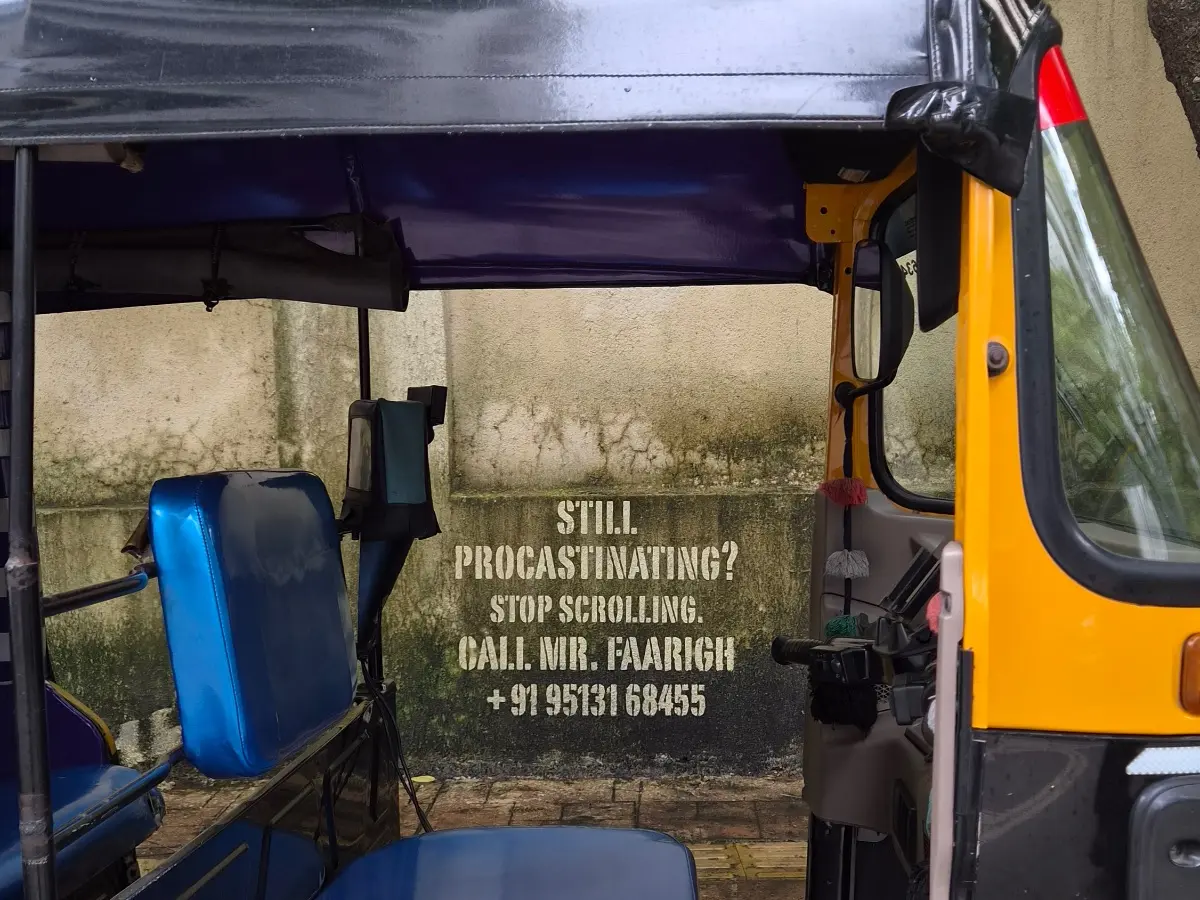
Beginning on a quiet Tuesday morning, residents across the bustling metropolis of Mumbai woke up to an unusual urban phenomenon. Striking graffiti pieces, rendered in both English and Hindi, materialized across high-traffic pedestrian zones. The artwork posed a deceptively simple yet piercing question: "Still procrastinating?" It immediately commanded the viewer to "stop scrolling" and dialed up engagement by inviting them to "call Mr. Faarigh" at a dedicated phone number: +91 95131 68455.
Far from being a disconnected prank, dialing the number plunges the caller straight into the artistic universe of the album. Greeted by the warm, recognizable voice of Tewari—adopting the persona of "Mr. Faarigh"—listeners are invited to unpack their lingering regrets, anxieties, and emotional baggage. Through an interactive voice response (IVR) menu mapping directly to the album’s tracklist, callers are prescribed specific musical remedies based on their personal predicaments.
Conceived by independent label Misfits Inc., executed in collaboration with reverse-graffiti specialists Greenworks, and supported strategically by the Robach Music Group, this campaign represents a watershed moment for the Indian independent music scene. By merging physical guerrilla marketing, interactive telephony, and deeply thematic storytelling, Tewari has bypassed the financial barriers of traditional outdoor advertising while forging an intimate, visceral bond with his audience.
Detailed Chronology: From Street-Level Intrigue to Interactive Audio Immersion
Phase 1: The Seeds of Anticipation (June – August)
The narrative arc of Mr. Faarigh began months before the physical graffiti hit Mumbai’s pavements. Ankur Tewari, a seasoned veteran of both the indie circuit and Bollywood’s composer pool, began quietly seeding the project across his digital footprint. Utilizing the hashtag #MrFaarigh as a breadcrumb trail, Tewari teased the project’s overarching themes. The rollout officially commenced in June with the release of the album’s first single, "1:15AM (After Hours)."
Rather than deploying standard social media rollout schedules—such as countdown reels and lyric video snippets—Tewari and his team at Misfits Inc. laid the groundwork for a psychological journey. The album’s core premise centers on the paralysis of overanalysis, chronicling the various defensive mechanisms humans deploy when confronted with modern anxiety, decision fatigue, and unresolved emotional debt.
Phase 2: The Mumbai Street Takeover (Tuesday Morning)
The campaign shifted from the digital ether to the physical realm on a Tuesday morning, transforming Mumbai’s urban canvas. Utilizing clean, environmentally conscious reverse-graffiti techniques—where stencils are used to power-wash grime off dirty city walls, leaving crisp, temporary messaging behind—Greenworks deployed the campaign across strategic transit points.
Crucially, the graffiti omitted any direct mention of Ankur Tewari or a traditional album title announcement. Instead, it relied entirely on raw human curiosity. Pedestrians waiting for local trains, navigating bustling market streets, or stepping out of office buildings were confronted with the stark, existential prompt: "Still procrastinating? Stop scrolling. Call Mr. Faarigh."
The anonymity was a calculated masterstroke. In a society saturated with corporate signage and celebrity endorsements, the absence of an immediate brand identity compelled passersby to treat the phone number not as an ad, but as a mysterious, peer-to-peer invitation.
Phase 3: The Hotline Encounter
Those who dialed +91 95131 68455 were instantly pulled into an immersive theatrical experience. Instead of a robotic automated menu, callers were welcomed by Tewari himself, fully inhabiting the persona of Mr. Faarigh.
Setting a tone of radical empathy, Tewari’s voice recording opens with a disarming invitation:
"If you’re carrying something unfinished, you’re probably in the right place. Choose what you brought here."
Callers are then presented with a curated menu of nine distinct emotional states and personal crises, each mapped precisely to a composition on the Mr. Faarigh tracklist:
- Option 1: “If someone has backstabbed you and you are still hurting.” Selecting this triggers a searing, therapeutic snippet of the album’s betrayal-themed opening track, “Kasam Se.”
- Option 2: “If the voices in your head are too loud and you need to drown them in the noise outside.” Callers leaning toward this option are met with the pulsing, escapist energy of “1:15AM (After Hours).”
- Options 3 through 9: Corresponding to the remaining tracks on the record, these cover the sprawling spectrum of modern urban malaise—ranging from career paralysis and unrequited longing to existential burnout and the desperate need for stillness.
Beyond passively consuming song previews, callers are given an active platform. At the end of the voice journey, they are invited to record an open-ended voicemail for Mr. Faarigh, with the explicit promise that their thoughts and confessions will "be heard." This two-way street transforms passive listeners into active participants, closing the psychological distance between artist and fan.

Supporting Context & Metrics: Challenging Industry Norms
To fully appreciate the gravity of the Mr. Faarigh campaign, one must examine the systemic constraints of the Indian music industry. For decades, outdoor marketing has remained an exclusive playground for major record labels and massive commercial film soundtracks. High-impact billboards along Mumbai’s Western Express Highway or Delhi’s Ring Road command astronomical monthly rentals—figures that are entirely prohibitive for independent artists operating on lean, self-funded budgets.
By leveraging reverse graffiti, Tewari’s team bypassed municipal advertising fees and traditional media gatekeepers entirely. Reverse graffiti is inherently sustainable, temporary, and non-destructive, making it a darling of modern guerrilla marketing. More importantly, it generates high organic shareability. Commuters who spotted the clean-stencil art on grimy pavement stones naturally photographed them, pushing the mystery onto Instagram Stories, X (formerly Twitter), and WhatsApp groups without requiring paid media amplification.
Furthermore, the campaign directly addresses a profound psychological shift in consumer behavior. Modern music consumers—particularly Gen Z and Millennials—are increasingly cynical about top-down advertising. They crave authenticity, serendipity, and emotional resonance. By framing the album release not as a commercial product launch, but as an open mental health hotline for the chronically procrastinating and over-analyzing, Misfits Inc. successfully transformed a marketing budget into an emotional support tool.
Distribution Architecture
While the marketing campaign was fiercely independent and grassroots-driven, its backend distribution is anchored by global muscle. Ankur Tewari’s music is primarily released under the independent banner of Misfits Inc., while global digital distribution for Mr. Faarigh is managed through a strategic partnership with Empire. This hybrid model allows independent artists to maintain complete creative sovereignty over their conceptual rollouts while ensuring seamless global reach across Spotify, Apple Music, YouTube Music, and other major streaming platforms.
Official Statements and Industry Insights
While formal corporate press releases often lean on sterile corporate speak, the collaborators behind Mr. Faarigh have made it clear that the campaign was designed as a direct counter-narrative to the frictionless, soulless nature of modern digital consumption.
Industry analysts tracking the independent South Asian music market have pointed to the campaign as a potential blueprint for future rollouts. Speaking on condition of anonymity, a prominent Mumbai-based music label executive noted:
"What Ankur and Misfits Inc. pulled off here is nothing short of a clinic in modern engagement. Anyone can buy a banner ad if they have deep pockets. But it takes genuine cultural intuition to look at urban alienation, channel it into a phone number on a dirty wall, and make thousands of strangers feel seen before they’ve even streamed a single second of the record."
The conceptual architecture of the campaign was forged through a multi-agency collaborative effort. While Misfits Inc. spearheaded the overarching creative vision, the physical execution on the streets of Mumbai was masterminded by Greenworks, a specialized reverse-graffiti advertising agency known for eco-friendly urban interventions. Meanwhile, the Robach Music Group served as the core marketing partner, ensuring that the psychological hooks translated effectively from physical public spaces into digital conversion funnels.
Reflecting on the album’s core themes, Tewari has consistently emphasized that Mr. Faarigh is an exploration of the quiet moments of paralysis that define contemporary urban existence. In interviews leading up to the release, the artist noted that society routinely celebrates hustle culture while ignoring the psychological toll of chronic overthinking. By naming the album and its central persona Faarigh—a colloquial term often carrying dual connotations of being unoccupied, idle, or left behind—Tewari reclaims the state of perceived "idleness" as a necessary space for emotional processing.
Future Outlook: The Blueprint for Post-Digital Indie Marketing
As Mr. Faarigh officially hits streaming platforms worldwide, the long-term impact of this campaign on the Indian independent music ecosystem will be closely monitored by artists, managers, and marketing executives alike.
The success of the Mumbai hotline initiative proves that physical-digital hybrid campaigns—often termed "phygital" marketing—hold immense untapped potential in emerging markets. As digital ad fatigue deepens and algorithm costs continue to rise, artists are discovering that true cut-through requires tactile, localized, and emotionally resonant interventions.
Several key takeaways emerge from the Mr. Faarigh rollout that will likely influence future independent music campaigns:
- Anonymity as a Hook: Stripping away immediate branding forces consumers to lean into their innate curiosity, transforming a commercial advertisement into an interactive puzzle.
- Interactive Audio as an Extension of Art: Moving beyond passive listening links, integrating IVR hotlines allows fans to experience an album’s thematic nuances through active, role-played scenarios.
- Eco-Friendly Guerrilla Tactics: Utilizing clean-street and reverse-graffiti techniques offers a cost-effective, sustainable alternative to traditional billboards, aligning with the ethical sensibilities of modern conscious consumers.
- Radical Empathy in Messaging: Campaigns that address mental health, vulnerability, and modern anxiety create immediate psychological bonds that traditional hype-driven marketing simply cannot replicate.
Ultimately, Ankur Tewari has proven that you do not need a major-label war chest to capture the imagination of a megalopolis like Mumbai. By meeting listeners where they are—stuck in traffic, staring at their phones, and grappling with unfinished business—Mr. Faarigh has successfully turned the universal pain of procrastination into a soaring celebration of independent art.