
Executive Overview
In the realm of musical pedagogy, few skills are as universally acknowledged in their importance yet as chronically underdeveloped as sight-reading. For generations, instrumentalists and vocalists alike have approached the score with a sense of dread, treating sheet music not as a vibrant, living language, but as a cryptographic puzzle to be laboriously decoded note by painful note.
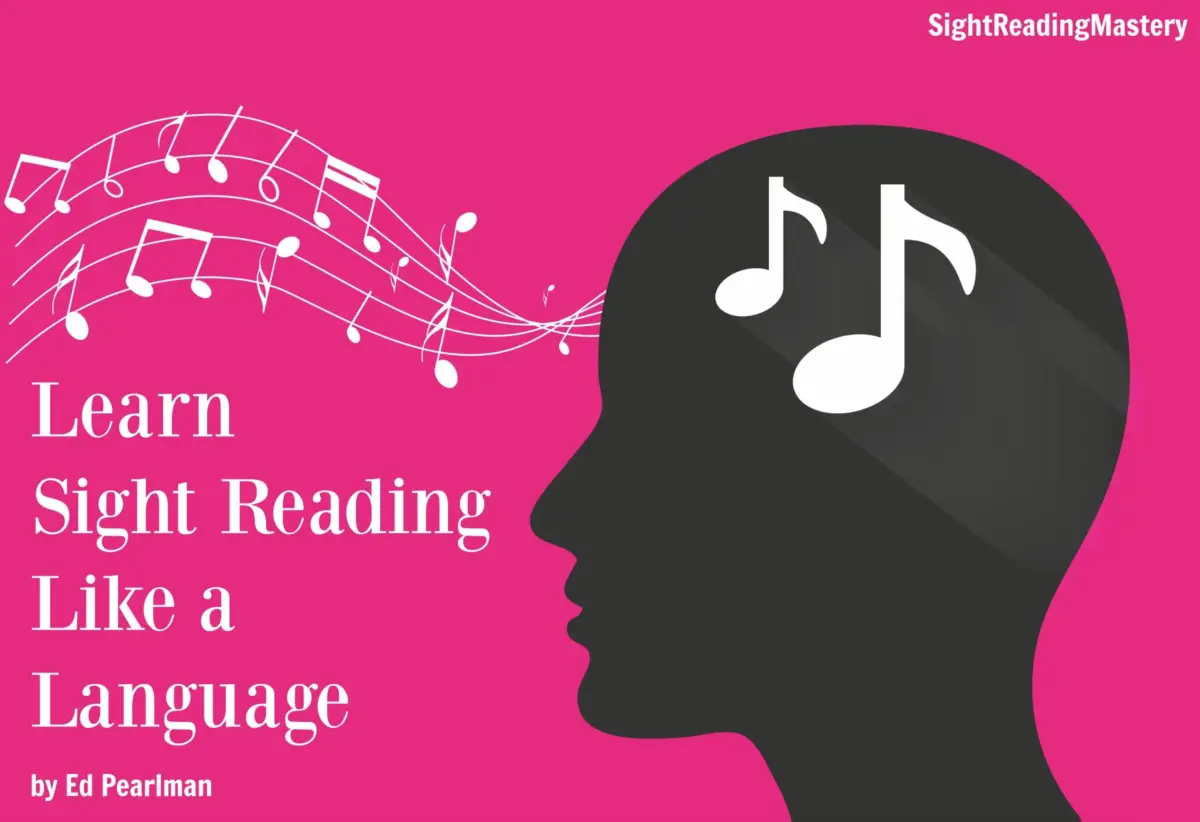
According to seasoned classical violinist, fiddler, and educator Ed Pearlman, this friction-heavy approach is fundamentally flawed. In an authoritative essay on musical literacy, Pearlman posits that true musical fluency mirrors linguistic fluency. When an individual learns a spoken language—such as acquiring the Spanish phrase “buenos días”—the ultimate objective is direct comprehension. The speaker does not pause to mentally translate the words into their native tongue ("good morning"); rather, the meaning is ingested and expressed natively.
Translation offers a comforting validation check, but it acts as a debilitating bottleneck to fluid communication. In music, this bottleneck manifests when a performer looks at the staff, translates the graphical symbols into letter names, converts those letters into physical fingerings, cross-references correctness, and finally executes the sound. In real time, this serial processing is mathematically impossible to sustain within a strict tempo.
This comprehensive report explores Pearlman’s revolutionary, five-tiered progressive framework designed to transform sight-reading from a burdensome intellectual translation exercise into an intuitive, subconscious reflex. By breaking down the cognitive architecture of reading music, this guide offers musicians of all instruments a definitive pathway toward effortless sight-reading mastery.
The Cognitive Paralysis of Mental Translation
To understand why traditional sight-reading instruction so frequently fails, one must examine the neuro-cognitive constraints of human processing. When musicians read a new piece of music note-by-note, they overload their working memory. Working memory is famously finite; psychological research suggests it can comfortably hold only a small handful of discrete items at any given moment.
When a performer attempts to consciously register the clef, decipher a notehead’s vertical position, recall its literal pitch name, determine its corresponding physical location on the instrument (such as fret, valve, or fingerboard), and decide upon a dynamic and articulation marking all for a single note, working memory collapses. Multiply this cognitive load by a tempo of 120 beats per minute, and the result is inevitable: hesitation, stuttering, loss of pulse, and profound performance anxiety.
Music, much like spoken language, relies on gestalt principles—the perception of wholes rather than isolated parts. A fluent reader does not read individual letters ($c$-$a$-$t$); they instantly process the entire word (cat). Similarly, a fluent sight-reader does not parse individual dots on a page; they process comprehensive rhythmic groupings, contour profiles, and harmonic intervals at a glance.
Pearlman’s methodology bridges the gap between mechanical decoding and true musical literacy. By isolating specific cognitive layers—rhythm, contour, tonality, intervals, and absolute pitch names—musicians can systematically train their brains to bypass the mental translation barrier entirely.
A Progressive Framework: The Five Levels of Sight-Reading Fluency
Pearlman’s instructional model is structured hierarchically. Musicians are advised to master each level independently before layering them together. Crucially, these pedagogical levels are distinct from the difficulty grading systems found in standardized sight-reading libraries; they represent cognitive strategies, not technical hurdles.
[Level 1: Rhythms Only]
       ↓ (Add)
[Level 2: Note Profile]
       ↓ (Add)
[Level 3: Focusing the Picture (Tonality)]
       ↓ (Add)
[Level 4: Seeing Intervals]
       ↓ (Add)
[Level 5: Names of Notes (Optional)]
Level 1: Rhythms Only — Securing the Temporal Foundation
The foundational layer of sight-reading is not pitch, but time. In Level 1, the performer selects a stable tempo and focuses exclusively on tapping, clapping, or speaking the rhythm of an unpitched passage.
- The Core Objective: To shift the brain away from single-note monitoring and toward holistic rhythmic visualization. Rhythms possess zero meaning in isolation; they derive their entire artistic value from their relationship to adjacent durations.
- The Pedagogical Insight: Pearlman punctuates this concept with a classic musical adage: A violist goes up to a violinist and boasts that he can play 64th notes. The violinist replies, "Splendid, let’s hear one!" The joke highlights the absurdity of isolating micro-elements without a functional framework. By mastering the rhythmic architecture first, the performer establishes an unshakeable temporal grid upon which pitches can later be safely hung.
Level 2: Note Profile — Mapping the Contour
Once the rhythmic grid is secure, the musician introduces the spatial dimension of the score, but without the burden of absolute pitch accuracy.
- The Core Objective: To track the physical trajectory of the notes—whether they ascend, descend, or remain stationary relative to one another—while strictly maintaining the rhythmic tempo established in Level 1.
- The Pedagogical Insight: The human eye is naturally equipped to recognize topographic contours. By viewing an entire measure’s profile as a graphical landscape (peaks, valleys, and plateaus), the musician trains their visual cortex to process directional motion instantly. If a passage steps upward, the pitch must rise; the exact name of the note is temporarily secondary to maintaining temporal continuity and directional integrity.
Level 3: Focusing the Picture — Establishing Tonality
With rhythm and contour mastered, Level 3 injects the stabilizing force of key signatures and tonal orientation.
- The Core Objective: Before sight-reading the passage, the musician must analyze the key signature, explicitly perform a scale within that key, and mentally map out the structural placement of half-steps.
- The Pedagogical Insight: During execution, the golden rule of Level 3 is inviolable: Never compromise the tempo or the contour. If uncertainty arises regarding a specific pitch, the musician is encouraged to make an educated guess based on the tonal center rather than pausing or dragging the tempo. Mistakes in pitch are acceptable casualties of fluid reading; timing errors are fatal. For practitioners struggling with this transition, Pearlman recommends slowing the metronome or breaking down the exercise into micro-chunks of one to two measures.
Level 4: Seeing Intervals — Recognizing Geometric Shapes on the Staff
Level 4 moves the performer from general contour recognition to precise geometric shape-matching on the staff.
- The Core Objective: To visually decode the exact structural distance between notes.
- The Pedagogical Insight: Musicians must learn to recognize intervals not as abstract mathematical distances, but as visual shapes:
- Steps (Seconds): Consecutive notes moving dynamically from a line to a space, or a space to a line.
- Thirds: Movement from a line to the very next line up or down, or from a space to the next adjacent space.
- Larger Leads (Fourths, Fifths, and beyond): Wider intervals require dedicated exposure, such as recognizing a fifth as spanning across three lines or three spaces. Through repetitive immersion, these geometric shapes bypass conscious calculation and trigger immediate physical responses on the instrument.
Level 5: Names of Notes — The Optional Analytical Layer
The final tier of Pearlman’s framework addresses the traditional cornerstone of music education: absolute note-naming.
- The Core Objective: To mentally articulate or vocalize the literal letter names of the notes while simultaneously playing them in time.
- The Pedagogical Insight: In a striking pedagogical pivot, Pearlman notes that naming the notes is entirely optional for fluent sight-reading. Because literal note-naming is not strictly required for the direct language-processing of music, it sits atop the hierarchy as a diagnostic test. If a musician can successfully execute rhythm, contour, tonality, and intervals while concurrently thinking or speaking note names, they have achieved elite cognitive multi-tasking. For those experiencing friction here, targeted tools such as dedicated note-recognition software can accelerate fluent symbol-to-name mapping.
Supporting Context & Metrics: The Science of Musical Literacy
To contextualize Pearlman’s methodology, it is valuable to examine the broader pedagogical shift occurring within music academies worldwide. For decades, traditional conservatories prioritized master-class repertoires—forcing students to spend months grinding down a single concerto—while treating sight-reading as an innate talent rather than a trainable skill.
| Traditional Approach | Modern Fluency Approach (Ed Pearlman Framework) |
|---|---|
| Note-by-Note Decoding: Translating symbols to letter names individually. | Gestalt Processing: Reading entire rhythmic and contour phrases holistically. |
| Perfectionism at All Costs: Pausing and correcting every single pitch error. | Temporal Inviolability: Prioritizing steady tempo and pulse above isolated pitch perfection. |
| Implicit Learning: Assuming sight-reading improves magically through raw exposure. | Systematic Layering: Isolating rhythm, contour, tonality, and intervals progressively. |
Cognitive scientists studying auditory-motor integration note that expert sight-readers exhibit unique neural efficiency. Functional MRI studies reveal that advanced readers process musical notation via predictive coding—their brains anticipate upcoming musical syntax fractions of a second before execution, much like a fluent reader anticipates the end of a sentence in prose. By stripping away the cognitive drag of mental translation through Pearlman’s leveled approach, developing musicians can actively rewire their neural pathways to mirror this elite predictive capability.

Official Perspectives and Expert Guidance
Ed Pearlman brings a rare breadth of authority to this discussion. Having spent 25 years studying and performing classical violin in cultural hubs like Chicago and Boston, followed by 35 dedicated years deeply immersed in traditional fiddle styles across North America and Scotland, Pearlman’s perspective bridges the often-fractured worlds of strict classical literacy and organic, ear-driven folk traditions.
Through his extensive work—including private instruction, international workshops, and his comprehensive digital platform Fiddle-Online—Pearlman has consistently championed the philosophy that technical mastery must serve artistic communication rather than stifle it.
Reflecting on the psychological barriers faced by adult learners and advanced students alike, Pearlman emphasizes that frustration in sight-reading is almost universally a symptom of biting off too much cognitive load at once. By consciously compartmentalizing the learning process into discrete sensory channels—first capturing the pulse, then the topography, then the key, and finally the geometric intervals—instructors can lower affective filters, eliminate performance anxiety, and unlock rapid, sustainable progress.
Future Outlook: The Digital Evolution of Musical Fluency
As musical education continues to merge with digital innovation, the methodologies outlined by educators like Ed Pearlman are becoming increasingly accessible to a global audience. Platforms dedicated to systematic sight-reading development—coupled with interactive digital tools, automated rhythm checkers, and adaptive note-recognition software—are democratizing elite conservatory training.
Looking toward the future, the integration of artificial intelligence and real-time audio analysis promises even more personalized training pipelines. Future pedagogical tools will likely be capable of diagnosing precisely where a student’s cognitive bottleneck lies—whether they are lagging in rhythmic tracking or hesitating at wide intervallic leaps—and automatically generate targeted exercises modeled on Pearlman’s five-level framework.
Ultimately, however, technology remains merely a delivery mechanism for timeless cognitive principles. Whether utilizing traditional paper folios or cutting-edge digital workstations, the fundamental truth remains unchanged: mastery of the musical language requires moving past the clumsy crutch of internal translation. By embracing a structured, multi-tiered approach to sight-reading, musicians can finally silence their inner translator, step onto the stage with unshakeable confidence, and begin to speak the universal language of music with native fluency.