
Executive Overview
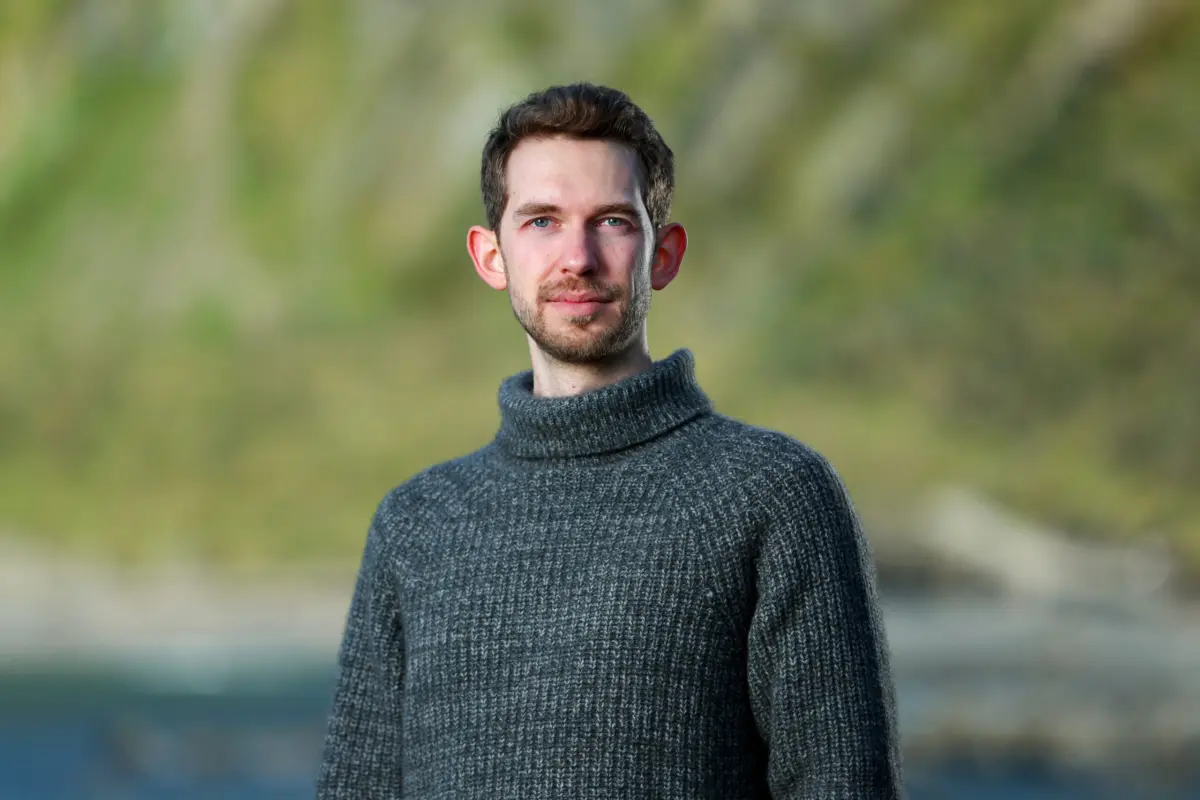
In the contemporary landscape of classical and post-classical music, few voices are exploring the intersection of environmental philosophy and auditory art with the urgency and depth of Nicholas Denton Protsack. Named as the laureate for the prestigious 2026 Azrieli Commission for Canadian Music, the New Zealand-based Canadian composer and cellist has steadily built a reputation as a visionary creator. Praised by the Canadian Music Centre as a “composer to keep a close eye on,” Protsack’s multifaceted career spans continents, challenging conventional paradigms of how art interacts with the physical world.
At the center of this latest career milestone is his ambitious new work, Height of Land—a sprawling, immersive piece scored for chorus, orchestra, and solo cello. The composition serves as a profound interrogation of what it means to author "Canadian music" in the 21st century. Rather than merely treating nature as an illustrative backdrop or a passive source of programmatic inspiration, Protsack’s work grapples with complex concepts such as environmental listening, ecological reciprocity, and cultural-ecological renewal.
In this exclusive interview, OperaWire speaks with Protsack about the intricate architecture of Height of Land, the philosophical burdens and breakthroughs of creating ecologically minded art, his unique concept of "musical ecopoiesis," and the diverse lineage of influences that inform his singular musical language.
Detailed Chronology and Artistic Evolution
To understand the weight of the 2026 Azrieli Commission, one must trace the trajectory of Nicholas Denton Protsack’s artistic evolution. Growing up in the dramatic landscapes of British Columbia’s Okanagan Valley, Protsack was immersed early on in natural soundscapes that would fundamentally shape his aesthetic framework. His formal musical journey began with classical training on the cello, an instrument that remains central to both his performance career and his compositional output.
Throughout his development, Protsack’s practice has resisted easy categorization. His works have traveled across North America, Europe, and New Zealand, earning critical acclaim and drawing commissions from forward-thinking ensembles and institutions, including Stroma, the National Youth Orchestra of Canada, the Toronto Summer Music Festival, and Ensemble for These Times.
The culmination of these diverse experiences crystallized during his doctoral studies, where he formulated the term "musical ecopoiesis"—a framework designed to describe music that operates on a collaborative, reciprocal basis with the more-than-human world. This theoretical and practical breakthrough laid the groundwork for Height of Land, a composition that elevates his ecological philosophies to a symphonic scale. By securing the Azrieli Commission, Protsack enters a lineage of esteemed creators, positioning his work at the vanguard of contemporary Canadian composition and signaling a pivotal moment in his international career.
Supporting Context, Concepts, and Metrics
The implications of Height of Land extend far beyond traditional concert programming, touching upon critical contemporary dialogues surrounding climate change, resource extraction, and the decolonization of artistic practices.
The Philosophy of "Musical Ecopoiesis"
Traditional art music has a long history of pastoral depiction—think of Vivaldi’s The Four Seasons or Beethoven’s Pastoral Symphony. However, these works largely function as human-centric representations of nature, bringing external environments into the human-controlled space of the concert hall. Protsack’s concept of ecopoiesis seeks to dismantle this unidirectional dynamic. It asks whether post-classical music can achieve reciprocity with the natural world, functioning not just about the land, but with and for the land and its human and more-than-human inhabitants.
Structural and Sensory Dimensions
Scored specifically in the order of chorus, orchestra, and cello solo, Height of Land integrates natural-material percussion instruments to bypass mere aesthetic appropriation. By employing sounds and materials native to the environment—while consciously avoiding the exploitation of ecosystems for purely pleasing artistic tropes—Protsack aims to transform the concert hall itself into an active landscape. Furthermore, Protsack’s personal experience with synesthesia—wherein sound manifests as physical shapes and textures in space rather than colors—infuses his scoring with a tactile, spatial dimension that challenges both performers and listeners to perceive audio as a physical architecture.
Official Statements and Dialogue: An Interview with Nicholas Denton Protsack
OperaWire: What is the name of your piece and what inspired it?
Nicholas Denton Protsack: Height of Land—for chorus, orchestra, and cello solo (specifically in that order). Although it contains many ecological sources of inspiration, there are a few underlying questions that the work is centred upon: can post-classical "concert music" exist on a reciprocal basis with the natural world? That is, is it possible to create such music that isn’t just about the land, but is created collaboratively with the land, and for its explicit benefit (including both human and more-than-human inhabitants)? If this isn’t yet possible—and one should note there are many Indigenous musical practices in which it is—what can the world of post-classical music do to get closer to achieving this?
OW: Describe the musical language of your piece and how you arrived at it.
NDP: I think, first and foremost, the musical language is centred upon authenticity. It isn’t just depictive or representative of nature: it attempts to work directly with the sounds and materials of nature (including several natural-material percussion instruments). There is a concerted effort to avoid extracting the aesthetically pleasing parts of nature and leaving everything else out, and instead it musically engages with almost everything one might observe in an environment. Many of the soundscapes contained in the work are meant to evoke those I grew up in, in the Okanagan Valley (British Columbia).
Ultimately, it is an immersive musical language that avoids "bringing nature into the concert hall" and instead attempts to break down the walls (both literal and metaphorical) of the concert hall, transforming it into a landscape of its own. In other words, the intention of the language is to bring the concert hall into nature. I arrived at this language naturally, through the questions I described above.
OW: What inspires your creative process?
NDP: As I have already touched on a bit, my process is highly inspired by the world around me, particularly the more-than-human-world. In my work, I have tried to find as many musical dimensions as possible that can operate on a collaborative basis with the more-than-human world. This is a process I have come to call "musical ecopoiesis"—a term which I developed during my doctoral studies.
In addition to that, I have found that many of my past works are inspired by imposing creative constraints on myself—like writing in palindromes—as well as childhood memories, extramusical things, people and ideas that I find interesting, and references to other works of music as a form of symbolic communication. I also experience a form of synaesthesia in which sound appears as physical shapes and textures in space—color rarely factors in, however.
OW: What were some challenges you experienced while creating this work?
NDP: To serve the purpose of the work, I had to heavily scrutinize what I do as an ecologically-minded composer. Does my work really engage collaboratively with the world around me, or am I just cherry-picking the parts of nature that are aesthetically interesting to me and translating them into music? What are the problems with doing that whilst ignoring the troubling areas where nature has been exploited by people (who in doing so often exploit other people)? How do I even write music about this without being self-righteous or—worse—developing some kind of a saviour complex?
OW: What do you hope audiences take away from the experience of your piece?
NDP: Typically, I am happy with whatever narratives, images, or other things my listeners take from my music, as I think no experience of music is inherently wrong. That being said, I see Height of Land ultimately as a work that looks hopefully towards a world in which collective reciprocity with nature (and by extension one another) can exist. A world that recognizes that violence against nature is violence against people, and vice versa. It is not a work that makes any claims about how to "solve the problem," but rather one that recognizes that while there is much to be done, it is not too late to turn things around.
OW: On a personal note, what inspired you to become a composer? Who are some of the composers that inspire you?
NDP: In some ways, it’s hard to remember any single thing that inspired me to become a composer. I think growing up was a gradual process of realizing that I was always meant to be one. I began with music lessons—I am also a professional cellist—at an early age, and composing and improvising music was always a part of that, and something that I felt compelled to do.
My favourite musical creators often fluctuate and change over time. When I was younger and less in-the-know about living composers, I took a particular liking to Messiaen, Dutilleux, Bartók, and Ligeti. In more recent years, however, I have found a lot of joy and interest in the work of composers like Liza Lim, Pauline Oliveros, Gabriella Smith, R. Murray Schafer, Christophe Bertrand, and composers who can’t really be classified as classical like Björk, Owen Pallett, Raven Chacon, Alex Sopp, St. Vincent or SOPHIE (if I’m feeling upbeat), and, lately, Nick Drake and the early work of Phil Elverum. I also am a big fan of a number of New Zealand composers who I have had the pleasure of collaborating with: Michael Norris, Salina Fisher, Elliot Vaughan, and Tristan Carter to name several.
Future Outlook
As Nicholas Denton Protsack steps into his tenure as the 2026 Azrieli Commission laureate, the classical music community watches with anticipation. Height of Land represents a vital milestone not only for Protsack’s personal catalog but for the broader genre of Canadian contemporary music. By confronting the ethical dilemmas of representation, structural exploitation, and environmental degradation head-on, Protsack proves that classical music can remain relevant, provocative, and deeply engaged with the pressing crises of the 21st century.
Looking forward, the premiere of Height of Land will undoubtedly spark vital conversations regarding how institutions, performers, and creators engage with the natural world. In bridging the divide between ecological activism and symphonic composition, Protsack offers a model of artistic integrity that resonates far beyond the proscenium arch—pointing the way toward an auditory future grounded in reciprocity, awareness, and hope.