
Executive Overview
The intersection of artificial intelligence and digital audio workstations (DAWs) has long been a battleground of intense debate, marked by fears of displacement, copyright infringement, and the homogenization of art. However, as the software landscape evolves, prominent industry stakeholders are beginning to articulate a more nuanced perspective. Robert Linke, the Chief Product and Technology Officer of Image-Line—the pioneering company behind the globally renowned DAW FL Studio (formerly known as Fruity Loops)—recently offered a refreshing paradigm shift.
Speaking extensively on the Music Ally Focus podcast alongside Image-Line CEO Constantin Köhncke, Linke argued that generative AI music tools should not be viewed as an existential threat to human creativity. Instead, they serve as a powerful, low-friction funnel, introducing complete beginners to the foundational concepts of music-making. According to Image-Line’s leadership, text-to-audio prompts and consumer-facing generative platforms lower the barrier to entry, sparking an initial creative impulse that eventually drives users toward deeper, more sophisticated human-driven workflows within traditional software environments like FL Studio.
At the same time, Image-Line remains fiercely protective of the artistic ecosystem that sustains its user base. The company has drawn strict, unyielding boundaries regarding how artificial intelligence is integrated into its software suite. Emphasizing a philosophy rooted in ethical model training, fair compensation for rights holders, and strict functional utility, Image-Line is positioning itself as a pragmatic steward of technology. Rather than chasing fleeting tech trends or deploying AI "for AI’s sake," the company insists that any automated feature must solve a previously intractable problem for the producer. This comprehensive analysis explores Image-Line’s strategic vision, the psychological journey of the modern bedroom producer, the ethical frameworks guiding future software development, and what this means for the broader future of music creation.
The Evolution of the DAW: From Fruity Loops to an AI-Adjacent Ecosystem
To understand Image-Line’s current stance on artificial intelligence, one must first look at the historical trajectory of FL Studio. Launched in the late 1990s as a simple MIDI step sequencer under the moniker Fruity Loops, the software democratized electronic music production. Long before cloud collaboration and sophisticated VST plugins became ubiquitous, FL Studio provided an intuitive, pattern-based workflow that allowed aspiring beatmakers—many of whom lacked formal training in music theory or traditional instrumentation—to craft professional-sounding tracks in their bedrooms.
Over the past two decades, the software has evolved into a powerhouse digital audio workstation utilized by top-tier hip-hop, EDM, and pop producers worldwide. Yet, the foundational ethos of the company has remained consistent: lowering barriers to entry while offering infinite depth for advanced users.
Now, the emergence of generative AI represents the next major technological wave threatening to disrupt—or expand—the music production pipeline. While many traditionalists view text-to-music generators as malicious copycats built on scraped catalogs, Image-Line’s leadership views them as a novel top-of-funnel discovery mechanism.
"It gets a lot more people around the planet in touch with interacting with music in a more creative way," Linke explained during the podcast interview. "Nowadays, you basically just can prompt your idea, which might not be the most creative thing you’ve ever done, but it might be the very first time you actually create a piece of music… And that leads a lot of people to go further downstream."
In Linke’s view, the limitations inherent in consumer-facing generative AI tools act as a natural filter. Once a novice user exhausts the creative boundaries of a simple prompt-based platform—realizing that they cannot deeply manipulate individual stems, shape specific sound design parameters, or achieve granular mixing control—they hit a creative ceiling. That frustration, paradoxically, becomes the catalyst for growth. Users seeking genuine authorship look for the next step, frequently downloading a fully fledged DAW like FL Studio to take absolute control over their sonic vision.
Demystifying the Funnel: How Generative Prompts Lead to Deep Production
The concept of a technological "funnel" is well-established in software marketing and consumer behavior, but its application to music creation is remarkably unique. Traditionally, the pathway to becoming a music producer required a significant investment of time, capital, and cognitive energy. Aspiring creators had to learn the basics of digital audio workstations, understand signal flow, master MIDI editing, and spend months—if not years—overcoming the steep learning curve before producing something listenable.
For millions of casual consumers, this friction was simply too high. Consequently, they remained passive listeners rather than active creators. Generative AI tools have fundamentally altered this dynamic by decoupling immediate creative gratification from technical proficiency.
The Journey of the Modern Novice Producer:
- The Spark (Generative Prompting): A user with no prior musical background inputs a text prompt (e.g., "An upbeat synthwave track with a driving bassline"). Within seconds, the AI generates a complete piece of audio.
- The Realization of Limitations: While the output is superficially impressive, the user quickly discovers they cannot easily change a specific chord, swap out a substandard snare sample, or alter the emotional arc of the bridge without generating an entirely new track.
- The Search for Control: Frustrated by the black-box nature of generative platforms, the user seeks tools that offer granular editing capabilities.
- The Migration Downstream: The user downloads FL Studio or a similar DAW, realizing that true creative satisfaction requires hands-on arrangement, mixing, and sound design.
Linke acknowledges that while text prompts are a brilliant gateway, they are fundamentally "not the ideal way to start getting into making music" over the long term. True artistic fulfillment, according to Image-Line, comes from the friction and triumph of individual choices—selecting a specific synthesizer patch, tweaking an envelope filter, or manually drawing in a drum pattern. Generative AI merely serves as the spark that ignites the fire, convincing individuals who previously saw music as something consumed to view it as something they can actively participate in.
Ethical Red Lines: Image-Line’s Principles for AI Integration
While Image-Line recognizes the top-of-funnel benefits of external generative AI, the company maintains a rigorous and principled approach when considering artificial intelligence integration inside its own workstation. As AI features have gradually been introduced into FL Studio over the past few years, the development team has established non-negotiable boundaries. These guidelines address the two primary anxieties plaguing the contemporary music industry: copyright theft and gimmicky, uninspired software bloat.
1. The Imperative of Ethical Training Data
The most contentious issue surrounding generative audio models is the unauthorized scraping of copyrighted sound recordings, compositions, and artist catalogs to train neural networks. Image-Line has drawn a definitive line in the sand on this matter.
"Whatever model we tie into FL studio… needs to be ethically trained, so it can’t be trained on data where the rightsholder of that data hadn’t been compensated for that. That’s really important," Linke stressed.
By insisting on transparent, consent-driven, and properly compensated training datasets, Image-Line distances itself from the predatory practices adopted by certain tech startups and unregulated generative platforms. For professional producers whose livelihoods depend on copyright protection, this commitment offers crucial peace of mind. It ensures that any native AI tool embedded within FL Studio respects the intellectual property rights of the broader music community.
2. Functional Utility Over Technological Gimmicks
In an era where every software developer feels compelled to slap an "AI-powered" label onto their product to appease investors and capture headlines, Image-Line advocates for restraint and pragmatism. Artificial intelligence models—particularly those dealing with audio processing, separation, and generation—are computationally heavy, resource-intensive, and expensive to run.
Because of these steep computational costs, Image-Line refuses to implement AI features simply for the sake of marketing hype.
"It also needs to be better than a more traditional solution. Just providing AI for AI’s sake doesn’t make a lot of sense in our view, because it’s very expensive. It’s very heavy type of technology. So it really needs to help to do something and accomplish something that has been very difficult before."
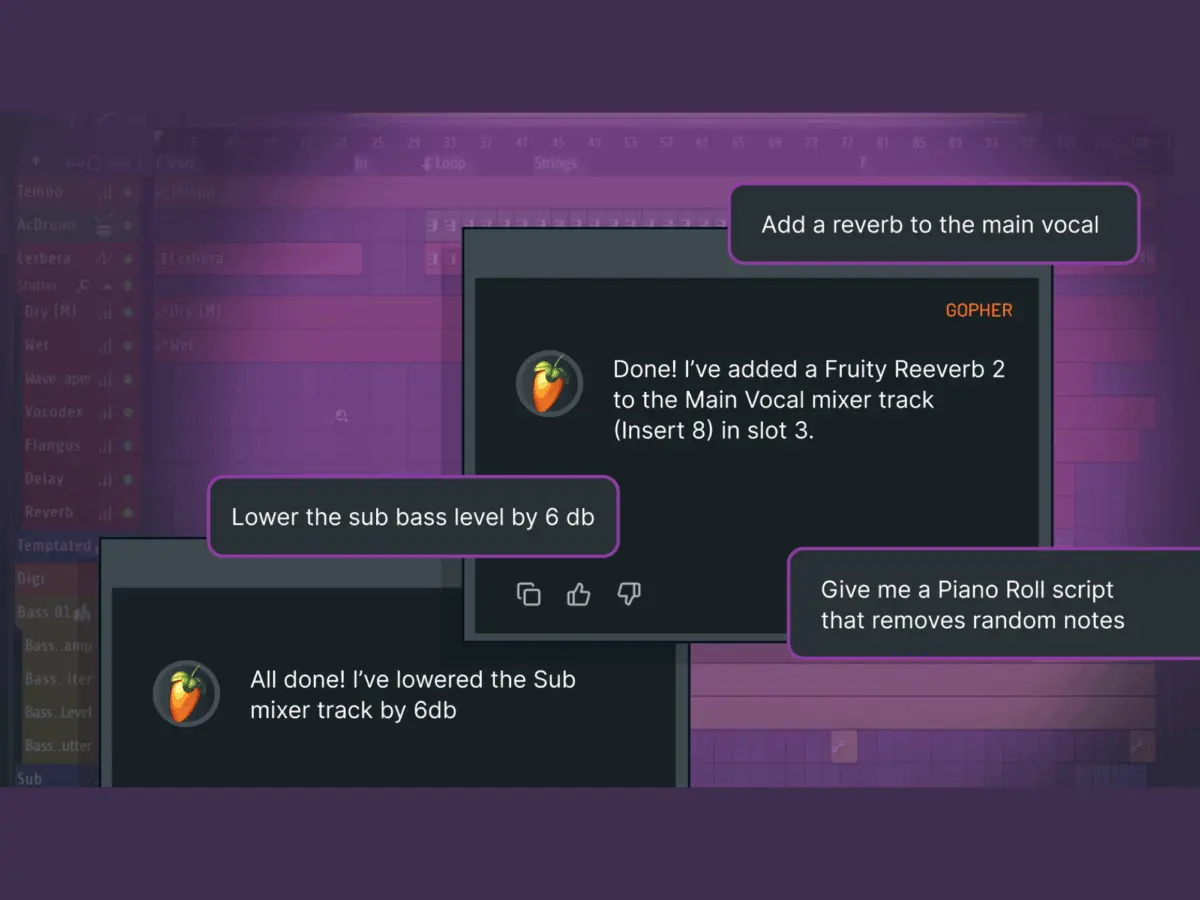
This utilitarian philosophy ensures that when AI features are introduced into FL Studio, they serve a clear, practical purpose. Whether it is advanced stem separation, intelligent vocal tuning assistance, or automated mixing suggestions, the technology must genuinely alleviate long-standing production bottlenecks rather than introduce unnecessary complexity.
The Great Hypocrisy: Public Posturing vs. Private Practice
A fascinating secondary theme highlighted in the discussion between Image-Line’s leadership and the Music Ally Focus podcast is the glaring contradiction between how musicians discuss artificial intelligence in public versus how they utilize it behind closed doors.
In public forums, social media threads, and industry panels, artists and producers frequently express deep hostility toward artificial intelligence. Many publicly posture as staunch abolitionists, pledging never to touch AI-generated tools, condemning the technology as an artistic abomination, and demanding sweeping legislative bans.
However, behind studio doors, the reality is vastly different. Industry insiders and software developers alike observe a widespread, quiet adoption of AI-driven utilities. Producers frequently rely on AI-powered spectral repair plugins, intelligent mastering assistants, automated vocal alignment tools, and stem splitters to streamline their daily workflows.
Image-Line’s leadership navigates this psychological landscape with pragmatic understanding. Rather than judging producers for this hypocrisy, they recognize that the term "artificial intelligence" has become an emotional lightning rod. When artists rail against AI, they are usually condemning the unauthorized theft of their likeness and styles by tech conglomerates, rather than cursing the utility of a smart algorithm that saves them three hours of manual audio editing during a tight mixing session. By focusing on ethical transparency and practical workflow enhancements, Image-Line aims to bridge this emotional gap, providing tools that producers can utilize with a clear conscience.
Industry Context: The Broader Landscape of AI in Music Production
Image-Line’s measured approach does not exist in a vacuum. The entire music software industry is currently grappling with how to integrate machine learning without alienating its core consumer base. Competitors ranging from major hardware manufacturers to boutique plugin developers are rolling out various forms of intelligent software.
| Company / Product | AI Integration Strategy | Industry Reception |
|---|---|---|
| Image-Line (FL Studio) | Focused on ethical training data, fair compensation for rights holders, and strict utility-driven features that solve hard problems. | Cautiously optimistic; praised for respecting intellectual property rights and avoiding gimmicks. |
| Open AI / Consumer Generators | Standalone text-to-music prompts designed to generate complete compositions instantly from scratch. | Highly controversial; criticized heavily by major labels and trade bodies for uncompensated data scraping. |
| Traditional Audio Plugin Brands | Integration of machine learning for mixing assistance, transient shaping, noise reduction, and pitch correction. | Broadly accepted privately, though publicly scrutinized under the broader "AI" umbrella. |
As regulatory bodies in the European Union, the United States, and elsewhere begin to draft legislation governing copyright and AI training transparency, companies that have prioritized ethical foundations—like Image-Line—are exceptionally well-positioned to weather upcoming legal storms. Software that relies on legally ambiguous, scraped datasets faces an increasingly perilous future, whereas ethically sourced models provide long-term stability for both developers and users.
Future Outlook: Where Do DAWs and AI Go From Here?
Looking ahead, the relationship between digital audio workstations and artificial intelligence is poised to mature rapidly. The initial phase of wild-west experimentation and defensive panic is gradually giving way to pragmatic integration.
Image-Line’s vision offers a compelling blueprint for this next era. By treating generative AI not as a replacement for human artistry, but as an onboarding ramp for the next generation of creators, the company is redefining how musical talent is cultivated. As more novices transition from prompt-based platforms into fully fledged DAWs, the overall population of active, engaged music makers will expand dramatically.
At the same time, the strict criteria demanded by Image-Line—ethical training, mandatory compensation for rights holders, and strict functional necessity—will likely become the gold standard across the software industry. Producers do not want their workstations cluttered with sluggish, ethically compromised gimmicks; they want intelligent, high-performance tools that respect their labor and enhance their creative output.
Ultimately, Robert Linke and Constantin Köhncke’s insights remind us that the heart of music-making has never resided in the tools themselves, but in the human impulse to express emotion through sound. Whether an artist begins their journey by typing a sentence into a generative prompt or by dropping a kick drum sample onto a blank timeline, the destination remains the same: the pursuit of unique, deeply human creative expression. And as long as software companies provide the ethical framework and the deep, granular controls required to shape that expression, the future of music production remains bright, resilient, and undeniably human.