
Executive Overview
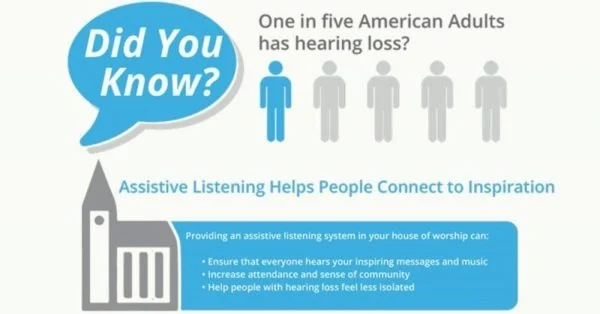
In an era where houses of worship strive to foster environments of radical inclusion, the acoustic experience remains a silent barrier for millions. Across the globe, millions of individuals struggle with varying degrees of hearing loss, often finding themselves disconnected from the sermon, the music, and the vital communal fellowship that defines congregational life. For these individuals, standard architectural acoustics—frequently plagued by reverberation, distance, and ambient noise—transform weekly worship into an exercise in isolation rather than inspiration.
To combat this widespread challenge, forward-thinking faith communities are increasingly turning to advanced Assistive Listening Systems (ALS). These technologies are no longer viewed as mere accommodations for a niche demographic; rather, they are recognized as essential tools for universal accessibility, ensuring that the spoken word and the emotional resonance of worship are delivered with absolute clarity to every attendee.
However, procuring and deploying an Assistive Listening System involves much more than simply purchasing hardware off the shelf. Without a strategic approach to congregation assessment, equipment budgeting, operational training, and proactive marketing, even the most sophisticated technology can fall short of its intended impact. This report provides an authoritative, step-by-step roadmap for religious organizations seeking to implement or upgrade their assistive listening infrastructure. Drawing from industry standards, expert consultations, and dedicated implementation frameworks—such as those provided by Listen Technologies and specialized audiovisual integrators like CCI Solutions—we explore the precise methodologies required to successfully bridge the hearing gap, champion inclusion, and ensure that no member of the flock is left straining to hear the message.
Detailed Chronology: A Four-Step Implementation Framework
Successfully integrating an Assistive Listening System into a house of worship requires a methodical, multi-phase approach. Religious leaders and facility managers must navigate a structured implementation timeline to ensure that technology investments align with congregational needs, financial constraints, and operational capabilities.
[Phase 1: Needs Assessment] ---> [Phase 2: Technical Evaluation & Budgeting] ---> [Phase 3: Operational Training] ---> [Phase 4: Awareness & Launch]Phase 1: Understand Your Needs
The foundation of any successful accessibility initiative is a comprehensive understanding of the target audience. Before engaging with hardware vendors or drafting equipment budgets, church leadership must determine the exact scope of hearing challenges within their congregation.
The most effective mechanism for achieving this is a targeted congregational survey. This diagnostic tool should go beyond a simple headcounts of those who identify as hard of hearing. Instead, the survey must delve into the nuanced daily experiences of congregants during services. Key data points to capture include:
- Acoustic Experience: How well do attendees hear the pastor, the choir, and the scripture readings from their preferred seating areas?
- Device Utilization: What percentage of the congregation currently utilizes hearing aids or cochlear implants?
- Technological Compatibility: Crucially, do these hearing devices come equipped with integrated telecoils (t-coils)?
Understanding the prevalence of t-coil-equipped hearing aids is paramount because it dictates the choice of transmission technology, such as induction loop systems that broadcast directly into personal hearing devices without the need for auxiliary receivers. By collecting and analyzing this data, church administrators can transition from making assumptions to designing a data-driven accessibility strategy.
Phase 2: Fully Understand Your Options and Budgeting
Once the congregational profile is established, the next critical phase involves matching identified needs with appropriate technological solutions and financial models. The marketplace offers a diverse array of Assistive Listening Systems, ranging from Radio Frequency (RF) and Infrared (IR) systems to cutting-edge Wi-Fi-based audio streaming and Audio Frequency Induction Loop Systems (AFILS).
Navigating these options requires balancing capital expenditure with long-term usability. Facility managers must estimate the total cost of ownership, which includes transmitters, receivers, neck loops, charging stations, and signage. Because this can be an intimidating process for non-technical leadership teams, expert guidance is invaluable. Organizations like CCI Solutions offer specialized assistance, including complimentary consultations designed to help houses of worship evaluate expenses and integrate these costs into broader operational or capital budgets.
Furthermore, churches should not view the financial burden entirely through the lens of existing reserves. Proactive fundraising campaigns, dedicated accessibility endowments, or grants specifically earmarked for disability inclusion can serve as powerful mechanisms to offset equipment costs. Engaging the congregation in the funding process also doubles as an early awareness campaign, generating grassroots enthusiasm for the forthcoming project.
Phase 3: Prepare for Success Through Operational Training
The acquisition of state-of-the-art hardware is functionally meaningless if the human infrastructure supporting it fails. The long-term viability of an Assistive Listening System relies heavily on the staff and volunteers tasked with its day-to-day operation.
To ensure seamless execution, churches must designate and train "Assisted Listening Ambassadors"—ushers, welcome desk personnel, and AV technicians who become deeply familiar with the equipment. Training should cover not only the technical mechanics of charging, cleaning, and storing receivers, but also the interpersonal skills required to distribute them compassionately.
When a congregant requests a device, the interaction should be welcoming, dignified, and informative. Ambassadors must take the time to instruct users on basic functions, volume adjustments, and accessory compatibility (such as pairing neck loops with t-coil hearing aids). To eliminate operational friction during high-traffic Sunday mornings, facilities should maintain laminated, step-by-step troubleshooting guides and frequently asked questions (FAQs) directly at the distribution counter or welcome desk.
Phase 4: Create Awareness and Community Outreach
The final phase of the implementation chronology is perhaps the most critical: bridging the gap between installation and utilization. Many houses of worship invest heavily in listening technology, only to see it sit idly in charging docks because the congregation simply does not know it exists.
A robust communication strategy is essential to drive adoption:
- Visual Signage: Prominent, universally recognized international symbols for accessibility should be placed at all primary entrances, outlining where Assisted Listening Devices (ALDs) can be secured.
- Print and Digital Media: Weekly bulletins, electronic newsletters, and pre-service multi-media slide presentations must feature recurring reminders about the availability of the system.
- Live Demonstrations: Hosting a dedicated live training session or orientation allows congregants to touch, test, and familiarize themselves with the technology in a low-pressure environment.
- Broader Community Engagement: Accessibility initiatives are powerful evangelistic tools. Advertising these modern accommodations to the surrounding geographical community signals a profound commitment to radical hospitality, often drawing in individuals and families who had previously abandoned church attendance due to untreated hearing barriers.
Supporting Context & Metrics: The Hidden Epidemic of Hearing Loss
To fully appreciate the urgency of installing Assistive Listening Systems, one must examine the broader socio-acoustic context of modern houses of worship. Hearing loss is often referred to as an "invisible disability," making its impact easily overlooked by those with typical auditory function.

The Scale of the Challenge
According to public health data from organizations such as the World Health Organization (WHO) and the Centers for Disease Control and Prevention (CDC), millions of adults experience disabling hearing loss. The prevalence increases dramatically with age: approximately one in three people older than 65, and half of those older than 75, experience hearing impairments that significantly interfere with communication.
In the context of a typical congregational demographic—which often skews older—these statistics represent a substantial portion of the community. When individuals experience age-related presbycusis or noise-induced hearing loss, standard speech intelligibility drops sharply in spaces characterized by hard reflective surfaces, high ceilings, and complex sound propagation. Without assistive interventions, these individuals experience what audiologists call "listening fatigue," where the brain expends excessive energy trying to decode distorted or reverberant sounds, ultimately leading to disengagement and withdrawal from church life.
The Economic and Technological Landscape
The market for assistive listening technologies has evolved rapidly over the past decade, driven by advances in digital signal processing (DSP), Bluetooth Low Energy (BLE) integration, and streaming protocols.
| Technology Type | Primary Mechanism | Pros | Cons |
|---|---|---|---|
| RF Systems | Broadcasts via radio frequencies to dedicated belt-pack receivers. | Long range, reliable, covers large architectural spaces. | Requires physical receivers and sanitation management. |
| IR Systems | Uses infrared light waves within line-of-sight. | Highly secure, immune to radio frequency interference. | Cannot pass through walls; requires clear line-of-sight. |
| Wi-Fi Streaming | Streams audio via local Wi-Fi networks directly to personal smartphones. | Utilizes devices patrons already own; highly scalable. | Dependent on user smartphone literacy and battery levels. |
| Induction Loops | Creates an electromagnetic field picked up directly by t-coil hearing aids. | Seamless integration; no extra receivers or equipment needed for t-coil users. | High installation complexity; susceptible to electrical interference. |
Despite these technological advancements, regulatory standards—such as the Americans with Disabilities Act (ADA) in the United States—mandate the provision of assistive listening systems in places of public assembly. However, legal compliance should be viewed merely as a baseline. The true objective is pastoral: creating an environment where the theological and emotional depth of the service is unhindered by physiological limitations.
Official Statements and Industry Insights
Industry experts, accessibility advocates, and manufacturers emphasize that the integration of assistive technologies is fundamentally an issue of spiritual equity.
Dr. Thomas R. Vidic, an audiologist specializing in acoustic accessibility, notes:
"When a person sits in a pew and cannot understand the spoken word, they are effectively disenfranchised from the community. Sound is the primary vehicle of religious instruction and communal bonding. Investing in high-quality assistive listening is not an acoustic luxury; it is a profound moral statement that every soul matters."
Furthermore, organizations providing specialized implementation resources have consistently highlighted the operational shift required by leadership teams. In official documentation released by Listen Technologies, accessibility specialists stress that hardware deployment must be paired with cultural readiness:
"An Assistive Listening System is only as effective as the culture that surrounds it. If staff members treat the distribution of receivers as an afterthought, congregants will feel burdensome rather than welcomed. By treating the technology as a Ministry of Access—supported by trained volunteers and clear, compassionate signage—churches transform an accessibility requirement into an act of radical grace."
Audio engineering consultants at CCI Solutions echo this sentiment, advising that technical planning must begin early in any sanctuary renovation or new construction project:
"Integrating cabling, loop amplifiers, or transmitter infrastructure during the planning phase is exponentially more cost-effective than retrofitting a finished worship space. We always encourage pastoral and facility teams to look at the total ecosystem of their audio environment—from the main mixing console down to the individual hearing aid user in the back row."
Future Outlook: The Next Horizon in Accessible Worship
As we look toward the future of congregational life, the intersection of acoustics, accessibility, and digital innovation promises to reshape how houses of worship welcome individuals with sensory impairments.
Emerging Trends in Accessibility Technology
- Personalized Audio Streaming via Smart Devices: The proliferation of smartphone-based audio streaming is shifting the paradigm away from traditional, bulky RF receivers. Future systems will increasingly leverage local Wi-Fi networks to stream ultra-low-latency audio directly to personal smartphones, allowing users to connect their own wireless earbuds, headphones, or Bluetooth-enabled hearing aids. This eliminates the social stigma often associated with asking for a specialized venue receiver at a welcome desk.
- Artificial Intelligence (AI) and Noise Cancellation: Advanced DSP algorithms embedded in modern mixing consoles and assistive listening transmitters are beginning to utilize AI-driven noise suppression. These systems can dynamically isolate human speech from ambient background noise, HVAC hums, and late-arriving reverberations in real time, delivering a pristine, crystal-clear audio stream specifically tailored for compromised ears.
- Universal T-Coil and Auracast Integration: The advent of Bluetooth LE Audio and Auracast broadcast technology represents a monumental leap forward. Auracast will allow multi-channel audio broadcasts to be transmitted openly in public spaces, enabling any compatible Bluetooth hearing aid, cochlear implant, or earbud to tune into the house of worship’s audio stream natively, bridging the gap between proprietary assistive tech and consumer electronics.
The Theological Imperative Ahead
Ultimately, the future of accessible worship is not merely technological; it is deeply pastoral. As architectural designs become more intentional and technological barriers continue to fall, houses of worship are uniquely positioned to model a society that values every individual’s contribution.
Reaching out to those who feel disconnected from your community due to hearing loss is central to sharing the message of inclusion. Genuinely compassionate service involves being aware of and caring for the needs of everyone, especially those dealing with impairments. By providing the equipment and cultural framework necessary to keep congregants connected, faith communities ensure that the beauty, nuance, and emotion of the spoken word resonate in every heart, without exception.
For more detailed information on choosing the right Assistive Listening System and tools to ensure your success—including sample surveys, signage templates, and promotional announcements—leadership teams are encouraged to explore comprehensive implementation guides, such as the Listen Technologies Church Assistive Listening Toolkit.
Let us know if you believe your worship facility could benefit from an audit of its assistive listening infrastructure, and take the first step toward a more inclusive, connected spiritual community today.