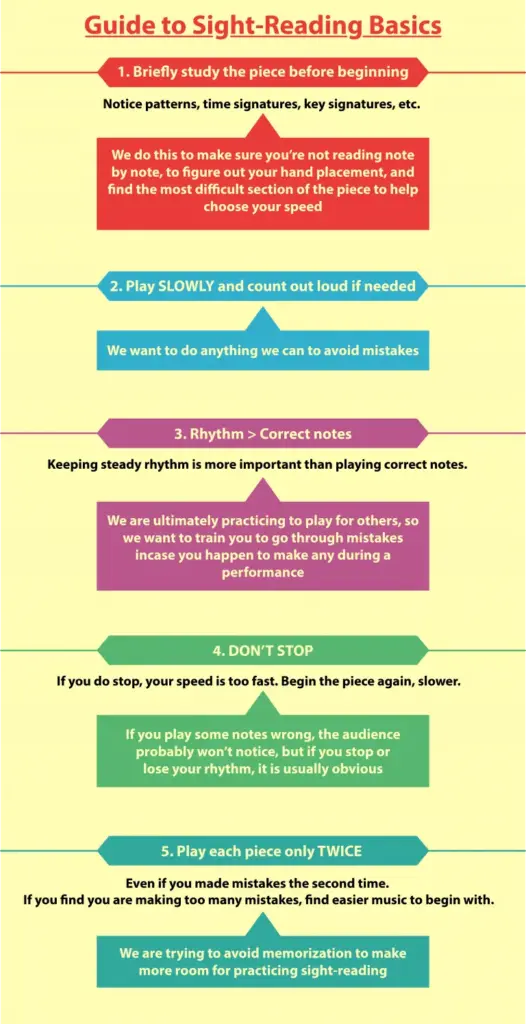

Executive Overview
Ask any music educator to identify the single greatest hurdle in their profession, and the responses point overwhelmingly to one familiar, frustrating phenomenon: getting students to practice outside of formal instructional hours. While casual observers might assume that budget cuts, archaic school facilities, or uninspired curriculum design dominate the list of educator complaints, the reality on the ground is far more nuanced. By a margin of more than two to one over any other obstacle, music teachers report that bridging the gap between weekly lessons remains their most formidable challenge.
This article delves deep into the mechanics of home music practice, examining why traditional methods fail, the psychological toll of unsupervised rehearsal, and how modern digital tools like MakeMusic Cloud are transforming the educational landscape. By integrating real-time feedback loops into daily practice, educators are discovering new ways to turn frustrating student shrugs into moments of genuine musical triumph.
Detailed Chronology: The Evolution of Student Practice and Accountability
To understand the current state of music education, one must examine how home practice has historically been managed and why it has remained largely unchanged for generations.
The Era of the Paper Assignment Book
For decades, the standard for tracking home practice relied on physical tools: paper assignment notebooks, manual metronomes, and pencil markings on sheet music. Teachers would meticulously write down instructions—such as "practice measures 12 through 24 slowly with a metronome"—and trust that the student would interpret and execute these directions during the six days between lessons.
Unfortunately, this system was fraught with friction. Without real-time guidance, students frequently misinterpreted instructions, built bad habits, and arrived at their next lesson unprepared. The teacher would then spend half of the paid lesson time correcting mistakes that could have been avoided with a few seconds of mid-practice guidance.
The Rise of Digital Metronomes and Passive Recording
As technology progressed into the late 20th and early 21st centuries, tools became more accessible. Digital metronomes, tuner applications for smartphones, and basic voice-memo recorders allowed students to check their pitch and tempo. However, these tools still lacked context. A tuner could tell a student they were playing a sharp note, but it could not explain why the intonation was drifting or how that note fit into the harmonic structure of a complex ensemble piece. Practice remained a solitary, isolated endeavor.
The Modern Integration of Interactive Platforms
In recent years, the educational technology sector has shifted its focus from passive digital tools to active, interactive ecosystems. Platforms designed specifically for music education have emerged to address the core issue of immediate feedback. By listening to student performances in real time and highlighting inaccuracies instantly, these modern systems effectively act as an in-home coach, signaling a fundamental shift in how home practice is structured, monitored, and evaluated.
Supporting Context & Metrics: The Psychology of Practice and the Danger of the Isolation Loop
The struggle to maintain consistent, high-quality practice sessions is deeply rooted in human psychology and the cognitive demands of learning an instrument.
Dispelling the Myth of Laziness
A common misconception among parents and novice instructors is that students who fail to practice are simply lazy or lack discipline. In reality, modern pedagogical research indicates that most children and adolescents genuinely want to succeed. The barrier is rarely a lack of desire; rather, it is a lack of procedural knowledge.
Playing an instrument alone in a bedroom is genuinely difficult and isolating. When a student encounters a difficult passage, they lack an objective ear to tell them whether their rhythm, articulation, or pitch is correct. Consequently, they repeat a flawed execution twenty times, inadvertently memorizing the mistake. When they present this "practiced" material to their teacher and receive corrections, the experience feels demoralizing. Over time, repeated frustration conditions the student to withdraw, resulting in the classic, uninformative shoulder shrug when asked, "How was practice this week?"
[Student Plays Alone] ---> [Repeats Error 20x] ---> [Memorizes Mistake] ---> [Corrected in Lesson] ---> [Demoralization/Shrugging]The Power of the Immediate Feedback Loop
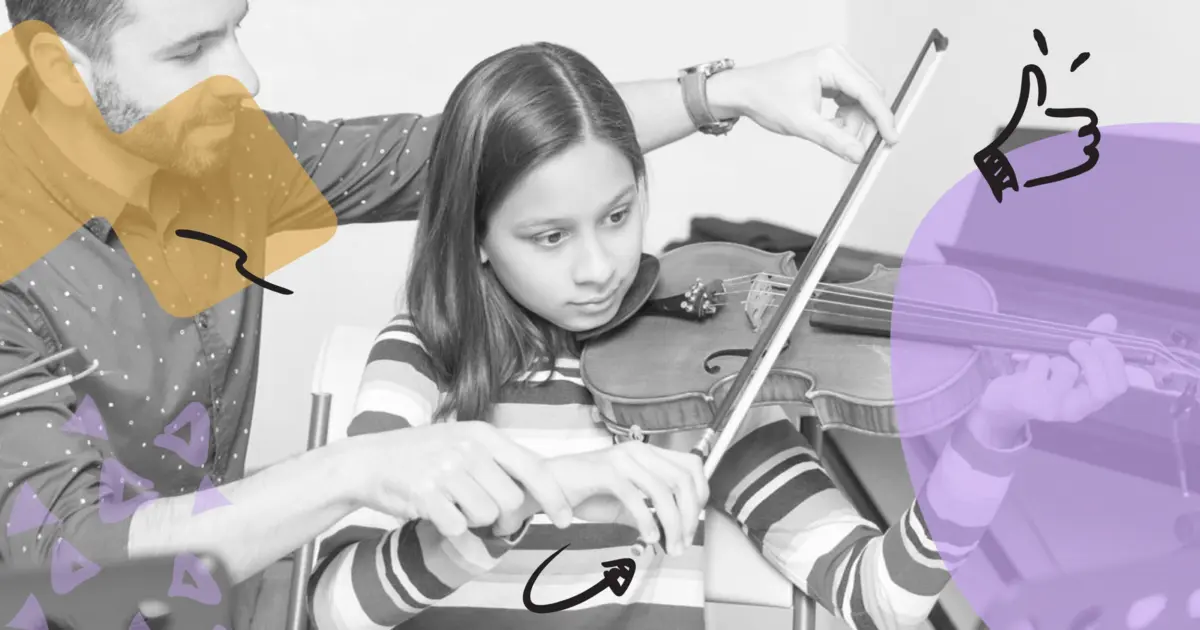
In contrast, learning accelerates exponentially when a student is in the presence of an instructor. Teachers provide instant cues—a raised eyebrow, a verbal redirection, a hummed correction—that close the feedback loop immediately.
- Immediate Correction: The student adjusts before the error becomes ingrained in muscle memory.
- Positive Reinforcement: Successes are highlighted instantly, generating a surge of dopamine and intrinsic motivation.
- Visible Progress: Measurable improvement keeps engagement high, transforming a chore into a rewarding pursuit.
The central challenge of modern music pedagogy has therefore become clear: how to replicate that immediate feedback loop during the six days a week when the teacher cannot be physically present.
Official Insights: Perspectives from the Front Lines of Music Pedagogy
Educators and industry analysts have increasingly spoken out about the necessity of redefining home practice through technology.
The Shift in Lesson Time Utilization
According to veteran music instructors, the integration of real-time interactive assessment software has fundamentally altered how lesson time is spent. Instead of acting as forensic investigators trying to uncover what a student did (or did not do) over the past week, teachers can dive straight into advanced musicality, interpretation, and expression.
"When you walk into a lesson knowing precisely which measures gave the student trouble—because the practice software tracked their exact performance metrics—you stop wasting valuable time on detective work," notes a prominent metropolitan music director. "Class time goes back to what it was always meant to be: pure teaching and artistic mentorship."
Transparency for Instructors and Parents
Furthermore, administrative burdens on educators have lightened. Systems that log practice metrics provide teachers with clear dashboards detailing student engagement levels long before class begins. This transparency allows educators to proactively reach out to struggling students, offering encouragement and targeted assistance before frustration sets in and leads to student attrition.
Future Outlook: The Next Era of Interactive Music Education
As artificial intelligence, audio recognition software, and cloud-based infrastructures continue to evolve, the future of music education points toward even deeper personalization.
Hyper-Personalized Practice Routines
Next-generation platforms are moving beyond simple note-and-rhythm tracking. Future iterations of digital practice assistants will likely utilize advanced machine learning to analyze a student’s unique physical habits, ergonomic posture, and tonal tendencies, offering tailored exercise routines designed to prevent repetitive strain injuries and accelerate technical mastery.
Cultivating Lifelong Musicianship
Ultimately, solving the practice crisis impacts more than just short-term recital readiness; it shapes lifelong relationships with art and culture. When students are equipped with the tools to practice effectively, the frequency of plateaus decreases drastically. Frustration gives way to curiosity, and the dreaded shrug is replaced by an enthusiastic request: "Wait, listen to what I figured out."
By removing the isolation of home practice and pairing students with intelligent, real-time feedback systems, the music education community is successfully turning the hardest part of teaching into an engine for lifelong artistic growth.