
Executive Overview
The contemporary landscape of jazz continues to prove its boundless capacity for cross-cultural synthesis and historical preservation. In this dual-feature critical review, we examine two divergent yet compelling contributions to the modern jazz canon: bassist Fumi Tomita’s imaginative concept album, Yokai: Songs Of The Japanese Supernatural, and WaxTime’s premium audiophile reissue of Julian "Cannonball" Adderley’s 1957 classic, Sophisticated Swing.
While separated by nearly seven decades of musical evolution, both releases illuminate the enduring vitality of hard-bop frameworks. Tomita’s project, recorded in August 2025 at Northfire Studios in Amherst, Massachusetts, utilizes traditional Japanese mythological archetypes—spanning malevolent spirits, noble beasts, and historical figures—as programmatic canvases for a swinging, contemporary American jazz quartet. Conversely, the Cannonball Adderley reissue transports listeners back to the fertile grounds of late-1950s New York, capturing a pivotal moment in jazz history when blues-drenched soul-jazz and rigorous bebop coalesced under the stewardship of alto saxophone royalty.
Together, these works offer an illuminating study in contrast and continuity. Tomita’s album demonstrates how external, non-Western narratives can enrich structural improvisation without sacrificing the rhythmic drive and harmonic sophistication inherent in hard-bop. Meanwhile, the Adderley artifact serves as a masterclass in foundational phrasing, group telepathy, and the historical friction between commercial accessibility and jazz purism. Through meticulous critical evaluation, this report explores the artistic merits, cultural contexts, historical significance, and enduring future outlook of both releases.
Detailed Chronology and Artistic Anatomy
Fumi Tomita: Yokai: Songs Of The Japanese Supernatural (OA2 Records 22259)
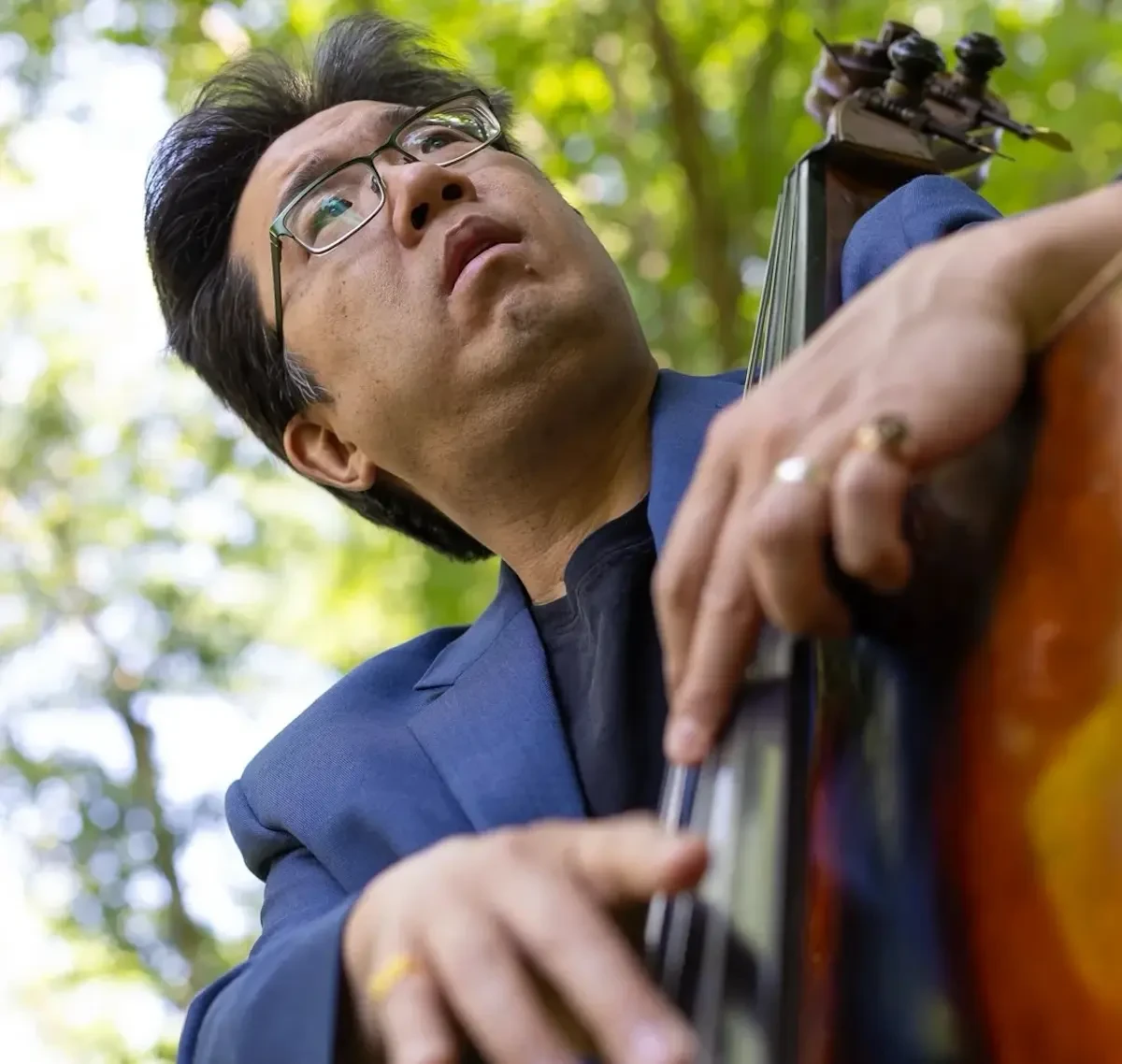
Despite the global fascination with Japanese horror cinema that flourished at the turn of the millennium, Western cultural fluency regarding traditional Japanese mythologies—specifically the realm of yokai (supernatural spirits, monsters, and anomalies)—remains surprisingly sparse. Bassist and composer Fumi Tomita seeks to bridge this cultural divide through an inventive, eight-track suite recorded on August 15–16, 2025, at Northfire Studios in Amherst, Massachusetts.
Tomita anchors the ensemble alongside a formidable frontline and rhythm section: Carl Clements on soprano saxophone, tenor saxophone, and flute; Jason Ennis on guitar; and Gary Feldman on drums. The resulting music serves as an intellectual crash-course in Nippon folklore, executed via robust, swinging hard-bop.
The programmatic arc of the album unfolds with acute psychological and narrative precision:
- "Daija" (Monster Snake): Eschewing the terrifying connotations of a giant, legless serpent, Tomita renders Daija as an amiable entity through a sprightly, dance-like motif that emphasizes lithe movement over heavy-handed menace.
- "Kitsune" (The Fox): Represented with an aura of elegant reserve, the legendary shape-shifting trickster figure maintains a sophisticated composure before breaking into a brisk, highly communicative drum solo by Feldman.
- "Betobeto San": This track evokes a palpable sense of urban or nocturnal paranoia. An initially confident strut mimics the auditory illusion of being followed in the dark, subtly pushing the ensemble to accelerate its rhythmic pace.
- "Wakana-Hime" (Princess Wakana): Drawing inspiration from a historical figure-turned-magician, this piece relies on sinuous grace. Clements’ flute and Ennis’s guitar float in atmospheric interplay, capturing the ethereal qualities of sorcery.
- "Kiyomori": A musical portrait of the ruthless 13th-century samurai leader Taira no Kiyomori. Rather than wallowing in a caricature of cruelty, the composition channels Kiyomori’s ironclad determination and sophisticated political acumen.
- "Amabiko" (Sea Lad / Sea Demon): Historically believed to ward off plagues and national calamities, this aquatic entity inspires a composition rich in protective, grounding frequencies.
- "Tenju Zakushi Emaki" (Beasts Galore): A tour-de-force of bop bustle that quickly transitions into a lively parade of trading fours and agile, egalitarian solos from every corner of the quartet.
- "Okiku": Based on the tragic folklore of a young servant girl wrongfully executed over a broken family heirloom, whose spirit purportedly haunts a castle well. The music mirrors deep regret for her unfair demise before introducing jagged, minor-key motifs hinting at her vengeful haunting.
- "Hyakki Yagyo" (Night Parade Of 100 Demons): The grand finale. The track begins with deceptive behavioral decorum before Clements unleashes a piercing soprano saxophone line. Ennis ramps up the harmonic tension, and Tomita and Feldman wade in with relentless forward motion to construct a thrilling, high-velocity climax.
Cannonball Adderley: Sophisticated Swing (WaxTime 771671)
Shifting our chronological lens back to the mid-20th century, WaxTime’s deluxe limited-edition vinyl reissue brings fresh focus to Sophisticated Swing, originally recorded in New York across three dates in February 1957 (February 6, 8, and 11). Presented on 180-gram heavy vinyl housed inside a robust replica sleeve containing both archival liner notes and contemporary contextual essays, the release celebrates one of hard-bop’s most formidable early alignments.
The session features a stellar lineup: Nat Adderley on trumpet, Julian "Cannonball" Adderley on alto saxophone, Junior Mance on piano, Sam Jones on bass, and Jimmy Cobb on drums.
The structural flow of the original sessions and subsequent bonus inclusions maps a compelling jazz evolution:
- Opening and Compositional Framework: The album bursts open with a bustling Nat Adderley composition that triggers fiery, competitive exchanges between the Adderley brothers.
- "Miss Jackie’s Delight": A looser, more relaxed vehicle that nevertheless swims in deep, foundational blues feeling, proving the ensemble’s capacity to balance cerebral complexity with unforced groove.
- "Spring Is Here" & "Tribute To Brownie": The band shifts gears into a sublime ballad feature for Cannonball before paying direct homage to the late, transcendent trumpeter Clifford Brown, with Cannonball delivering a masterclass in classic bebop syntax.
- Mid-Album Vigor ("Spectacular", "Jeannie", "Eddie McLin"): High-velocity arrangements penned by Nat Adderley and collaborators test the acoustic speed limits. Jones and Cobb maintain an unshakeable rhythmic foundation that propels the horns.
- Pianistic Interludes and Bonus Material: Junior Mance takes the spotlight on a melodramatically introduced yet deeply thoughtful rendition of the standard Stella by Starlight. Meanwhile, an uptempo bonus cut of the Gershwins’ A Foggy Day—omitted from the original LP running order—adds substantial value to this definitive package.
Supporting Context, Cultural Metrics, and Historical Significance
The Transcultural Synthesis of Yokai
Fumi Tomita’s integration of Japanese folklore into an American jazz idiom represents a growing movement of globalized storytelling within the genre. For decades, jazz has drawn inspiration from African, European, and Latin American folk traditions. By incorporating yokai lore, Tomita avoids orientalist tropes, treating the source material with the psychological depth of a tone poem while preserving the improvisational spontaneity of a standard jazz club date.
From an analytical perspective, the instrumentation—guitar-led frontlines supported by a tight acoustic rhythm section—allows for a textural transparency rarely found in horn-heavy big bands. As noted in critical evaluations, while the mythological backstory deepens the listener’s intellectual appreciation, the charts are sturdy enough to stand entirely on their own musical merits. Every member of the quartet functions as both a cohesive ensemble player and an articulate soloist.
The Sociopolitical Friction of 1957 Hard-Bop
To understand the historical weight of Cannonball Adderley’s Sophisticated Swing, one must analyze the broader sociopolitical and aesthetic debates within the jazz community of the late 1950s. During this era, jazz was transitioning from a localized dance and club art form into a serious, intellectualized concert medium.
Gene Wright, who contributed multiple compositions to these 1957 sessions (alongside a co-writing credit with Nat Adderley), was soon to join the Dave Brubeck Quartet—a move that vaulted him into unprecedented commercial visibility. Similarly, Cannonball Adderley’s subsequent trajectory included massive commercial successes and a pivotal stint in the Miles Davis Sextet (1957–1959), where he contributed directly to foundational modal masterpieces like Milestones and Kind of Blue.
However, this commercial viability often drew the ire of jazz "purists" and critics who equated populism with artistic compromise. Adderley’s deliberate cultivation of younger talent—such as Charles Lloyd, whose bands would later face identical accusations of commercial over-exposure—highlights a continuous tension within the genre: the eternal struggle between avant-garde insularity and populist accessibility. Sophisticated Swing captures Adderley and his collaborators right at the fulcrum of this debate, proving that swinging hard-bop could be simultaneously sophisticated, soulful, and universally resonant.
Official Statements and Critical Perspectives
Reviewing the Contemporary Avant-Garde: Yokai
In assessing Fumi Tomita’s latest output, industry critics have emphasized the democratic nature of the quartet’s interplay. An excerpt from contemporary evaluation notes:
"Whilst the background information does help to better understand where the compositions are ‘coming from’ it is not essential to the enjoyment and appreciation of the music, which is engaging and stimulating, with admirable, engaging and involving playing from each member of the quartet, both in ensembles and solos."
This sentiment underscores a vital production principle: programmatic jazz fails when the narrative overshadows the music. Tomita successfully avoids this pitfall by ensuring that the underlying groove, harmonic tension, and improvisational release take precedence over literal sound-effects.
Archival Reassessment: Sophisticated Swing
WaxTime’s ongoing archival campaign has likewise drawn critical praise for its physical presentation and sonic fidelity. Reviewers of the Sophisticated Swing reissue have highlighted the rhythm section’s historical importance:
"Mance, Jones and Cobb provide sterling support of course: there’s good reason why they cropped up in so many excellent bands. The album presents hard bop at its finest and well deserves its return to the catalogue."
This observation touches upon the unsung heroes of the hard-bop era. While frontmen like the Adderley brothers commanded the marquee, the rhythmic engine room composed of players like Junior Mance, Sam Jones, and Jimmy Cobb constituted the foundational bedrock upon which the golden age of American jazz was built.
Future Outlook
As we look toward the future of recorded jazz, releases like Yokai: Songs Of The Japanese Supernatural and Sophisticated Swing point toward two vital, complementary directions for the genre.
First, the contemporary scene continues to expand its geographic and cultural boundaries. We anticipate a surge in cross-cultural concept albums where artists use jazz as a universal lexicon to explore non-Western literature, mythology, and history. Fumi Tomita’s work sets a high standard for how programmatic concepts can be translated into sophisticated harmonic structures without losing rhythmic accessibility.
Second, the market for high-fidelity archival reissues demonstrates that the appetite for historical preservation remains robust. Audiophile labels like WaxTime play an essential cultural preservation role, ensuring that formative mid-century masterworks are kept in active rotation for younger generations of listeners, musicians, and collectors.
Ultimately, whether examining newly minted compositions inspired by ancient Japanese spirits or revisiting the fiery blues-inflected bop of 1957 New York, the core tenets of jazz remain unchanged: deep listening, telepathic ensemble interaction, unyielding swing, and an unwavering commitment to emotional authenticity.