
Executive Overview
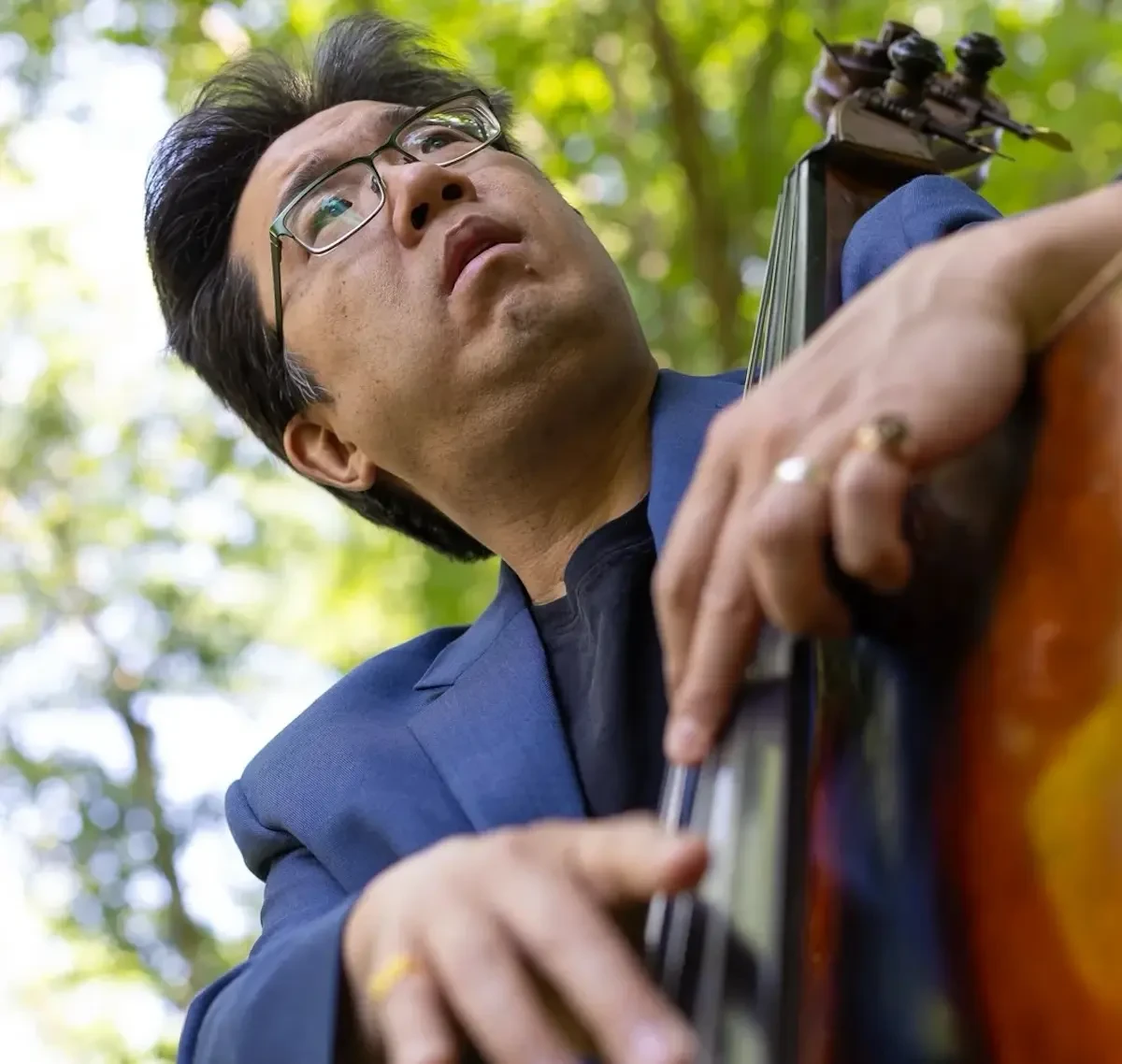
The contemporary landscape of jazz continues to prove its boundless capacity for cross-cultural synthesis and historical preservation. In a striking testament to the genre’s elasticity, two recent releases capture contrasting yet complementary approaches to the hard-bop idiom. On one front, bassist and composer Fumi Tomita bridges the gap between Western jazz and ancient Japanese folklore with his latest studio project, Yokai: Songs Of The Japanese Supernatural. Recorded in August 2025 at Northfire Studios, Tomita’s suite offers a compelling sonic crash course in Nippon traditions, executed through robust, swinging frameworks led by saxophone, flute, and guitar.
Simultaneously, the archival jazz market looks backward to preserve the foundational pillars of the genre, highlighted by WaxTime’s lavish 180-gram vinyl reissue of Cannonball Adderley’s 1957 classic, Sophisticated Swing. Featuring an elite ensemble that includes Nat Adderley, Junior Mance, Sam Jones, and Jimmy Cobb, this release reminds contemporary listeners of the soulful urgency, peerless technique, and historical gravitas that defined the golden age of hard bop.
While Tomita explores uncharted thematic territories by scoring centuries-old mythological entities—ranging from amiable giant serpents to vengeance-seeking ghosts—Adderley’s reissue captures a pivotal juncture in jazz history, chronicling an era just before its principal architects ascended to commercial stardom and jazz-canon immortality. Together, these two releases present an expansive view of a musical tradition that refuses to stay anchored to a single geographic origin or historical epoch.
Detailed Chronology
The Genesis of Yokai: Songs Of The Japanese Supernatural
The conceptual foundation of Fumi Tomita’s Yokai was shaped over years of musical maturation and cross-cultural inquiry. Though Western audiences experienced a significant appetite for Japanese horror cinema in the early 2000s, comprehensive knowledge of traditional Japanese mythology—specifically the yokai (supernatural spirits and monsters of Japanese folklore)—remained largely superficial outside of academic circles. Tomita recognized an untapped parallel between the improvisational, narrative-driven nature of hard-bop jazz and the vivid, character-driven storytelling embedded in Japanese folk legends.
- August 15–16, 2025: The core quartet consisting of Carl Clements (soprano/tenor saxophone, flute), Jason Ennis (guitar), Fumi Tomita (double bass), and Gary Feldman (drums) convened at Northfire Studios in Amherst, Massachusetts. Over these two intensive days of recording, the ensemble captured the nine-track suite that would become Yokai: Songs Of The Japanese Supernatural (released via OA2 Records, catalog number OA2 22259).
- Compositional Execution: Tomita mapped out a diverse array of Japanese folklore figures, translating their legendary traits directly into musical motifs.
- Daija, the legless monster snake, is rendered as an amiable, sprightly dance.
- Kitsune, the mythical fox, manifests as an elegant, reserved presence underscored by a dynamic drum solo.
- Betobeto captures an ominous psychological state through a confident strut that simulates the unsettling feeling of being followed in the dark.
- Princess Wakana (Wakana-Hime), a legendary magician, is illustrated with sinuous grace via floating flute and guitar lines.
- Kiyomori channels the fierce determination and political acumen of the ruthless 13th-century samurai warlord.
- Amabiko honors the sea demon historically believed to ward off plagues.
- Beasts Galore (Tenju Zakushi Emaki) breaks into a high-energy bop bustle featuring rapid-fire trading of fours.
- Okiku dramatizes the tragic tale of a young servant girl executed over broken plates, blending profound regret with sudden, chilling hints of spectral revenge.
- Hyakki Yagyo (Night Parade Of 100 Demons) serves as a climactic, unpredictable finale where Clements cuts loose on soprano saxophone, amplified by Ennis, Tomita, and Feldman.
The Historic Sessions of Sophisticated Swing
The historical timeline of Cannonball Adderley’s Sophisticated Swing dates back to the mid-1950s, a period of explosive creativity and professional transition for the legendary alto saxophonist.
- February 1957 (Dates 6, 8, and 11): Julian "Cannonball" Adderley, alongside his cornetist brother Nat Adderley, pianist Junior Mance, bassist Sam Jones, and drummer Jimmy Cobb, entered a New York recording studio. These sessions yielded some of the finest hard-bop recordings of the decade.
- The Sideman Contributions: Three of the album’s original compositions were penned by bassist Gene Wright, who collaborated closely with the group before joining Dave Brubeck’s legendary quartet the following year—a move that would catapult Wright into commercial prominence, despite drawing the ire of contemporary jazz purists.
- The Miles Davis Connection: During this broader career window (specifically 1957–1959), Cannonball Adderley was a core member of the Miles Davis Sextet, participating directly in the creation of monumental modal and hard-bop masterworks such as Milestones and Kind of Blue. The confidence and dexterity displayed on Sophisticated Swing directly mirror the artistic authority Adderley held while trading blows with giants like Davis and John Coltrane.
- The WaxTime Reissue Campaign: Decades later, WaxTime curated Sophisticated Swing (catalog number WaxTime 771671) as part of its limited-edition series. Pressed on heavyweight 180-gram vinyl and housed in a faithful replica of the original gatefold sleeve—complete with archival liner notes and newly commissioned essays—the release returned a crucial piece of jazz history to active circulation.
Supporting Context & Metrics
To fully appreciate the artistic weight of these two releases, one must examine the metrics of their production, instrumentation, and historical reception.
| Release Attribute | Fumi Tomita – Yokai | Cannonball Adderley – Sophisticated Swing |
|---|---|---|
| Release Year (Original / Reissue) | 2025 (New Release) | 1957 (Recorded) / Modern Reissue |
| Record Label | OA2 Records (OA2 22259) | WaxTime (771671) |
| Recording Location | Northfire Studios, Amherst, MA | New York City, NY |
| Key Instrumentation | Bass, Guitar, Saxophone, Flute, Drums | Alto Sax, Cornet, Piano, Bass, Drums |
| Primary Idiom | Modern Hard-Bop / Global Fusion | Classic 1950s Hard-Bop |
| Track Count | 9 Original Compositions | 10 Tracks (Including Bonus Track) |
| Total Runtime | Approx. 49 minutes, 33 seconds | Approx. 40 minutes (Split across vinyl sides) |
The Intersection of Narrative and Music
In Yokai, Fumi Tomita proves that programmatic music—compositions designed to tell a specific story or evoke non-musical imagery—can coexist seamlessly with the abstract demands of modern jazz improvisation. While the background cultural context of Japanese folklore enriches the listener’s intellectual appreciation, the structural integrity of the tracks requires no prerequisite knowledge. The interplay between Jason Ennis’s versatile guitar comping and Carl Clements’s multi-instrumental leads creates an expansive tonal palette.
Conversely, Sophisticated Swing relies on the intrinsic momentum of the blues-inflected, bop-oriented American songbook. Tracks like Miss Jackie’s Delight, Nat Adderley’s bustling opener Another Kind Of Soul, and the blistering tempo of Spectacular demonstrate an effortless synthesis of intellectual rigor and visceral, blues-soaked swing. Furthermore, the inclusion of the uptempo bonus track version of George and Ira Gershwin’s A Foggy Day—omitted from the original LP pressing—provides modern collectors with valuable studio outtakes that illuminate the creative headspace of the 1957 ensemble.
Official Statements and Critical Reception
The critical reception surrounding both of these releases highlights a shared appreciation for instrumental mastery and conceptual daring.
Industry analysts and jazz critics have lauded Fumi Tomita’s ability to avoid the pitfalls of heavy-handed musical pastiche. Rather than relying on superficial tropes or traditional Japanese scales to simulate an "oriental" atmosphere, Tomita utilizes sophisticated hard-bop harmonies and rhythmic shifts to interpret the psychological weight of the yokai. Reviewers have noted that while the titles invoke ancient phantoms—such as the tragic specter Okiku or the sea-demon Amabiko—the resulting music remains fiercely contemporary, driven by agile ensemble interplay and inventive soloing structures.
Regarding the WaxTime reissue of Sophisticated Swing, contemporary jazz scholarship continues to validate the historic importance of Cannonball Adderley’s pre-Blue Note and early Riverside recordings. Critics have pointed out that despite the occasional snobbery directed at jazz artists who achieved commercial crossover success (such as Dave Brubeck or later Adderley hits like Mercy, Mercy, Mercy), Adderley’s 1957 quintet operated at an elite level of uncompromising musicianship.
Official notes from the reissue campaign emphasize the brilliance of the rhythm section—featuring Junior Mance on piano, Sam Jones on bass, and Jimmy Cobb on drums—whose collective dependability made them the most sought-after accompaniment in the industry. The consensus across major jazz publications is clear: whether evaluating the freshly minted explorations of Japanese folklore by Fumi Tomita or revisiting the timeless brilliance of Cannonball Adderley, the enduring vitality of hard bop remains undiminished.
Future Outlook
As the global jazz ecosystem continues to decentralize, the trajectories signaled by these two recordings point toward promising directions for both archival preservation and cross-cultural innovation.
1. The Expansion of Global Narratives in Jazz
Fumi Tomita’s successful marriage of Japanese folklore with swinging hard-bop paves a compelling path for contemporary composers. As audiences grow increasingly receptive to cross-cultural storytelling, jazz is uniquely positioned to serve as a universal language capable of interpreting non-Western myths, indigenous histories, and global literature. Future projects in the modern jazz sphere are likely to follow this blueprint, moving beyond standard modal explorations to embrace rich, narrative-driven suites that challenge instrumentalists to stretch their interpretive boundaries.
2. The High-End Vinyl Resurgence and Archival Integrity
The continued commercial viability of premium archival imprints like WaxTime demonstrates that physical media—particularly 180-gram vinyl pressings with restored artwork and historical liner notes—remains vital to the preservation of jazz history. As younger generations discover mid-century hard bop through curated physical formats, record labels are expected to dig deeper into radio broadcasts, private rehearsal tapes, and out-of-print sessions to satisfy a growing appetite for historical authenticity.
Ultimately, whether through the forward-thinking cultural synthesis found on Yokai: Songs Of The Japanese Supernatural or the golden-era mastery enshrined on Sophisticated Swing, jazz proves that its historical roots and its future horizons are inextricably linked. Both releases ensure that the past is honored with exacting precision while the future remains wide open to imaginative exploration.