
By David Salazar
Published November 2023
Executive Overview
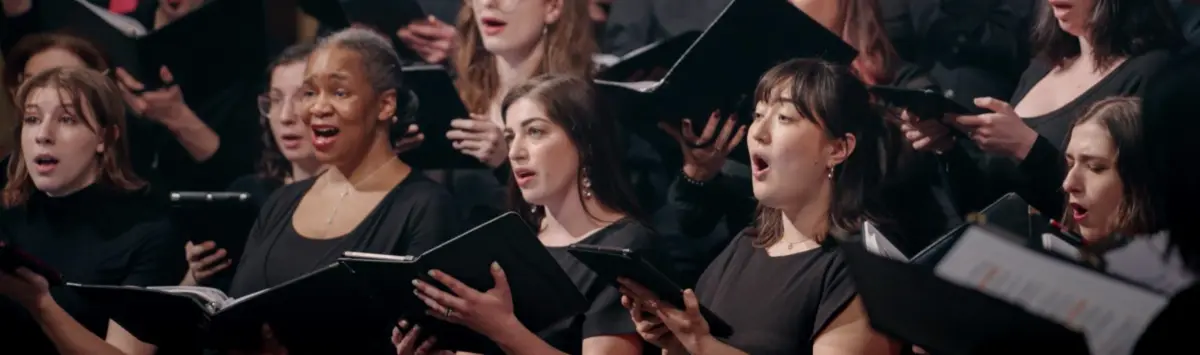
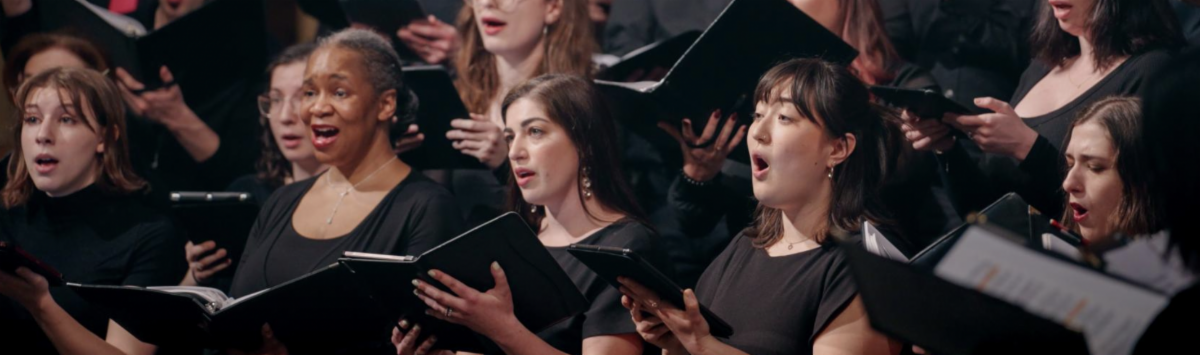
In an era where the classical music landscape constantly grapples with the challenge of balancing historic reverence with contemporary relevance, New York City’s premier chamber choir, Cantori New York, continues to carve out a distinct and vital niche. Under the visionary artistic leadership of conductor Mark Shapiro, the ensemble is set to mount one of its most emotionally resonant and intellectually stimulating programs of the season.
Titled “Everlasting Light,” the upcoming two-night engagement will take place on November 13 and 14 at 8:00 p.m. within the soaring, acoustically rich sanctuary of the Church of St. Francis Xavier in Manhattan.
Far more than a standard seasonal concert, "Everlasting Light" is structured as a profound meditation on transcendence, cosmic wonder, and human connection. The meticulously curated program interweaves contemporary choral masterpieces from across the globe, featuring Carson Cooman’s In the Midst of Wild Being, David Hamilton’s The Moon Is Silently Singing, and Christos Hatzis’s titular masterwork, Everlasting Light. Adding high artistic stakes to the event is the highly anticipated world premiere of a new work, Come Travel with Me.
Yet, beyond its aesthetic ambitions, the concert carries an immense emotional weight. The performances are formally dedicated to the memory of Jake Snyder, a beloved member of the Cantori New York family whose recent passing has left a palpable void within the ensemble. To bring this complex, deeply personal repertoire to life, Shapiro will helm an ensemble bolstered by an exceptional roster of guest soloists: contralto Megan Esther Grey, countertenor Wei En Chan, tenor Chad Kranak, and baritone Michael Weyandt.
This report provides a comprehensive, multi-faceted analysis of the upcoming event, exploring the thematic architecture of the program, the structural brilliance of the selected compositions, the biographical and institutional legacy of Cantori New York under Mark Shapiro, and the broader cultural significance of choral music in contemporary urban landscapes.
Detailed Chronology & Repertoire Breakdown
To fully appreciate the scope of "Everlasting Light," one must examine the deliberate sequence of the program. Mark Shapiro has constructed a narrative arc that moves from the kinetic, earthly energy of the natural world into ethereal, celestial realms, ultimately culminating in a collective act of remembrance and global human journeying.
1. Carson Cooman: In the Midst of Wild Being
The evening opens with In the Midst of Wild Being by American composer Carson Cooman. Known for a prolific output that bridges neoclassical accessibility with deeply spiritual modernism, Cooman’s work serves as a vibrant prologue. The piece—drawing inspiration from themes of untamed nature and existential awareness—challenges the chorus to navigate shifting rhythmic meters and soaring vocal lines that mimic the unpredictable, vital forces of the natural world. For Cantori New York, known for its pristine blend and agility, this piece establishes a high technical ceiling right from the downbeat, setting a tone of dynamic awakening.
2. David Hamilton: The Moon Is Silently Singing
Transitioning from the terrestrial to the nocturnal, the program moves to New Zealand composer David Hamilton’s The Moon Is Silently Singing. Hamilton, a prominent figure in Pacific choral music, possesses an uncanny ability to translate visual luminosity into sound. In this work, shimmering vocal clusters and delicate harmonic suspensions evoke the quiet, profound stillness of moonlight cutting through darkness. The piece demands immense breath control and tonal purity from the singers, functioning as a bridge between the physical energy of Cooman’s opening work and the spiritual transcendence of the concert’s second half.
3. Christos Hatzis: Everlasting Light
The emotional and structural anchor of the evening is Christos Hatzis’s Everlasting Light. Hatzis, a Greek-Canadian composer whose music frequently explores the intersection of ancient Byzantine traditions, modern minimalist techniques, and universal human suffering and redemption, infuses the title work with staggering depth. Everlasting Light is not merely heard; it is experienced as a sonic architecture of hope. The interplay between the soloists and the full choir creates a polyphonic halo effect, making the sacred space of the Church of St. Francis Xavier an ideal vessel for the work’s luminous message.
4. World Premiere: Come Travel with Me
In keeping with Cantori New York’s long-standing tradition of championing living composers and expanding the contemporary choral canon, the program features the world premiere of Come Travel with Me. While specific details regarding the authorship and textual basis of the premiere have been closely guarded to maximize the impact of the live unveiling, the piece is understood to deal with themes of transition, spatial movement, and temporal passage. Given the concert’s dedication to the late Jake Snyder, the premiere takes on an extra-musical resonance, acting as a sonic voyage into the unknown—a musical bon voyage for a cherished colleague.
Supporting Context & Metrics: The Anatomy of Cantori New York
To understand the weight of an event like "Everlasting Light," one must look at the institutional bedrock of Cantori New York and the unique position it holds within the competitive ecosystem of New York City’s classical music scene.
The Artistic Leadership of Mark Shapiro
At the heart of Cantori New York’s artistic identity is its music director and conductor, Mark Shapiro. Recognized by The New York Times for his "fiercely committed" and "infinitely varied" interpretations, Shapiro is a rare breed of conductor who moves fluidly between orchestral, operatic, and choral realms.
Shapiro’s tenure with Cantori has been defined by fearless programming. Under his baton, the ensemble has premiered dozens of major works, collaborated with world-class instrumentalists, and maintained a standard of vocal execution that routinely earns critical acclaim from major outlets. His approach combines rigorous musicological analysis with an intuitive grasp of emotional delivery—a balance that is particularly crucial when dealing with a program as thematically diverse as "Everlasting Light."
The Soloist Roster
A hallmark of Cantori New York’s major concerts is the integration of elite guest soloists who blend seamlessly with the choral texture while retaining distinct interpretive voices for featured passages:
- Megan Esther Grey (Contralto): Celebrated for her rich, mahogany timbre and deep interpretive intelligence, Grey is a sought-after interpreter of both early and contemporary music.
- Wei En Chan (Countertenor): A rising star known for his ethereal, bell-like clarity and virtuosic agility, Chan brings a haunting, otherworldly dimension to the vocal texture.
- Chad Kranak (Tenor): Renowned for his fearless projection, clarion tone, and fluency in contemporary vocal techniques, Kranak specializes in bringing complex modern scores to vivid life.
- Michael Weyandt (Baritone): Possessing a resonant, grounding instrument and a reputation for profound dramatic commitment, Weyandt anchors the lower end of the ensemble’s soloistic spectrum.
The Venue: The Church of St. Francis Xavier
The choice of the Church of St. Francis Xavier on West 16th Street is far from incidental. Built in the late 19th century and boasting a magnificent acoustic profile with substantial reverberation time, the church acts as an acoustic instrument in its own right. Choral music that relies on microtonal shifts, complex harmonic suspensions—such as Hamilton’s The Moon Is Silently Singing—requires a space where sound can bloom and decay naturally. The architectural grandeur of the venue visually and spatially reinforces the spiritual and transcendent themes of "Everlasting Light."
Official Statements & Artistic Vision
In statements surrounding the upcoming performances, the overarching ethos of the project centers on resilience, community, and the unique communicative power of the human voice.
While commercial classical music institutions often retreat into safe, hyper-familiar canonical repertoire during periods of cultural and economic uncertainty, Cantori New York has doubled down on contemporary creation. The decision to anchor the program around Hatzis and Cooman—alongside a major world premiere—signals a firm institutional belief that contemporary choral music is uniquely equipped to process collective grief and articulate profound hope.
Furthermore, the dedication of the concerts to Jake Snyder elevates the performances from a standard subscription concert to a communal rite of passage. In choral singing, the breath is shared, the physical space is shared, and the collective resonance of multiple voices functioning as a single organism creates an intense bond. For the members of Cantori New York, singing these particular works in memory of Snyder is an act of active memorialization. It transforms sorrow into art, ensuring that the legacy of a departed friend reverberates through the acoustic space of Manhattan.
Future Outlook: The Trajectory of Choral Artistry in New York
As Cantori New York looks beyond the November 13 and 14 performances, "Everlasting Light" serves as a bellwether for the future of chamber music programming in major metropolitan centers.
The success and cultural resonance of this program highlight several critical trends in the modern classical music landscape:
- The Demand for Thematic Cohesion: Modern audiences increasingly reject random assortment of pieces in favor of curated, conceptual programs that offer emotional and intellectual arcs akin to literature or cinematic storytelling.
- The Vitality of the Living Canon: By placing contemporary works by Cooman, Hamilton, and Hatzis alongside a world premiere, Cantori demonstrates that the choral canon is not a static museum collection, but a living, evolving ecosystem.
- The Therapeutic and Communal Role of Music: In an increasingly fragmented digital society, live acoustic performance—particularly choral music, which requires no amplification and depends entirely on human breath and physical presence—offers a vital antidote to alienation.
For those attending the performances at the Church of St. Francis Xavier, "Everlasting Light" promises to be much more than an evening of pleasant listening. It is an invitation to traverse the boundaries of nature, time, and memory, guided by one of North America’s most fearless chamber choirs. As the final chords of Hatzis’s masterwork fade into the Manhattan night, the resonance of voices united in grief, beauty, and hope will undoubtedly linger long after the lights have dimmed.
Event Details At a Glance:
- What: Cantori New York presents “Everlasting Light”
- When: November 13 and 14 at 8:00 p.m.
- Where: Church of St. Francis Xavier, Manhattan, NY
- Conductor: Mark Shapiro
- Soloists: Megan Esther Grey (contralto), Wei En Chan (countertenor), Chad Kranak (tenor), Michael Weyandt (baritone)
- Repertoire: Carson Cooman (In the Midst of Wild Being), David Hamilton (The Moon Is Silently Singing), Christos Hatzis (Everlasting Light), and the world premiere of Come Travel with Me.
- Dedication: In memory of Cantori member Jake Snyder.